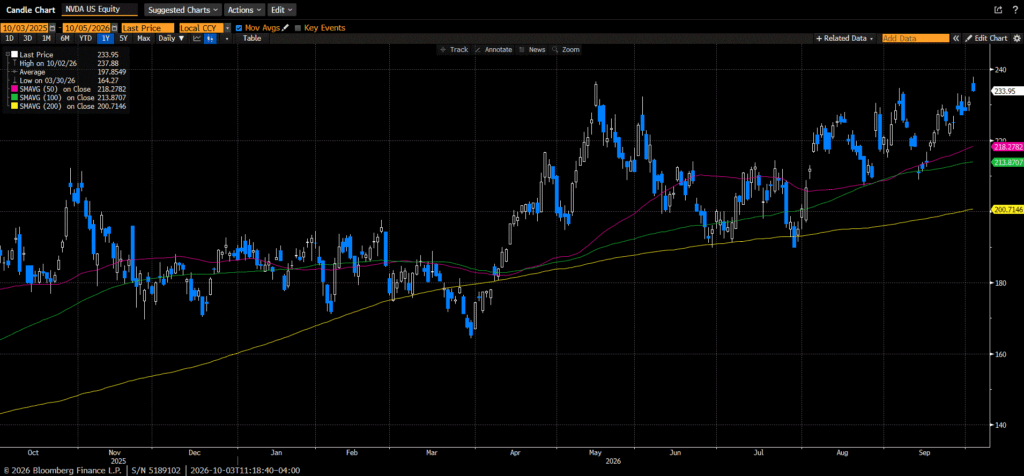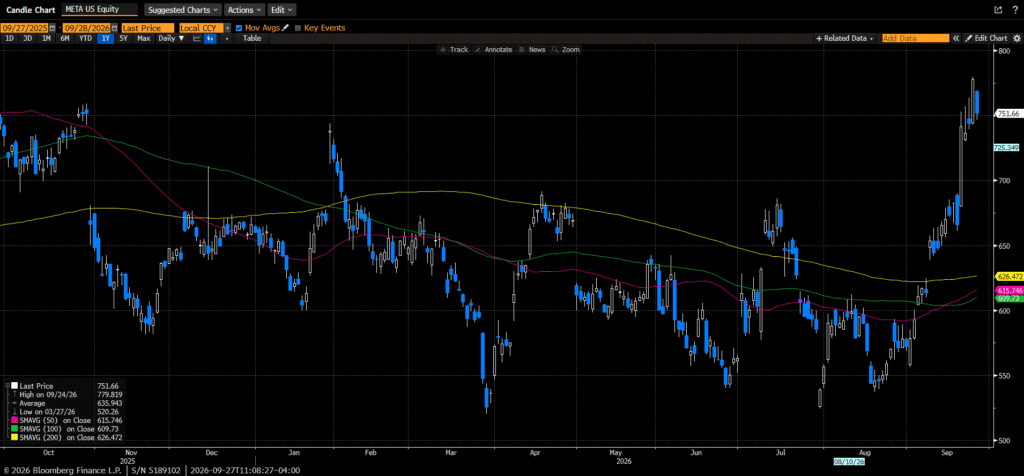
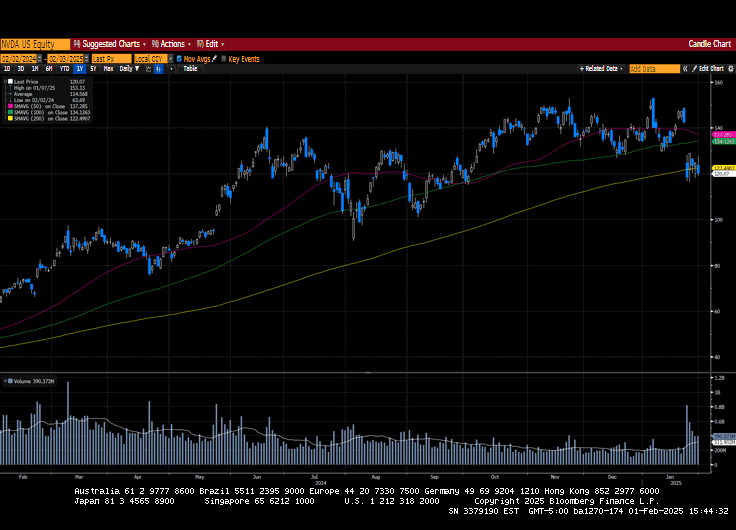
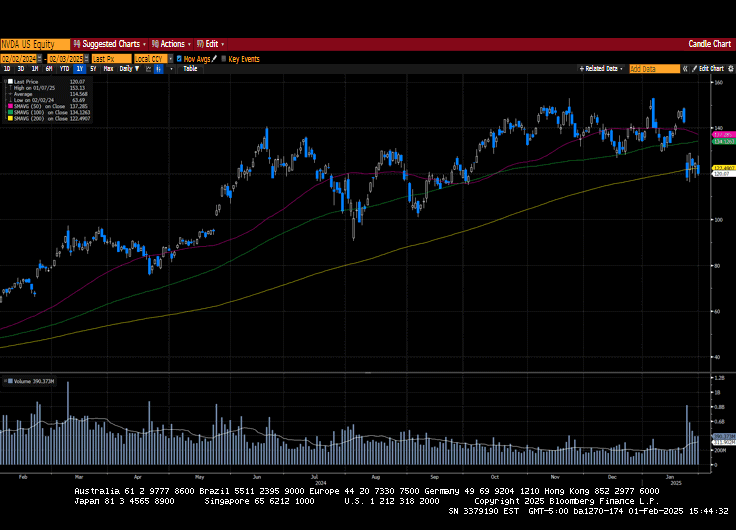
US financial markets were extremely busy last week as a rush to download a Chinese AI platform called Deep Seek from Apple’s App Store seemingly changed the narrative around artificial intelligence in a heartbeat and on multiple fronts. Capital expenditures and the return on investment questions were front and center on Wall Street and tested current earnings estimates and valuations for these AI-related companies. NVidia, an AI darling, saw its shares tumble 17%, the largest one-day loss of market capitalization in history. Investors also digested 4th quarter earnings from almost 40% of the S&P 500, including Tesla, Microsoft, Apple, and Meta. Earnings results were met with mixed responses. For instance, Microsoft’s quarter appeared solid, but inline cloud results induced a steep sell-off in shares. The Federal Reserve’s Open Market Committee meeting yielded no change to its policy rate. Fed Chairman Powell acknowledged that inflation continues to be elevated, and the labor market appears solid. The Fed is in wait-and-see mode, and at this point, it’s possible the markets will not get a rate cut in 2025. Tariff policy also came into play toward the end of the week, agitating markets as Trump levied 25% tariffs on Canada and Mexico while putting an additional 10% tariff on China. The President also said tariffs would be imposed on Europe.
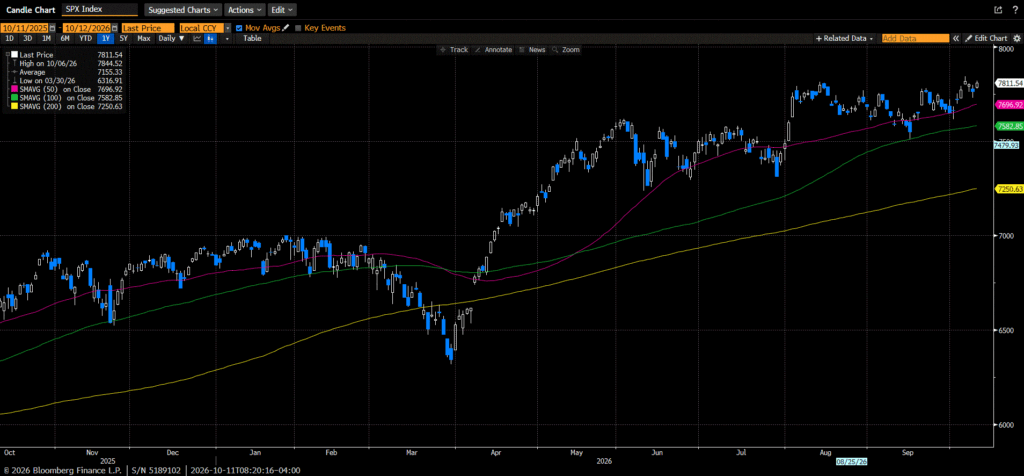
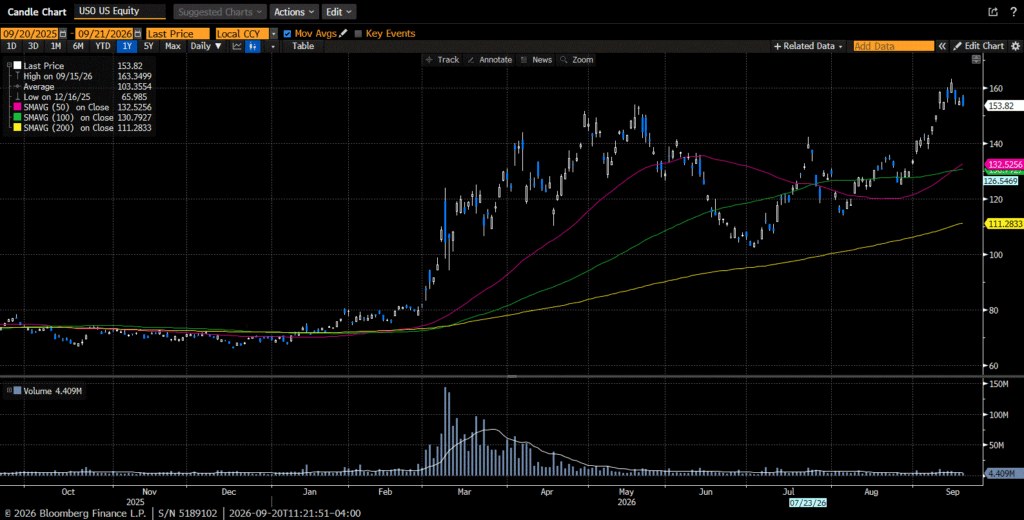
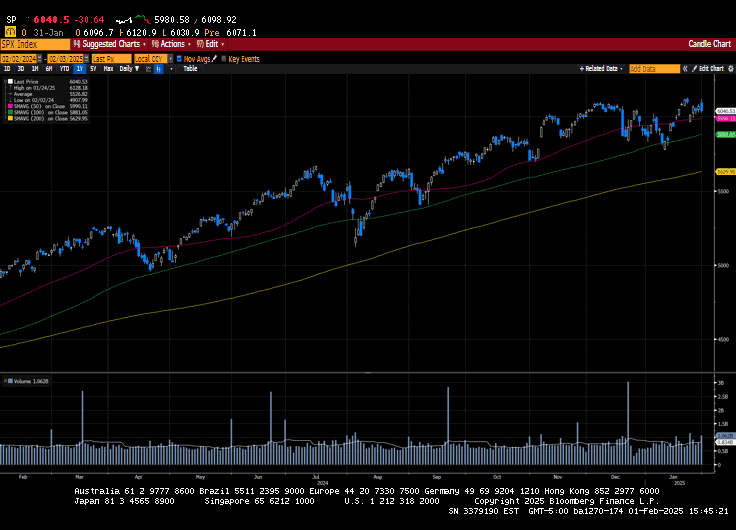
The S&P 500 shed 1% but closed the month higher by 2.7%. The Dow managed a gain of 0.3% and closed the month up 4.7%. The NASDAQ fell by 1.6% and posted a 1.6% gain for January. The Russell 2000 lost 0.9% and added 2.6% for the month. US Treasuries advanced this week in volatile trade and ended the month flat. The 2-year yield fell by three basis points to 4.24%, while the 10-year yield declined by six to 4.57%. Oil prices fell by 2.8% or $2.14 to close the week at $72.46. Oil prices rallied late in the week on the idea that Trump would impose tariffs on energy. Gold prices traded to new all-time highs in a safe-haven bid. Prices rose by $55.60 to close the week at 2834.10 an Oz. Copper prices fell by five cents to $4.27 per Lb. Bitcoin prices fell by 2.36%, closing the week at $102,240. The US Dollar index rallied on the idea of tariffs and closed the week higher by 0.80 to close the week at 108.38. Notably, the Mexican Peso and Canadian Dollar sold off hard on Trump’s tariff announcement but ended the month flat relative to the US Dollar. It’s also worth mentioning that Trump’s strong rhetoric on the US Dollar maintaining its reserve currency status was aimed directly at the BRICS nations (Brazil, Russia, India, China, and South Africa). For some time, these countries have floated the notion of moving away from utilizing the US Dollar.
The economic calendar was also quite busy. The Fed’s preferred measure of inflation, the PCE, showed an increase of 0.3% on the headline number and an increase of 0.2% on the Core reading. These results were in line with the street’s expectations. On a year-over-year basis, the headline number rose by 2.6%, up from 2.4% in November, while the Core measure rose for the third consecutive month by 2.8%. Personal income rose by 0.4%, in line with the consensus estimate, while personal spending increased by 0.7%, above the estimated 0.5%. 4th Quarter GDP showed growth of 2.3%, down from 3.1% in the 3rd quarter. The Atlanta Fed GDPNOW 1st quarter 2025 estimates growth of 2.9%. Initial Jobless Claims fell by 16k to 207k, while Continuing Claims fell by 42k to 1.858M, showing the labor market continues to be solid.
Investment advisory services offered through Foundations Investment Advisors, LLC (“FIA”), an SEC registered investment adviser. FIA’s Darren Leavitt authors this commentary which may include information and statistical data obtained from and/or prepared by third party sources that FIA deems reliable but in no way does FIA guarantee the accuracy or completeness. All such third party information and statistical data contained herein is subject to change without notice. Nothing herein constitutes legal, tax or investment advice or any recommendation that any security, portfolio of securities, or investment strategy is suitable for any specific person. Personal investment advice can only be rendered after the engagement of FIA for services, execution of required documentation, including receipt of required disclosures. All investments involve risk and past performance is no guarantee of future results. For registration information on FIA, please go to https://adviserinfo.sec.gov/ and search by our firm name or by our CRD #175083. Advisory services are only offered to clients or prospective clients where FIA and its representatives are properly licensed or exempted.