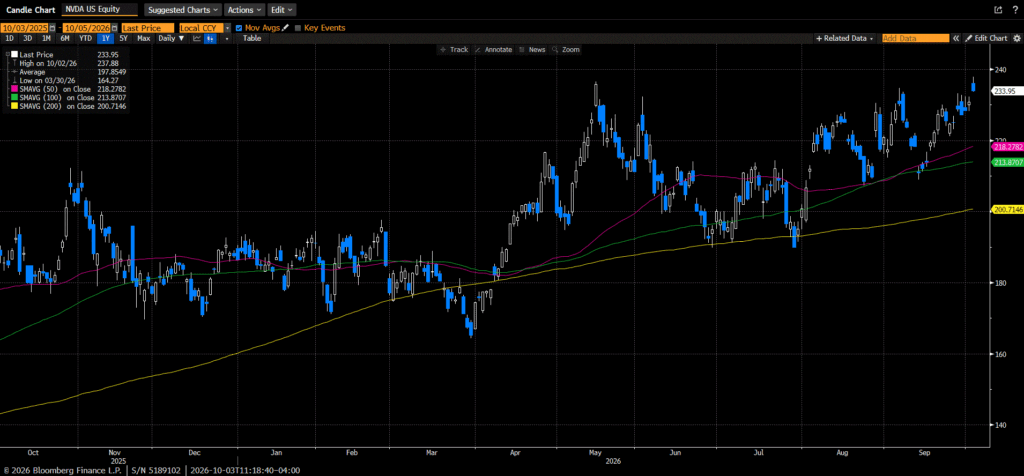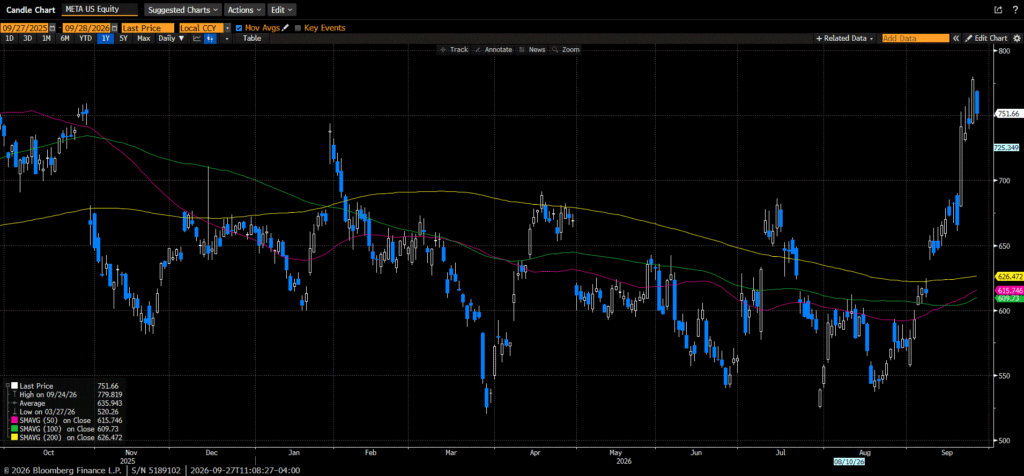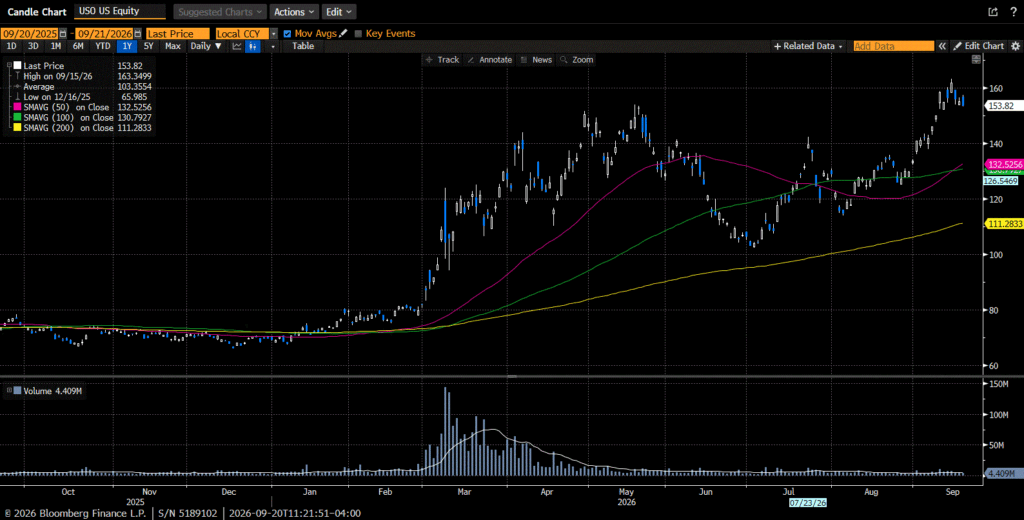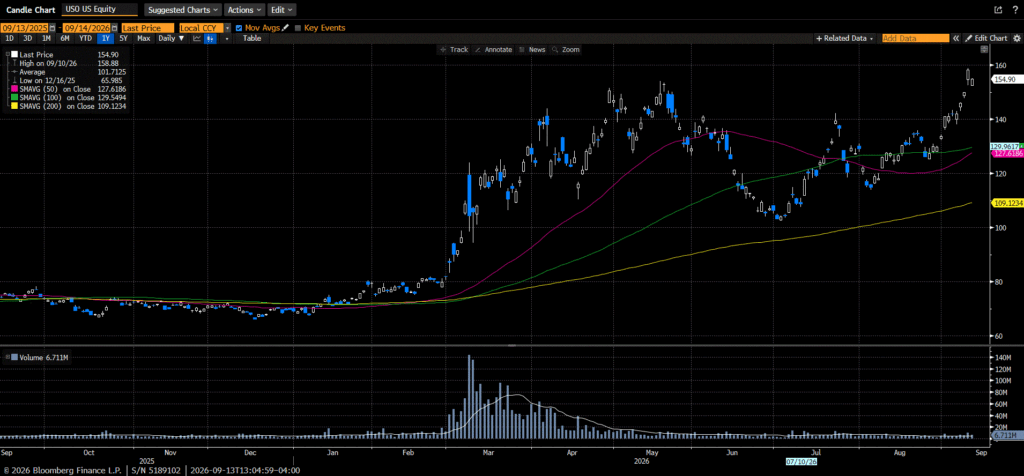
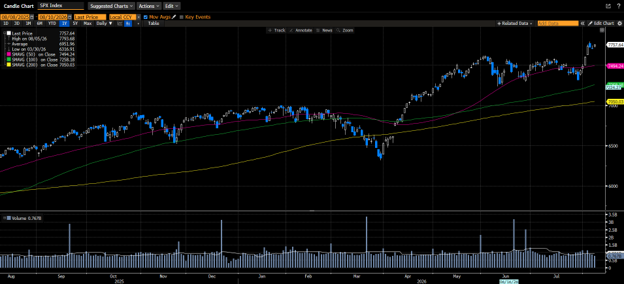
The S&P 500 forged a new all-time high as investors recalibrated interest-rate-hike expectations after an in-line print of the Consumer Price Index and a cooler-than-expected print of the Producer Price Index. The probability of a rate hike in September fell to 32% from 55% a week ago. Interestingly, the short end of the US curve advanced while longer-dated Treasuries declined over the week amid concerns about the widening US deficit. Treasury auctions this week were met with tepid demand and saw the 10-year and 30-year priced at yields not seen since 2007 and 2001, respectively. Oil prices rose as the US-Iran war continues while negotiations appear to be at an impasse. The US signaled it would continue its blockade of Iranian ports to inflict economic pressure while Iran and the Houthis continued to attack cargo ships in the Strait of Hormuz and the Red Sea. Second-quarter earnings continued to roll in for the most part, with better-than-expected results, albeit at a much slower pace. Sea Limited, Coreweave, and Nebius traded higher after reporting results, while Cerebras, Cisco Systems, and Coherent fell after reporting results. Mega Cap technology lagged this week as the Communication Services and Consumer Discretionary sectors declined. Energy, Utilities, Consumer Staples, and Healthcare posted nice gains on the week.

The S&P 500 gained 0.39%, the Dow fell by 0.53%, the NASDAQ increased by 0.16%, and the Russell 2000 advanced by 1.15%. The US yield curve steepened as the 2-year yield fell by 4 basis points to 4.17% and the 10-year yield rose by 4 basis points to 4.70%. Oil prices increased by $5.34, or 6.9%, to close the week at $82.40 a barrel. Gold prices rose by $37.60 to $4,436.90 per ounce. Silver prices were up 2.2%, closing at $65.11. Copper prices advanced by three cents to $6.61 per Lb. Bitcoin’s price fell by $1900 to $63,000. VIX, a measure of volatility, fell to 14.25, the lowest level this year. The dollar index fell by 0.1% to 99.67 despite the Japanese Yen’s weakness.

The economic calendar featured July’s inflation data. Headline CPI increased by 0.1% in line with expectations, while the Core reading that strips out food and energy increased by 0.2%, also in line with expectations. On a year-over-year basis, headline CPI increased by 3.4%, while the Core reading increased by 2.5%. Headline PPI was flat in July, less than the 0.1% increase expected. Core PPI increased by 0.2%, in line with the consensus estimate. Year-over-year, headline PPI came in at 4.7%, down from 5.5% in June, while the Core reading increased to 4.2% from 4.1% in June. July Retail Sales came in at -0.6% versus the consensus estimate of 0.2%. Initial Jobless Claims increased by 9k to 209k, while Continuing Claims declined by 12k to 1.777m. A preliminary look at August University of Michigan Consumer Sentiment fell to 51, as only 8% of the survey respondents think that their income growth will outpace inflation.

Investment advisory services offered through Foundations Investment Advisors, LLC (“FIA”), an SEC registered investment adviser. FIA’s Darren Leavitt authors this commentary which may include information and statistical data obtained from and/or prepared by third party sources that FIA deems reliable but in no way does FIA guarantee the accuracy or completeness. All such third party information and statistical data contained herein is subject to change without notice. Nothing herein constitutes legal, tax or investment advice or any recommendation that any security, portfolio of securities, or investment strategy is suitable for any specific person. Personal investment advice can only be rendered after the engagement of FIA for services, execution of required documentation, including receipt of required disclosures. All investments involve risk and past performance is no guarantee of future results. For registration information on FIA, please go to https://adviserinfo.sec.gov/ and search by our firm name or by our CRD #175083. Advisory services are only offered to clients or prospective clients where FIA and its representatives are properly licensed or exempted.