
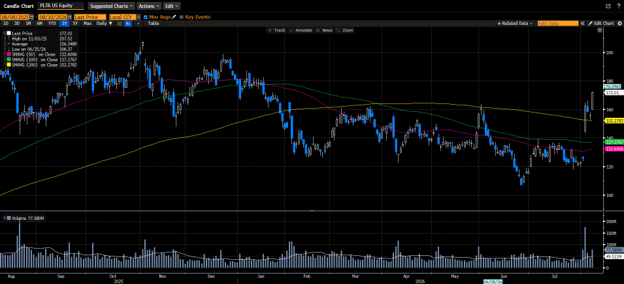
Giddy up! US equity markets ripped higher in the first week of August as 2nd quarter earnings continued to impress. According to FactSet, 88% of the S&P 500 have reported earnings, of which 86% have beaten Earnings Per Share estimates, while Earnings Per Share have grown by an impressive 50.4%. 76% of companies that have reported have beaten on revenues, with revenues growing by 15% in the 2nd quarter. Standout companies this week included: Palantir, Caterpillar, MP Materials, Cloudflare, SpaceX, AMD, and Twilio.
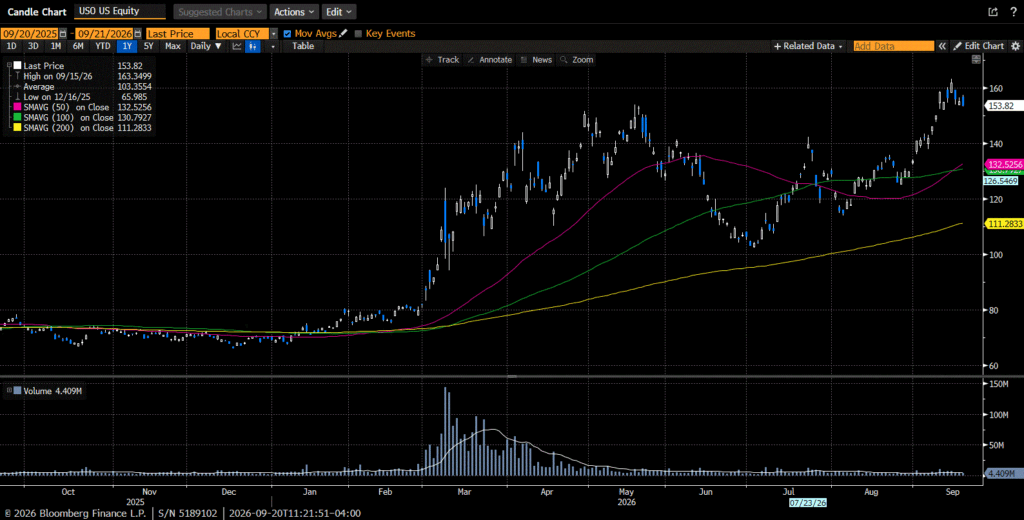
Tensions in the Middle East persisted as negotiations to partially open up the Strait of Hormuz between Iran and Oman continued. Oil prices fell for the third consecutive week as rhetoric suggested a deal was close. That deal has been elusive, to say the least, and concerns about the particulars remain. Is the US even engaged in negotiations, will the passage of the Strait require a toll, will all cargo ships be able to pass, and where does this leave Iran’s nuclear program? At the same time, tensions have only escalated between the Houthis and Saudi Arabia, with several Saudi cargo ships being attacked in the Red Sea, as the Saudi-backed Yemen government has also been engaged in fighting the Houthis.

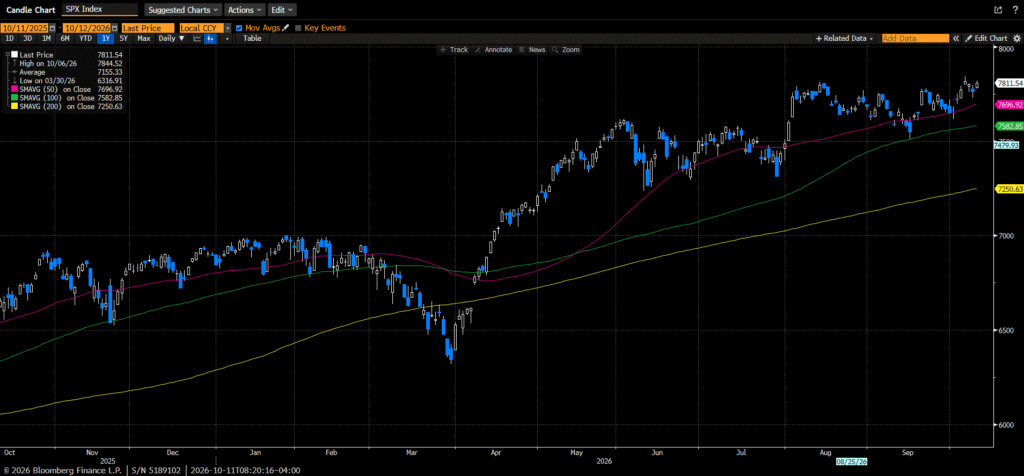
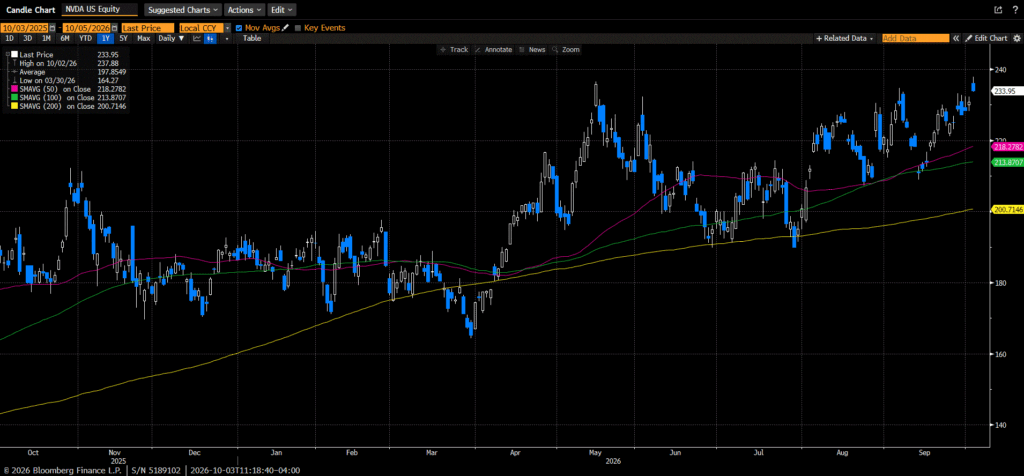
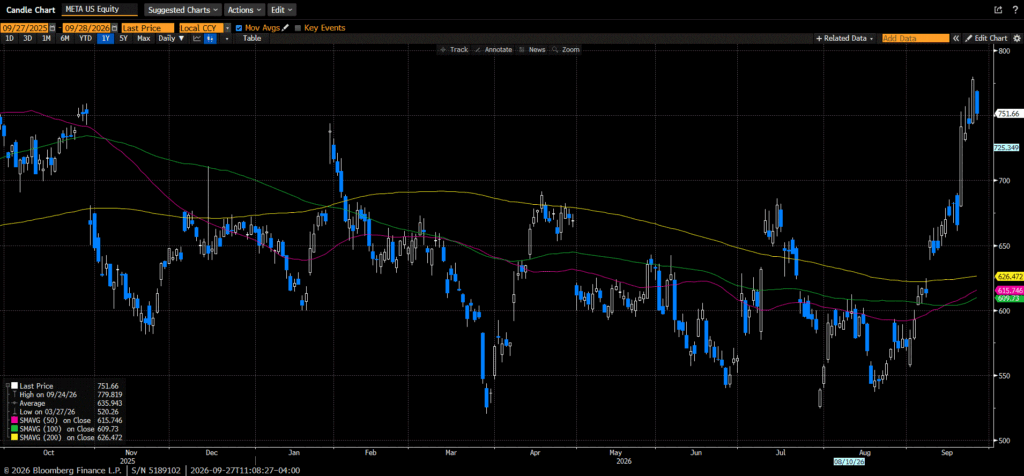
The S&P 500 gained 3.58%, the Dow rose by 2.96%, the NASDAQ advanced by 5.19%, and the Russell 2000 added 3.52%. The S&P 500 reached an all-time high this week and is now up 13.3% for the year. The Dow also set a new high and is up 12.4% for the year. Leadership by large technology companies was evident and carried over from the prior week. Semiconductor stocks and software companies posted strong returns. Rate-sensitive sectors also posted gains on the back of a weak BLS Employment Situation Report, which ratcheted down rate hike expectations for the September meeting. Yields also fell across the US Treasury curve on the weak employment data. The 2-year yield fell by nine basis points to 4.20%, while the 10-year yield declined by ten basis points to 4.65%. Oil prices fell by 8.88% on the week to $77.06 a barrel. Gold prices rose by 7.12%, to $4,399.30 per Oz, as a renewed bid into precious metals took hold. There were reports that China’s central bank has been buying gold for its Hong Kong coffers. Silver’s price increased by 10.10% to $63.68 an Oz. Copper prices came off record highs set earlier in the week to close up eleven cents to $6.58 per Lb. The Dollar index fell slightly to 99.58.

The economic calendar was full, with the weaker-than-anticipated payrolls number being the highlight for the week. Non-farm payrolls fell by 23k versus the consensus estimate of 86k. Private payrolls were also less than expected at 30k. Both data series saw the prior readings revised lower. The Unemployment Rate fell to 4.1% from 4.2%. Average Hourly earnings increased by 0.1%, less than the estimated 0.3%. The Average Workweek stayed at 34.3 hours. The weak print cast doubts over the likelihood of a September rate hike, cutting the probability of a hike from nearly 60% to 45%. Initial Claims increased by 1k to 199k, while Continuing Claims increased by 24k to 1801k. The ISM Manufacturing PMI expanded to 53.9 from 53.8, while ISM Non-Manufacturing increased to 54.1 from 51. Q2 productivity came in at 1.4%, above the estimated 0.5%, while Q2 Unit Labor Costs came in at 1.3% versus the estimated 1.5%. In the coming week, we will get a look at the Consumer Price Index and Producer Price Index for a read on inflation. We will also receive data related to retail sales and existing home sales.

Investment advisory services offered through Foundations Investment Advisors, LLC (“FIA”), an SEC registered investment adviser. FIA’s Darren Leavitt authors this commentary which may include information and statistical data obtained from and/or prepared by third party sources that FIA deems reliable but in no way does FIA guarantee the accuracy or completeness. All such third party information and statistical data contained herein is subject to change without notice. Nothing herein constitutes legal, tax or investment advice or any recommendation that any security, portfolio of securities, or investment strategy is suitable for any specific person. Personal investment advice can only be rendered after the engagement of FIA for services, execution of required documentation, including receipt of required disclosures. All investments involve risk and past performance is no guarantee of future results. For registration information on FIA, please go to https://adviserinfo.sec.gov/ and search by our firm name or by our CRD #175083. Advisory services are only offered to clients or prospective clients where FIA and its representatives are properly licensed or exempted.