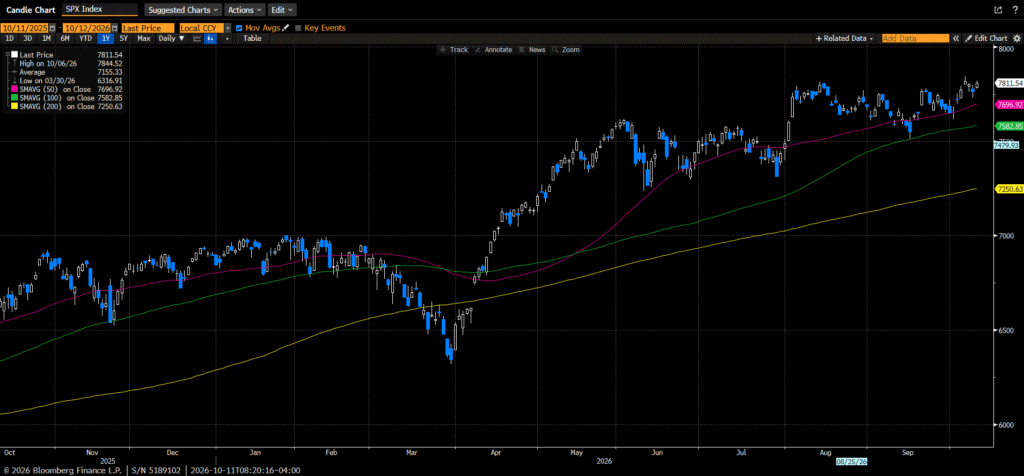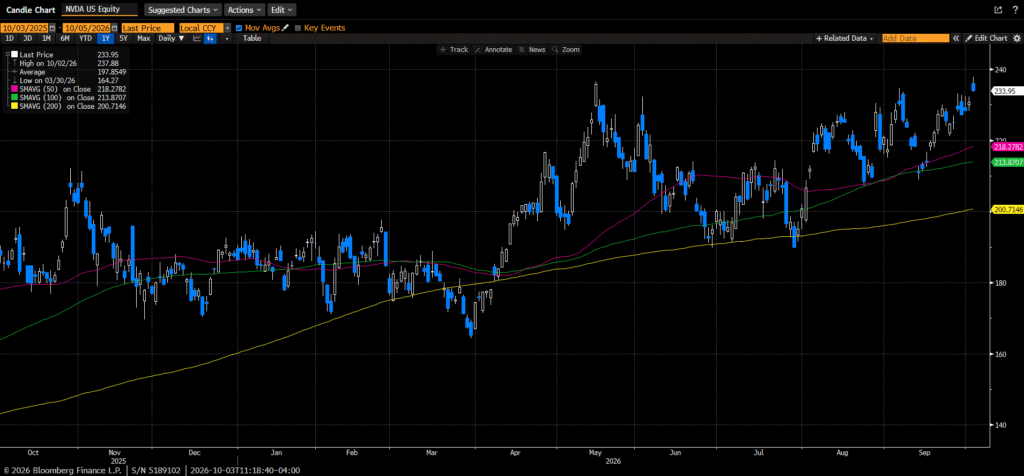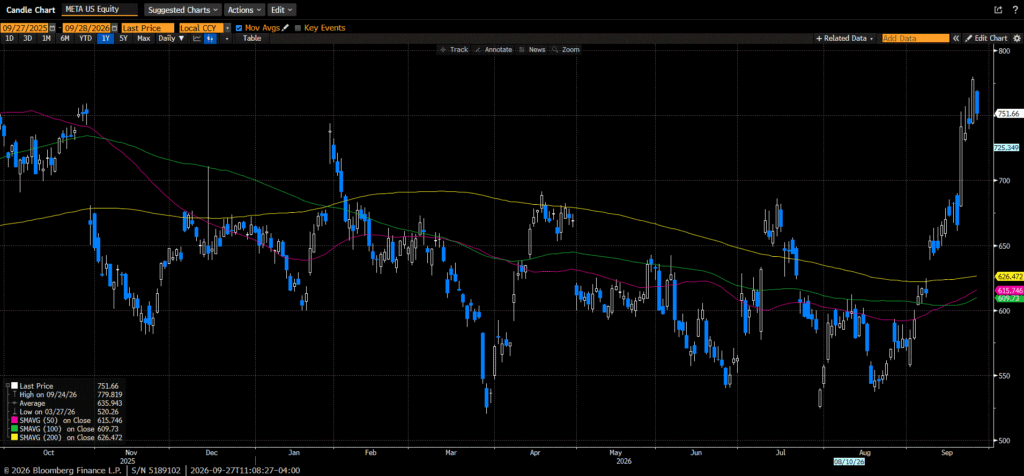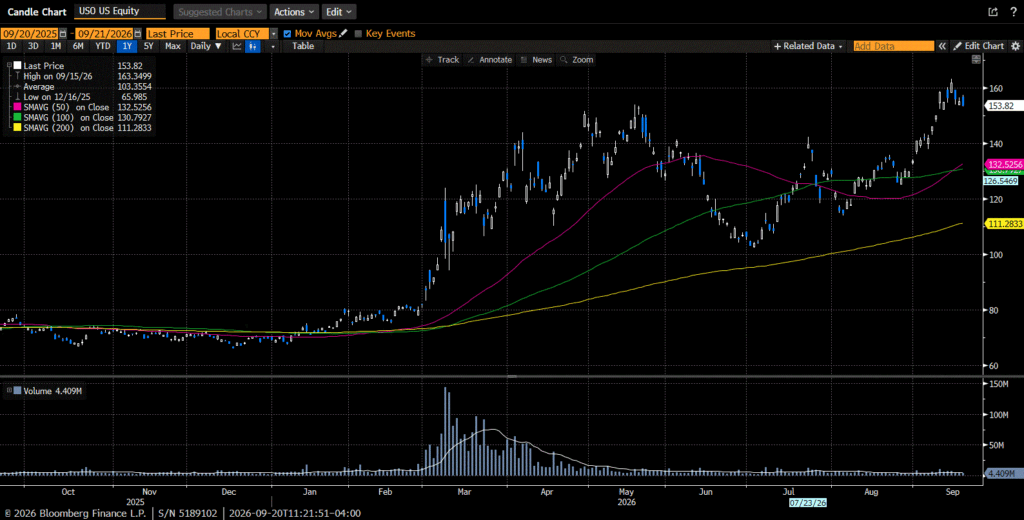
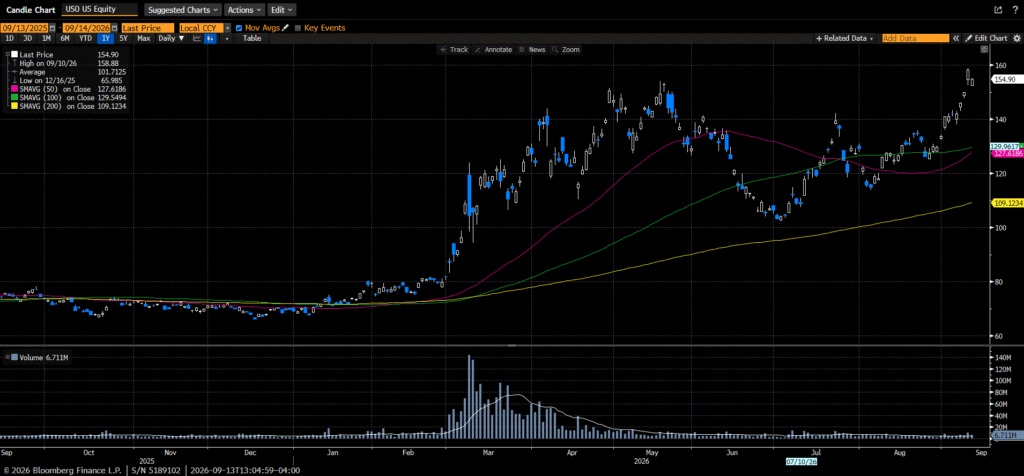
US equity markets fell in the holiday-shortened week as oil prices surpassed $100 a barrel, raising inflation concerns and pushing interest rates higher. Additionally, elevated inflation data announced during the week increased the likelihood that the Federal Reserve would raise its policy rate by 25 basis points. Several Gulf nations announced Friday that they would meet with Iranian officials this weekend to ease tensions, and on Sunday Tehran announced it would decide whether to open part of the Strait of Hormuz, but details of the opening were limited. This followed Saudi Arabia’s announcement that it had shut down the oil pipeline used to circumvent the Strait.

The S&P 500 fell 0.78%, the Dow gave back 1.56%, the NASDAQ declined 0.64%, and the Russell 2000 decreased by 2.39%. US Treasuries suffered losses across the curve, with the front end of the curve getting hit hardest. The 2-year yield increased by twenty-six basis points to 4.64%, while the 10-year yield increased by twenty basis points to 4.98%. With the 10-year yield approaching 5%, concerns about equity markets are rising. The equity volatility index, VIX, increased by 9% this week. Oil prices increased by 9.37% this week, with WTI prices increasing by $8.58 to $100.08 a barrel. Notably, the energy sector was one of the only sectors that traded higher this week. Gold prices fell by 1.5% to $4,409.10 per ounce. Silver prices declined by 2.33% to 65.19 per ounce. Copper prices fell nearly 2% to $6.55 per Lb. Bitcoin’s price fell by 2.88% or $2,300 to $77,500. The US Dollar index was unchanged for the week at 99.14.

Economic data highlighted sticky inflation in the Producer Price Index and the Consumer Price Index. Headline PPI increased by 0.4%, in line with expectations, and rose to 5.4% from 4.8% in July on a year-on-year basis. Core PPI, which excludes food and energy, increased by 0.2%, lower than the 0.3% consensus estimate, but rose to 4.6% from 4.3% in July on a year-on-year basis. Headline CPI for August rose 0.4%, in line with street expectations, and was up 3.4% year-on-year, unchanged from July. Core CPI increased by 0.3% in August, higher than the 0.2% consensus estimate, but ticked down to 2.4% from 2.5% in July on a year-over-year basis. NFIB Small Business Optimism fell to 98.7 from the previous reading of 99.8. A preliminary reading of the University of Michigan’s Consumer Sentiment Index fell to 47.8 from the previous reading of 51.7 on worries over inflation. Existing Home Sales came in at 3.98m, down from the prior reading of 4.06m. Initial Jobless Claims fell by 1k to 206k, while Continuing Claims fell by 1k to 1774k.

Investment advisory services offered through Foundations Investment Advisors, LLC (“FIA”), an SEC registered investment adviser. FIA’s Darren Leavitt authors this commentary which may include information and statistical data obtained from and/or prepared by third party sources that FIA deems reliable but in no way does FIA guarantee the accuracy or completeness. All such third party information and statistical data contained herein is subject to change without notice. Nothing herein constitutes legal, tax or investment advice or any recommendation that any security, portfolio of securities, or investment strategy is suitable for any specific person. Personal investment advice can only be rendered after the engagement of FIA for services, execution of required documentation, including receipt of required disclosures. All investments involve risk and past performance is no guarantee of future results. For registration information on FIA, please go to https://adviserinfo.sec.gov/ and search by our firm name or by our CRD #175083. Advisory services are only offered to clients or prospective clients where FIA and its representatives are properly licensed or exempted.