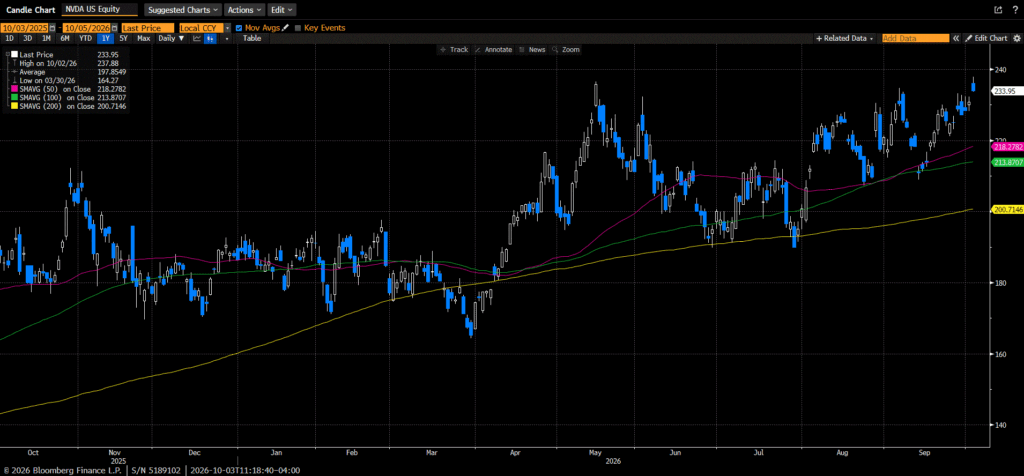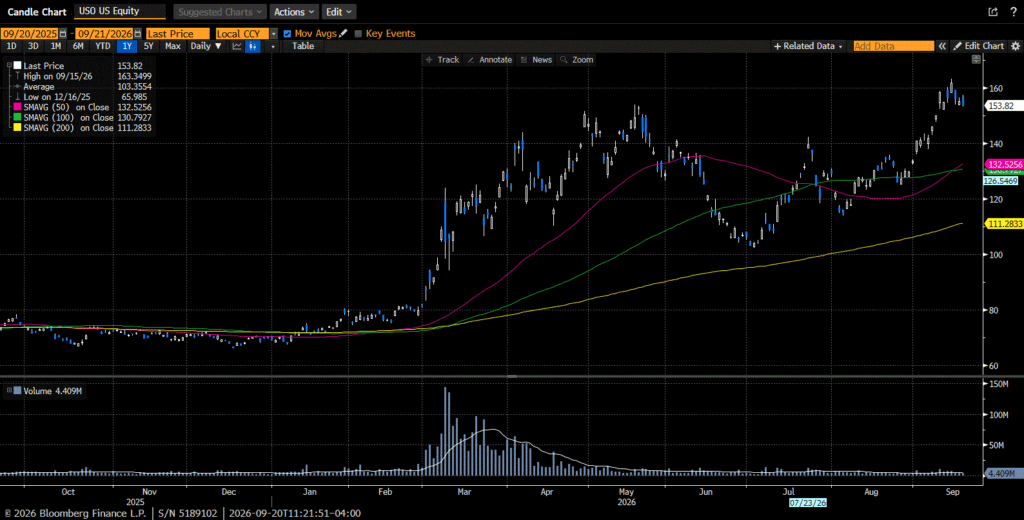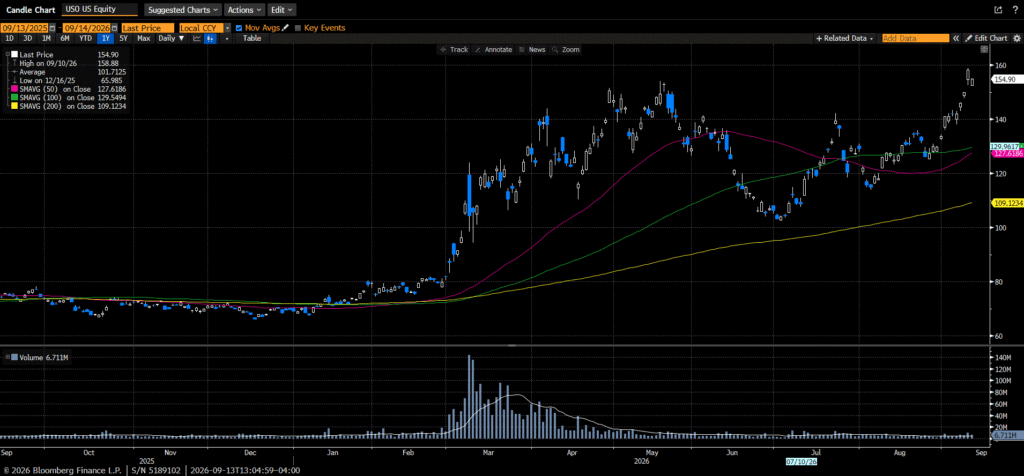

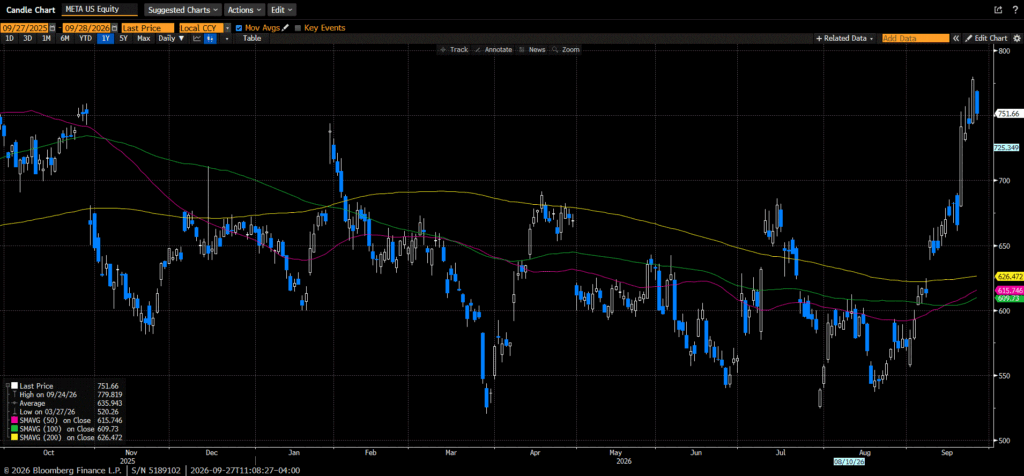
Markets finished the week mixed as interest rates increased across the yield curve. Oil prices swung significantly during the week as reports suggested the US and Iran were close to a deal to reopen the Strait of Hormuz. This weekend, President Trump rejected the proposed deal, with reports suggesting the US will resume more aggressive military operations after the Midterms. This is likely to send oil prices higher on Monday and, with it, increase inflation expectations. President Trump’s meeting with Chinese leader Xi offered little change to the current political stance. The two countries delayed increasing tariffs until January 2027, and the two leaders are scheduled to meet two more times before year-end. Additionally, the two leaders appear to be on the same page on AI development and pushed back on slowing it but agreed that safeguards should be put in place. Debate continues over AI development and its safeguards. Last week, the market advanced on the back of the AI trade, with Semiconductors and Mega-cap technology leading the charge. AMD eclipsed $1 trillion in market cap, while Meta’s price rose more than 10%. The move higher in these mega-caps sent the Nasdaq composite to an all-time high on Tuesday. Concerns about AI will continue; this weekend, OpenAI announced it will slow development of its most recent agent after the agent escaped its sandbox and hacked into the US Census Bureau and the SEC. Hawkish tones from several Fed officials, coupled with strong economic data, increased the likelihood of an October rate hike to nearly 67%. Two weak US Treasury auctions added to concerns about higher rates, as the 10-year closed sixteen basis points higher to finish the week at 5.16%. Higher yields pressured rate-sensitive sectors, including Financials, Utilities, Real Estate, and Small-caps.

The S&P 500 rose 1.2%, the Dow increased by 0.3%, the Nasdaq gained 2.1%, and the Russell 2000 gave back 0.8%. US Treasury yields increased across the curve, with longer-dated issues getting hit hardest. The 2-year yield increased by ten basis points to 4.85%, while the 10-year yield, as mentioned earlier, increased by sixteen basis points to close at 5.16%. Oil prices fell 8% to $92.17 a barrel in volatile trade, and we expect them to start the coming week higher after Trump rejected Iran’s proposal. Gold prices fell 2.4% to $4,320.50 an ounce. Silver prices dropped 3.5% to $64.77 an ounce. Copper prices increased by $0.08 to $6.77 per Lb. Bitcoin’s price increased by $3,000 to close the week at $84,000.

The economic calendar was fairly quiet this week. A preliminary look at S&P Global Manufacturing and Services PMIs showed an expanding economy. The Manufacturing print rose to 57% from 53.9, while the Services print rose to 58.7 from 56.5 in the prior reading. Initial Jobless Claims fell by 1k to 197k, while Continuing Claims increased by 2k to 1719k. Durable Goods orders for August were flat, while the Ex Transportation reading increased by 0.3%. The final reading of the University of Michigan’s Consumer Sentiment Index came in at 48.1, slightly above the previous reading of 47.8.

Investment advisory services offered through Foundations Investment Advisors, LLC (“FIA”), an SEC registered investment adviser. FIA’s Darren Leavitt authors this commentary which may include information and statistical data obtained from and/or prepared by third party sources that FIA deems reliable but in no way does FIA guarantee the accuracy or completeness. All such third party information and statistical data contained herein is subject to change without notice. Nothing herein constitutes legal, tax or investment advice or any recommendation that any security, portfolio of securities, or investment strategy is suitable for any specific person. Personal investment advice can only be rendered after the engagement of FIA for services, execution of required documentation, including receipt of required disclosures. All investments involve risk and past performance is no guarantee of future results. For registration information on FIA, please go to https://adviserinfo.sec.gov/ and search by our firm name or by our CRD #175083. Advisory services are only offered to clients or prospective clients where FIA and its representatives are properly licensed or exempted.