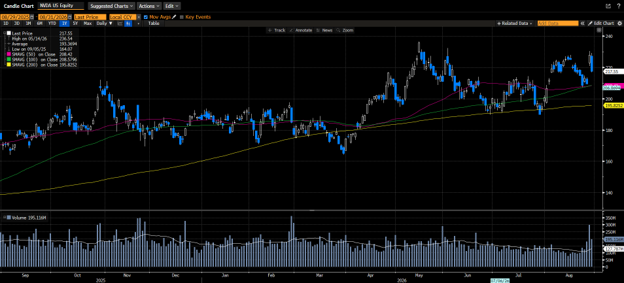




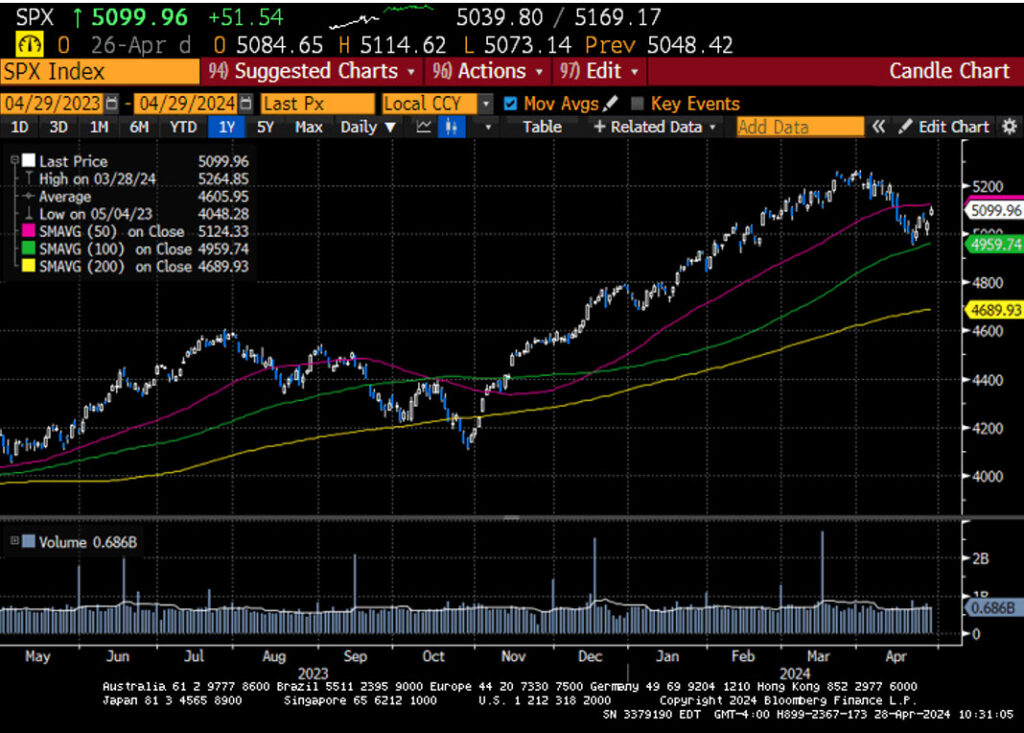
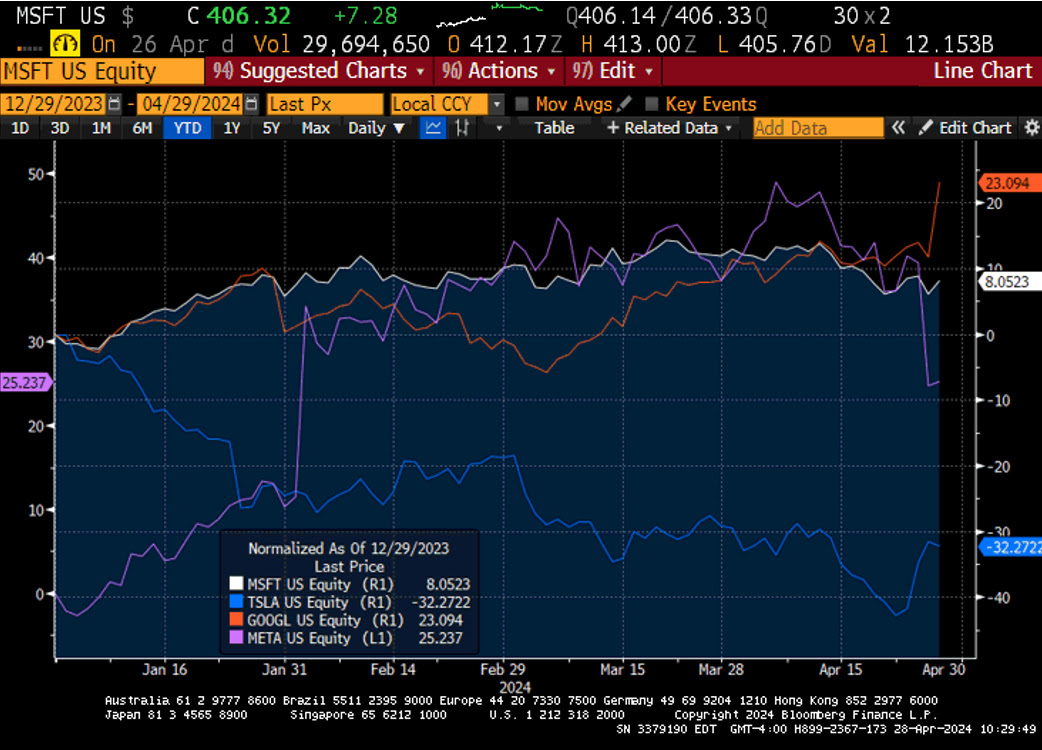
US equity markets bounced back last week, with nearly 40% of the S&P 500 companies reporting first-quarter results. The rally was propelled by Microsoft and Google, whose better-than-expected earnings not only boosted investor confidence but also bolstered the narrative on artificial intelligence. This positive AI narrative continues to be a tailwind for the technology sector. The semiconductor sector rallied nearly 10% on the idea that the largest technology companies will continue to spend billions on chips and AI infrastructure. While validating the sell-off we saw in the first quarter, Tesla’s earnings results also provided hope with the announcement of a low-cost EV to be introduced later this year and the planned implementation of its Robotaxi initiative. Meta’s results led to a significant sell-off due to what some deemed tepid revenue guidance and increased capital expenditures for AI and the Metaverse. Apple and Amazon will report their Q1 results this week, likely echoing AI spending, but both companies have faced their challenges in the first quarter, namely sluggish iPhone sales and what appears to be a loss in market share for AWS.
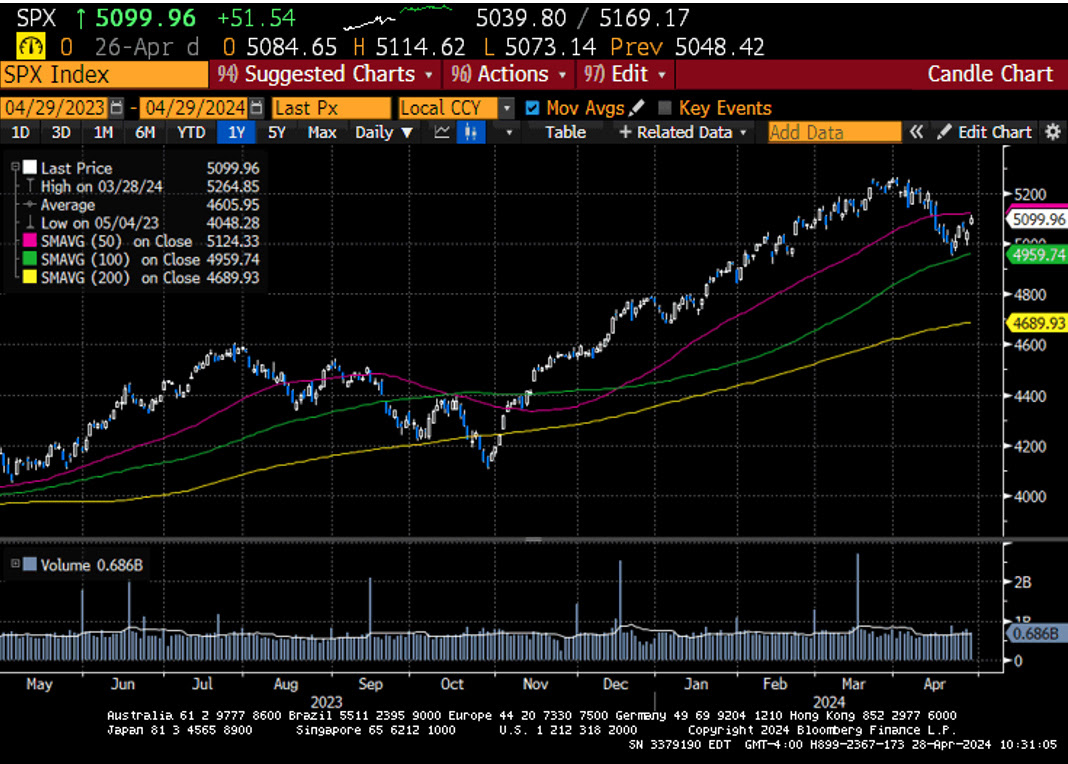
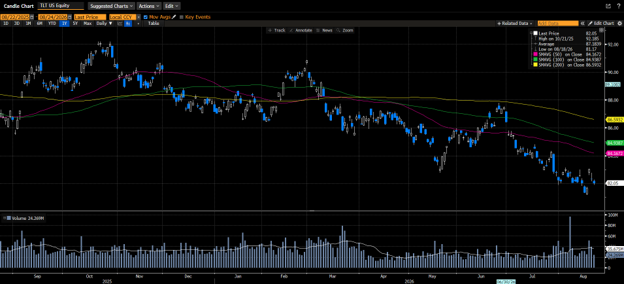
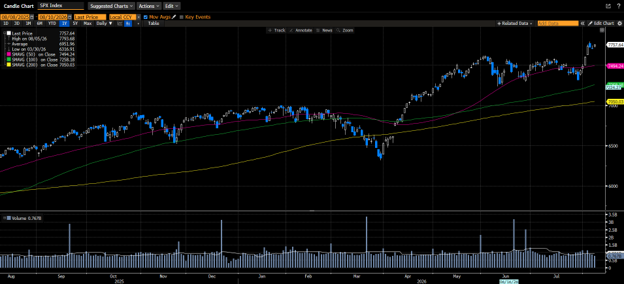
The S&P 500 gained 2.7%, the Dow increased by 0.7%, the NASDAQ added 4.2%, and the Russell 2000 rose by 2.8%. US Treasuries sold off across the curve and posted the highest yields this year. However, this week’s sell-off in Treasuries was relatively tame, given what we have seen over the last few weeks. The 2-year yield increased by two basis points to close at 5%, while the 10-year yield increased by five basis points to 4.67%. The 2-10 spread continues to show an inversion, but it compressed to -33 basis points. Notably, the three Treasury auctions this week were met with solid demand. West Texas Intermediate crude prices increased by $1.63 or 2% to close at $83.72 a barrel. Gold prices fell by 2.2% or $66.90 to $2347.90 an Oz. Copper prices hit a three-year high, closing up 1.7% to $4.57 per Lb. BHP offered to buy Anglo American this week, and if successful, the combined companies would be the largest copper mining company in the world. The US Dollar index fell by 0.1% to 105.97; however, the Dollar inked its best level to the Japanese Yen in three decades. The Bank of Japan left its policy rate unchanged and signaled little to discourage the Yen’s weakness. That said, I expect the BOJ to intervene in the next few days to stem the selling and the Yen from hitting 160.
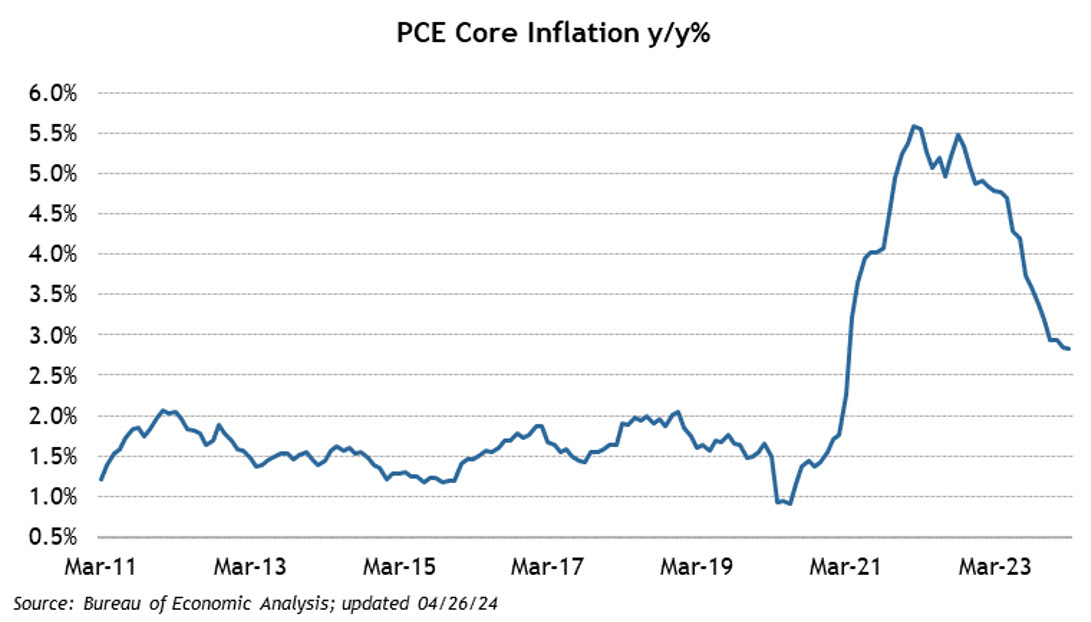
The economic data reported this week presented a mixed picture. The first look at Q1 GDP showed growth of 1.6%, significantly lower than the previous rate of 3.4% and the consensus estimate of 2.4%. However, the GDP Deflator increased to 3.1% from 1.6%, surpassing the expected 2.9%. This combination of slower growth and higher prices raised concerns about stagflation. On a positive note, the labor market remained resilient, with Initial Claims falling by 5k to 207k and Continuing Claims dropping by 15k to 1.781m. In the upcoming week, we will get a look at the Employment Situation Report, which is expected to show the creation of 250k non-farm payrolls and an unemployment rate unchanged at 3.8%. Personal Income increased by 0.5%, as expected, while Personal Spending Increased by 0.8%, above the consensus estimate of 0.6%. Again, a healthy labor market allows the consumer to continue to spend. Finally, the Fed’s preferred measure of inflation, the PCE, came in line with expectations on both the headline and core at 0.3% on a month-over-month basis. On a year-over-year basis, the headline number increased by 2.7%, up from 2.5% in February, and the Core reading increased by 2.8%, which was unchanged from the February print.
Investment advisory services offered through Foundations Investment Advisors, LLC (“FIA”), an SEC registered investment adviser. FIA’s Darren Leavitt authors this commentary which may include information and statistical data obtained from and/or prepared by third party sources that FIA deems reliable but in no way does FIA guarantee the accuracy or completeness. All such third party information and statistical data contained herein is subject to change without notice. Nothing herein constitutes legal, tax or investment advice or any recommendation that any security, portfolio of securities, or investment strategy is suitable for any specific person. Personal investment advice can only be rendered after the engagement of FIA for services, execution of required documentation, including receipt of required disclosures. All investments involve risk and past performance is no guarantee of future results. For registration information on FIA, please go to https://adviserinfo.sec.gov/ and search by our firm name or by our CRD #175083. Advisory services are only offered to clients or prospective clients where FIA and its representatives are properly licensed or exempted.