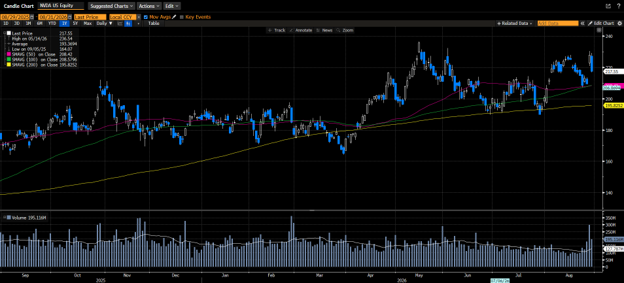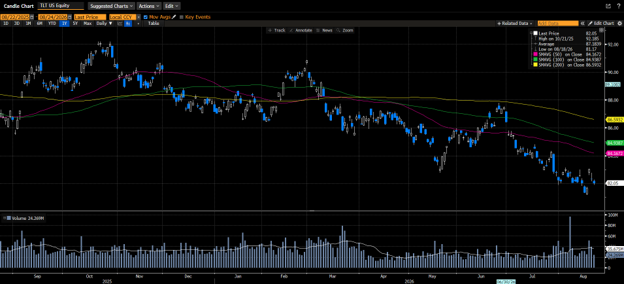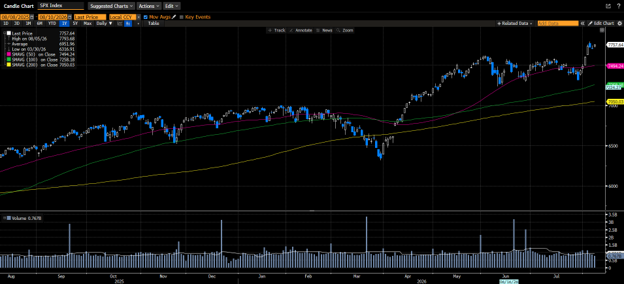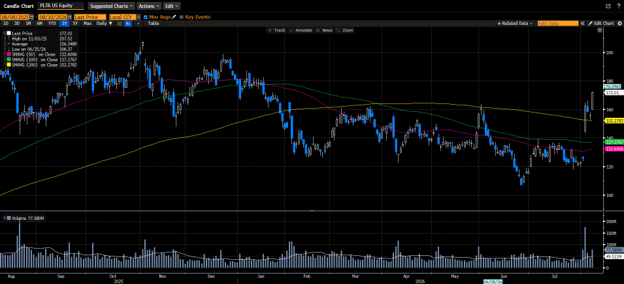




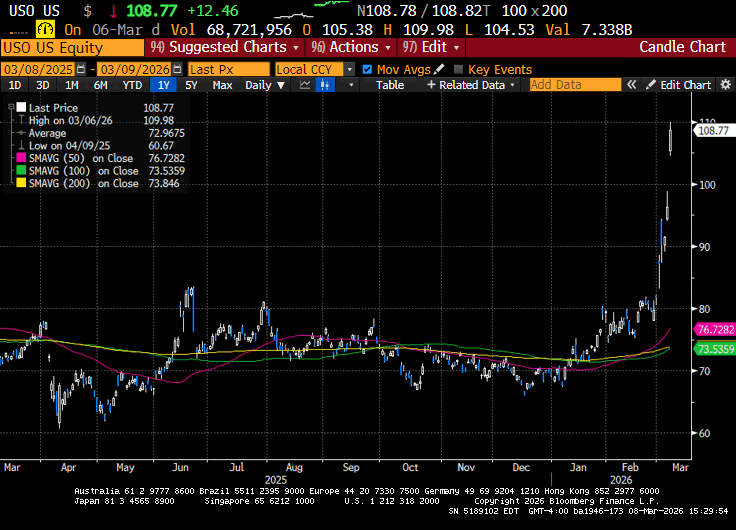
Investors endured a difficult week as the conflict between the US, Israel, and Iran continued. Iran’s efforts to target US military bases in the region broaden the conflict across the Middle East. Energy shipments through the Strait of Hormuz have come to a standstill, and some regional energy producers have had to curtail, if not shut down, production due to a lack of supply capabilities. Oil and Natural Gas prices surged throughout the week, stoking inflation fears worldwide. Europe and Asia are much more dependent on imported energy, with Asia feeling the brunt of this week’s market sell-off. The duration of this conflict and the closure of the Strait of Hormuz will likely dictate how the market will react in the coming days and weeks. The Trump administration has suggested it might provide tankers safe passage through the Strait of Hormuz, and China has been negotiating with Iran to allow shipments to continue without threat. President Trump has indicated he wants an Unconditional Surrender, as Iran has announced there is a new Supreme Leader, although the leader has not been named at this time. The recalibration of monetary policy considerations was front and center last week, as inflation fears increased, while labor market data came in much weaker than expected. A potential delay or cancellation of rate cut expectations that were considered a tailwind for US financial markets coming into the year may dampen market return expectations.

The S&P 500 lost 2%, the Dow gave back 3%, the NASDAQ shed 1.2%, and the Russell 2000 plunged 4.1%. Rotation in the market was intriguing, as traditional safe-haven bids were absent. U.S. Treasuries sold off across the curve on inflation concerns. The 2-year yield increased by eighteen basis points to 3.56%, while the 10-year yield increased by seventeen basis points to 4.13% after trading below 4% in the prior week. West Texas Intermediate crude prices increased by $23.80 or 35% to close the week at $90.86 a barrel. Gold prices fell by 1.6% to $5,159.30 per ounce, while silver prices decreased by 9.6% to $84.31 per ounce. Copper prices declined by 4.1% or $0.25 to $5.81 per Lb. Much of the weakness in precious metals was attributed to a strong US Dollar, which gained 1.4% on the week. Bitcoin’s price was all over the place this week, surging to over $73,000 before closing the week around $67,000.

The economic calendar provided investors with a little bit of everything. ADP Private Payrolls were better than expected at 63k, while the Employment Situation Report for February was decisively weak. Non-Farm Payrolls declined by 92k versus an estimated increase of 60k. Private Payrolls declined by 86k versus the consensus estimate of 78k. The Unemployment rate increased to 4.4% from 4.3%, and Average Hourly Earnings ticked up by 0.4%, up from an estimated 0.3%. The Average Work Week came in at 34.3 hours, in line with estimates. Initial Claims for the week were unchanged from the prior week, while Continuing Claims increased by 63k. ISM Manufacturing remained in expansion, although ticked slightly lower from the prior reading at 52.4%. ISM Non-Manufacturing expanded further, coming in at 56.1%, up from the prior reading of 53.8%. January Retail sales missed the mark, with the headline number declining by 0.2% and the Ex-Autos figure coming in flat. Some of the decline in retail sales was attributed to the extreme winter weather in January, keeping consumers out of shops. In the coming week, we will receive more inflation data with the Consumer Price Index and the Fed’s preferred measure of inflation, the PCE. We will also get a deluge of data on the housing market and a second look at Q4 GDP.

Investment advisory services offered through Foundations Investment Advisors, LLC (“FIA”), an SEC registered investment adviser. FIA’s Darren Leavitt authors this commentary which may include information and statistical data obtained from and/or prepared by third party sources that FIA deems reliable but in no way does FIA guarantee the accuracy or completeness. All such third party information and statistical data contained herein is subject to change without notice. Nothing herein constitutes legal, tax or investment advice or any recommendation that any security, portfolio of securities, or investment strategy is suitable for any specific person. Personal investment advice can only be rendered after the engagement of FIA for services, execution of required documentation, including receipt of required disclosures. All investments involve risk and past performance is no guarantee of future results. For registration information on FIA, please go to https://adviserinfo.sec.gov/ and search by our firm name or by our CRD #175083. Advisory services are only offered to clients or prospective clients where FIA and its representatives are properly licensed or exempted.