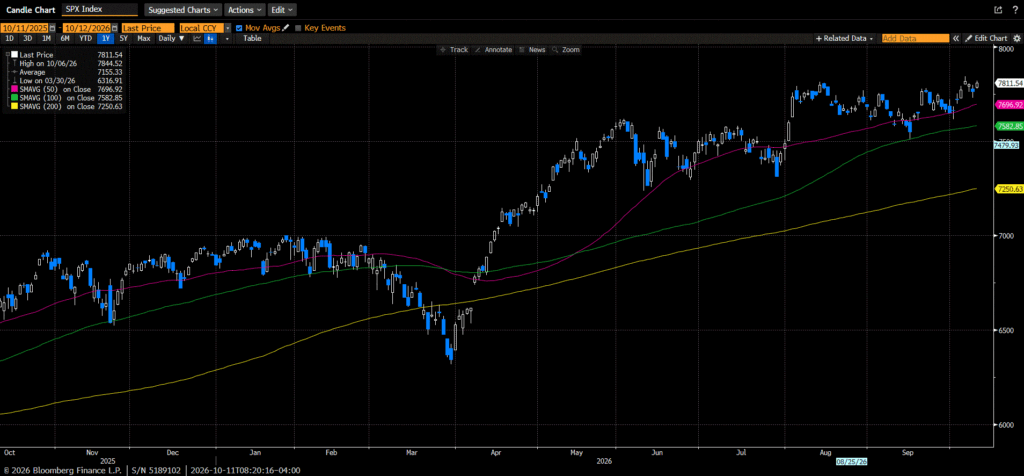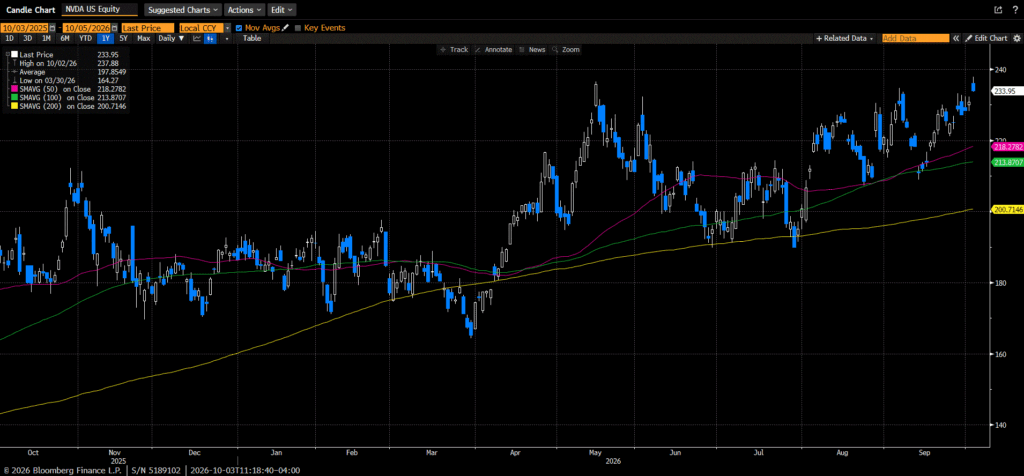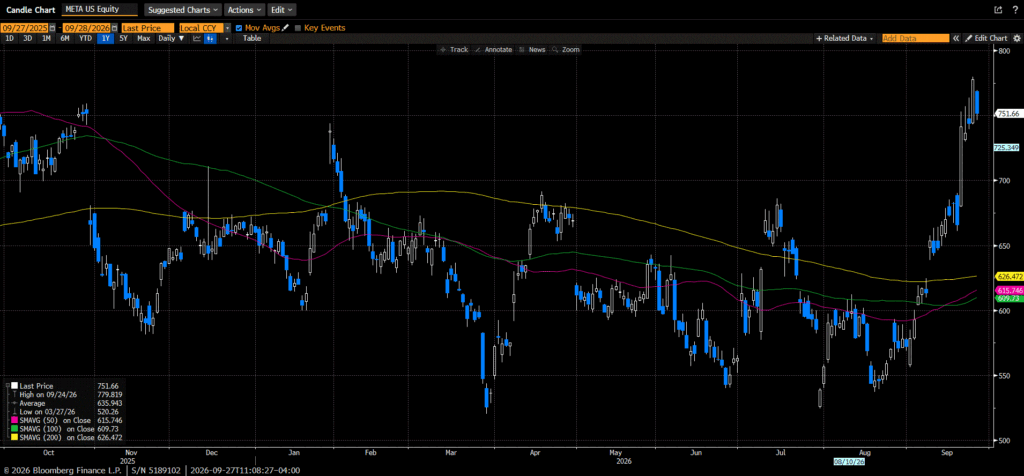

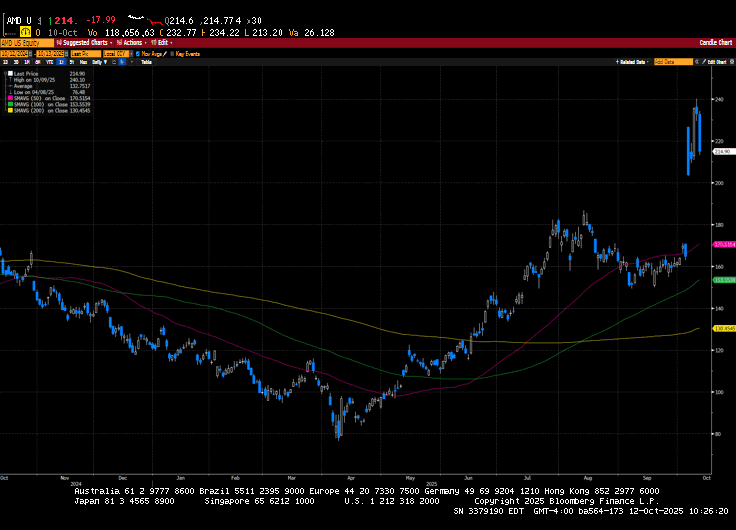
Well, the market finally had a significant pullback, but not before the S&P 500 and NASDAQ were able to set another all-time high. The week began with a deal between OpenAI and AMD, sending AMD shares nearly 24% higher. The deal catalyzed the technology sector while also promoting market leadership in the mega caps. OpenAI’s developer conference featured partnerships with Figma and Salesforce.com, which pushed their shares higher. Tesla’s shares traded higher at the beginning of the week, but the enthusiasm around a new, lower-cost version of the Model Y faded after it was introduced. Delta Airline’s quarterly results were better than expected, and the commentary from its CEO was encouraging on both consumer and business travel. Costco’s shares also traded higher on better-than-expected sales comparisons over the prior month. Oracle shares sold off following a news article suggesting the company would struggle to rent its NVidia GPUs.
Macro news was quiet for most of the week as the US Government shutdown continued. However, an announcement by the Chinese Ministry of Commerce that it would further tighten the export of rare earth metals for high-tech and military applications set up President Trump to retaliate. On Friday, President Trump announced that he would impose significant additional tariffs on China and said it was unlikely that he would sit down with Chinese leader Xi at the Asia-Pacific Economic Cooperation Forum in South Korea at the end of the month. The news sent the entire market lower, marking the first significant sell-off in months. This weekend, the Chinese trade delegation appeared to offer an olive branch to the US by welcoming more negotiations.

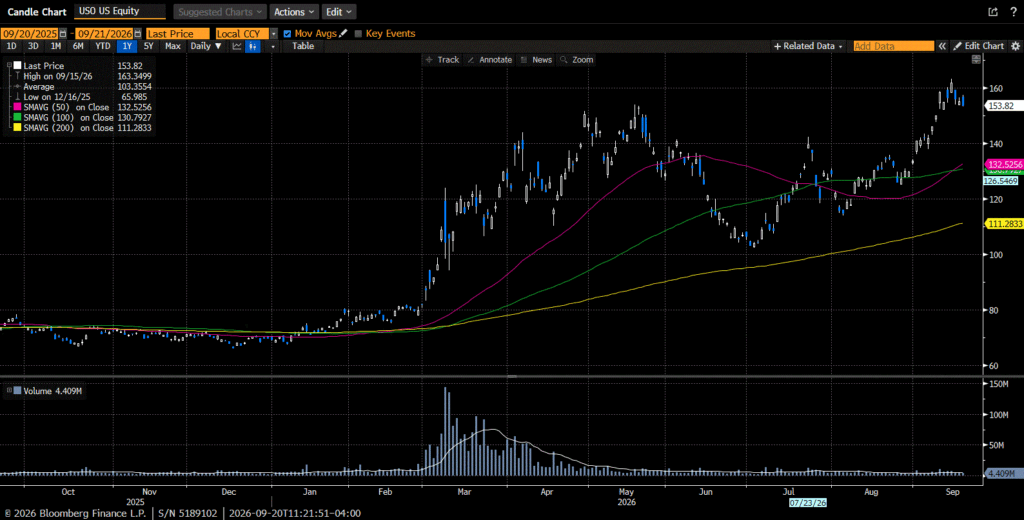
The S&P 500 lost 2.4%, the Dow gave back 2.7%, the NASDAQ fell 2.5%, and the Russell 2000 shed 3.3%. US Treasuries gained across the curve as yields fell to levels not seen since early April. The 2-year note yield fell by five basis points to 3.52%, while the 10-year yield fell by seven basis points to 4.05%. Oil prices tumbled 3.1% to $58.94 a barrel as OPEC+ confirmed it would increase its production in November. Gold prices eclipsed the $4000 mark before trading back below that area. Gold prices increased by $90.80 to close the week at $3999.90 per ounce. Copper prices fell by $0.22 and closed at $4.89 per Lb. Bitcoin’s price decreased by 9.18% or $11,350 to close the week at $111,850. The US Dollar index increased by 1.22 to close at 98.95.

The economic calendar remained relatively quiet, given the Federal Government shutdown. The Fed’s Open Market Committee minutes were released and reiterated the idea that most Governors believe it to be appropriate to ease policy further before year-end, with downside risk to the labor market. A preliminary look at October Consumer Sentiment from the University of Michigan saw a slight tick lower to 55 from the prior reading of 55.1.

Investment advisory services offered through Foundations Investment Advisors, LLC (“FIA”), an SEC registered investment adviser. FIA’s Darren Leavitt authors this commentary which may include information and statistical data obtained from and/or prepared by third party sources that FIA deems reliable but in no way does FIA guarantee the accuracy or completeness. All such third party information and statistical data contained herein is subject to change without notice. Nothing herein constitutes legal, tax or investment advice or any recommendation that any security, portfolio of securities, or investment strategy is suitable for any specific person. Personal investment advice can only be rendered after the engagement of FIA for services, execution of required documentation, including receipt of required disclosures. All investments involve risk and past performance is no guarantee of future results. For registration information on FIA, please go to https://adviserinfo.sec.gov/ and search by our firm name or by our CRD #175083. Advisory services are only offered to clients or prospective clients where FIA and its representatives are properly licensed or exempted.