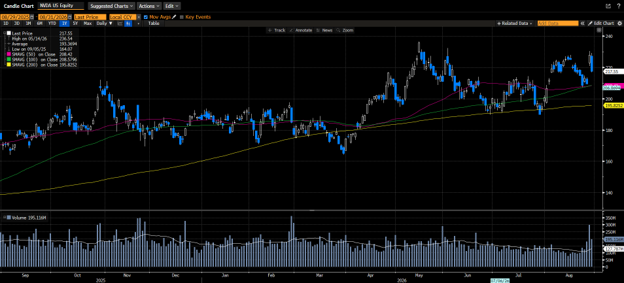




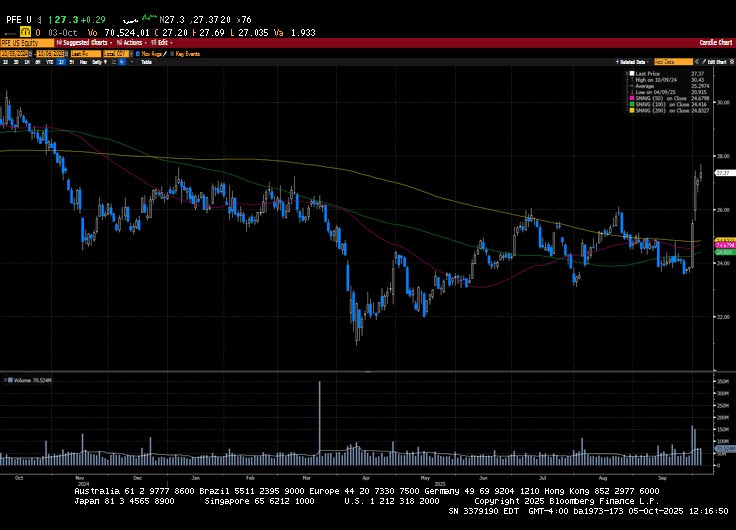
Investors sent US markets to another set of all-time highs despite concerns about an extended government shutdown. The U.S. government shutdown was largely dismissed by markets last week, which came as a surprise given that several key economic data sets (Initial Claims, Continuing Claims, and the Employment Situation Report) were delayed due to the shutdown. The private party economic data, which was released, increased the likelihood of rate cuts in the October and December meetings. Fed rhetoric throughout the week was mixed but generally left the door open for an October cut. The Healthcare sector led the markets higher last week after Pfizer agreed to lower some drug prices and sell them through a government-run direct-to-consumer program. Additionally, the drug maker announced that it would reduce drug prices for Medicaid and invest $70 billion in research and development in the US. The deal between the company and the Trump administration will give Pfizer a 3-year reprieve from tariffs. The healthcare sector was up 6.8% for the week. In other corporate news, NVidia traded to new all-time highs, helping to boost the Semiconductor sector. Tesla’s Q3 deliveries were solid, but investors sold the news, citing concerns that much of the demand was pulled forward ahead of the expiration of a $7,500 EV credit. Nike shares traded up nearly6.5% on the back of their quarterly results. The energy sector was a laggard this week amid speculation that OPEC+ would increase production in November. OPEC+ did, in fact, announce an increase on Sunday that will raise production by 137,000 barrels per day. OPEC+ has increased production by 2.7 million barrels per day so far this year.

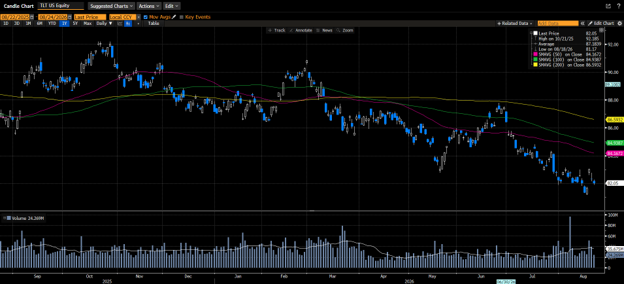
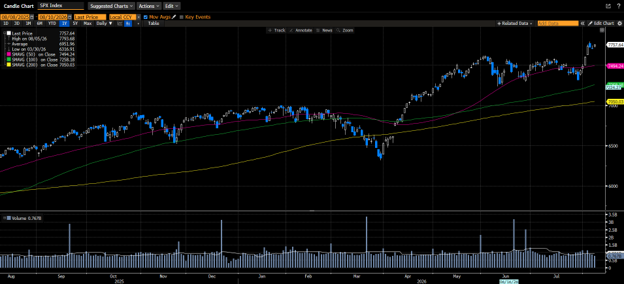
The S&P 500 closed above 6700, gaining 1.1% for the week. The Dow was higher by 1.1%, the NASDAQ increased by 1.3%, and the Russell 2000 added 1.7%. US Treasuries gained across the curve. The 2-year yield decreased by eight basis points to 3.57%, while the 10-year yield declined by seven basis points to 4.12%. Fed funds futures now assign a 96.3% probability of a 25-basis-point cut in October and an 86.3% of another 25-basis-point cut in December. Oil prices tumbled 7.3% to close the week at $60.85 a barrel. Gold prices rose by $100.10 to close at a new record high of $3,909.10 per ounce. Copper price increased by 6.9% to close the week at $5.11 per Lb. Bitcoin’s price increased by 12.3% or $13,500 to $123,189. The cryptocurrency touched $125,000 on Sunday morning.

The economic data announced this week was likely more significant than usual, given that some government data has been delayed due to the shutdown. Consumer Confidence fell to 94.2 from 97.8 on concerns related to business conditions and a slowing labor market. The ADP employment data showed a decrease of 32k private payrolls, while the prior months’ data were revised lower. JOLTS data showed that job openings increased to 7.227 million from the prior month’s reading of 7.208 million. The ISM Manufacturing index came in at 49.1, up from the prior figure of 48.7, but it is still in contraction. Pending home sales increased by 4%, which was well above the consensus estimate of0.4%. The S&P Case Shiller Home Price Index fell to 1.8% from 2.2% in the prior reading.

Investment advisory services offered through Foundations Investment Advisors, LLC (“FIA”), an SEC registered investment adviser. FIA’s Darren Leavitt authors this commentary which may include information and statistical data obtained from and/or prepared by third party sources that FIA deems reliable but in no way does FIA guarantee the accuracy or completeness. All such third party information and statistical data contained herein is subject to change without notice. Nothing herein constitutes legal, tax or investment advice or any recommendation that any security, portfolio of securities, or investment strategy is suitable for any specific person. Personal investment advice can only be rendered after the engagement of FIA for services, execution of required documentation, including receipt of required disclosures. All investments involve risk and past performance is no guarantee of future results. For registration information on FIA, please go to https://adviserinfo.sec.gov/ and search by our firm name or by our CRD #175083. Advisory services are only offered to clients or prospective clients where FIA and its representatives are properly licensed or exempted.