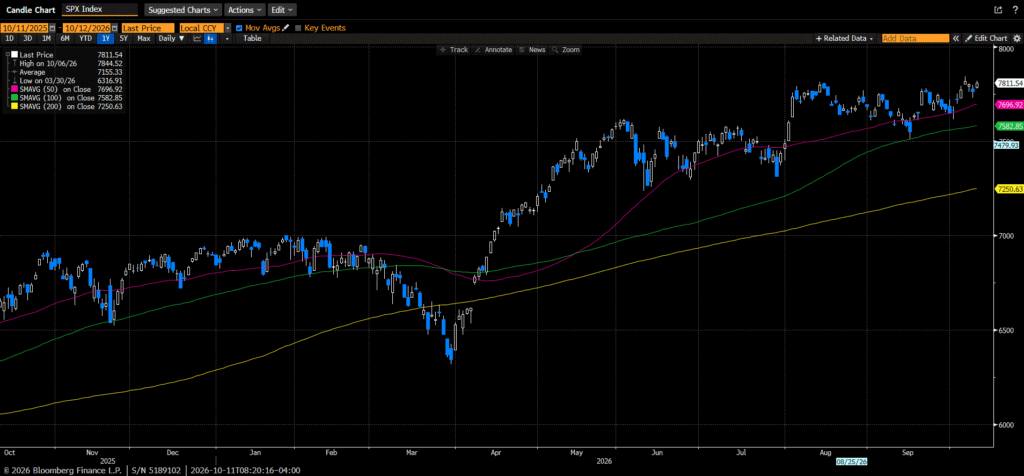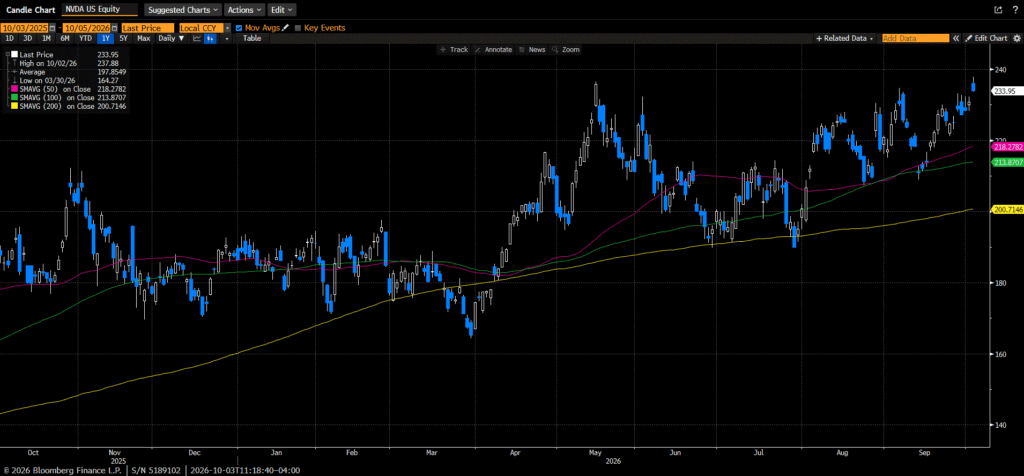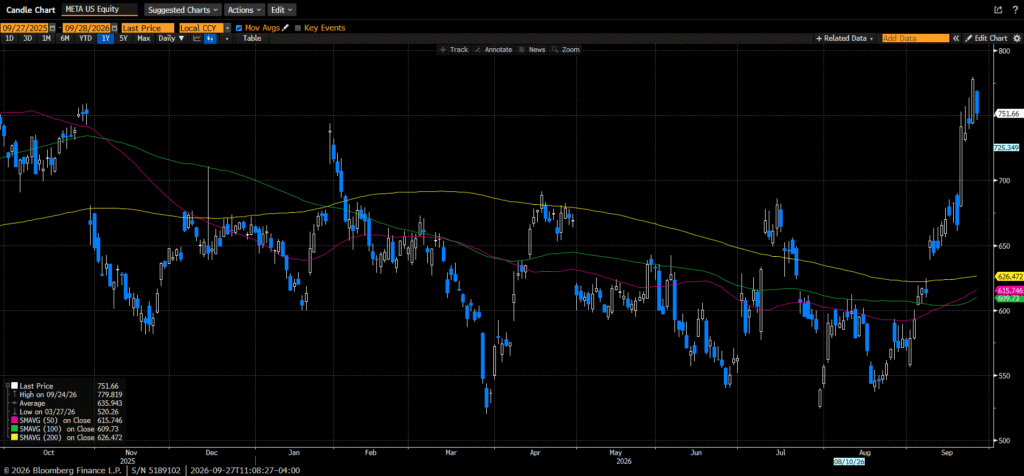

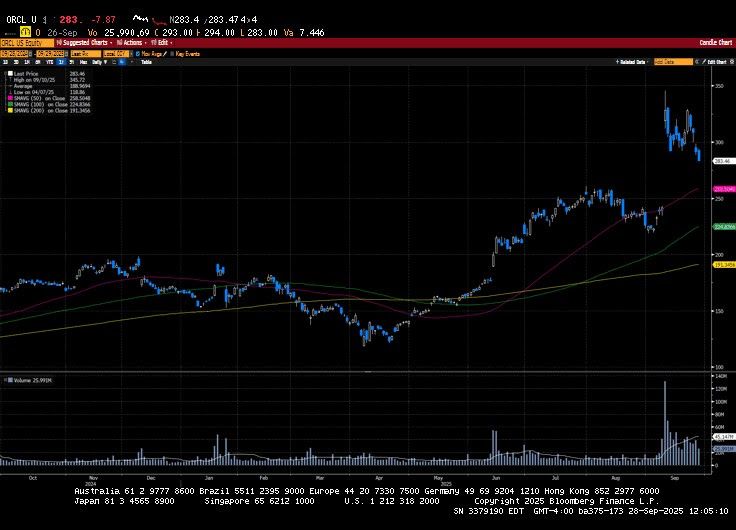
The S&P 500 hit a 28th record high for the year before settling lower for the week. Investors endured a choppy week of trading as better-than-expected economic data and better-than-feared inflation data tempered the notion of additional rate cuts. Several Fed officials, including Musalim, Hammack, Goolsbee, and Schmid, reiterated that stance. Fed Chairman Powell also suggested that “equity prices are fairly highly valued”, a sentiment shared by several Wall Street strategists. There were plenty of headlines on the tape that, in the past, would have moved share prices higher, but the adage ‘buy the rumor, sell the news’ seemed to be in play this week. NVIDIA’s announcement that it would invest $100 billion in AI infrastructure with OpenAI initially sent its shares higher, but as the week progressed, skeptics appeared and questioned the initiative. Similarly, news headlines suggesting that Oracle would be a prominent player in the acquisition of TikTok were met with early gains in the stock, only to end the week with confirmation of the deal and a sharp sell-off in Oracle shares. A barrage of tariff announcements made on Friday will likely influence market action in the coming week. Trump announced tariffs on Heavy Trucks, Kitchen Cabinets, Upholstered furniture, and Branded and Generic Pharmaceuticals. The potential shutdown of the US Government will also likely weigh on market sentiment.

Other corporate news included the announcement that Electronic Arts is going private in a $50 billion transaction. Apple announced that it too would invest in Intel, which propelled its shares higher throughout the week. Freeport-McMoRan shares traded lower by over 17% after one of its mines in Indonesia encountered a mudslide that will hinder its copper production and, as a result, lower earnings for the rest of this year. Costco’s shares traded lower by 2.9% following decent quarterly earnings.
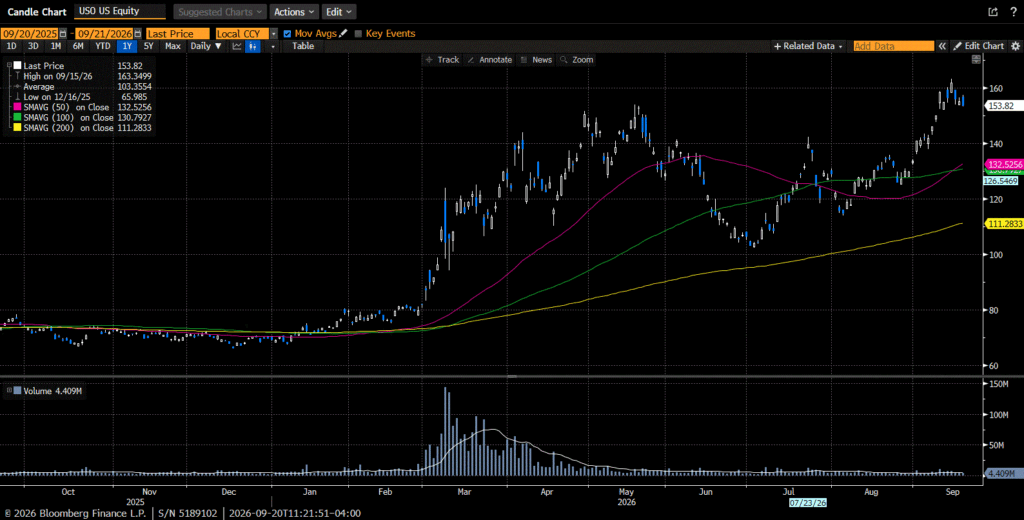
The S&P 500 fell by 0.3%, the Dow Jones Industrial Average lost 0.2%, the NASDAQ shed 0.7%, and the Russell 2000 gave back 0.6%. The US yield curve flattened, with shorter-duration paper underperforming. The 2-year yield increased by seven basis points to 3.65%, while the 10-year yield increased by five basis points to 4.19%- the highest level seen in three weeks. Tepid demand was notable in the three treasury auctions throughout the week. Oil prices increased by 5.3% this week to $65.69 a barrel. The move helped to propel the energy sector higher by 4.7% for the week. Gold’s price continued its climb, adding another $103 to close at $3,809 per ounce. Copper prices increased by3.2% or $0.15 to close at $4.78 per Lb. Bitcoin’s price fell by 5% to close at $109,500. The US Dollar index increased by 0.59 to 98.15.

The economic calendar showcased the Fed’s preferred measureof inflation, the PCE. August headline PCE increased by 0.3% as expected and rose by 2.7% on a year-over-year basis, more than the 2.6% reported in July. The Core figure, which excludes food and energy, increased by 0.2% in August, in line with expectations, and was unchanged from the prior month on a year-over-year basis at 2.9%. While these levels are well above the Fed’s mandate of 2% the street felt like the results were better than feared. Personal Income rose by 0.4%,above the consensus estimate of 0.3%. Personal spending came in at 0.6%, above the expected 0.4% and shows a resilient consumer. The third look at Q2 GDP was revised higher to 3.8% from 3.3%, while the Atlanta Fed’s estimate of Q3 GDP was revised higher to 3.9% from 3.3%. These figures don’t suggest the US economy is anywhere close to a recession. Over the past forty years, the S&P 500 has averaged a 15% increase when rate cuts occurred within an economic growth backdrop. New Home Sales increased by 800k, well above the consensus estimate of 660k. Existing home sales were in line with estimates at 4M. A preliminary look at S&P Global Manufacturing came in at 52 versus 53, while the Services reading came in at 53.9 versus the estimate of 54.5.

Investment advisory services offered through Foundations Investment Advisors, LLC (“FIA”), an SEC registered investment adviser. FIA’s Darren Leavitt authors this commentary which may include information and statistical data obtained from and/or prepared by third party sources that FIA deems reliable but in no way does FIA guarantee the accuracy or completeness. All such third party information and statistical data contained herein is subject to change without notice. Nothing herein constitutes legal, tax or investment advice or any recommendation that any security, portfolio of securities, or investment strategy is suitable for any specific person. Personal investment advice can only be rendered after the engagement of FIA for services, execution of required documentation, including receipt of required disclosures. All investments involve risk and past performance is no guarantee of future results. For registration information on FIA, please go to https://adviserinfo.sec.gov/ and search by our firm name or by our CRD #175083. Advisory services are only offered to clients or prospective clients where FIA and its representatives are properly licensed or exempted.