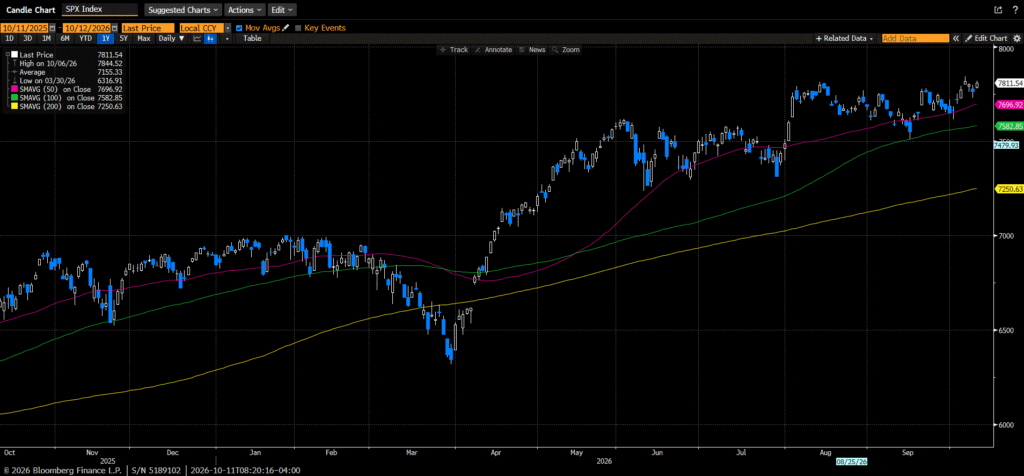

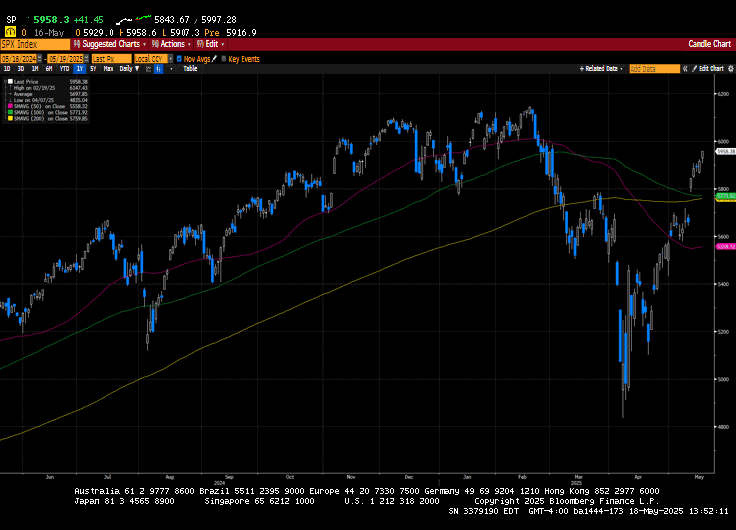
It was a busy week on Wall Street. The Dow Jones Industrial Index and the S&P 500 went positive for the year, catalyzed by the announcement that China and the US would significantly lower tariffs for 90 days as trade negotiations continue. China reduced its tariffs on US goods to 10% while the US lowered its tariffs on Chinese goods to 30%. The move sent global markets higher on Monday, leading to 5 straight days of market gains for the S&P 500. The S&P 500 had been down 21.4% from its all-time high set on February 19th and is up 23.2% from the low set on April 7th.
President Trump’s visit to the Middle East garnered several headlines related to military deals, Artificial Intelligence, and exports of US Technology. It has been reported that over $600 billion in initiatives were forged during his visit. On his visit, Trump also lifted sanctions on Syria and announced an imminent nuclear deal with Iran. Ukraine and Russia’s peace talks started on Friday in Turkey, but Putin and Trump did not attend the talks. It is reported that Zelensky, Trump, and Putin are scheduled to have a call this Monday.
The Reconciliation bill was unable to move forward from the budget committee, as several fiscal hawks pushed back on the deal. Lawmakers will reconvene on Monday to try to get the bill to the next stage, with Republicans hoping to pass the bill by Thursday. Concerns regarding the growing deficit induced rating agency Moody’s to downgrade US sovereign debt on Friday. The move by Moody’s comes after S&P and Fitch cut their US debt rating last fall. Markets will likely feel the downgrade’s impact on Monday, with US Treasury yields expected to rise.

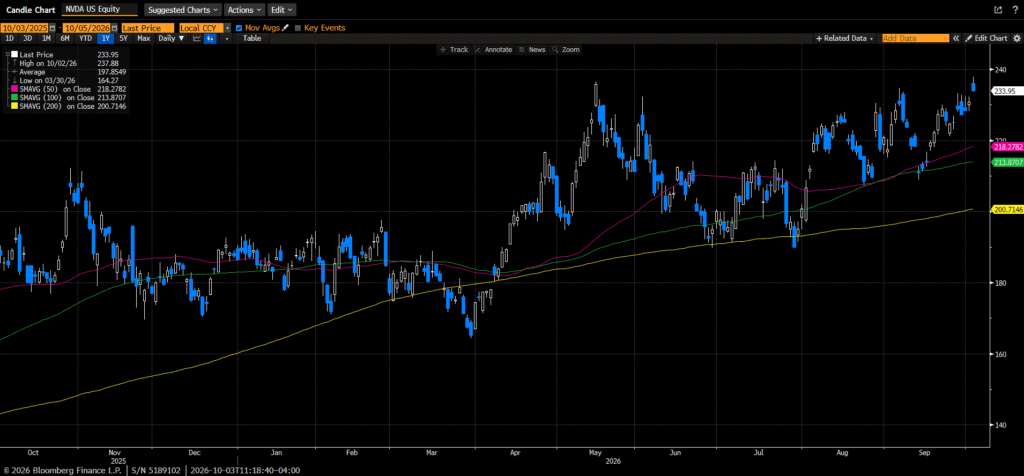
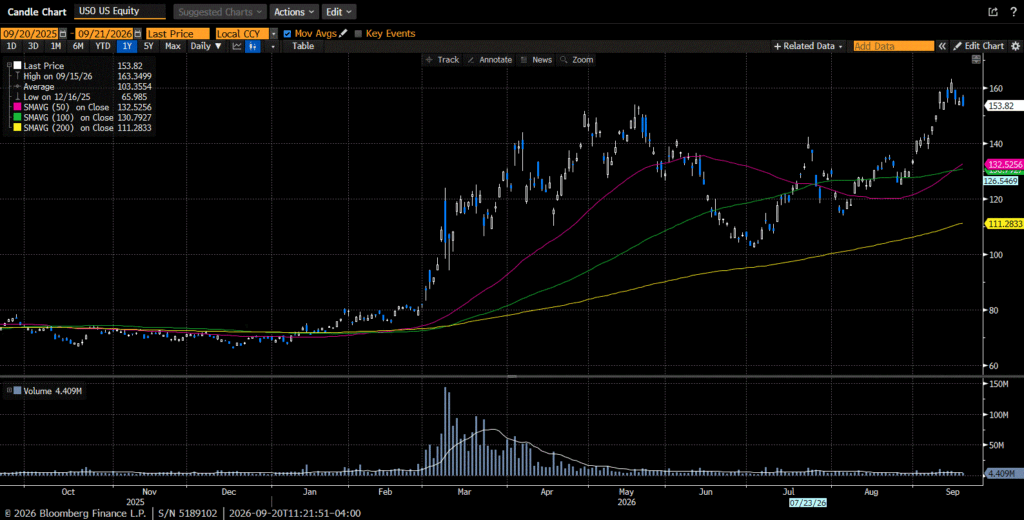
The S&P 500 gained 5.3%, the Dow rose 3.4%, the NASDAQ climbed 7.2%, and the Russell 2000 added 4.5%. The rally was broad-based but favored the Mega-Cap names, which were up 7.2% for the week. NVidia was a standout, gaining 16% on the week. US Treasury yields increased across the curve for a second week. The 2-year yield increased by ten basis points to 3.98%, while the 10-year yield jumped by six basis points to 4.44%. Oil prices increased by $0.97 to close at $61.97 a barrel. Gold prices fell by $157.90 or 4.7% to close at $3186.80 an Oz. Copper prices declined by $0.07 to $4.58 per Lb. Bitcoin prices changed little from the prior week, closing at $103,500. The US Dollar index increased by 0.65 to 101.07.

The economic calendar showcased the Consumer Price Index and Producer Price Index. CPI rose by 0.2% in April, less than the forecasted increase of 0.3%. The Core reading, which excludes food and energy, also increased by 0.2% and was lower than the consensus estimate of 0.3%. Headline CPI rose 2.3% year-over-year, down from 2.4% in March. Core CPI rose 2.8% year-over-year, in line with the March reading. PPI declined by 0.5% versus an estimated increase of 0.3%, while the Core reading declined by 0.4% versus the consensus estimate of 0.3%. Notably, the prior month’s data was revised materially higher. Retail Sales were a bit of a disappointment as consumers pulled back on their spending. The headline figure increased by 0.1% versus an estimated 0.2%, while the Ex-Auto’s figure increased by 0.1% versus the consensus of 0.5%. Initial Jobless Claims were unchanged at 229K and Continuing Claims ticked higher by 9k to 1.881M. The University of Michigan’s Consumer Sentiment index declined to 50.8 from the prior reading of 52.2. Inflation expectations for the next year increased from 6.5% to 7.3%.

Investment advisory services offered through Foundations Investment Advisors, LLC (“FIA”), an SEC registered investment adviser. FIA’s Darren Leavitt authors this commentary which may include information and statistical data obtained from and/or prepared by third party sources that FIA deems reliable but in no way does FIA guarantee the accuracy or completeness. All such third party information and statistical data contained herein is subject to change without notice. Nothing herein constitutes legal, tax or investment advice or any recommendation that any security, portfolio of securities, or investment strategy is suitable for any specific person. Personal investment advice can only be rendered after the engagement of FIA for services, execution of required documentation, including receipt of required disclosures. All investments involve risk and past performance is no guarantee of future results. For registration information on FIA, please go to https://adviserinfo.sec.gov/ and search by our firm name or by our CRD #175083. Advisory services are only offered to clients or prospective clients where FIA and its representatives are properly licensed or exempted.