US financial markets were little changed last week as investors continued to weigh the implications of the Trump administration’s trade policies. A trade agreement between the US and the UK set a constructive tone and is likely to provide a template for future trade deals- there are currently 20 nations at the table negotiating tariffs with the US. Treasury Secretary Scott Bessent is scheduled to meet with Chinese Premier He Lifeng in Geneva this weekend to discuss trade between the two nations. It is not expected that much will come out of this weekend’s negotiations; however, de-escalating what is now considered a full-on embargo on goods between the superpowers is a first step and provides the market with something to look forward to. Again, it’s not likely anything material will come out of this weekend’s discussions; rather, it is more likely that there will be several rounds of talks with plenty of issues to contemplate and thus more volatility for investors to endure.
The Federal Reserve’s open market committee meeting left its policy rate unchanged at 4.25%-4.50%. Fed Chairman Powell noted the cost of waiting to change the policy rate is fairly low, as the economic data remains solid. That said, there is a strong sense that the uncertainty induced by trade policy will dampen the economy and that tariffs will likely be inflationary. The Bank of England cut its policy rate by twenty-five basis points to 4.25%.
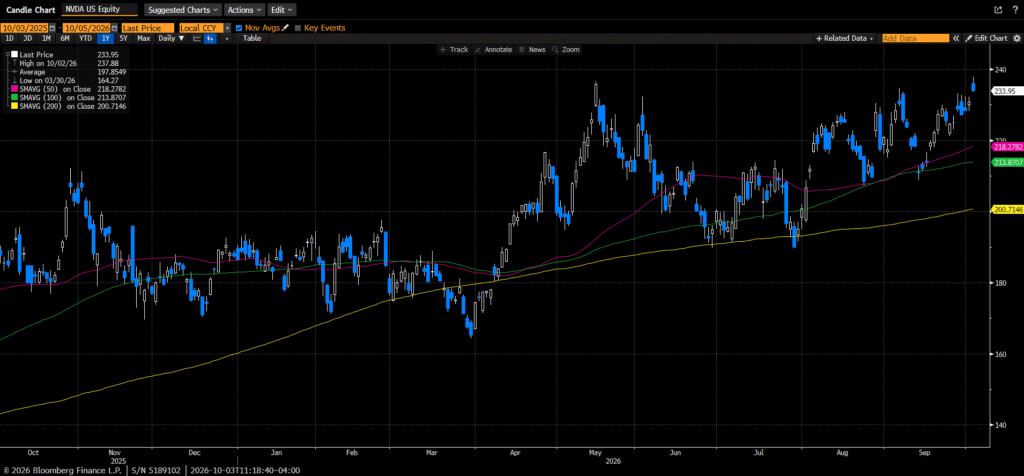
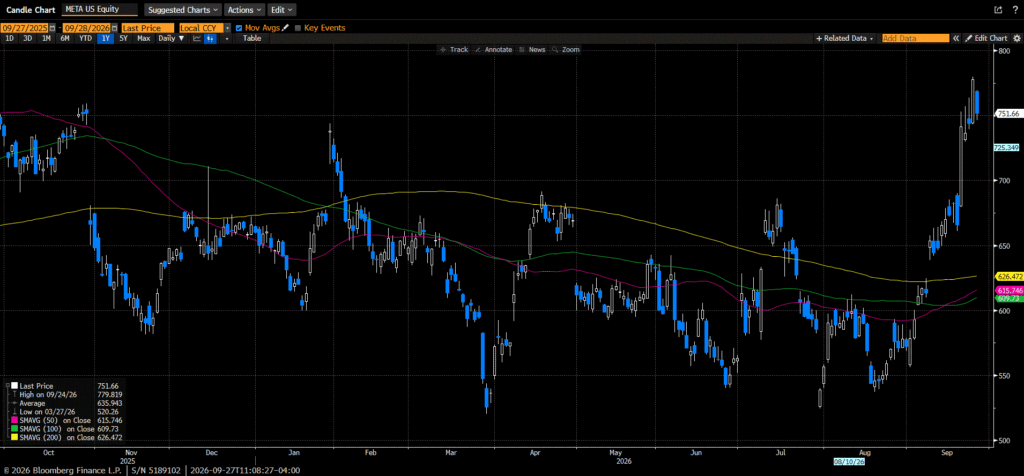
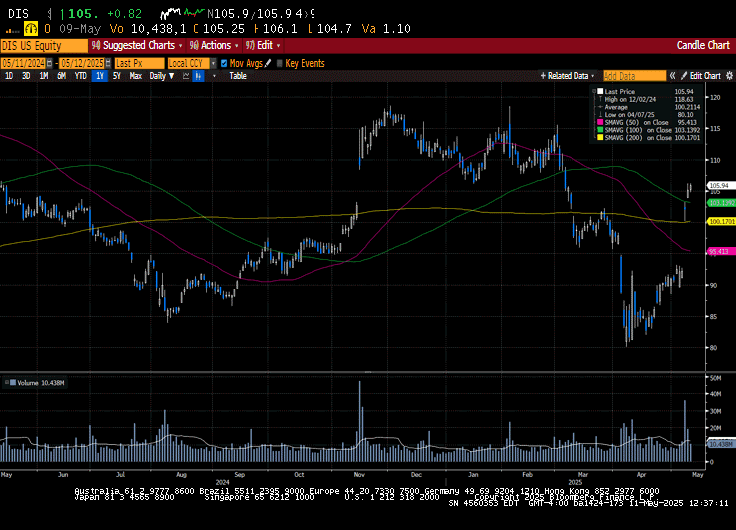
Corporate earnings continued to roll in with mixed results. Despite a solid quarter and a better-than-expected outlook, Palantir’s share price fell after its earnings announcement. Valuation concerns were cited as the reason for the pullback. The street applauded Disney’s results as subscriber growth topped estimates and theme park revenue surpassed expectations. Carvana was also bid higher after a strong beat on their first quarter results. The company saw a surge in buying in front of the implementation of tariffs on autos. Arm Holdings, DraftKings, and Coinbase had disappointing results. Google shares were also under pressure this week as Apple looked for alternative search solutions for its Safari browser. Google’s Chrome has co

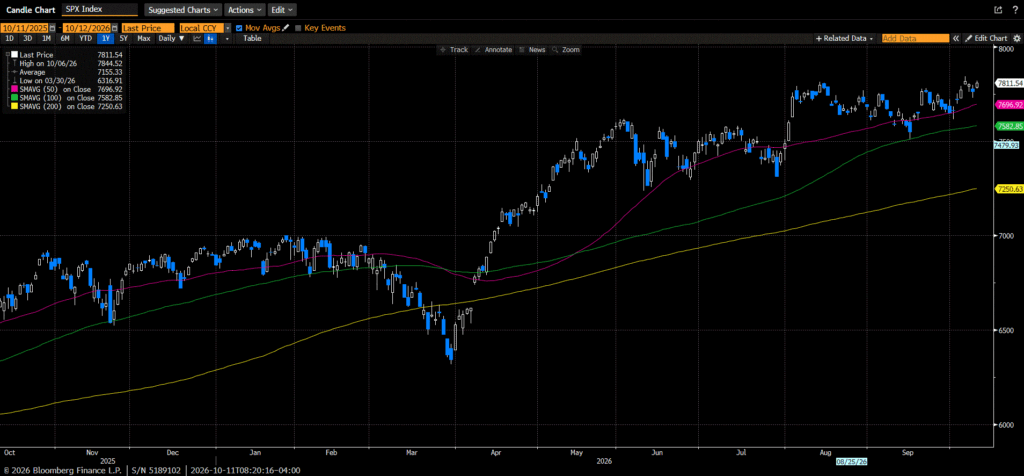
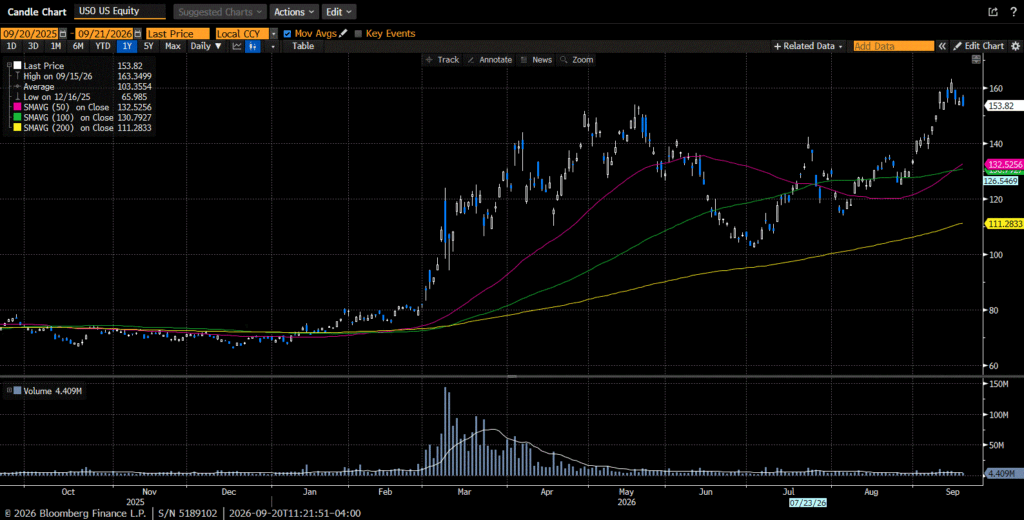
The S&P 500 lost 0.5%, the Dow lost 0.2%, the NASDAQ shed 0.3%, and the Russell 2000 gained 0.1%. Technically, the US market appears to be consolidating the last few weeks of gains. We believe that the market is vulnerable to a pullback with limited upside in the short term. Yields increased slightly across the curve, with the 2-year yield up four basis points to 3.88% and the 10-year yield up six basis points to 4.38%. Despite an increase in oil production, oil prices increased 4.6% on the week, closing at $61.05 a barrel. Gold prices increased by 3.1% or $102.60 to close at $3344.70 per Oz. Copper prices shed $0.04 to close at $4.65 per Lb. The price of Bitcoin increased by 7.2%, closing at $103,500 on Friday afternoon. The US Dollar index increased by 0.4% to 100.42.

The economic calendar was quiet. ISM Services showed that the services sector remained in expansion mode and accelerated from the prior month. The reading came in at 51.6 versus the previous reading of 50.8. Initial claims fell by 13k to 228k, and continuing claims fell by 27k to 1879k, which helped temper fears that the labor market is rolling over after last week’s noticeable uptick in claims. First quarter productivity fell to -0.8% versus the consensus estimate of -0.2%. Q1 Unit Labor Cost increased to 5.7% from 2% in the fourth quarter.
Investment advisory services offered through Foundations Investment Advisors, LLC (“FIA”), an SEC registered investment adviser. FIA’s Darren Leavitt authors this commentary which may include information and statistical data obtained from and/or prepared by third party sources that FIA deems reliable but in no way does FIA guarantee the accuracy or completeness. All such third party information and statistical data contained herein is subject to change without notice. Nothing herein constitutes legal, tax or investment advice or any recommendation that any security, portfolio of securities, or investment strategy is suitable for any specific person. Personal investment advice can only be rendered after the engagement of FIA for services, execution of required documentation, including receipt of required disclosures. All investments involve risk and past performance is no guarantee of future results. For registration information on FIA, please go to https://adviserinfo.sec.gov/ and search by our firm name or by our CRD #175083. Advisory services are only offered to clients or prospective clients where FIA and its representatives are properly licensed or exempted.