
Weekly Market Commentary

US equity markets sold off in tandem with the US Treasury market as the Federal Reserve’s Open Market Committee meeting concluded with no change to its policy rate.  The Fed’s Summary of Economic Projections indicated that another rate hike could be in play and also sent a clear message that rates are likely to be higher for longer.  The Bank of England decided to keep its policy rate at the same level; however, the vote was 5 to 4, signaling division in the path of their monetary policy.  The Swiss National Bank surprised by keeping its rate unchanged, while the Norges Bank and Sweden’s central bank decided in favor of a 25-basis point hike.   The Hong Kong Monetary Board kept their rate unchanged at 5.75%.

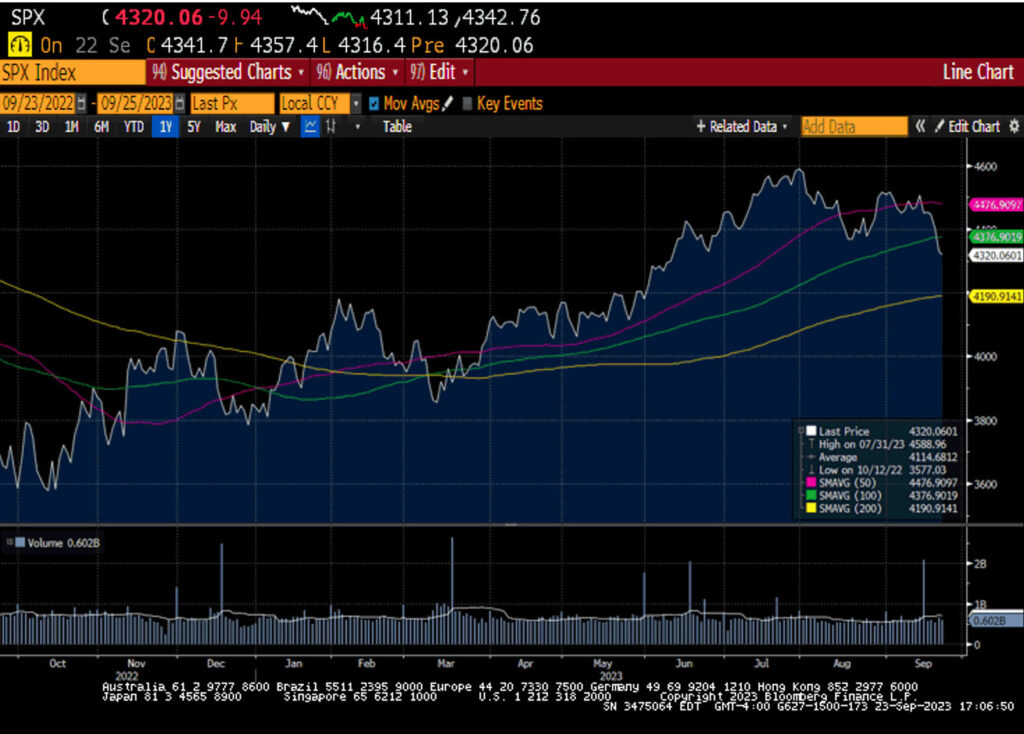
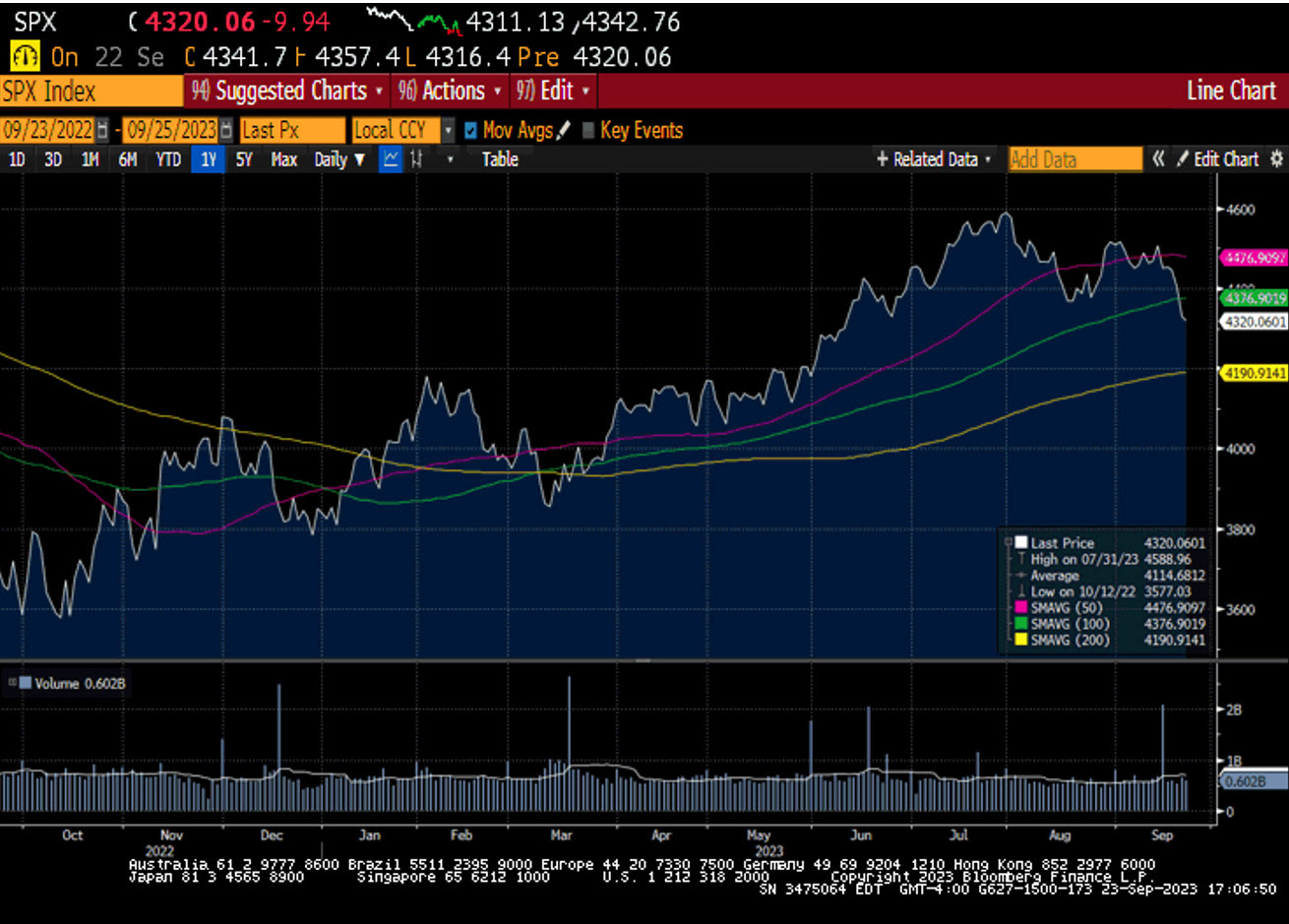
The S&P 500 lost 2.9% and fell below 4400 after breaking its 50-day moving average in the prior week.  The Dow gave up 1.9%; the NASDAQ tumbled 3.6% as mega-cap tech struggled, and the Russell 2k slumped 3.8%.  US Treasuries fell again, with yields on the 2’s and 10’s hitting cycle highs.  The 2-year yield increased by eight basis points to 5.12%.  The 10-year yield rose by twelve basis points to 4.44%.  There is real concern that if the 10-year yield eclipses 4.5%, there could be trouble ahead for risk assets.
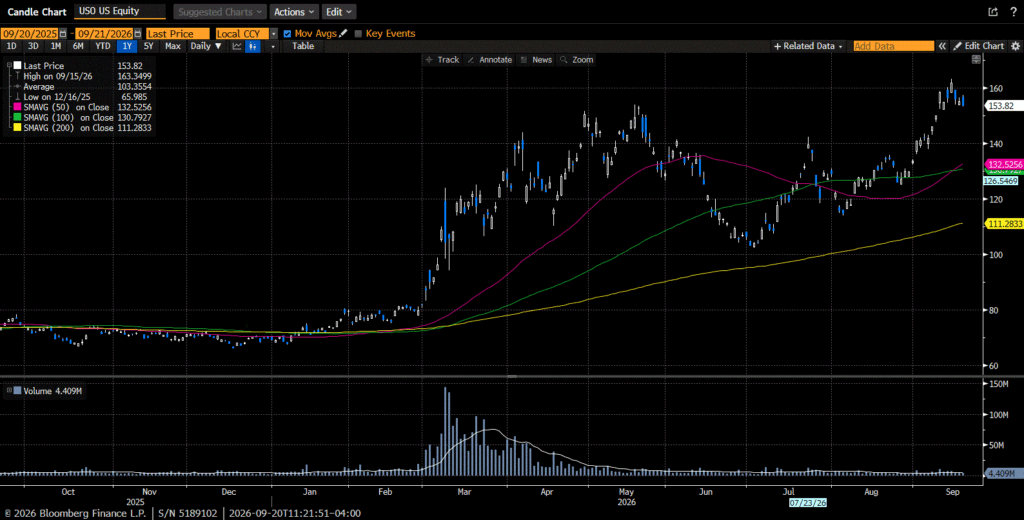
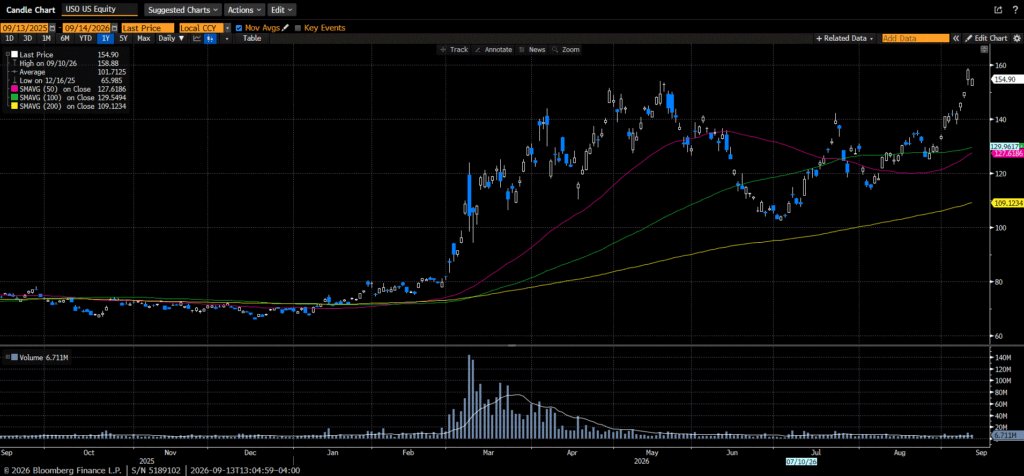
Oil prices fell $0.73 to $90.27 as Wall Street continued to increase estimates of where crude could end the year.  Gold prices were little changed, closing a dime higher at $1945.70 an Oz.  Copper prices closed down $0.10 to $3.70 a lb.  The US Dollar strengthened as central bank policy and projections for future rate hikes diverged across different geographies.

Economic news showed a stubborn labor market.  Initial claims fell to 201k versus the estimate of 230k.  Continuing Claims decreased to 1662k from the prior week’s figure of 1683k.  The UAW strike continues and may start to impact these numbers in the future if negotiations remain in a stalemate.  Housing data was mixed with better-than-expected weekly Mortgage Applications, lighter-than-expected existing home sales, and Housing Starts, while Housing Permits came in a bit better.  Global Manufacturing and Services data showed manufacturing in contraction as services trending lower.

This week, the markets will digest another round of Treasury issuance.  $48 billion in 2 years, $49 billion in 5 years, and $37 billion in 7 years will be auctioned, again a cycle highs.  Economic data will include the 3rd estimate of Q2 GDP and the Q2 GDP Deflator, Personal Income and Spending, and the Fed’s preferred measure of inflation, the PCE.

Investment advisory services offered through Foundations Investment Advisors, LLC (“FIA”), an SEC registered investment adviser. FIA’s Darren Leavitt authors this commentary which may include information and statistical data obtained from and/or prepared by third party sources that FIA deems reliable but in no way does FIA guarantee the accuracy or completeness.  All such third party information and statistical data contained herein is subject to change without notice.  Nothing herein constitutes legal, tax or investment advice or any recommendation that any security, portfolio of securities, or investment strategy is suitable for any specific person.  Personal investment advice can only be rendered after the engagement of FIA for services, execution of required documentation, including receipt of required disclosures.  All investments involve risk and past performance is no guarantee of future results. For registration information on FIA, please go to https://adviserinfo.sec.gov/ and search by our firm name or by our CRD #175083. Advisory services are only offered to clients or prospective clients where FIA and its representatives are properly licensed or exempted.
Share:

View the Latest Commentaries:

Weekly Market Commentary

US equity markets fell in the holiday-shortened week as oil prices surpassed $100 a barrel, raising inflation concerns and pushing interest rates higher.  Additionally, elevated inflation data announced during the week increased the likelihood that the Federal Reserve would raise its policy rate by 25 basis points.  Several Gulf nations announced Friday that they would meet with Iranian officials this weekend to ease tensions, and on Sunday Tehran announced it would decide whether to open part of the Strait of Hormuz, but details of the opening were limited.  This followed Saudi Arabia’s announcement that it had shut down the oil pipeline used to circumvent the Strait. The S&P 500 fell 0.78%, the Dow gave back 1.56%, the NASDAQ declined 0.64%, and the Russell 2000 decreased by 2.39%.  US Treasuries suffered losses across the curve, with the front end of the curve getting hit hardest.  The 2-year yield increased by twenty-six

Weekly Market Commentary

Markets finished the week mixed as investors assessed the escalation of tensions between the US and Iran and recalibrated expectations of Federal Reserve monetary policy.  The week started with sharp declines after the US hit targets on an island in the Strait of Hormuz that were ready to launch mines into the strait.  Iran then countered with drone attacks on Jordan and the UAE.  On Saturday, there were reports that the US had hit three Iranian cargo ships after Iran fired ballistic missiles at two US Navy ships.  The news sent oil prices higher, which in turn raised inflation concerns.   Markets settled down mid-week after Dell reported a solid quarter and after dovish comments made by Fed Bank of New York President John Williams.  Markets moved higher on Thursday after Fed Governor Waller said he would be willing to hold rates steady if price pressures continue to ease and noted

Weekly Market Commentary

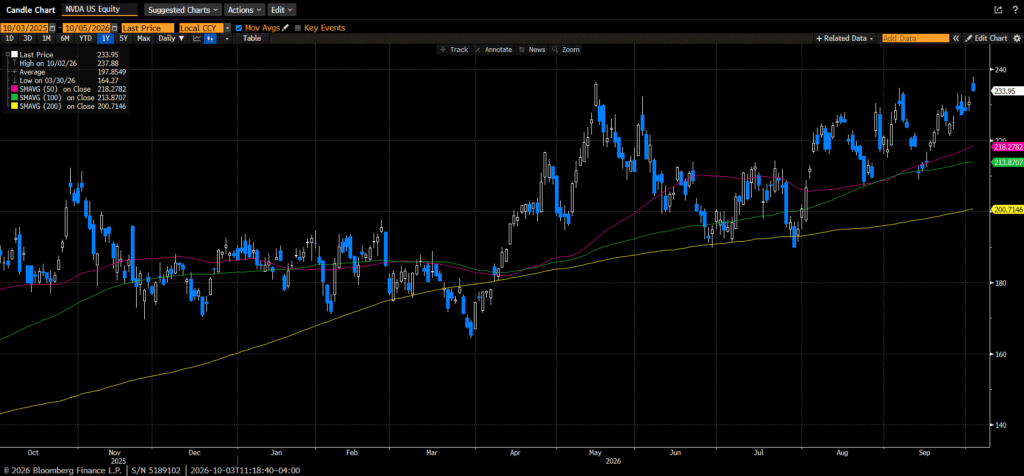
Markets ended the week mixed as investors assessed the implications of the US economic isolation of Iran, the fallout of increased tariffs on Canada, Nvidia Q2 earnings results, and the Fed Chairman’s speech at the Kansas City Federal Reserve’s Economic Symposium in Jackson Hole. Oh yeah, we were also treated to a slightly hotter print of the Fed’s preferred inflation measure, the PCE. On Monday, Treasury Secretary Bessent laid out a plan to isolate economic activity with Iran.  The plan, dubbed Economic D-day, promised economic punishment to any country doing business with Iran and suggested that, in the coming days, there will be announcements and actions taken against several entities that have worked alongside Iran to evade economic sanctions.  The US and Iran both said they would not return to the MOU signed in June, as negotiations have stalled.  Oil traded lower this week on reports that 10 million barrels

Weekly Market Commentary

US equity markets took a step back last week in what turned out to be a very busy week.  Increased yields on the long end of the curve prompted Treasury Secretary Scott Bessent to double buybacks of 10- to 30-year US Treasuries in an effort to temper the rise in rates.  The move was met with a rally in both bonds and stocks; however, it was short-lived, with much of the gains being given back within a day of the announcement.  A global debasement narrative has emerged as the US deficit topped $40 trillion.  The US Dollar sold off to levels not seen since May, while precious metals and Bitcoin prices soared.  Interestingly, the correlation between Gold and Bitcoin is the highest since Covid, following massive liquidity injections by global governments.  It’s notable that several other developed markets are facing similar pressure on their sovereign debt, including Japan, the UK,