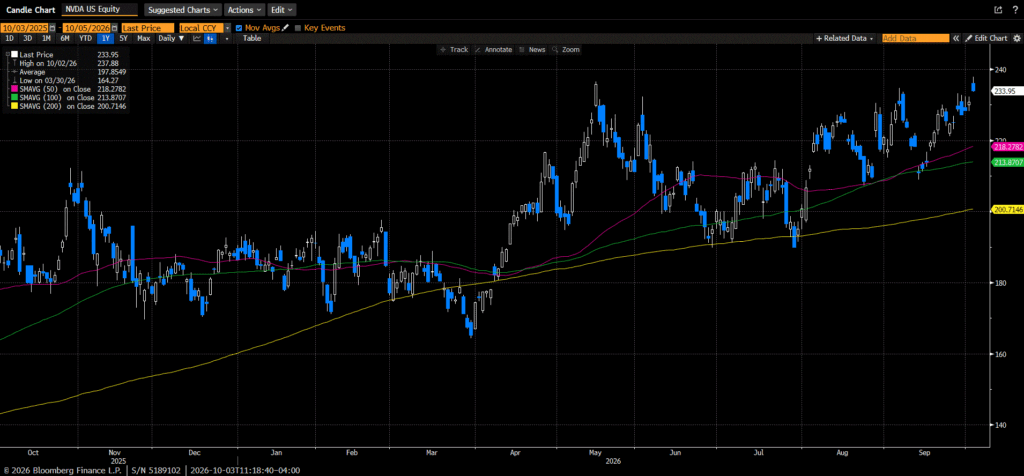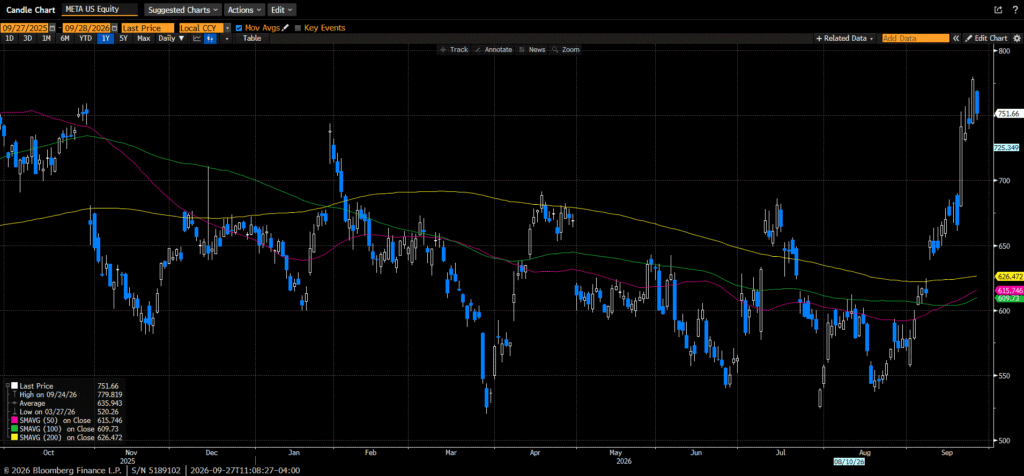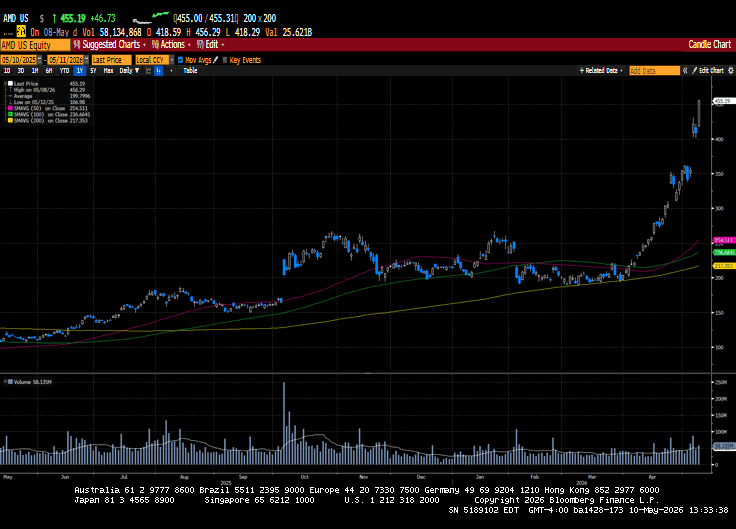
Global markets hit record highs as Q1 earnings continued to exceed expectations. Despite continued tensions in the Middle East and the Strait of Hormuz effectively closed, investors bought mega-cap technology issues alongside Semiconductor companies. AMD posted stellar earnings results, catalyzing technology shares higher. NVIDIA will report earnings in a couple of weeks, and its results are expected to drive a 9% move in the stock price. According to FactSet, 86% of the S&P 500 have reported Q1 earnings; of those, 84% have beaten on the bottom line, and 80% have beaten on revenue. The quarter has seen Earnings Per Share growth of 27.7%, the best since the fourth quarter of 2021. Revenue growth has come in at 11.3%. Expectations are for full-year 2026 Earnings Per Share growth of 21%. This is what has been driving markets higher. Yes, the global economy will still face significant consequences from the closure of the Strait of Hormuz and supply chain disruptions, but for now, the earnings story has taken precedence. The US continues to wait for a response to its most recent peace deal, even as the ceasefire appears more fragile than ever. At this point, I am not sure we can even claim a ceasefire exists, as there have been several reports of Iranian attacks on Gulf Nation assets. President Trump will meet with President Xi this week, but few believe anything consequential will come of it. The war in the Middle East, trade, rare earth metals, and technology export curbs are likely on the table for discussion. The two leaders are set to meet three more times this year.

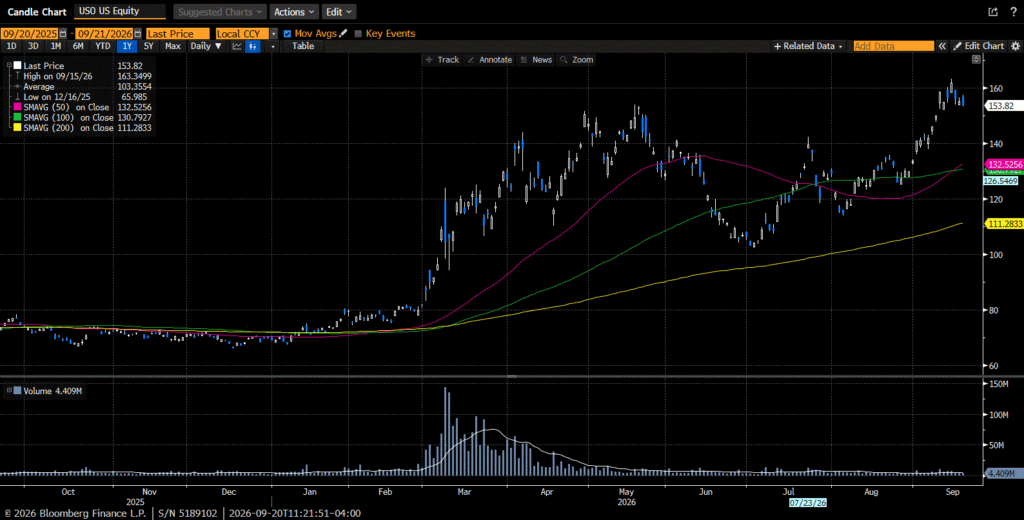
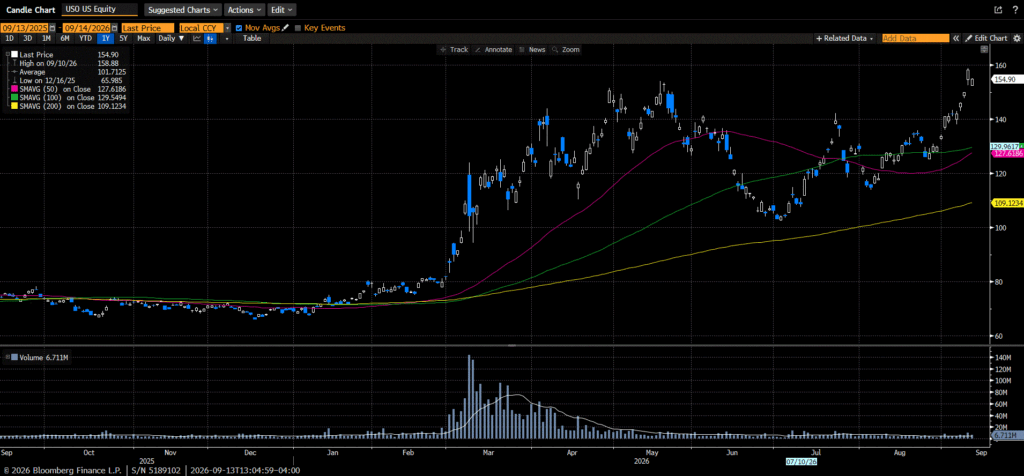
The S&P 500 gained 2.3%, the Dow rose 0.2%, the NASDAQ increased by 4.5%, and the Russell 2000 added 1.7%. Notably, the S&P 500, the NASDAQ, South Korea, and Japan hit record highs this week. US Treasury trade was quite volatile this week, tied to gyrations in oil and to several economic data prints. The 2-year yield closed the week unchanged at 3.89%, while the 10-year yield fell by two basis points to 4.36%. Fed Funds futures currently suggest no monetary policy changes in 2026. Oil prices remained volatile amid news from the Middle East. West Texas Intermediate fell 6.3% on the week to close at $95.39 per barrel. Gold prices advanced by 1.8% to $4,730.20 per ounce. Silver prices jumped 6.47% to $80.87 per ounce, while Copper prices surged 5.1% to $6.30 per Lb. Bitcoin’s price increased by 2.8% to $80,800. The US Dollar Index fell by 0.3% to 97.93.

NASDAQ 5/8/2026
The economic calendar was packed. The Employment Situation report showed more payrolls than expected. Non-Farm Payrolls increased by 115k versus expectations of 67k. Private Payrolls increased by 123k versus the consensus estimate of 60k. The Unemployment Rate stayed at 4.3%, while Average Hourly Earnings increased by 0.2%. The Average Work Week increased to 34.3 hours from 34.2 hours. While the report was better than expected, there were some concerns regarding earnings, which grew at 3.6% year over year, just above inflation. The small margin may curb consumer spending. JOLTS data showed fewer job openings from the prior reading at 6.886M. ADP Private Payrolls increased by 109k versus the estimated 79k. Initial Jobless Claims increased by 10k to 200k, while Continuing Claims fell by 10k to 1766k. April ISM Non-Manufacturing stayed in expansion at 53.6, but fell from the prior reading of 54. Finally, a preliminary look at the University of Michigan’s Consumer Sentiment showed a decline to 48.2, a record low for the data series. The decline was attributed to increased energy costs and labor concerns.

Investment advisory services offered through Foundations Investment Advisors, LLC (“FIA”), an SEC registered investment adviser. FIA’s Darren Leavitt authors this commentary which may include information and statistical data obtained from and/or prepared by third party sources that FIA deems reliable but in no way does FIA guarantee the accuracy or completeness. All such third party information and statistical data contained herein is subject to change without notice. Nothing herein constitutes legal, tax or investment advice or any recommendation that any security, portfolio of securities, or investment strategy is suitable for any specific person. Personal investment advice can only be rendered after the engagement of FIA for services, execution of required documentation, including receipt of required disclosures. All investments involve risk and past performance is no guarantee of future results. For registration information on FIA, please go to https://adviserinfo.sec.gov/ and search by our firm name or by our CRD #175083. Advisory services are only offered to clients or prospective clients where FIA and its representatives are properly licensed or exempted.