
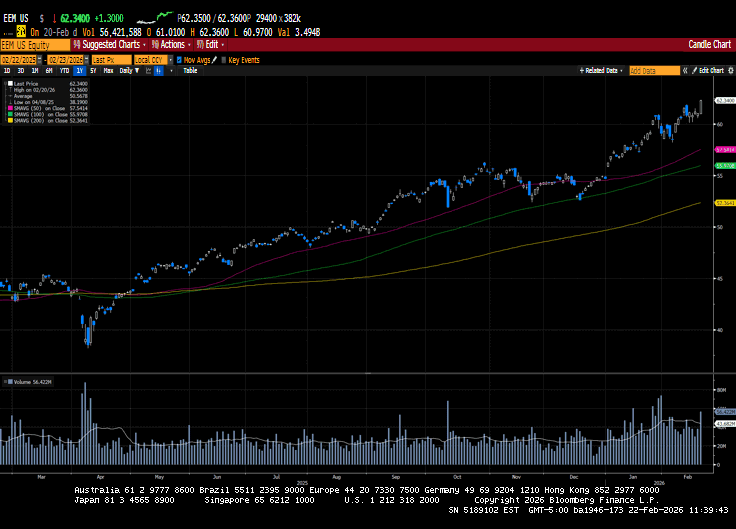
The holiday-shortened week produced gains across US indices and saw an emerging market ETF break out to all-time highs. The start of the Chinese Lunar New Year and Ramadan tempered international trading volumes. The tail end of Q4 earnings continued to show constructive results, while tensions between the US and Iran increased as President Trump set a 10-15-day timeline for reaching a deal. The Supreme Court on Friday ruled against many of the tariffs President Trump imposed. The decision was widely expected, but the fallout will have several complex implications. Will the US Government have to repay the estimated $170 billion that has already been taken in? How this will be accomplished and who will receive the repayment are immediate questions. This has real potential to affect US Treasury markets, as more issuance will likely be needed. Trump immediately imposed global levies under sections 122, 232, and 301 of the Trade Act of 1974. The potential economic impact could include lower prices, be particularly beneficial to companies most affected by the tariffs, and even act as a stimulus to the global economy.

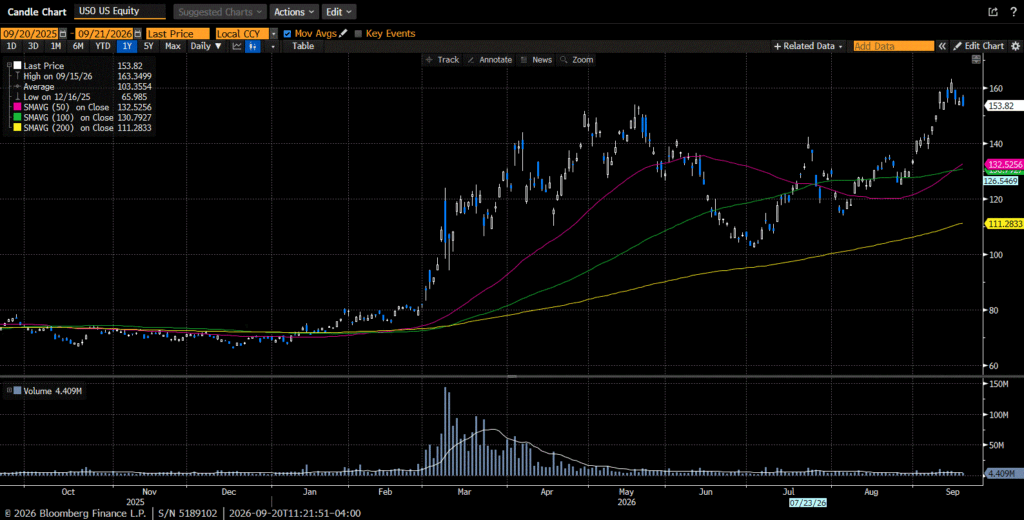
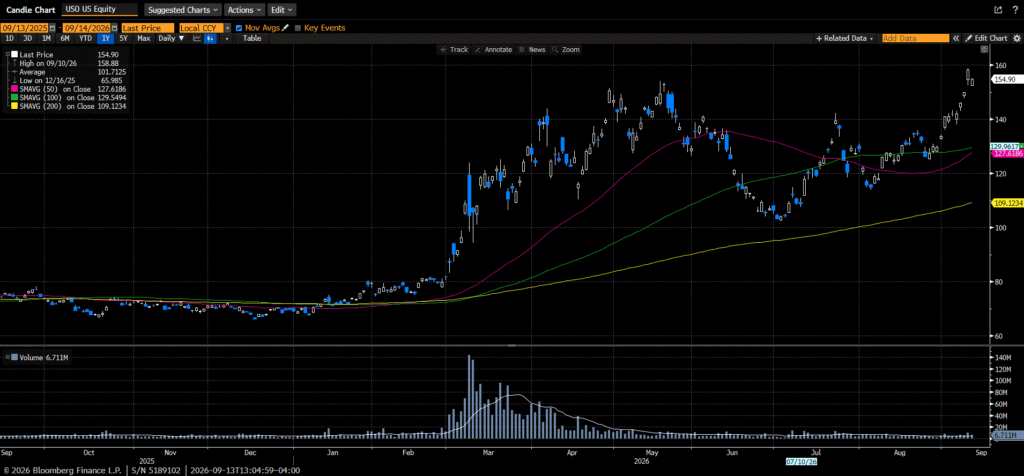
The S&P 500 gained 1.1%, the Dow rose by 0.3%, the NASDAQ added 1.5%, and the Russell 2000 increased by 0.7%. Walmart was a notable loser this week after the company announced better-than-expected comparable US sales and a more conservative outlook for the rest of 2026. Figma and Deer shares traded higher after their better-than-expected results. US Treasury yields rose across the curve, with shorter-duration issues taking the brunt of the sell-off. The 2-year yield increased by seven basis points to 3.48%, while the 10-year yield increased by three basis points to 4.09%. Of note, the $16 billion in 20-year Treasuries drew lackluster demand. Oil prices were volatile throughout the week amid what was initially seen as constructive dialogue between the US and Iran, only to be followed by a definitive timeline set for Iran to have a deal on the table. Oil prices increased by 5.8% or $3.64 to close at $66.49 a barrel. Gold prices increased by $33.80 to $5079.90 per ounce, while silver prices increased by 5.7% to $82.34 per ounce. Copper prices increased by four cents to $5.84 per Lb. Bitcoin’s price fell 2.36% to $68,150. The US Dollar index increased by 1% to 97.81.

S&P 500 2/20/2026
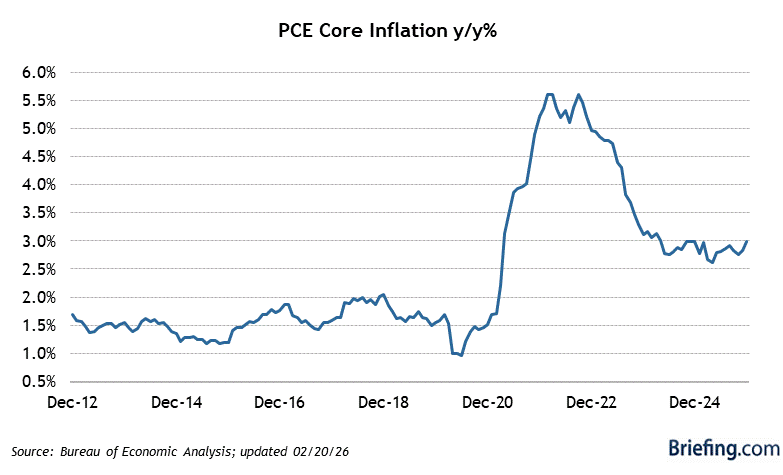
The economic calendar was stacked, featuring a stronger-than-expected PCE and a weaker-than-expected Q4 GDP first reading. The Fed’s preferred inflation measure came in at 0.4%, versus the consensus estimate of 0.3%. The headline number was up 2.9% year over year, up from 2.8% in November. The Core reading, which excludes food and energy, was up 0.4%, in line with estimates, but year over year rose to 3% from 2.8% in November. The hotter inflation read likely gives the Fed more reason to delay another rate cut. Personal Income came in line with estimates at 0.4%, while Personal Spending at 0.4% topped expectations of 0.2%. Q4 GDP came in at 1.4% versus the consensus estimate of 3%, with the government shutdown in the quarter likely the culprit for the decline in economic activity. Housing Starts, Building Permits, and New Home Sales all topped estimates; however, single-family starts and permits were materially lower than anticipated. Initial Claims fell by 23k to 206K, while Continuing Claims increased by 17k to 1869K. The final reading for February, the University of Michigan’s Consumer Sentiment, fell to 56.3 from 57.3.
Investment advisory services offered through Foundations Investment Advisors, LLC (“FIA”), an SEC registered investment adviser. FIA’s Darren Leavitt authors this commentary which may include information and statistical data obtained from and/or prepared by third party sources that FIA deems reliable but in no way does FIA guarantee the accuracy or completeness. All such third party information and statistical data contained herein is subject to change without notice. Nothing herein constitutes legal, tax or investment advice or any recommendation that any security, portfolio of securities, or investment strategy is suitable for any specific person. Personal investment advice can only be rendered after the engagement of FIA for services, execution of required documentation, including receipt of required disclosures. All investments involve risk and past performance is no guarantee of future results. For registration information on FIA, please go to https://adviserinfo.sec.gov/ and search by our firm name or by our CRD #175083. Advisory services are only offered to clients or prospective clients where FIA and its representatives are properly licensed or exempted.