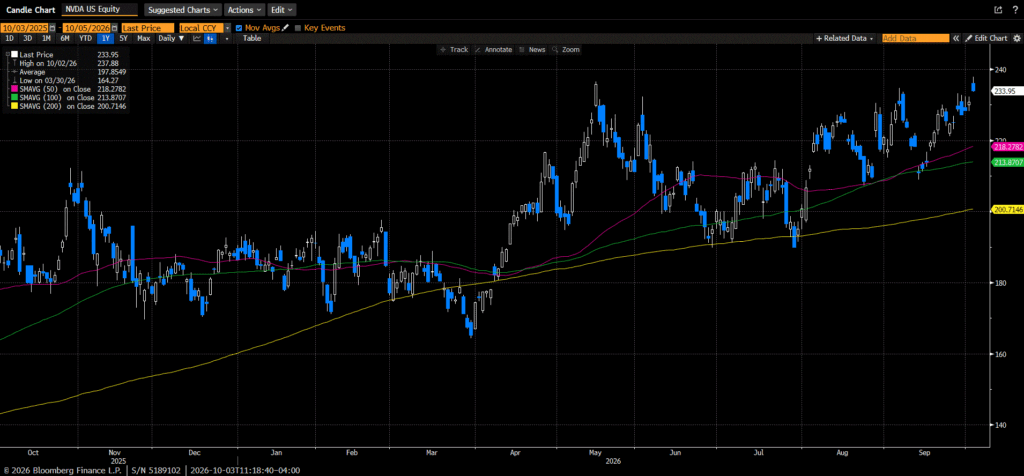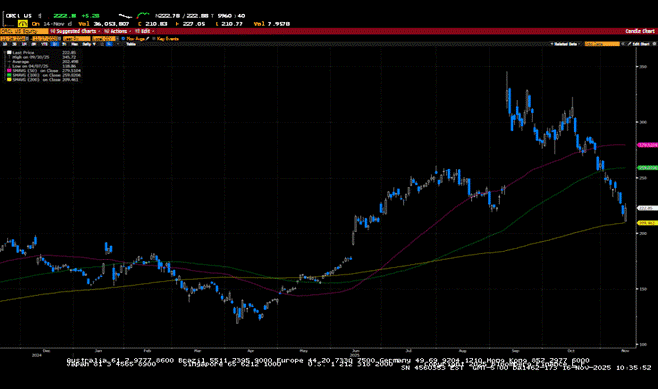
Markets were choppy and ended the week with mixed results. Investors poured into risk assets on the idea that the longest US government shutdown was over, but a more hawkish tone from several Fed officials recalibrated expectations for a December rate cut and dampened the appetite for risk assets. Atlanta Fed President Rafael Bostic announced his retirement in February and voiced concerns over inflation. St Louis Fed President Musalem echoed those concerns, while Boston Fed President Susan Collins said it would be appropriate to keep rates at their current levels for some time. Minneapolis Fed Governor Kashkari stated that he was not in favor of the most recent rate cut and still had questions about whether a December rate cut was necessary. Kansas City Fed President Schmid also pushed back on the notion of a December rate cut. All that said, a couple of weeks ago, the likelihood of a December rate cut stood above 94%; at the end of the week, that probability had fallen to less than 50%. A clear rotation was again visible this week, as the healthcare and Consumer staples sectors were bid, while money was taken off the table in some of the high-flying technology issues. Concerns over debt issued to finance AI initiatives at Oracle led to credit default swaps on that paper trading materially higher. Valuation concerns continued even as AMD expressed its AI addressable market could exceed $1 trillion dollars and Anthropic announced a $50 billion US infrastructure investment. SoftBank’s sale of its position in Nvidia also raised questions on the Tech trade, even though the company has earmarked $22.5 billion for OpenAI investments. Nvidia will set the tone for the markets when it announces earnings on Wednesday, the 19th.

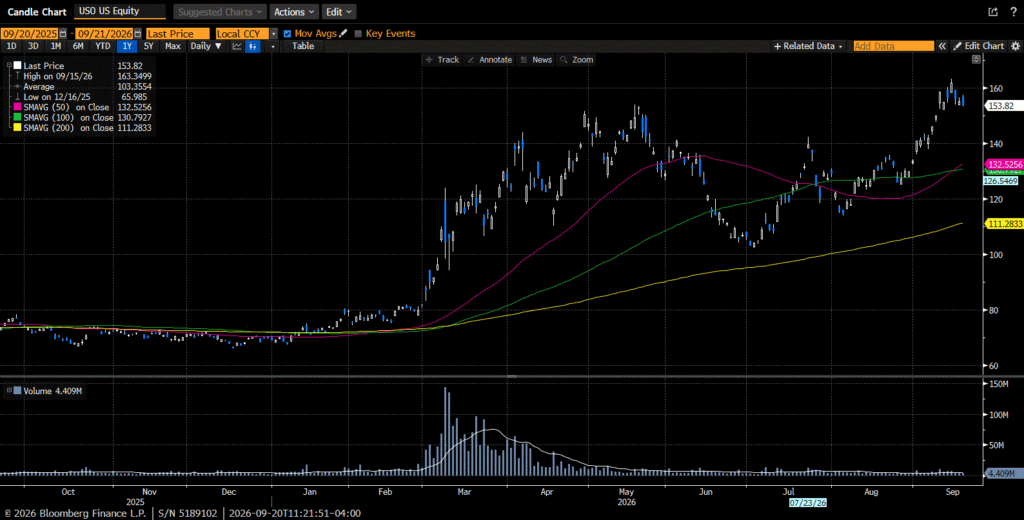
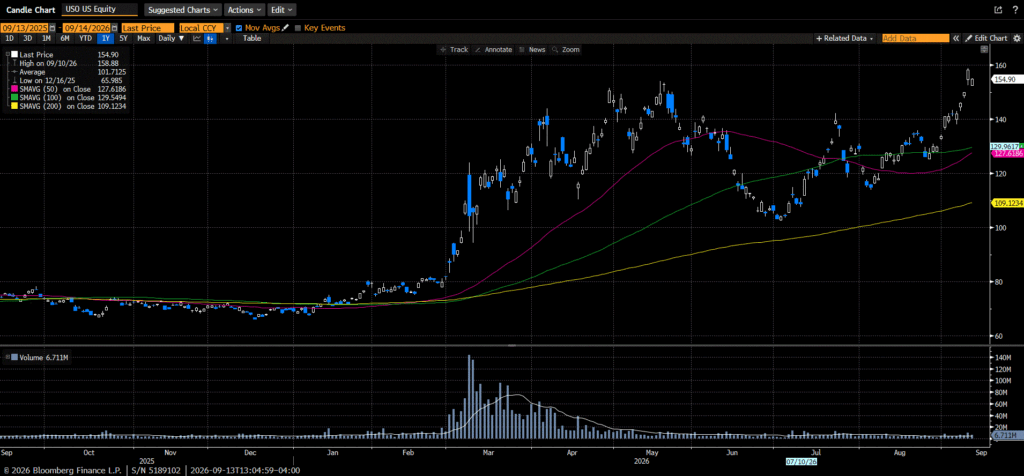
The S&P 500 gained 0.1%, the Dow added 0.3%, the NASDAQ fell by 0.5%, and the small-cap focused Russell 2000 shed 1.8%. US Treasury yields increased across the curve. The 2-year yield increased by five basis points to 3.61%, while the 10-year yield increased by six basis points to end the week at 4.15%. Reports from OPEC+ that suggested that oil demand would be in line with its supply, along with increased tensions with Russia and news that Iran had seized a tanker in the Strait of Hormuz, created plenty to trade on within the oil market. Oil ended the week at $60.08, up $0.35. Gold prices increased by $85.20, or 2.12%, to close at $4,095.20 per ounce. Copper prices rose by $0.10 to $5.06 per Lb. Bitcoin prices plunged by 6.28% and closed the week at $95,643. The US Dollar index fell 0.3% to close at 99.30.

Data on the economic front was quiet. However, that is set to change as a deluge of data is expected to hit markets in the coming weeks, following the delay of more than a month’s worth of data due to the government shutdown. White House Press Secretary Karoline Leavitt suggested that some of the delayed data may never be announced. The bottom line is that several data sets are expected to be released and may have an impact on whether the Fed cuts rates in December, thereby increasing the likelihood of further market volatility. This week, we will also get a read on the consumer through the lens of Walmart and Target’s Q3 earnings announcements.
Investment advisory services offered through Foundations Investment Advisors, LLC (“FIA”), an SEC registered investment adviser. FIA’s Darren Leavitt authors this commentary which may include information and statistical data obtained from and/or prepared by third party sources that FIA deems reliable but in no way does FIA guarantee the accuracy or completeness. All such third party information and statistical data contained herein is subject to change without notice. Nothing herein constitutes legal, tax or investment advice or any recommendation that any security, portfolio of securities, or investment strategy is suitable for any specific person. Personal investment advice can only be rendered after the engagement of FIA for services, execution of required documentation, including receipt of required disclosures. All investments involve risk and past performance is no guarantee of future results. For registration information on FIA, please go to https://adviserinfo.sec.gov/ and search by our firm name or by our CRD #175083. Advisory services are only offered to clients or prospective clients where FIA and its representatives are properly licensed or exempted.