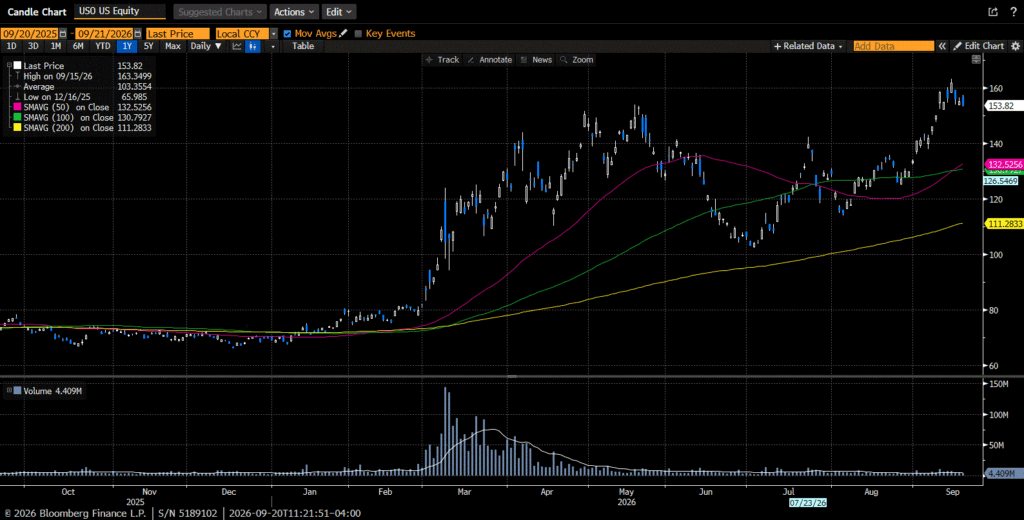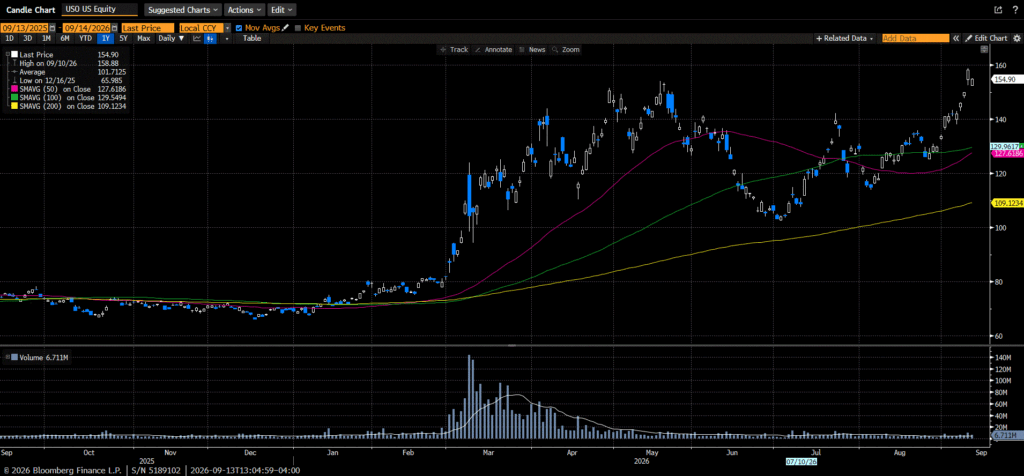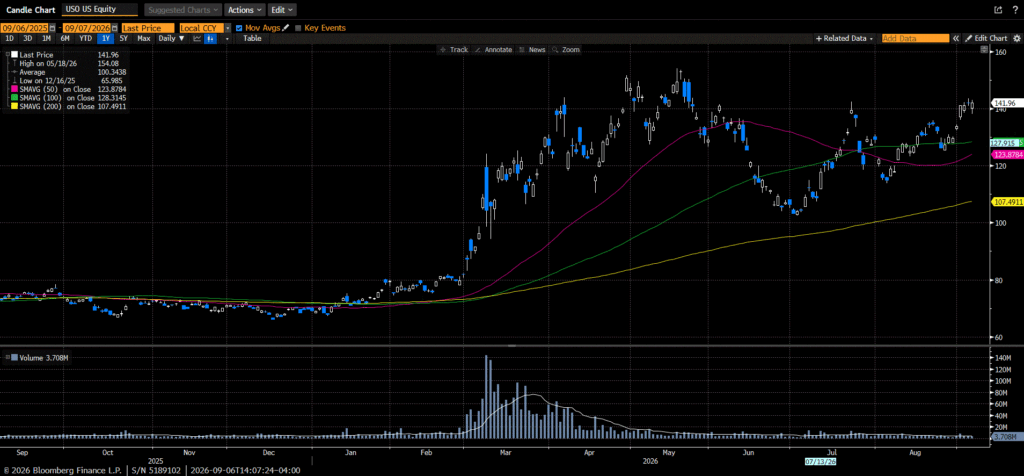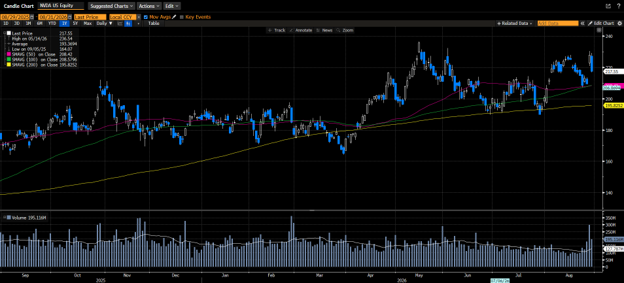

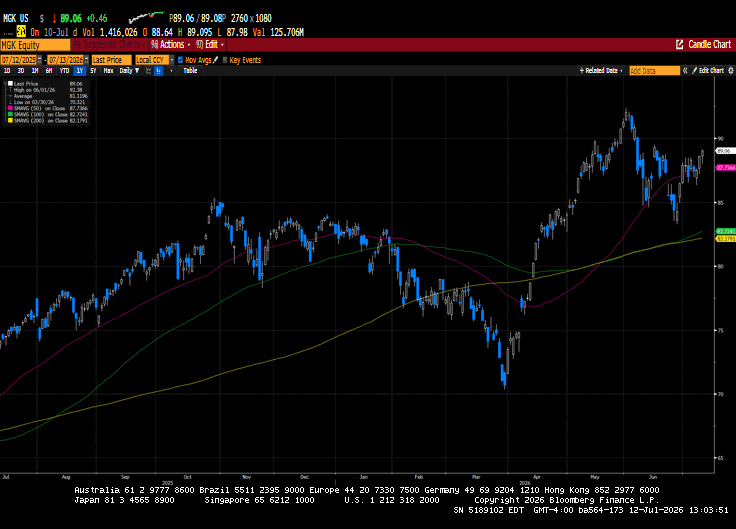
US markets finished the week mixed in volatile trade. The rotation from technology into other parts of the market reversed this week, as leadership from mega-cap tech names and semiconductors powered the market higher. News that China would allow the purchase of Nvidia’s H200 chips, along with an upgrade from Goldman on AMD, Broadcom and Apple extending their collaboration, a successful US IPO of Korean memory company SK Hynix, and Meta entering the cloud infrastructure market and introducing new imaging technology, catalyzed the tech trade. An attack on a cargo ship in the Strait of Hormuz by Iran effectively ended the ceasefire. The initial US response appeared to be somewhat measured, attacking possible drone sites on the coast and refraining from infrastructure inland and around the capital of Tehran. However, the US stepped up its attacks late in the week and carried on further strikes against Iran Saturday night. Iran responded Sunday by targeting five Arab states that have US military assets. Trump has left the door open for more negotiations, but it may be that the fractured leadership of Iran has lost control of parts of the Republican Guard, so any agreement will be questionable. Oil prices spiked at the beginning of the week, only to come back down later. The move sent the industrial and material sectors lower while sending the energy sector higher by over 3%. Iran has declared the Strait closed again, while the US insists the Strait remains open and is willing to provide safe passage. The markets will continue to focus on further developments in the region, as well as the start of Q2 earnings season and a fresh set of inflation data due this week.

he S&P 500 gained 1.2%, the Dow fell by 0.5%, the NASDAQ rose by 1.7%, and the Russell 2000 gave back 0.5%. US Treasuries lost across the curve, with the 2-year yield climbing by 7 basis points to 4.21% and the 10-year yield rising by 8 basis points to 4.57%. This came as 3-, 10-, and 30-year auctions were met with solid demand. Oil prices increased by $2.73, or 3.9%, to close the week at $71.41 per barrel. Gold prices declined by $11.50 to $4,4114.40 per ounce. Silver prices fell by 4% to $60.17 per ounce. Copper prices rose by eleven cents to $6.28 per Lb. Bitcoin’s price increased by 2.48% to $64,000. The US Dollar index increased by 0.1% to 100.96.

The economic calendar was fairly quiet this week, but it showed that the services sector of the economy continues to expand at a stronger pace than last month. ISM Services came in at 54.6% versus the previous reading of 54.5. Initial Claims fell by 2k to 215k, while Continuing Claims rose by 8k to 1814k. Existing Home Sales came in weaker than expected at 4.09m. The Federal Open Market Committee minutes from the Fed’s June meeting showed participants were concerned about elevated prices and the geopolitical uncertainties surrounding the US-Iran war.

Investment advisory services offered through Foundations Investment Advisors, LLC (“FIA”), an SEC registered investment adviser. FIA’s Darren Leavitt authors this commentary which may include information and statistical data obtained from and/or prepared by third party sources that FIA deems reliable but in no way does FIA guarantee the accuracy or completeness. All such third party information and statistical data contained herein is subject to change without notice. Nothing herein constitutes legal, tax or investment advice or any recommendation that any security, portfolio of securities, or investment strategy is suitable for any specific person. Personal investment advice can only be rendered after the engagement of FIA for services, execution of required documentation, including receipt of required disclosures. All investments involve risk and past performance is no guarantee of future results. For registration information on FIA, please go to https://adviserinfo.sec.gov/ and search by our firm name or by our CRD #175083. Advisory services are only offered to clients or prospective clients where FIA and its representatives are properly licensed or exempted.