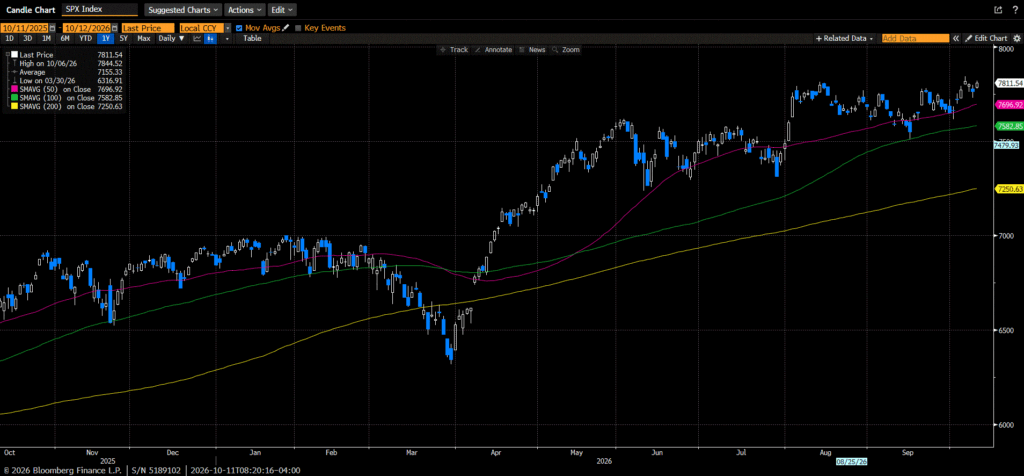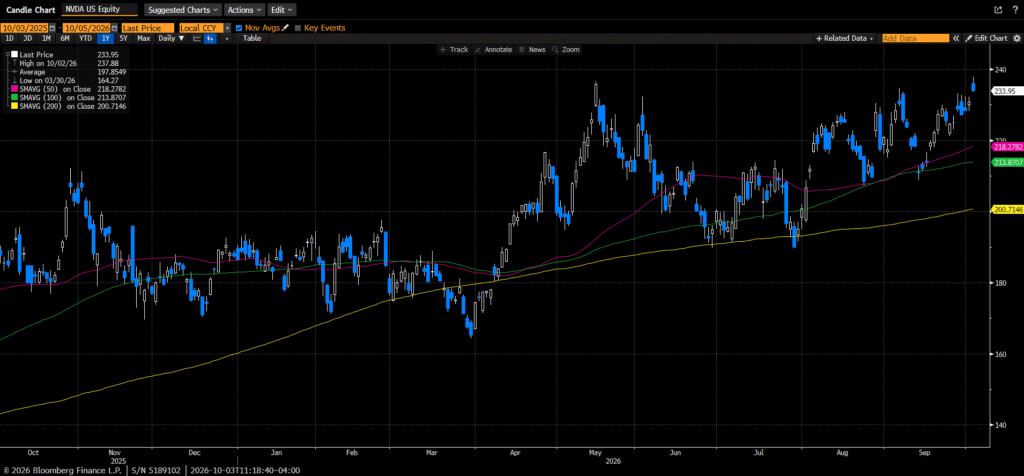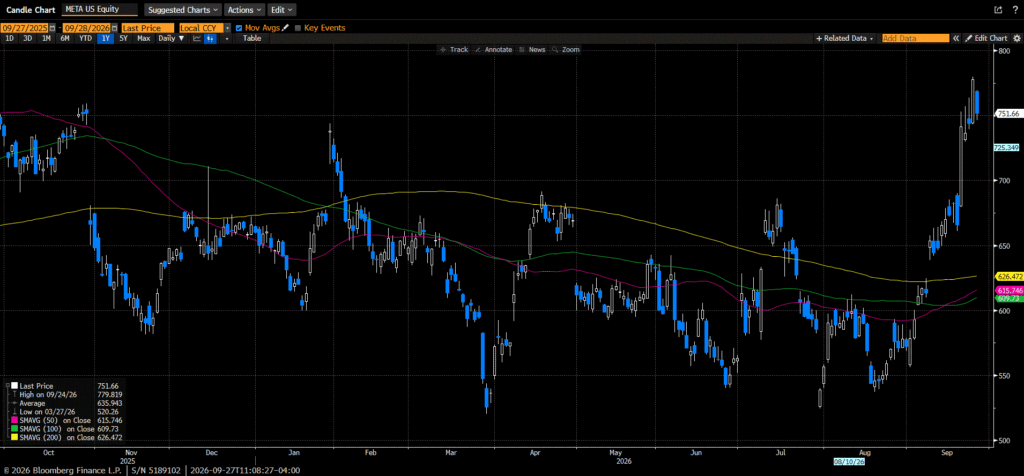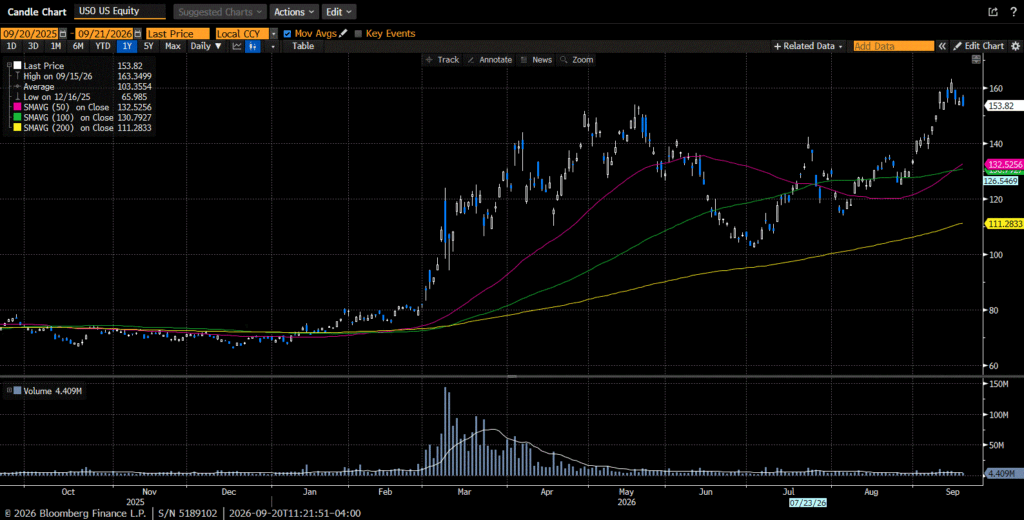

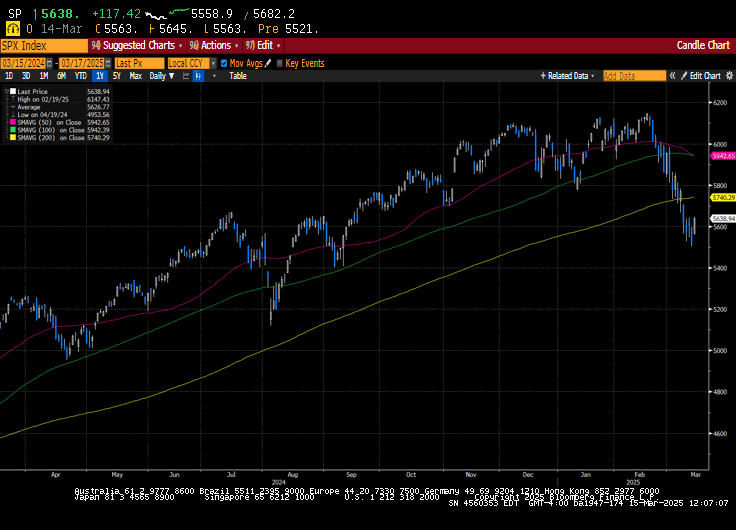
Investors endured the fourth consecutive week of losses in US equity markets as concerns around tariffs and their impact on the economy continued to weigh on sentiment. Several investment banks decreased their assessment of US equities and upgraded their outlook on international developed and emerging markets. In just sixteen trading sessions, nearly five trillion dollars in market cap has been lost in US equities as the S&P 500 fell over 10% from its February 19th highs and entered correction territory. President Trump announced additional tariffs on Canadian steel and aluminum from 25% to 50% in response to Ontario’s tariffs on electricity used by several states. Trump also responded to EU tariffs on US whisky, threatening a 200% tariff on EU alcoholic beverages. The manic nature of these tariffs instills uncertainty, with everyone wondering what their impact will be on the global economy. Calls for recession have increased, and if that is the eventual outcome, the recent sell-off is likely not over. We do not believe this is the most likely outcome, but we continue to watch the incoming data for further economic clues. Increased layoffs in the Federal Government are one clear area of concern, and the idea that job growth will decline over the next few months is also something that we are monitoring closely. A government shutdown was avoided on Friday and provided reason to buy the current oversold condition in the market, but we remain cautiously optimistic. There are several companies and asset classes that we are currently evaluating to make additional moves in our models.

The S&P 500 traded below its 200-day moving average, and at one point, it had declined more than 10% from its all-time highs to enter a market correction. The index fell 2.3% on the week and is down 4.1% year to date. The Dow fell 3.1%, the NASDAQ shed 2.4%, and the Russell 2000 lost 1.5%. The energy and utilities sector posted gains for the week, while the consumer staples, consumer discretionary, and communication services sectors posted the most significant declines. The US Treasury market was quite volatile over the week but ended the week little changed. The 2-year yield increased by two basis points to 4.02%, while the 10-year yield fell by one basis point to 4.31%. Gold prices surpassed the $3000 mark and gained 2.9% or $85 on the week to close at $3001 per Oz. Oil prices were little changed, gaining $0.08 to $67.10 a barrel. Copper prices continued their advance, increasing by 4% to close at $4.90 per Lb. Bitcoin prices fell by 4.6% to close at $82,600. The US dollar index lost 0.2%, closing the week at 103.71.

Weaker than anticipated inflation data had minimal impact on the markets. The Consumer Price Index increased by 0.2% in February versus the estimated 0.3%. The headline number fell to 2.8% from 3% year-over-year. The Core reading, which excludes food and energy, increased by 0.2%, slightly below the expected 0.3%. The Core reading on a year-over-year basis fell to 3.1% from 3.2% in January. While the data was encouraging, it still remains well above the Fed’s target of 2%. The Producer Price Index also showed progress on wholesale prices. Headline PPI came in flat versus expectations of a 0.3% increase, while the Core reading declined by 0.1% versus expectations of a 0.3% increase. Initial Claims declined by 2k to 220k, while Continuing Claims fell by 27k to 1.870M. A preliminary look at March’s University of Michigan Consumer Sentiment data showed a material downtick. The data came in at 57.9, down from the last reading of 64.7 and was down from 79.4 one year ago. Finally, the NFIB Small Business Optimism survey fell to 100.7 from 102.8 and showed the second-largest increase in its uncertainty index since the index was created.
Investment advisory services offered through Foundations Investment Advisors, LLC (“FIA”), an SEC registered investment adviser. FIA’s Darren Leavitt authors this commentary which may include information and statistical data obtained from and/or prepared by third party sources that FIA deems reliable but in no way does FIA guarantee the accuracy or completeness. All such third party information and statistical data contained herein is subject to change without notice. Nothing herein constitutes legal, tax or investment advice or any recommendation that any security, portfolio of securities, or investment strategy is suitable for any specific person. Personal investment advice can only be rendered after the engagement of FIA for services, execution of required documentation, including receipt of required disclosures. All investments involve risk and past performance is no guarantee of future results. For registration information on FIA, please go to https://adviserinfo.sec.gov/ and search by our firm name or by our CRD #175083. Advisory services are only offered to clients or prospective clients where FIA and its representatives are properly licensed or exempted.