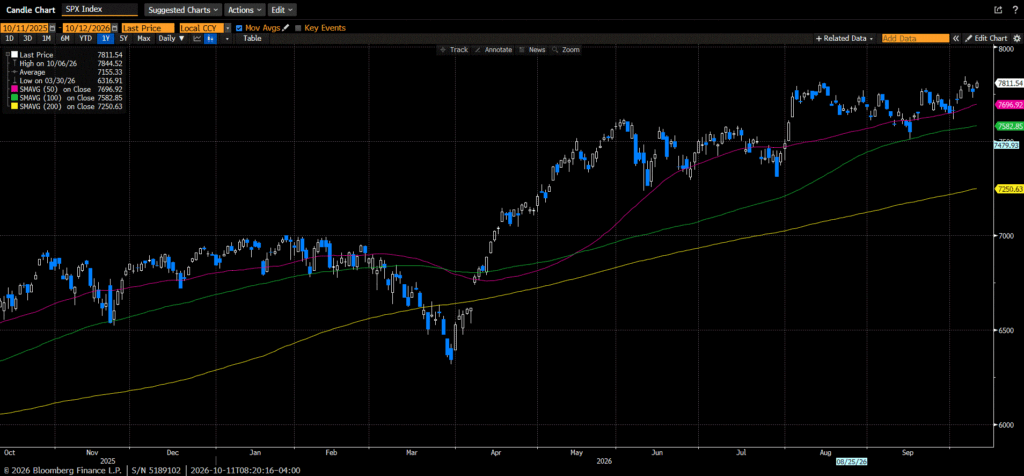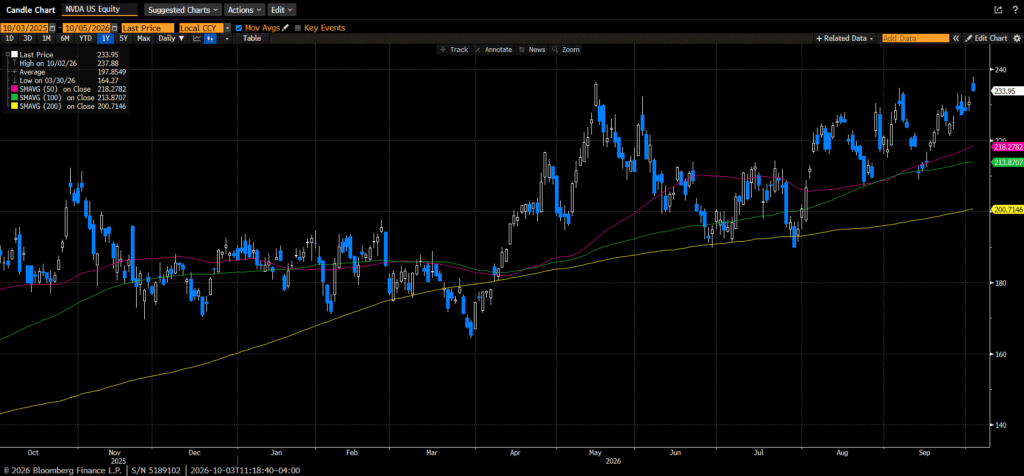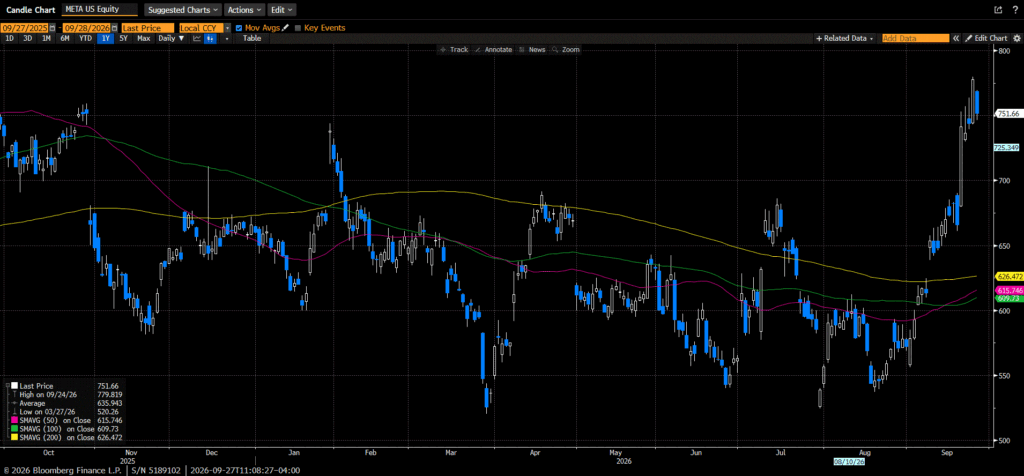

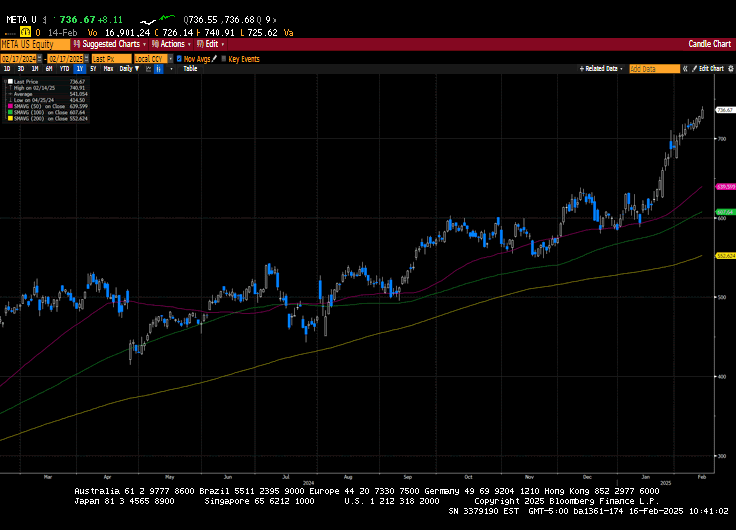
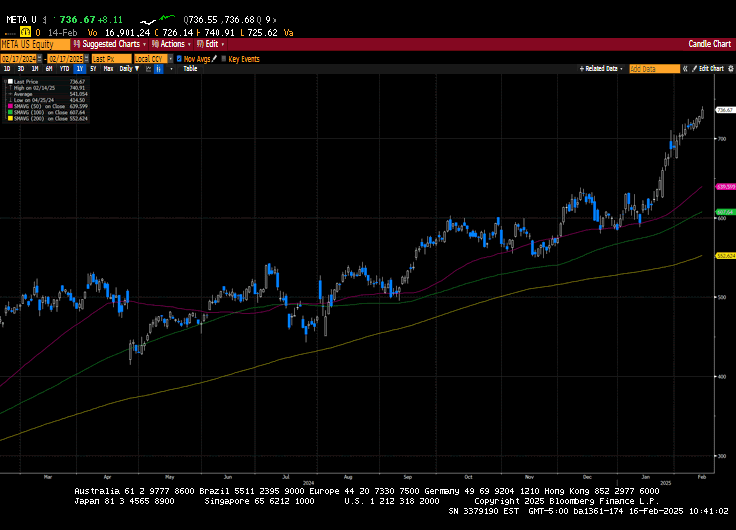
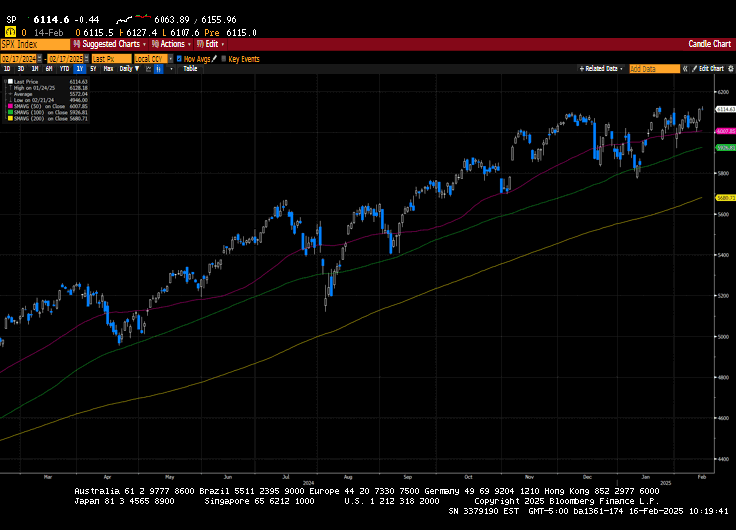
Despite all of the uncertainties within the investment landscape, global markets were able to post nice gains last week. Fourth-quarter earnings continued to roll in with notable results from Coca-Cola, McDonald’s, Roku, Cisco Systems, Draft Kings, Coinbase, DuPont, Shopify, Reddit, Deer, and Palo Alto Networks. News that Apple will work with Chinese technology companies Baidu and Alibaba to put their AI technology onto the iPhone helped push Apple’s shares higher. Mega Cap names stood out as market leaders throughout the week as Meta posted its 20th consecutive day of gains on Friday. NVidia was able to break above its 50-day moving average, which is seen as a key technical resistance area, portending perhaps more upside for the stock. This comes as the S&P 500 looks to break out to new all-time highs after nearly three months of consolidation.
Tariff talk, fears of global trade wars, and concerns about what tariffs could mean for an already elevated inflation environment continue to dominate market rhetoric. The Trump Administration announced 25% tariffs on imported steel and aluminum at the beginning of the week and announced that reciprocal tariffs would be applied to countries that impose levies on US goods. Trump asked his Commerce Secretary, Howard Lutnick, to formulate these reciprocal tariffs, expected to be announced by April 1st. In the latter half of the week, India’s President Modi visited the White House, where he and President Trump discussed multiple trade initiatives and immigration. European leaders were caught off guard by the announcement that President Trump had started negotiating with Russian President Putin to end the Russian-Ukrainian war. There are several reports that the two leaders will meet in Saudi Arabia to discuss the war’s end.
The S&P 500 gained 1.5%, the Dow advanced 0.5%, the NASDAQ rose 2.6%, and the Russell 2000 closed flat on the week. It’s worth pointing out that international markets have been performing exceptionally well this year, in fact, better than the US market, which has dominated performance for the last several years. The Euro STOXX 50, an index of Europe’s 50 largest companies, is up 13.9% for the year and has moved to the highest level seen in 25 years. We are seeing international markets do well for several potential reasons- maybe they are just playing catch up, a revision to the mean trade, valuations are more attractive. A weaker currency profile has probably helped; a more accommodative monetary policy relative to the US is also a likely tailwind; a more stable political backdrop, including the potential for the end of the Russian-Ukraine war, may also be helping.
The US bond market posted its fifth consecutive week of gains in a very volatile week of trade. US CPI data hit Treasuries hard on Wednesday, sending the 10-year yield higher by nine basis points to 4.62%, but the Treasury market was able to bounce back nicely after the PPI print showed that certain key component prices were moderating. The 2-year yield fell by three basis points to close the week at 4.26%, while the 10-year yield fell one basis point to close at 4.48%. Fed Chairman Powell’s semi-annual testimony to the Financial Services Panel and Senate Banking Committee had minimal market impact. Powell said there was no rush to cut rates. The market expects one twenty-five basis point cut in 2025 in late summer. However, the timing of the cut has been all over the map, moving from December to June/July within a week.
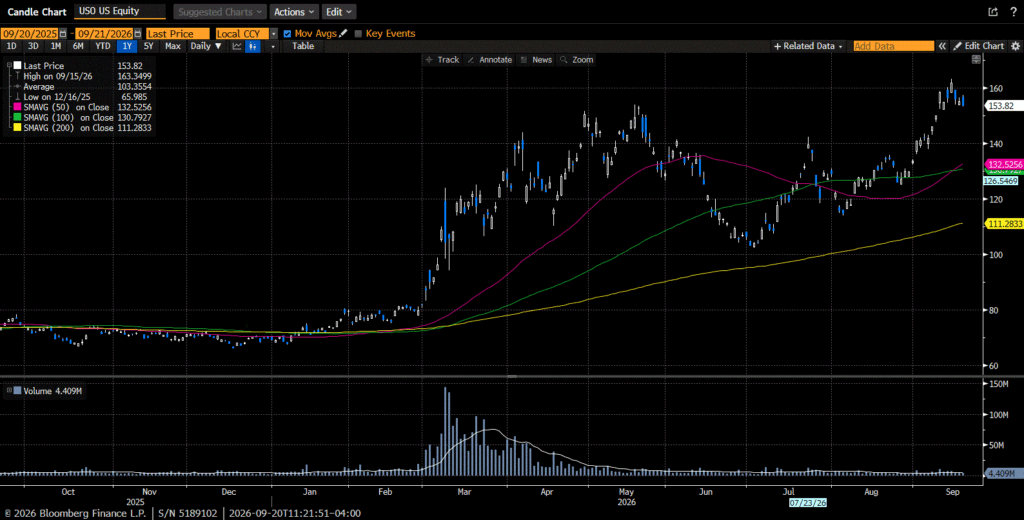
Oil prices fell by $0.22 to $70.68 a barrel, partly due to the news that the war in Ukraine may be ending. Gold prices gained $12.80 to close at $2,899.90 an Oz. Copper prices rose by $0.06 to $4.66 per Lb. Bitcoin prices increased by $1,550 to close at $97,400. The US Dollar index tumbled 1.2% to close the week at 106.73.
This week’s economic calendar was highlighted by the Consumer Price Index (CPI) and the Producer Price Index. Both readings came in hotter than expected. Headline CPI rose by 0.5% versus the expected 0.3% and was up 3% on a year-over-year basis in January, up from 2.9% in December. The Core reading, which excludes food and energy, rose by 0.4% versus the estimated 0.3%. The Core rose 3.3% annually, up from the 3.2% reported in December. The elevated prints were troublesome for the markets as investors worry about inflation and its potential to accelerate off Trump’s tariff policy. Headline PPI rose by 0.4%, above the consensus estimate of 0.2%, and annually by 3.5%, in line with December’s reading. The Core reading came in at 0.3%, in line with estimates, and was up 3.6% annually, slightly less than the 3.7% print in December. The PPI data helped to stabilize the bond market as key components within the data set that are also used in the Fed’s preferred measure of inflation showed modest declines and suggested that the upcoming PCE print would show continued progress on inflation. PCE will be reported on February 28th. Retail Sales in January showed a significant drop and had investors questioning the consumer’s health. The headline reading was -0.9% versus the consensus estimate of 0%. The Ex-Autos reading was -0.4 versus the estimated 0.3%. Initial jobless claims fell by 7k to 213k, while Continuing Claims fell by 36k to 1.850m.

Investment advisory services offered through Foundations Investment Advisors, LLC (“FIA”), an SEC registered investment adviser. FIA’s Darren Leavitt authors this commentary which may include information and statistical data obtained from and/or prepared by third party sources that FIA deems reliable but in no way does FIA guarantee the accuracy or completeness. All such third party information and statistical data contained herein is subject to change without notice. Nothing herein constitutes legal, tax or investment advice or any recommendation that any security, portfolio of securities, or investment strategy is suitable for any specific person. Personal investment advice can only be rendered after the engagement of FIA for services, execution of required documentation, including receipt of required disclosures. All investments involve risk and past performance is no guarantee of future results. For registration information on FIA, please go to https://adviserinfo.sec.gov/ and search by our firm name or by our CRD #175083. Advisory services are only offered to clients or prospective clients where FIA and its representatives are properly licensed or exempted.