

Darren Leavitt, CFA
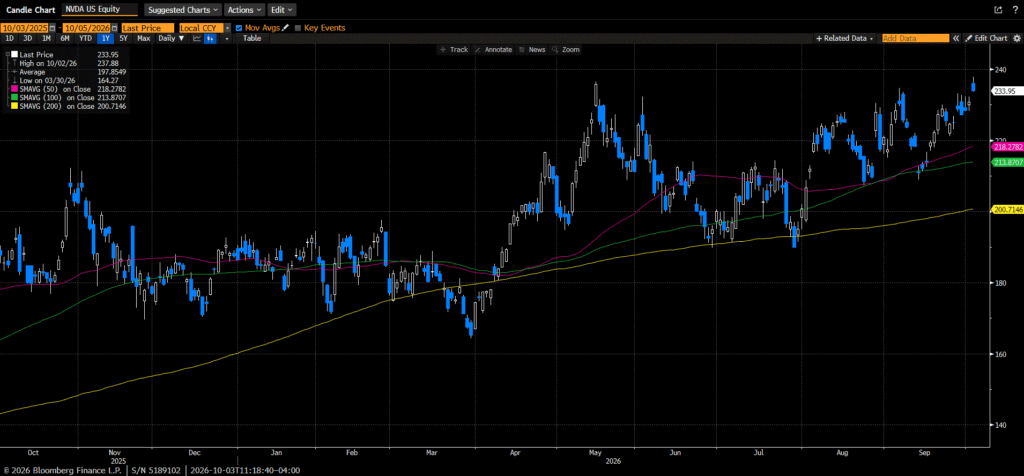
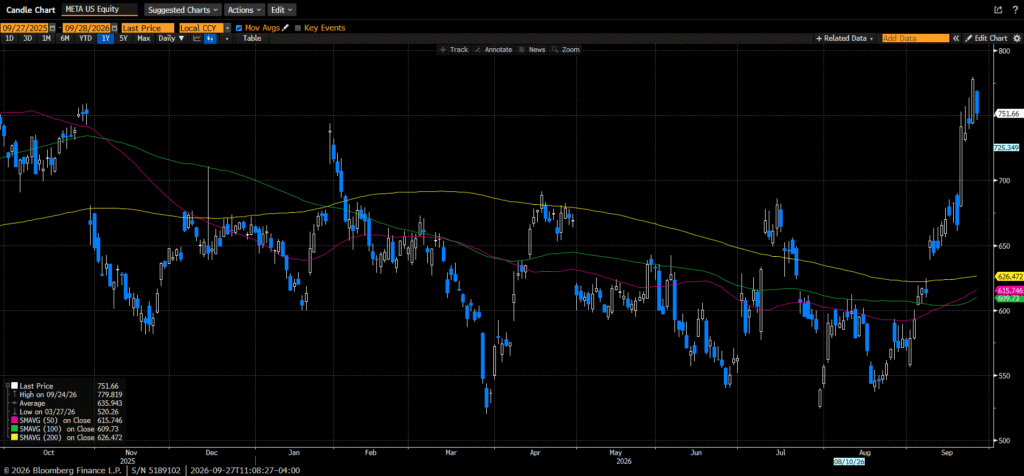
Wow, what a week! US markets were closed on Monday for Martin Luther King Jr. Day, and Donald Trump was inaugurated as the 47th President of the United States. It was a historic day indeed. The global markets were poised for a barrage of executive orders on Trump’s first day back in office, and he did, in fact, execute 26 orders on his first day back. The President declared a national emergency at the southern border and said the government should take all appropriate action to stop and remove illegal immigrants. Trump also issued an order to restrict birthright citizenship. Trump announced a national energy emergency while also calling out OPEC and Saudi Arabia to lower oil prices. Tariff policy has been top of mind for Wall Street, and Trump surprised with the announcement of 25% tariffs on Mexico and Canada that may be levied as soon as February 1st. The President did not announce additional tariff policies on China and Europe. The announcement of a $500 billion AI infrastructure project called Stargate fueled optimism in AI. Later in the week, Meta announced it would likely spend $60-$65 billion in Capex aimed at their AI initiatives. According to the Economist, The World Economic Forum in Davos, Switzerland, had three distinct narratives: trade policy, Artificial intelligence, and European competitiveness. Interestingly, climate change discussions were on the back burner as Trump announced several moves away from subsidized clean energy. Trump announced that the US would no longer participate in the Paris Accord on climate change and that it would depart the World Health Organization. At Davos, Trump also called on European NATO members to earmark 5% of their GDP to NATO. President Trump saw his nominees, Marco Rubio (Secretary of State) and Pete Hegseth (Secretary of Defense), confirmed by Congress.
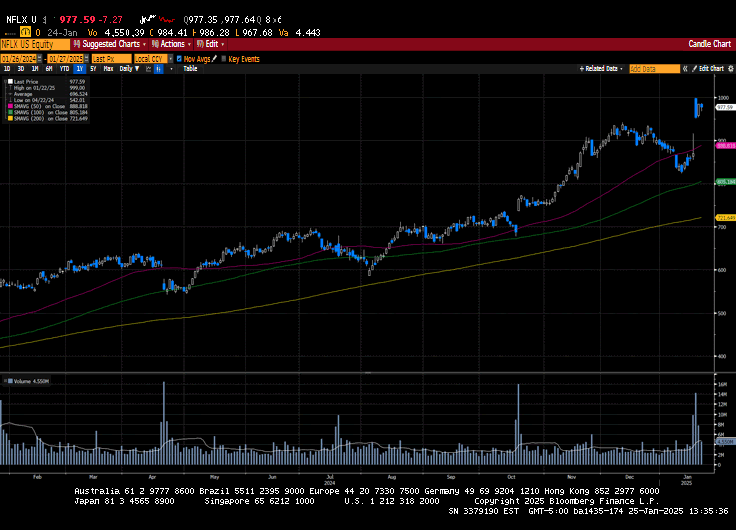
Fourth-quarter earnings results also encouraged markets. Netflix, MMM, Proctor and Gamble, Travelers, and United Healthcare stood out as winners. Texas Instruments and Boeing shares fell after their results. Apple shares were also under pressure after a Bloomberg report suggested that iPhone sales in China have fallen by 18%. In the coming week, we will get a look at Q4 earnings from Apple, Meta, Microsoft, Amazon, and Tesla.
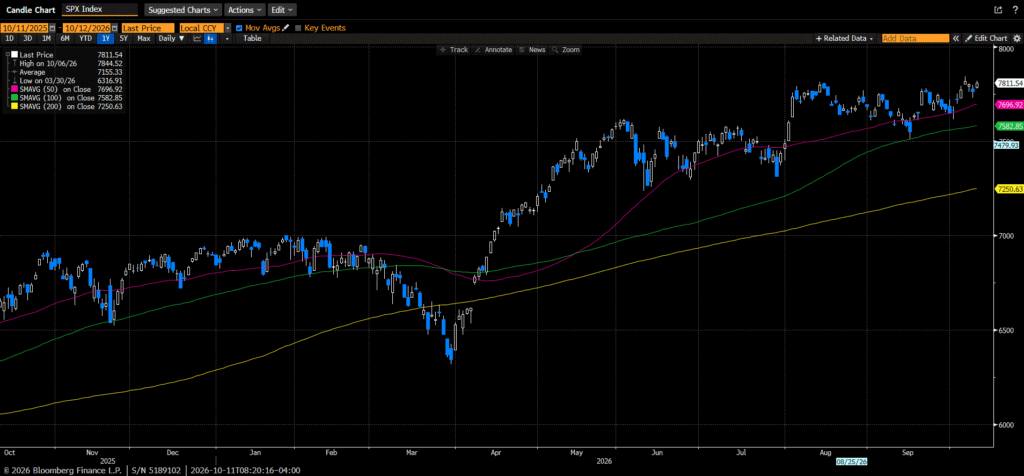
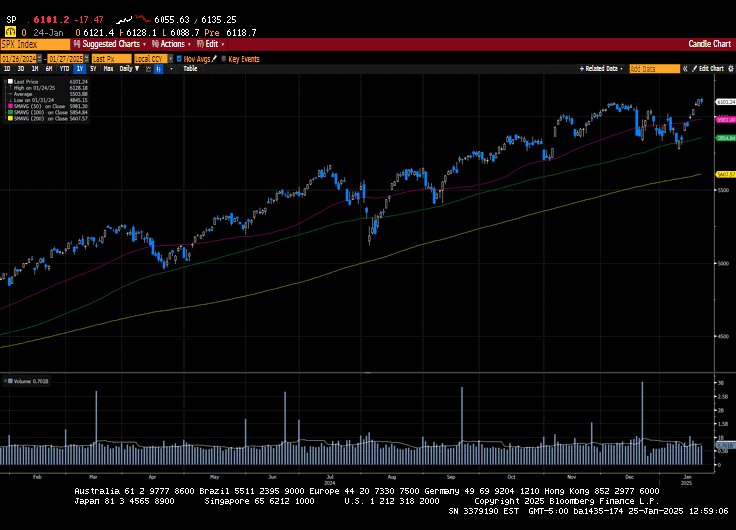
The S&P 500 gained 1.7% and forged an all-time high Thursday. The Dow rose 2.2%, the NASDAQ climbed 1.7%, and the Russell 2000 notched a 1.4% gain. The US Treasuries markets were quiet, which also allied the move in equities. The 2-year yield was unchanged on the week, closing at 4.27%. The 10-year yield increased by two basis points to 4.63%. The Federal Reserve meets in the coming week, and they are widely expected to keep rates at the current level. That said, Trump’s demand that all Global Central Banks cut rates will add an interesting twist to the Q&A session for Fed Chairman J. Powell post-meeting.
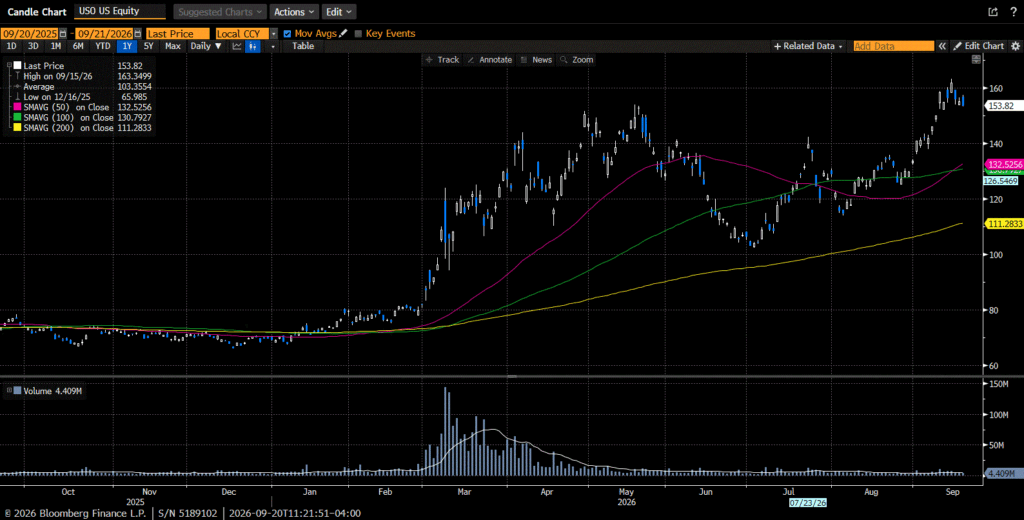
Oil prices fell 3.5% following Trump’s call for lower oil prices. Last week, the energy sector was the lone loser among the S&P 500’s 11 sectors. Gold prices increased by $30 to $2778.50 an Oz. Copper prices fell by four cents to $4.32 per Lb. Bitcoin’s price fell by 1.25% over the week to $104,740. The Dollar index tumbled 1.8% to 107.58. Notably, the Japanese Yen rallied on the Bank of Japan’s decision to raise its policy rate by 25 basis points to 0.50% while indicating the bias for another hike in the future.
The economic calendar was pretty quiet. Initial Jobless Claims ticked higher by 5k to 223k, while Continuing Claims increased by 46k to 1.899M. S&P Global Manufacturing came in better than expected at 50.1, but the Services figure surprised to the downside, coming in at 52.8, down from 56.8 in the prior reading. The final look at the University of Michigan’s January Consumer sentiment index showed a decline to 71.1 from 74 in December. Concerns regarding employment and inflation were evident in the report.
Investment advisory services offered through Foundations Investment Advisors, LLC (“FIA”), an SEC registered investment adviser. FIA’s Darren Leavitt authors this commentary which may include information and statistical data obtained from and/or prepared by third party sources that FIA deems reliable but in no way does FIA guarantee the accuracy or completeness. All such third party information and statistical data contained herein is subject to change without notice. Nothing herein constitutes legal, tax or investment advice or any recommendation that any security, portfolio of securities, or investment strategy is suitable for any specific person. Personal investment advice can only be rendered after the engagement of FIA for services, execution of required documentation, including receipt of required disclosures. All investments involve risk and past performance is no guarantee of future results. For registration information on FIA, please go to https://adviserinfo.sec.gov/ and search by our firm name or by our CRD #175083. Advisory services are only offered to clients or prospective clients where FIA and its representatives are properly licensed or exempted.