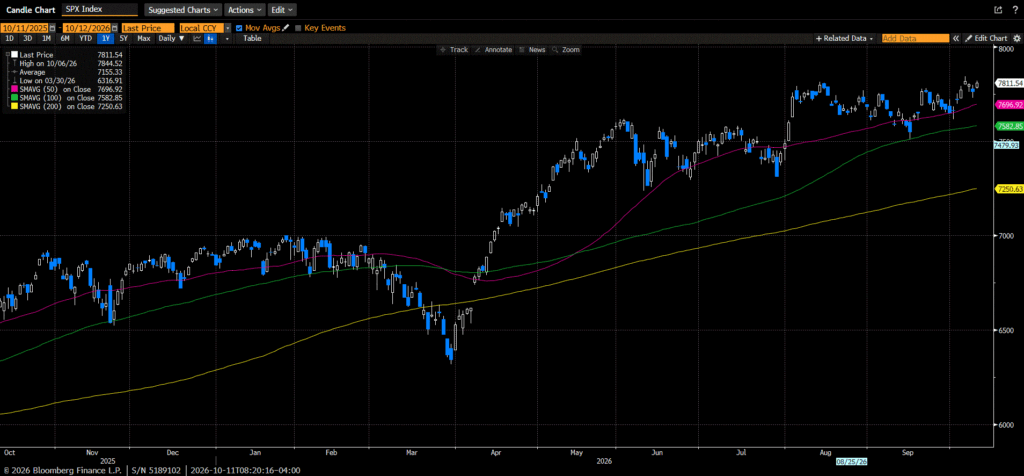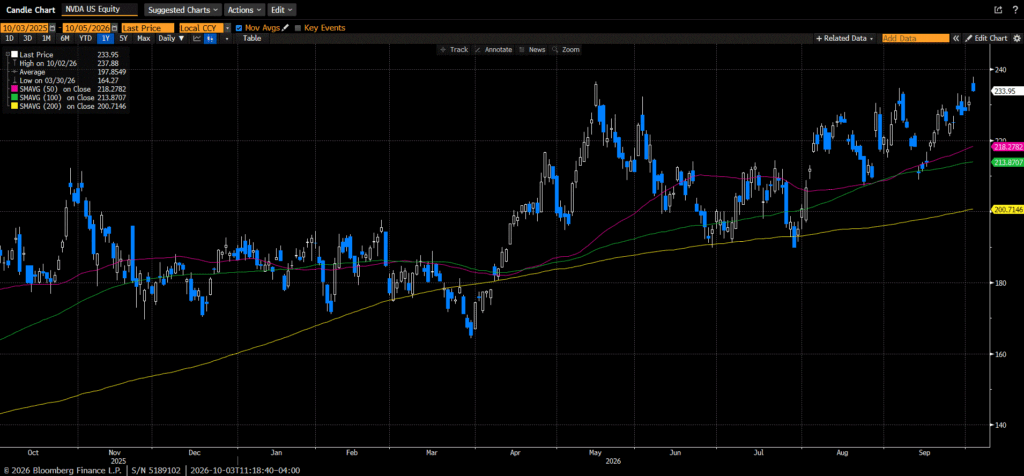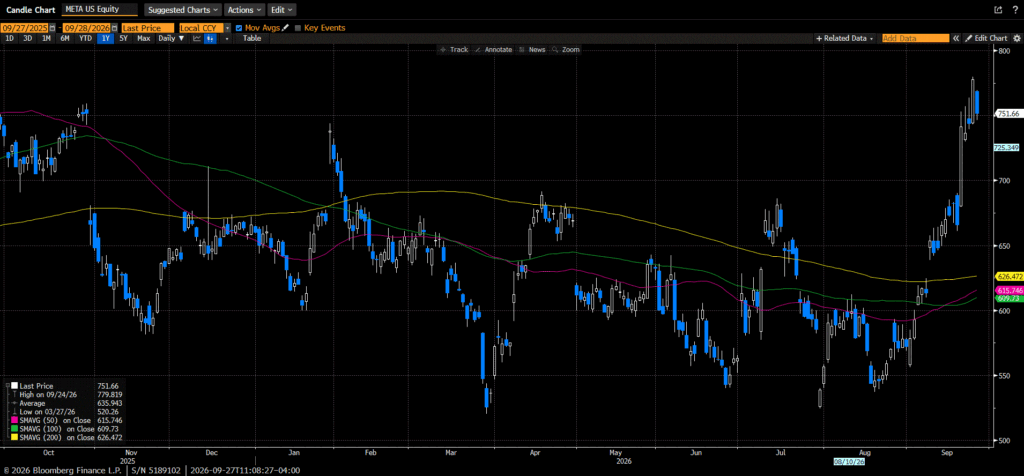

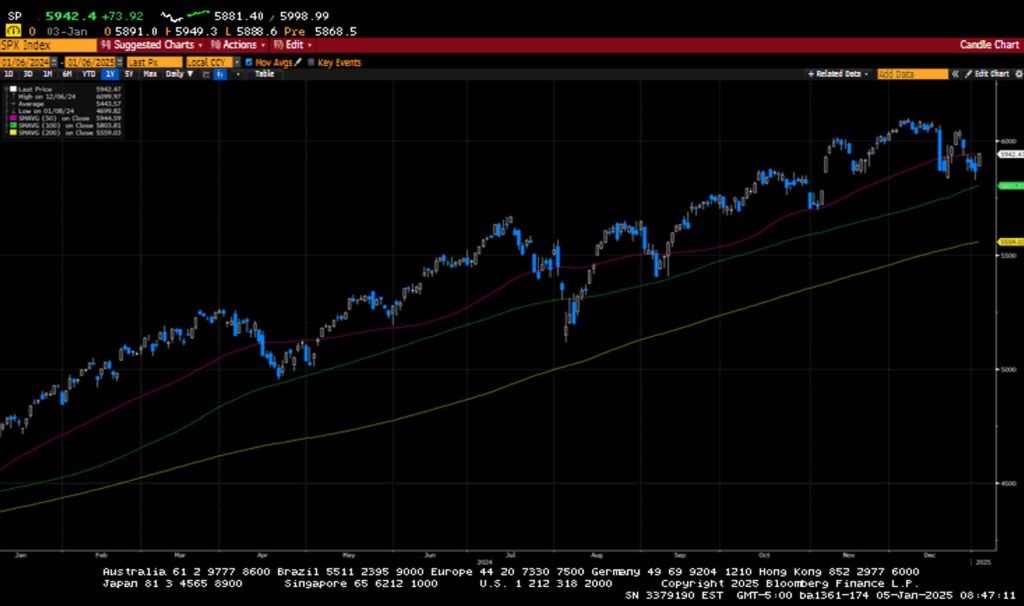
The final trading sessions for 2024 extended losses from the prior week, but the S&P 500 and NASDAQ still posted impressive gains for the year, 23.3% and 28.6%, respectively. The so-called Santa Clause Rally did not appear for the second year, as the final seven trading sessions produced a 1.6% loss in the S&P 500. The holiday-shortened week saw increased volatility as trading volume skewed to the light side. Friday’s session saw investors come in and buy the dip, with mega-cap issues outperforming. As we move into 2025, there are several variables Wall Street is considering. What exactly will the Trump 2.0 policy look like ( think taxes, tariffs, deregulation, geopolitical relations), and will these policies foster inflation? What will global central bank policy look like, and where will the most significant policy divergences materialize? Will the US consumer continue to show up, providing a tailwind to corporate earnings and the economy? What will corporate earnings be, and will they broaden out from the mega-cap technology names? Will artificial intelligence capital expenditures continue, and will past expenditures start to show a return on investment? Will US exceptionalism continue, or will other global economies begin to outperform? There will be a lot to unpack over the next several months, and we expect increased volatility as the answers to these questions are found out.
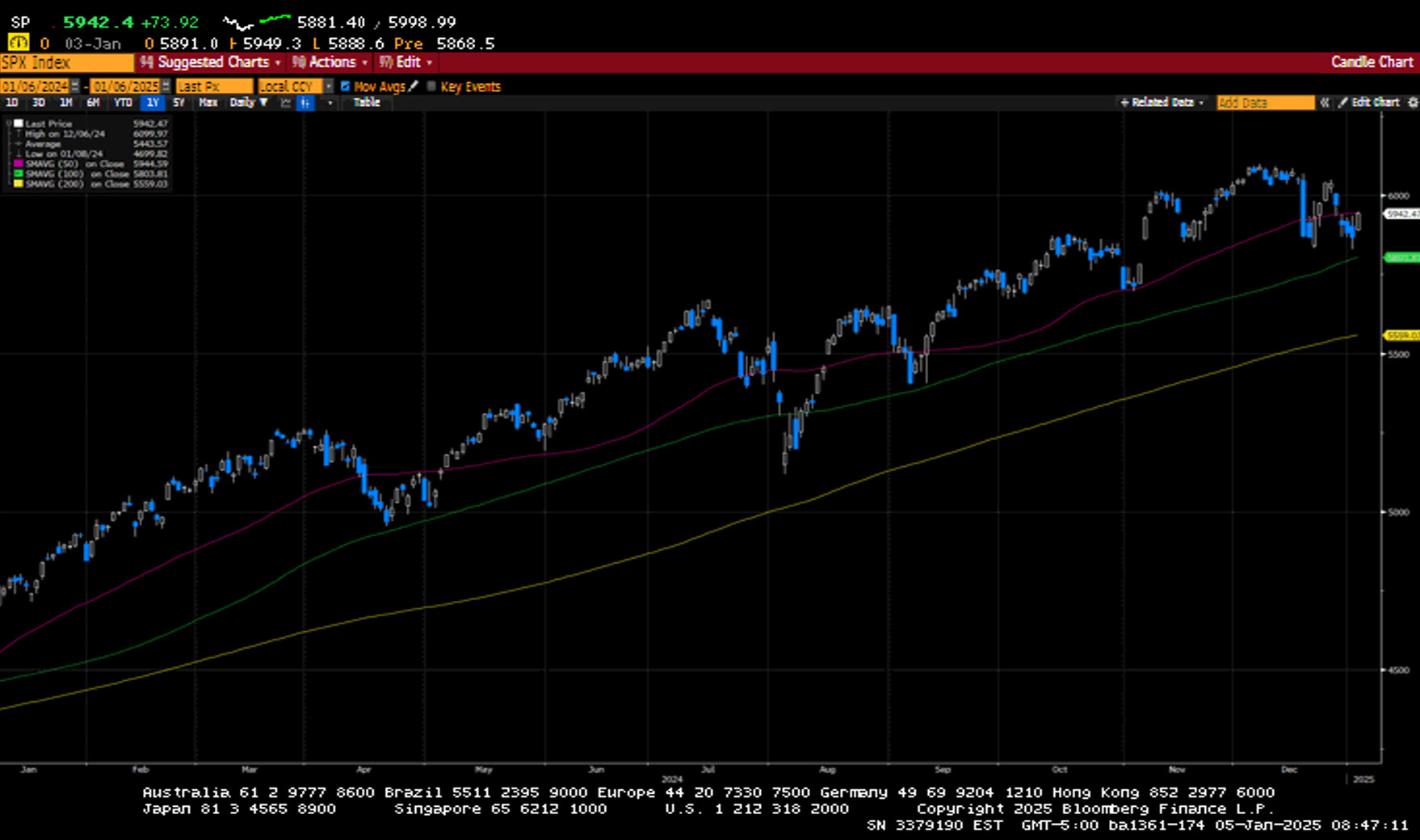
2024 was an excellent year for the equity markets, with the S&P 500 gaining 23.3%, the Dow added 12.9%, the NASDAQ rose 28.6%, and the Russell 2000 increased 10%. It was a more challenging market for US Treasuries as the 2-year yield decreased by just one basis point over the year to 4.24%, while the 10-year yield increased by sixty-nine basis points to 4.57%. However, the absolute moves across the curve really does not tell the whole story, as investors witnessed extreme volatility in the rates market with several material movers throughout the year.
Internationally, I was a bit surprised to see some of the year end numbers. The German DAX was up 18.8% despite a very weak economic backdrop. The China Shanghai Composite was up 12.6% despite lackluster economic policy. Weakness in South Korea was evident given the recent political fallout- the Kospi fell 9.6% for the year. Similarly, political uncertainty in France weighed on the CAC 40, which shed 2.4%.
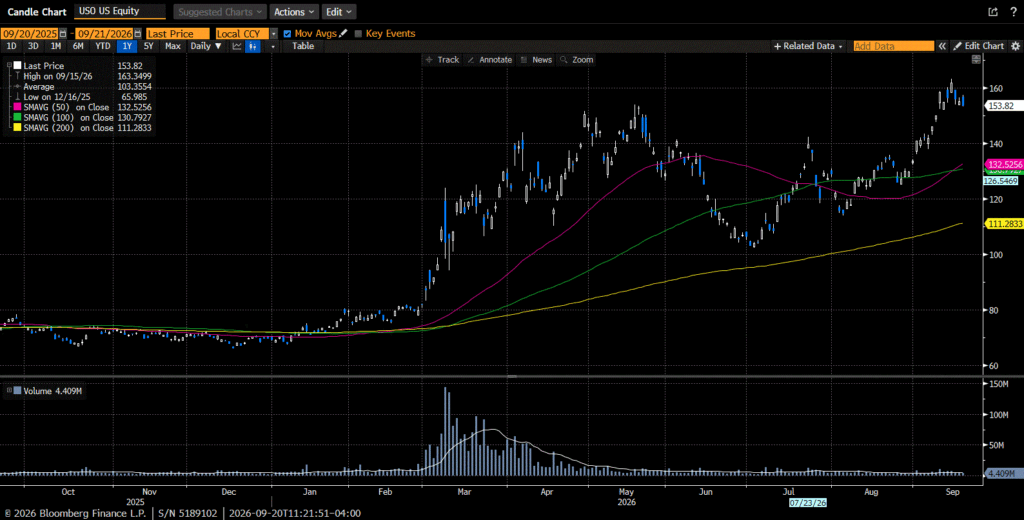
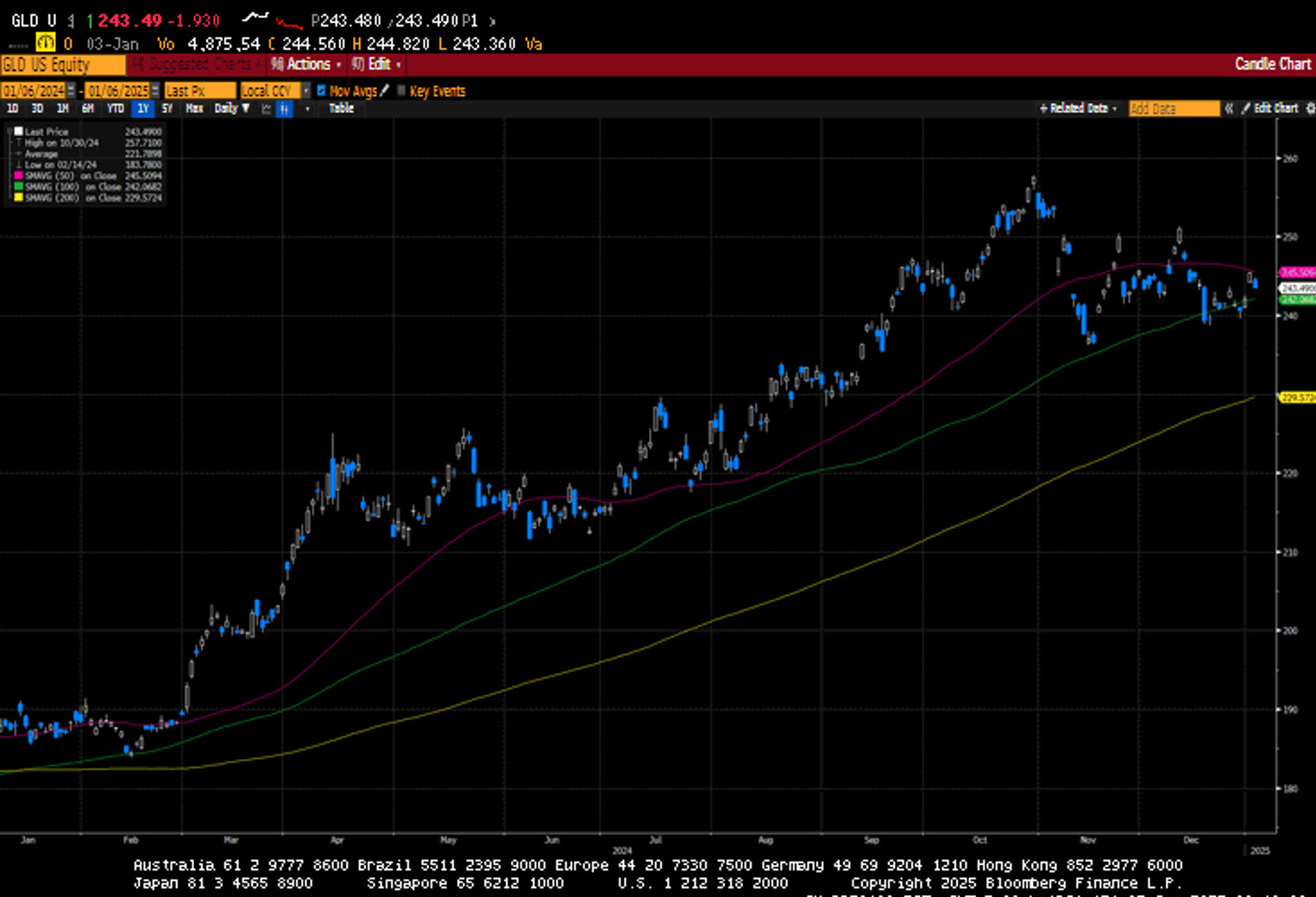
Gold prices rallied 27.4% or $568.80 to close 2024 at $2641.10 an Oz. The price of Oil closed the year where it started, gaining $0.01 to close at $71.85 per barrel. Copper prices increased by $0.13 to $4.02 per Lb. The price of Bitcoin over the last year has surged by ~121%, rising by $54,700 to $97,944. The US Dollar index increased by 7.1% to 108.49. The currency markets were also riddled with volatility as the Yen carry trade unwound in early July. The Euro closed the year on its lows trading at 103.53 to the US Dollar, and looks poised to break parity in the coming weeks.
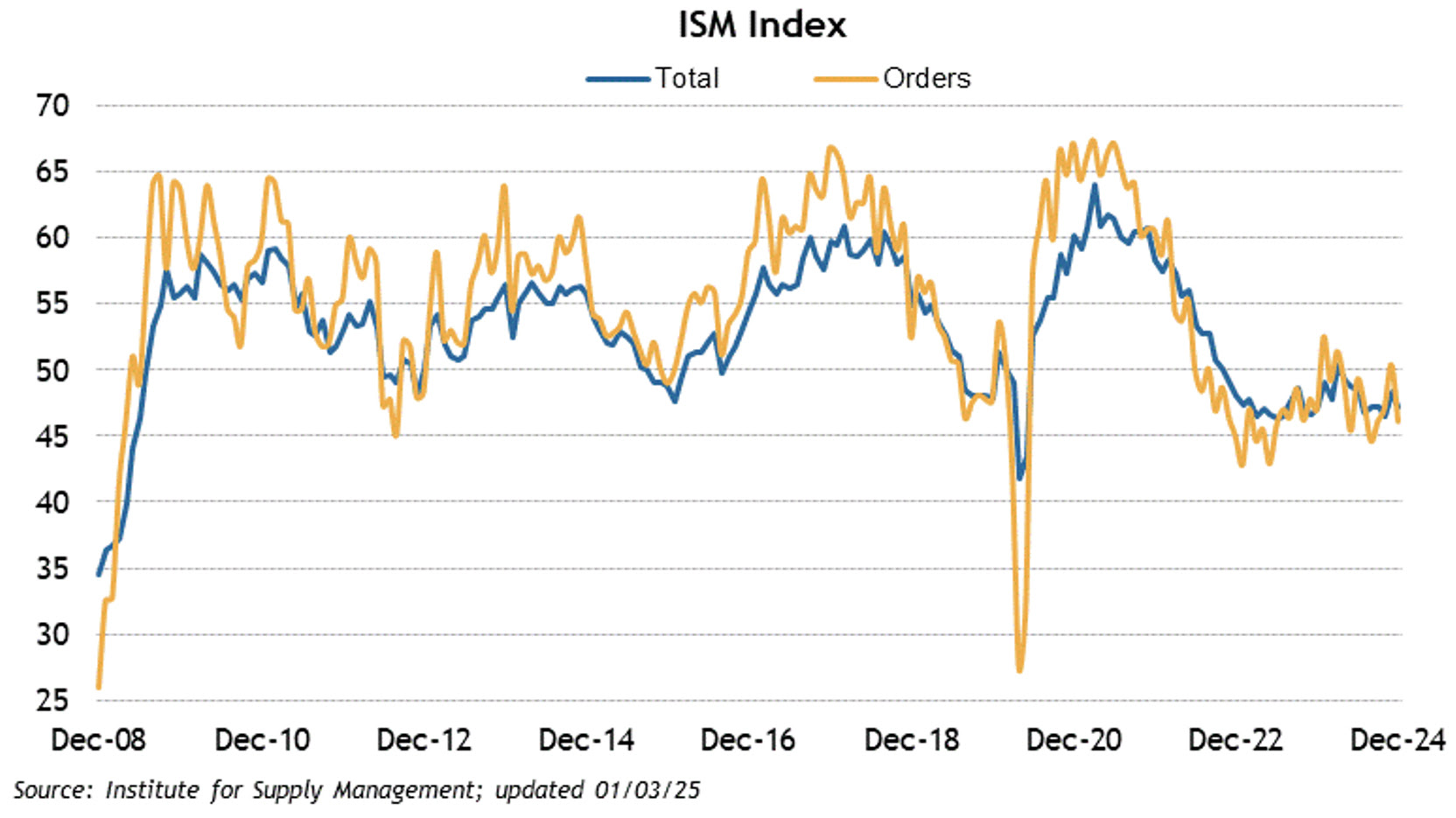
The Economic calendar featured some better-than-expected manufacturing data. The ISM Manufacturing Index increased to 49.3% versus the prior reading of 48.4% and topped the consensus estimate of 48.7%. The S&P Global Manufacturing PMI came in at 49.4%. Initial Jobless Claims fell by 9k to 211k, while Continuing Claims fell by 52k to 1844k.
Investment advisory services offered through Foundations Investment Advisors, LLC (“FIA”), an SEC registered investment adviser. FIA’s Darren Leavitt authors this commentary which may include information and statistical data obtained from and/or prepared by third party sources that FIA deems reliable but in no way does FIA guarantee the accuracy or completeness. All such third party information and statistical data contained herein is subject to change without notice. Nothing herein constitutes legal, tax or investment advice or any recommendation that any security, portfolio of securities, or investment strategy is suitable for any specific person. Personal investment advice can only be rendered after the engagement of FIA for services, execution of required documentation, including receipt of required disclosures. All investments involve risk and past performance is no guarantee of future results. For registration information on FIA, please go to https://adviserinfo.sec.gov/ and search by our firm name or by our CRD #175083. Advisory services are only offered to clients or prospective clients where FIA and its representatives are properly licensed or exempted.