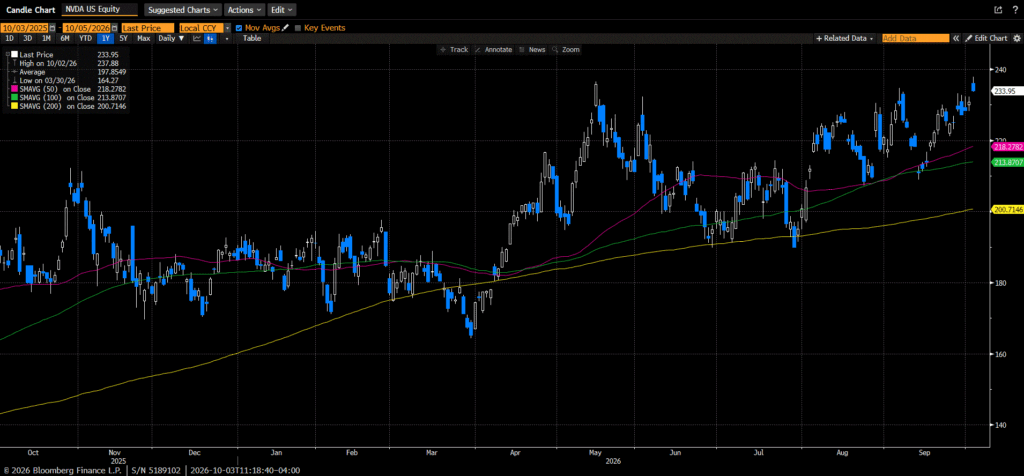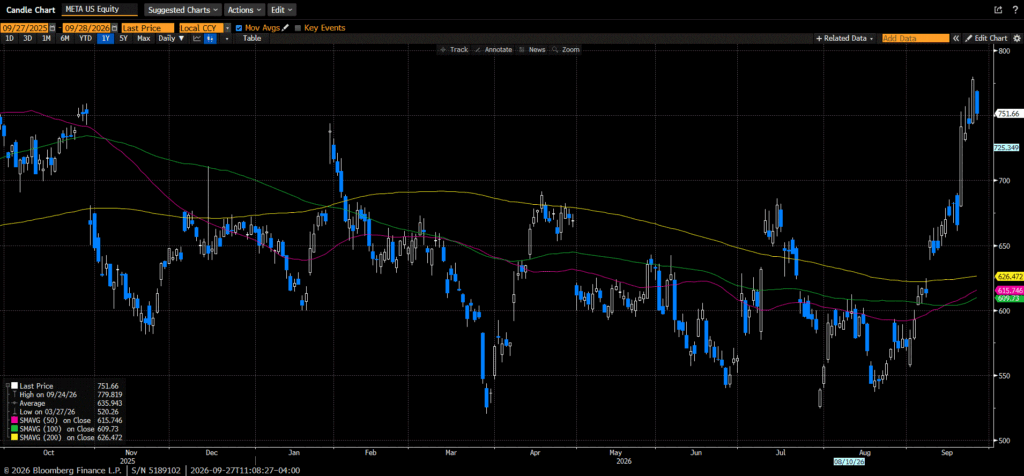

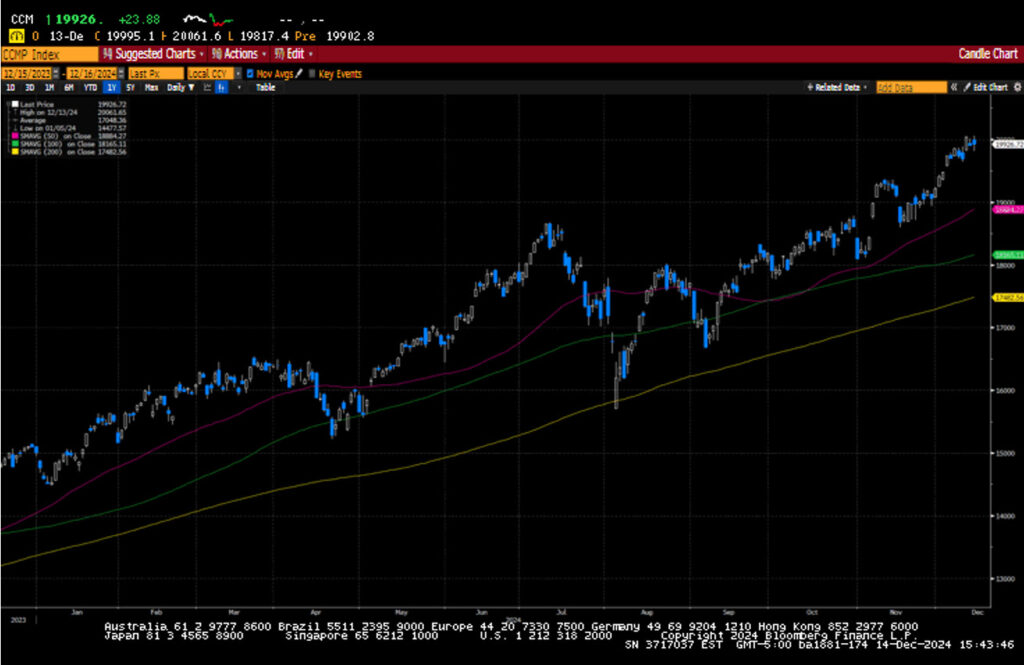
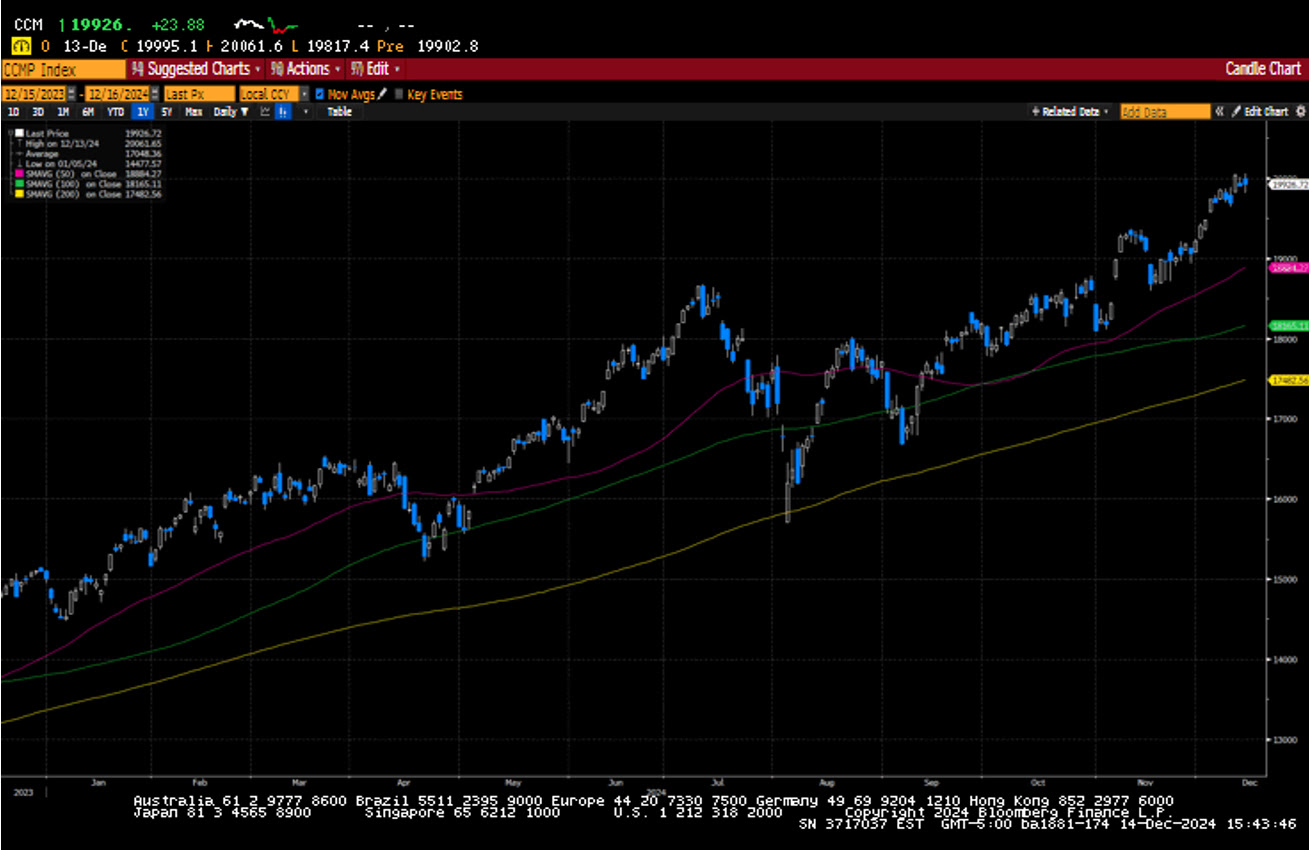
The Nasdaq eclipsed the 20,000 level for the first time this week as investors reengaged in buying the mega-cap technology names. Amazon, Google, Tesla, and Meta hit new highs for the year as investors heard about more advances in AI and quantum computing. Google showcased advances in its quantum computing chip, Willow, while Broadcom reported stellar 3rd quarter results and announced it would work on a new AI chip for Apple. Market action was somewhat tempered by lackluster 3rd quarter results from Oracle and Adobe and by the announcement that Chinese authorities were investigating Nvidia for anti-competitive practices.
Sticky US inflation data and a softer print in initial claims did not change the market’s expectation that the Fed would cut by twenty-five basis points in next week’s FOMC meeting. The European Central Bank cut its policy rate by twenty-five basis points, while the Bank of Canada and the Swiss National Bank opted for a fifty-basis-point cut. Chinese officials announced more monetary easing and plans to boost domestic consumption, but investors were left with very few details. We are expecting the Fed to cut by twenty-five basis points but will be more focused on the Fed’s Summary of Economic Projections that may show the Fed curtailing rate cuts in 2025.
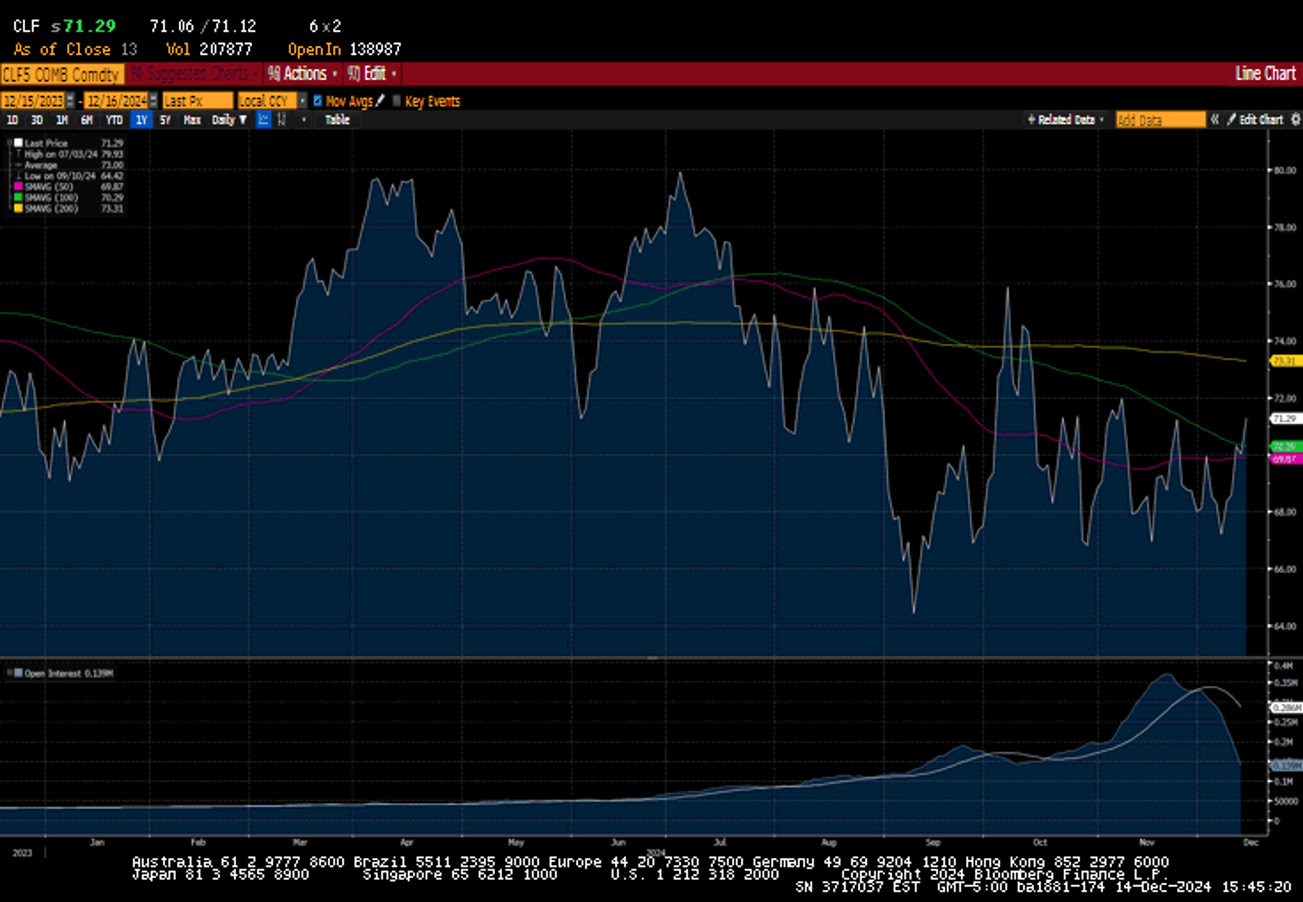
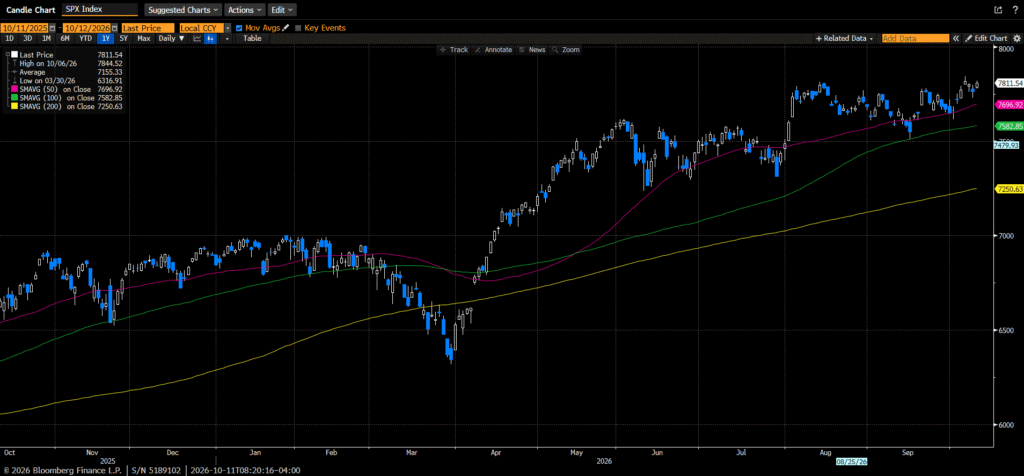
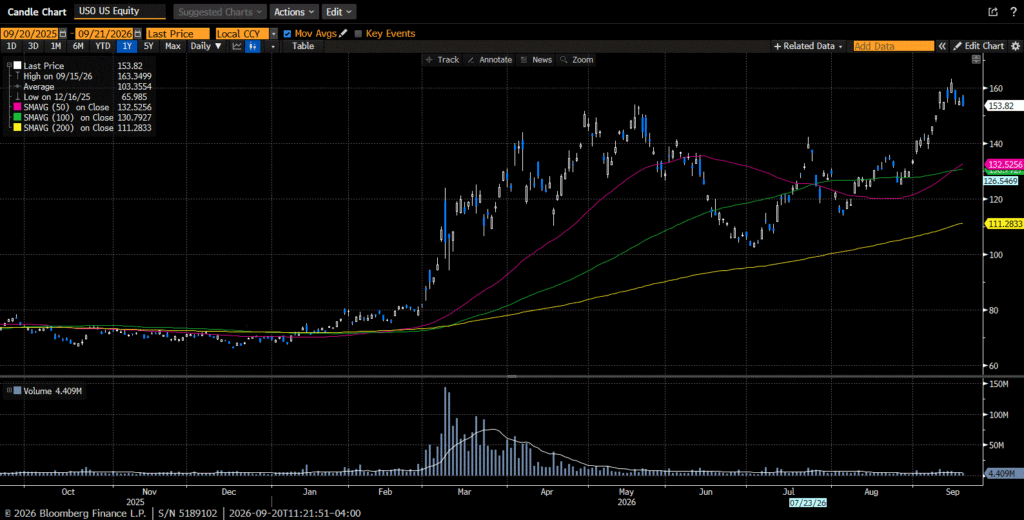
The S&P 500 lost 0.6%, the Dow fell by 1.8%, the Nasdaq gained 0.3%, and the Russell 2000 lagged, losing 2.6%. Interestingly, market breadth has been skewed toward more stocks losing than gaining over the last nine market sessions. This comes even as Wall Street Strategist projects more gains in 2025. Oppenheimer expects the S&P 500 to be at 7100 by the end of 2025, while Citi’s strategist sees a base case for 6500. US Treasuries had the worst week in a couple of months as yields moved higher across the curve. The 2-year yield increased by fourteen basis points to 4.24%, while the 10-year yield rose by twenty-five basis points to 4.40%. Oil was well-bid on the week, gaining over 6% or $4.12 to close at $71.29. Crude rose on the idea of tighter sanctions and more enforcement from President-elect Trump on Iran and Russia’s oil exports. Gold prices rose by $17.90 to $2676.70. Copper prices were unchanged on the week at $4.20. Bitcoin regained the $100,000 mark and closed at $101,200. The US Dollar index closed the week higher by 1% at 107.02. There was notable weakness in the Chinese Yuan after Chinese officials floated the idea of a weaker currency to address potential Trump tariffs.
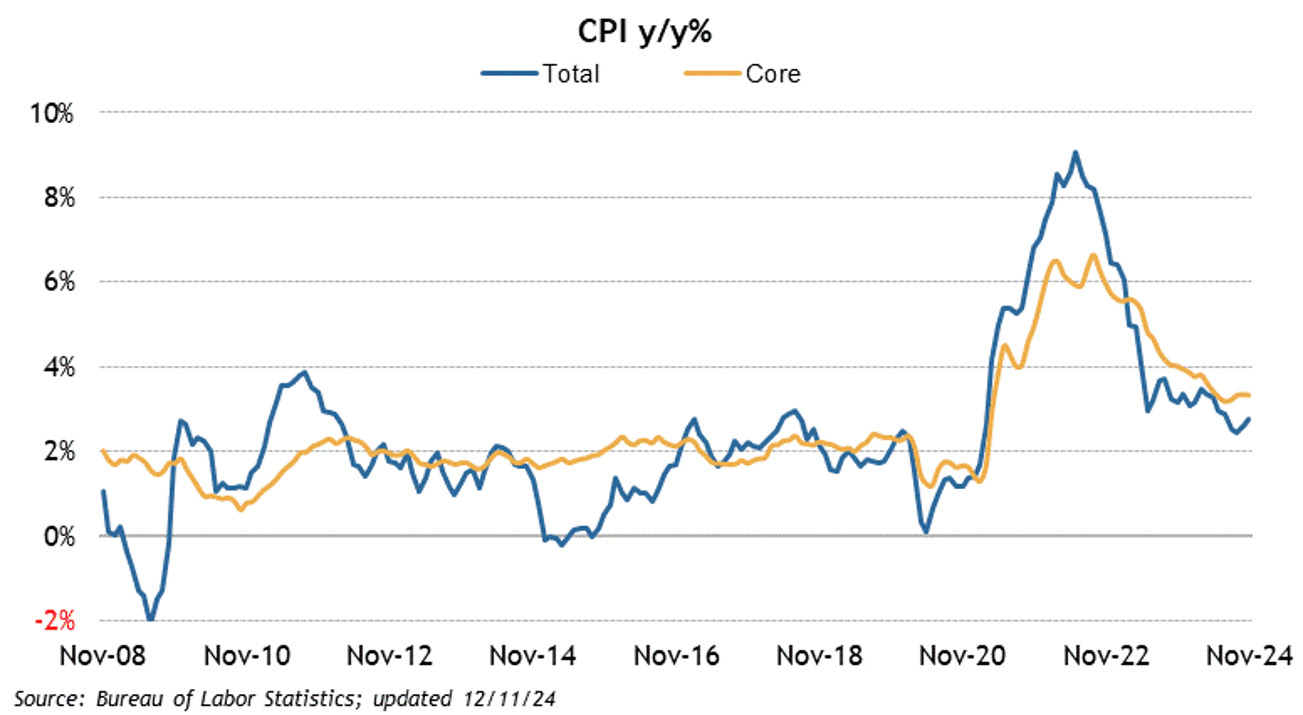
The economic calendar showed little progress on inflation. The Consumer Price Index (CPI) showed an increase of 0.3% in November, which was in line with the street’s expectations. The headline print was up 2.7% on a year-over-year basis, up from 2.6% in October. The Core reading, which excludes food and energy, was also up 0.3% and 3.3% year-over-year, unchanged from October. Notably, shelter prices rose at the smallest level since April of 2021. The Producer Price Index (PPI) increased by 0.4%, above the consensus estimate of 0.2%. On a year-over-year basis, prices rose 3% versus 2.6% in October. Core PPI rose 0.2%, in line with expectations, but rose 3.45% year-over-year, up from 3.37% in October. Food prices were the most significant contributor to the PPI reading. An uptick in Initial Claims caught investor’s eyes. The print increased by 17k over the prior week to 242k. Continuing Claims increased by 15k to 1.886M.
Investment advisory services offered through Foundations Investment Advisors, LLC (“FIA”), an SEC registered investment adviser. FIA’s Darren Leavitt authors this commentary which may include information and statistical data obtained from and/or prepared by third party sources that FIA deems reliable but in no way does FIA guarantee the accuracy or completeness. All such third party information and statistical data contained herein is subject to change without notice. Nothing herein constitutes legal, tax or investment advice or any recommendation that any security, portfolio of securities, or investment strategy is suitable for any specific person. Personal investment advice can only be rendered after the engagement of FIA for services, execution of required documentation, including receipt of required disclosures. All investments involve risk and past performance is no guarantee of future results. For registration information on FIA, please go to https://adviserinfo.sec.gov/ and search by our firm name or by our CRD #175083. Advisory services are only offered to clients or prospective clients where FIA and its representatives are properly licensed or exempted.