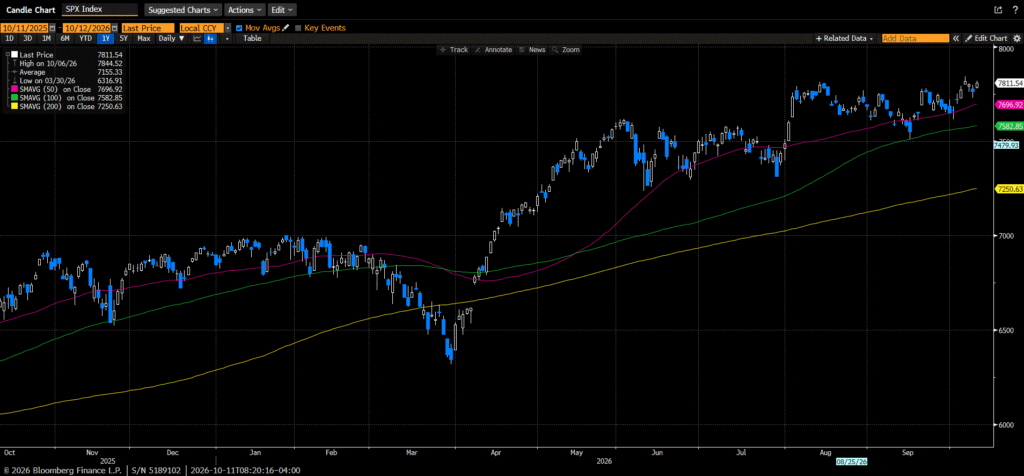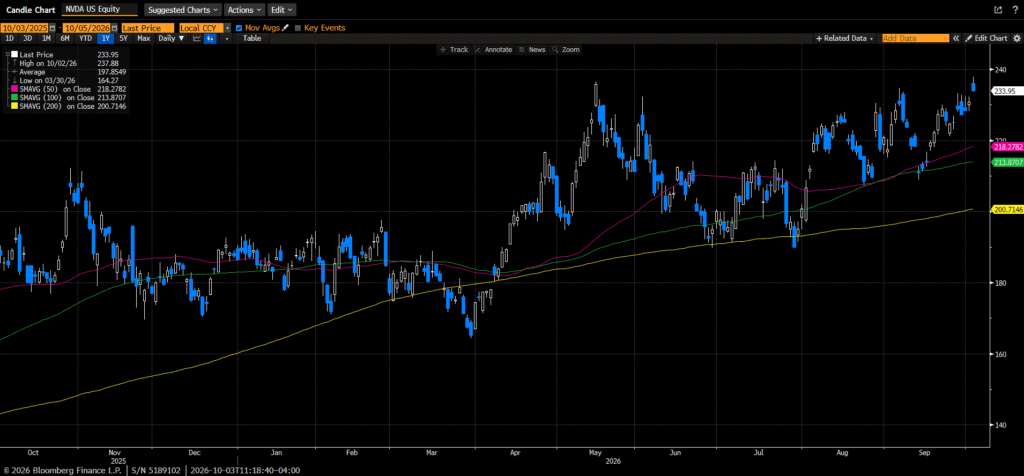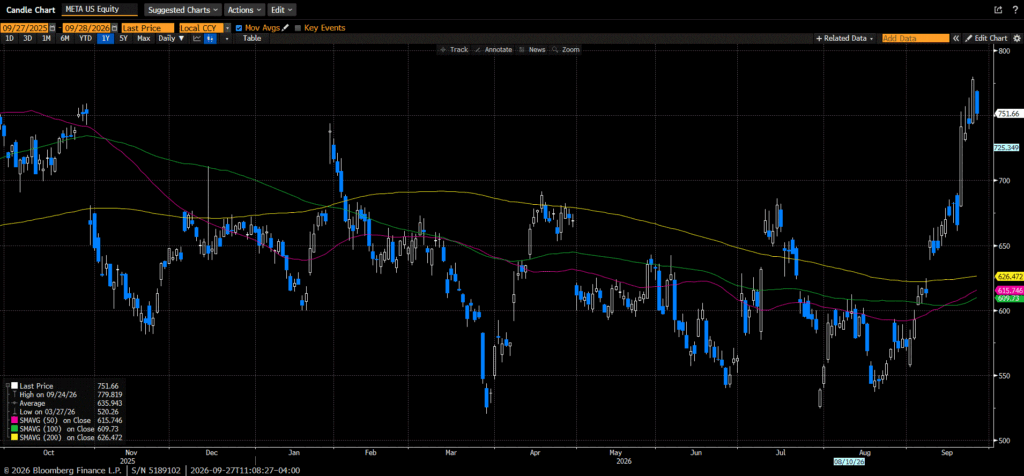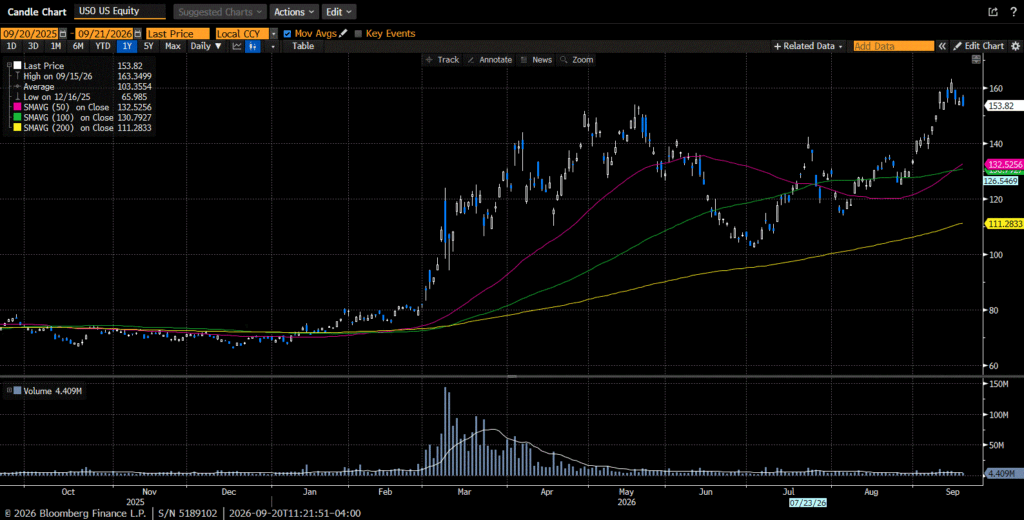


The holiday-shortened week saw the S&P 500 and Dow rise to new all-time highs. Investors cheered the nomination of Scott Bessent as Treasury Secretary, who is seen as a fiscal hawk and someone who will support Trump’s trade policies. US Treasuries rallied significantly on the idea of fiscal restraint. Markets were tested on the announcement that Trump plans to place an additional 10% tariff on Chinese goods while imposing a 25% tariff on goods from Mexico and Canada. The news catalyzed the leaders of Mexico and Canada to come to the table to strengthen policy on immigration and border security. A ceasefire agreement between Israel and Hezbollah was also constructive for the broader market, even as the war premium in oil faded. The 60-day agreement will likely be tested, and everyone recognizes this is a complicated situation that will require an extension of the timeline to find a comprehensive resolution. Third-quarter results posted this week from Dell, Hewlett Packard, Crowdstrike and Macy’s were disappointing.
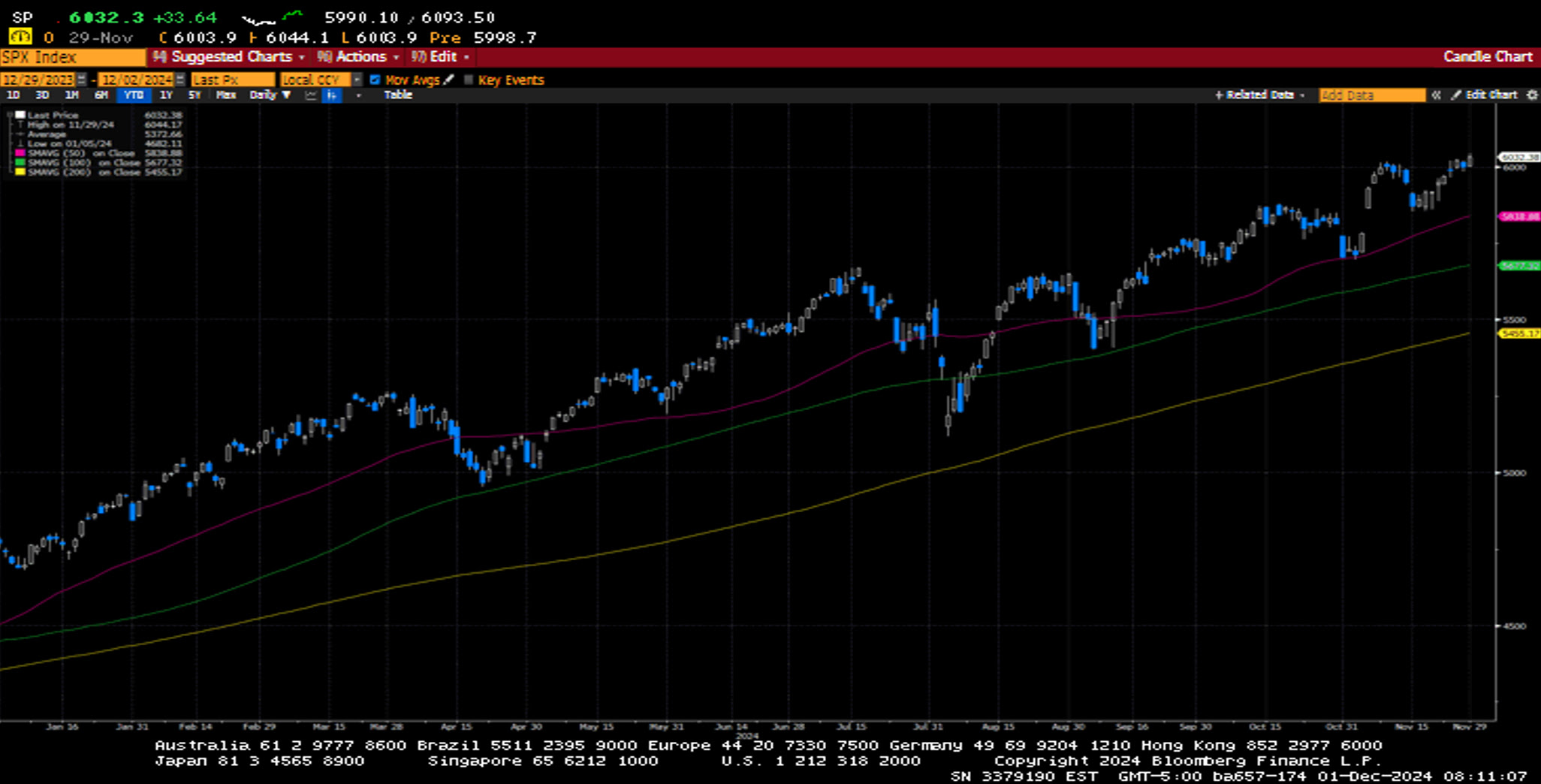
The S&P 500 gained 1.4%, the Dow added 1.7%, the NASDAQ increased 1.4%, and the Russell 2000 rose 1.4%. US Treasuries had a fantastic week of gains. The 2-year yield fell by twenty-one basis points to 4.16%, while the 10-year yield decreased by twenty-three basis points to 4.18%. Oil prices tumbled 4% or $2.83 to close at $68.45 a barrel. Gold prices fell 1.2% to close at $2678.10 an Oz. Copper price increased by five cents to $4.14 per Lb. Bitcoin fell by ~$900 to close at $96,600. The US Dollar index fell for the first time in eight weeks by 1.6% to 105.80.
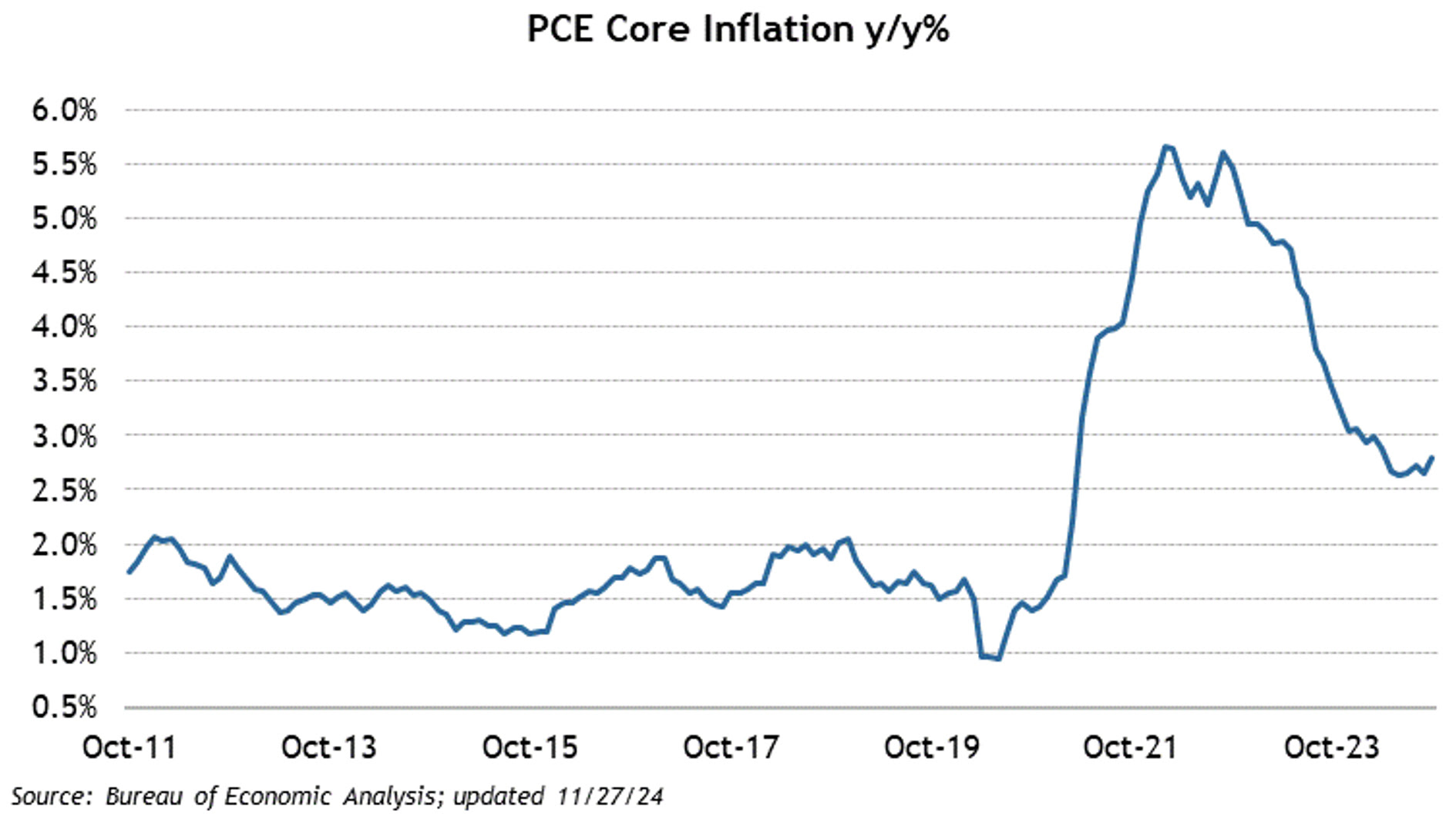
The economic calendar featured the Fed’s preferred measure of inflation, the PCE, which showed little progress on inflation. Headline PCE for the month of October came in line with expectations at 0.2% but, on a year-over-year basis, ticked to 2.3% from 2.1% in September. The core reading that excludes food and energy came in at 0.3%, which is also in line with the street’s expectations but rose 2.8% on a year-over-year basis, up from 2.7% in September. Notably, the price index for services rose to 3.9% in October from 3.7% in September. The data could provide the Fed some cover if it decides to hold rates at the current level at the December FOMC meeting. Fed Fund futures currently ascribe a 66% probability of a twenty-five basis point rate cut on December 18th. Personal Income increased by 0.6%, while Personal Spending rose by 0.4%. New Home Sales fell short of the consensus estimate at 610k. Consumer Confidence came in at 111.7, well above the prior reading of 109.6. The 2nd estimate of Q3 GDP came in at 2.8%, while the forecast for the GDP deflator came in at 1.9%. Initial Claims were unchanged at 213k, while Continuing Claims increased by 9k to 1907k.
Investment advisory services offered through Foundations Investment Advisors, LLC (“FIA”), an SEC registered investment adviser. FIA’s Darren Leavitt authors this commentary which may include information and statistical data obtained from and/or prepared by third party sources that FIA deems reliable but in no way does FIA guarantee the accuracy or completeness. All such third party information and statistical data contained herein is subject to change without notice. Nothing herein constitutes legal, tax or investment advice or any recommendation that any security, portfolio of securities, or investment strategy is suitable for any specific person. Personal investment advice can only be rendered after the engagement of FIA for services, execution of required documentation, including receipt of required disclosures. All investments involve risk and past performance is no guarantee of future results. For registration information on FIA, please go to https://adviserinfo.sec.gov/ and search by our firm name or by our CRD #175083. Advisory services are only offered to clients or prospective clients where FIA and its representatives are properly licensed or exempted.