Weekly Market Commentary

-Darren Leavitt, CFA

The S&P 500 advanced for the sixth consecutive week, closing at a new record high. This week, a broadening out of the market’s rally was evident, with small caps and the equally weighted S&P 500 index outperforming. Markets also appear to be embracing parts of the market that were favored when Trump won the presidential election in 2016. The so-called Trump trade includes exposure to the financials, the US Dollar, Small Caps, and, this time around, crypto assets.  Interestingly, national polling shows the presidential race as a dead heat within the margins of error; however, in the betting venues, where over two billion is wagered on the presidential election, Trump is the clear favorite.  With just over two weeks before the election, markets feel a bit extended. Still, better-than-expected third-quarter earnings, along with robust economic data, have prompted investors off the sidelines for fears of missing out on further gains.
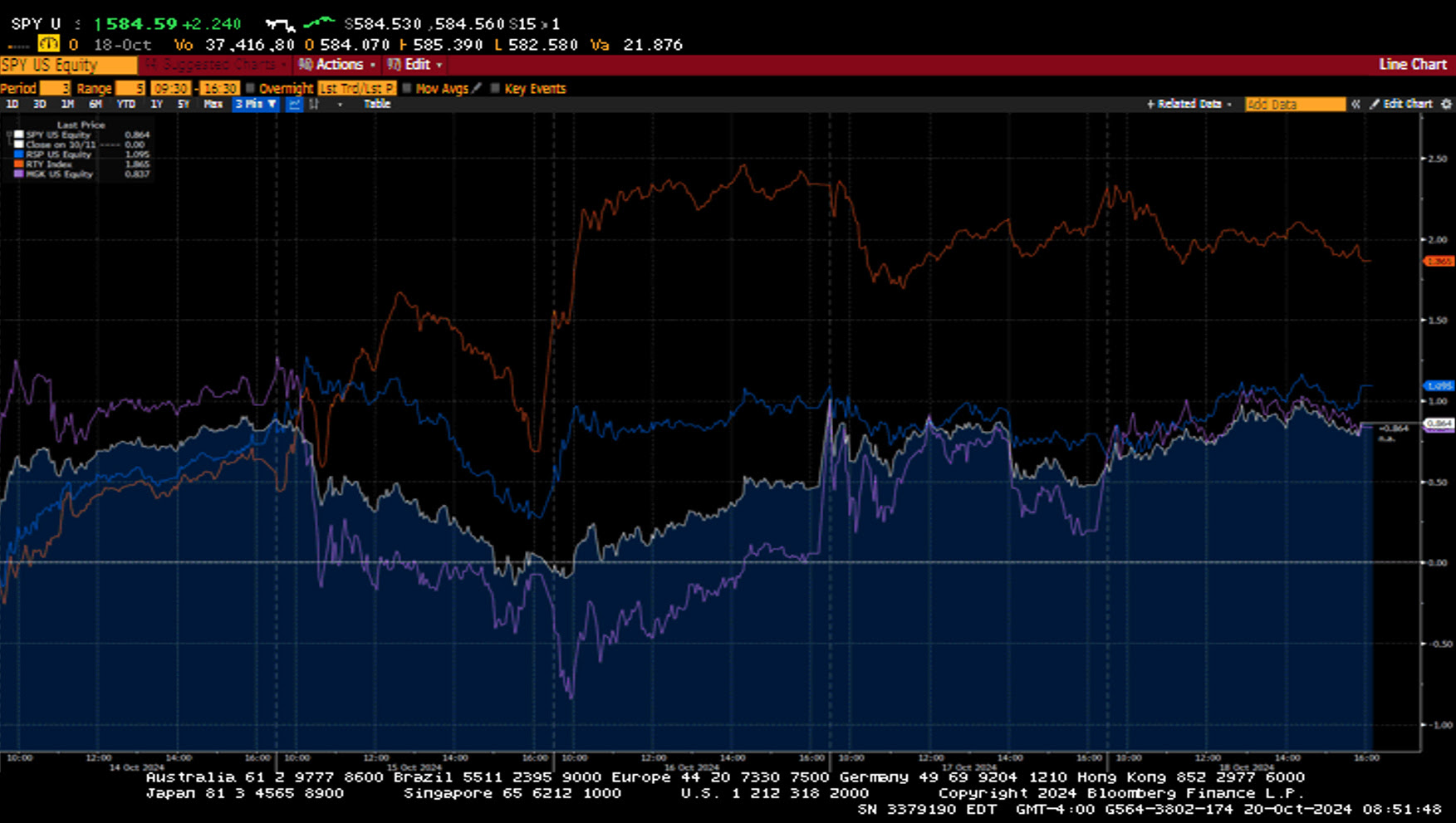
On the earnings front, I would highlight continued strength in the financials.  Morgan Stanley, Goldman Sachs, and Blackstone were notable outperformers.  Netflix posted solid results, and so did United Airlines.  The Semiconductor sector posted mixed results this week as the Biden Administration announced further measures to curb the sales of advanced AI chip technology to specific countries.  The news came just before the errant early release of Dutch semiconductor equipment maker ASML’s quarterly results, where the company missed on earnings, revenues, and bookings while slashing its full-year 2025 guidance.  The news sent shares lower by 17% while its peers sold off in sympathy.  Later in the week, the Semis caught a bid off of the better-than-anticipated results from Taiwan Semiconductor.  The healthcare sector struggled this week due to disappointing results from United Health and Elevance.  Apple advanced on the news that sales of the iPhone 16 accelerated in China.

The S&P 500 added 0.9%, the Dow rose by 1%, the NASDAQ gained 0.8%, and the Russell 2000 jumped 1.9%.  The Treasury market ended the week flat, with the 2-year yield increasing by one basis point to 3.95%, while the 10-year yield closed unchanged at 4.07%.
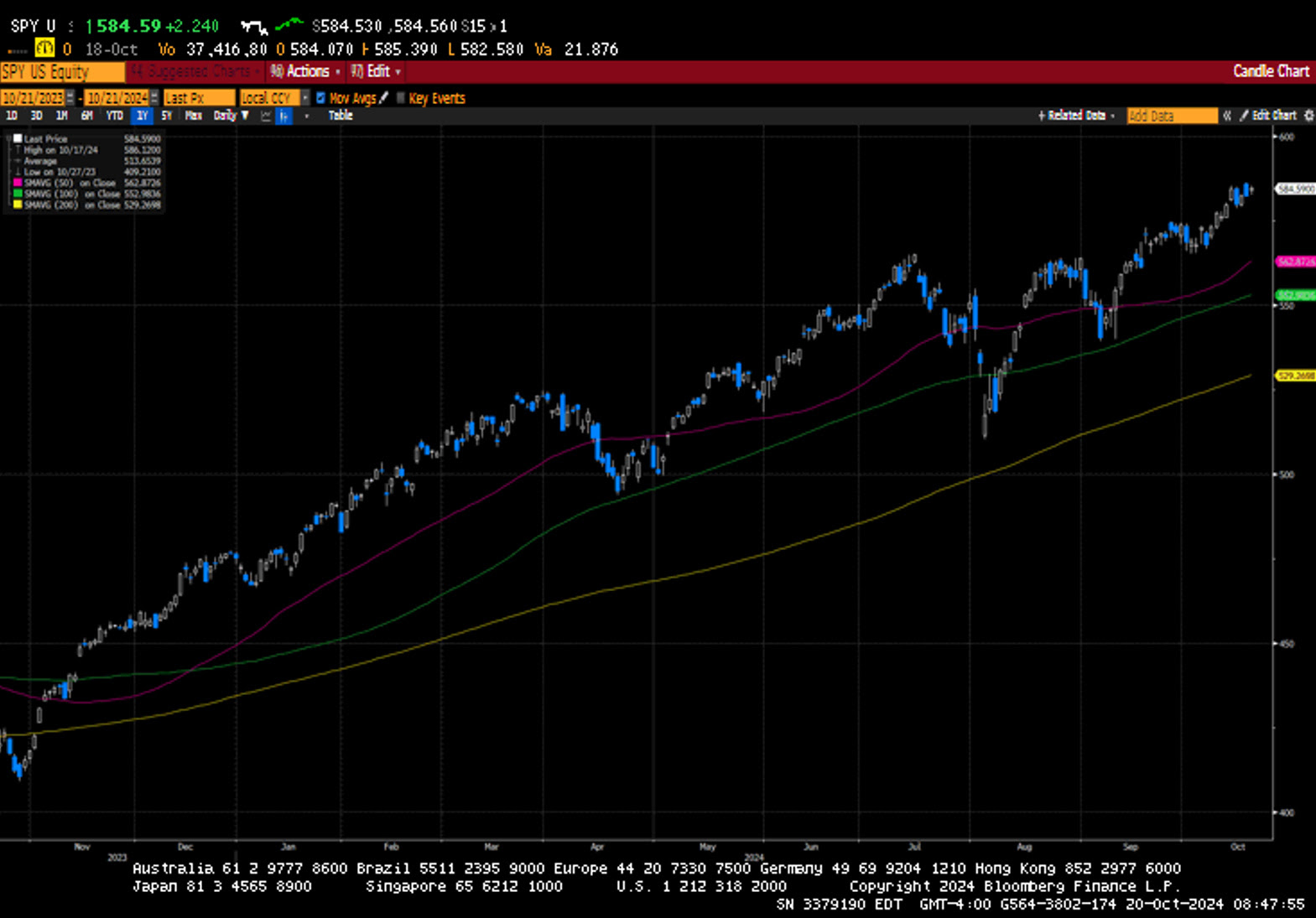
Oil prices tumbled 8.4% on the week as several reports suggested that Israel is not currently targeting Iran’s energy infrastructure. Israel also announced that the IDF had killed the leader of Hamas, Yahya Sinwar.  The news prompted calls for renewed cease-fire discussions. Oil and other commodities were also weak due to the lackluster stimulus announcement made by China’s Minister of Finance, which offered very little regarding how the Chinese aim is to boost domestic consumption.   WTI, which lost $6.30 to close at $69.16, posted the largest weekly loss this year. Copper prices fell by 2.4% to $4.38 per Lb.  Gold prices topped $2700 for the first time and closed higher by 2% at $2730.20 an Oz. Bitcoin rallied 8% or $5,500 to close the week at $68,400.  The US Dollar index advanced by 0.6% to close at 103.49.
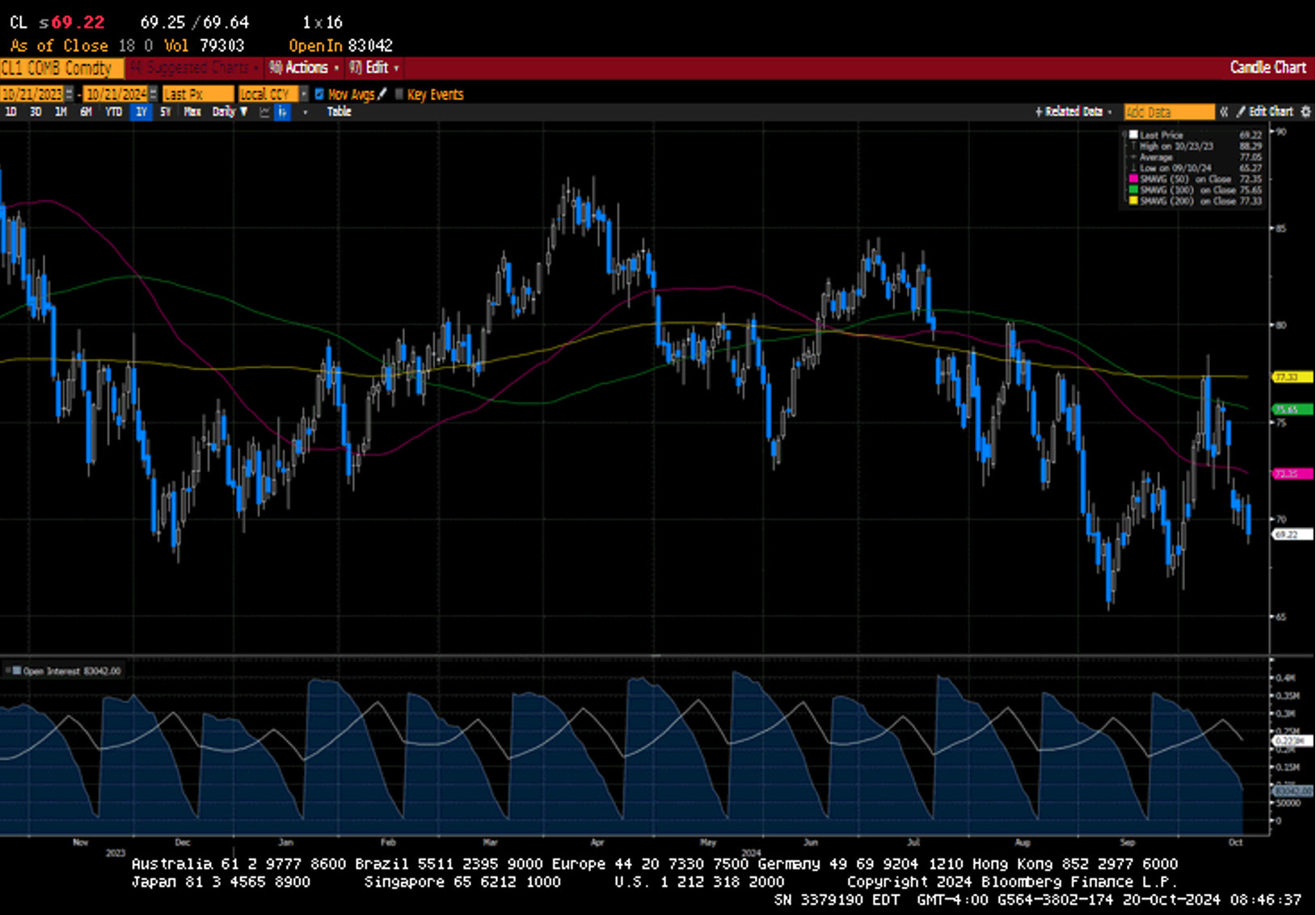
The economic calendar was relatively quiet this week.  Retail sales came in better than expected and showed a resilient consumer.  The headline number increased by 0.4% versus the consensus estimate of 0.2%, while the Ex-Autos number increased by 0.5% versus the forecast of 0.1%.  Initial claims fell by 19k to 241k, while Continuing Claims increased by 9k to 1867k.  Finally, Housing Starts were a tad light of expectations at 1354k, while Building Permits fell short of expectations at 1428k. 
Share:

View the Latest Commentaries:

Weekly Market Commentary

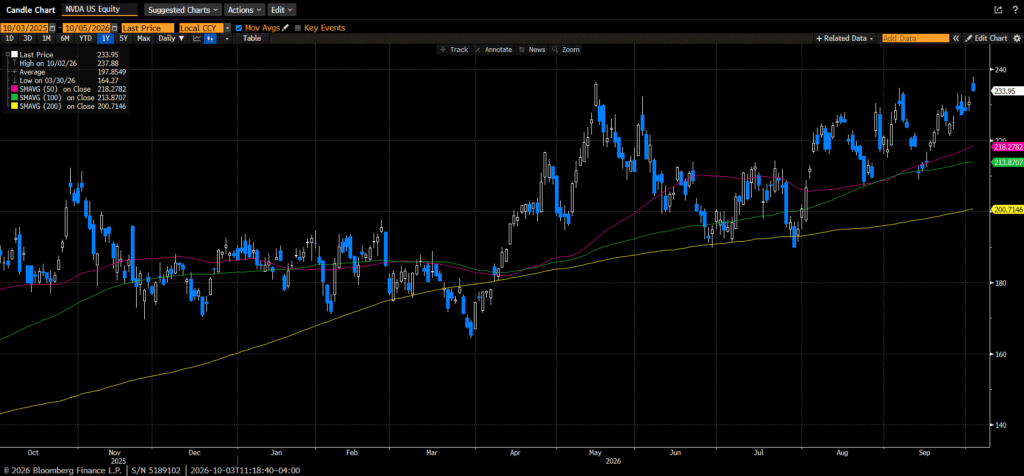
Markets ended the week mixed as investors assessed the implications of the US economic isolation of Iran, the fallout of increased tariffs on Canada, Nvidia Q2 earnings results, and the Fed Chairman’s speech at the Kansas City Federal Reserve’s Economic Symposium in Jackson Hole. Oh yeah, we were also treated to a slightly hotter print of the Fed’s preferred inflation measure, the PCE. On Monday, Treasury Secretary Bessent laid out a plan to isolate economic activity with Iran.  The plan, dubbed Economic D-day, promised economic punishment to any country doing business with Iran and suggested that, in the coming days, there will be announcements and actions taken against several entities that have worked alongside Iran to evade economic sanctions.  The US and Iran both said they would not return to the MOU signed in June, as negotiations have stalled.  Oil traded lower this week on reports that 10 million barrels

Weekly Market Commentary

US equity markets took a step back last week in what turned out to be a very busy week.  Increased yields on the long end of the curve prompted Treasury Secretary Scott Bessent to double buybacks of 10- to 30-year US Treasuries in an effort to temper the rise in rates.  The move was met with a rally in both bonds and stocks; however, it was short-lived, with much of the gains being given back within a day of the announcement.  A global debasement narrative has emerged as the US deficit topped $40 trillion.  The US Dollar sold off to levels not seen since May, while precious metals and Bitcoin prices soared.  Interestingly, the correlation between Gold and Bitcoin is the highest since Covid, following massive liquidity injections by global governments.  It’s notable that several other developed markets are facing similar pressure on their sovereign debt, including Japan, the UK,

Weekly Market Commentary

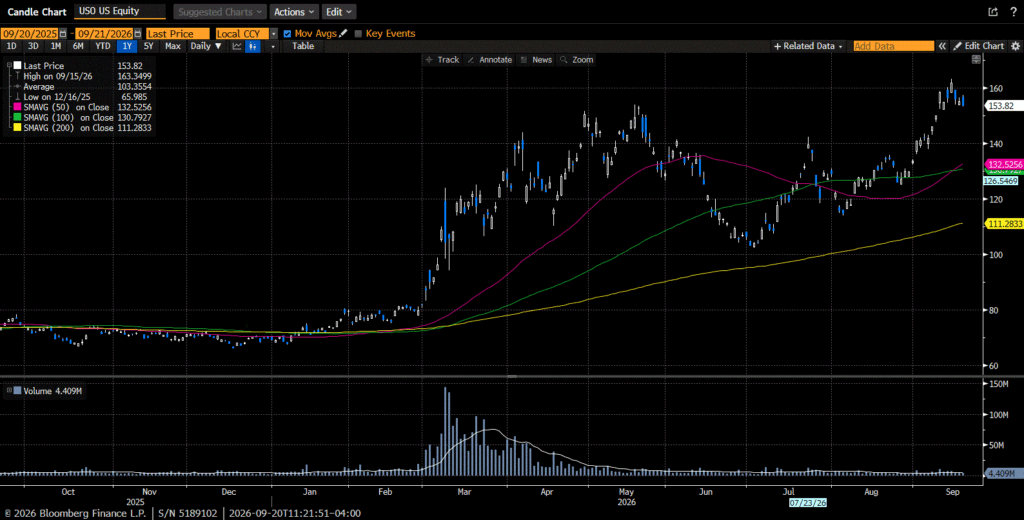
The S&P 500 forged a new all-time high as investors recalibrated interest-rate-hike expectations after an in-line print of the Consumer Price Index and a cooler-than-expected print of the Producer Price Index.  The probability of a rate hike in September fell to 32% from 55% a week ago. Interestingly, the short end of the US curve advanced while longer-dated Treasuries declined over the week amid concerns about the widening US deficit.  Treasury auctions this week were met with tepid demand and saw the 10-year and 30-year priced at yields not seen since 2007 and 2001, respectively. Oil prices rose as the US-Iran war continues while negotiations appear to be at an impasse.   The US signaled it would continue its blockade of Iranian ports to inflict economic pressure while Iran and the Houthis continued to attack cargo ships in the Strait of Hormuz and the Red Sea.  Second-quarter earnings continued to roll

Weekly Market Commentary

Giddy up!  US equity markets ripped higher in the first week of August as 2nd quarter earnings continued to impress.  According to FactSet, 88% of the S&P 500 have reported earnings, of which 86% have beaten Earnings Per Share estimates, while Earnings Per Share have grown by an impressive 50.4%.   76% of companies that have reported have beaten on revenues, with revenues growing by 15% in the 2nd quarter.  Standout companies this week included: Palantir, Caterpillar, MP Materials, Cloudflare, SpaceX, AMD, and Twilio. Tensions in the Middle East persisted as negotiations to partially open up the Strait of Hormuz between Iran and Oman continued.  Oil prices fell for the third consecutive week as rhetoric suggested a deal was close.  That deal has been elusive, to say the least, and concerns about the particulars remain.  Is the US even engaged in negotiations, will the passage of the Strait require a toll, will all