
-Darren Leavitt, CFA
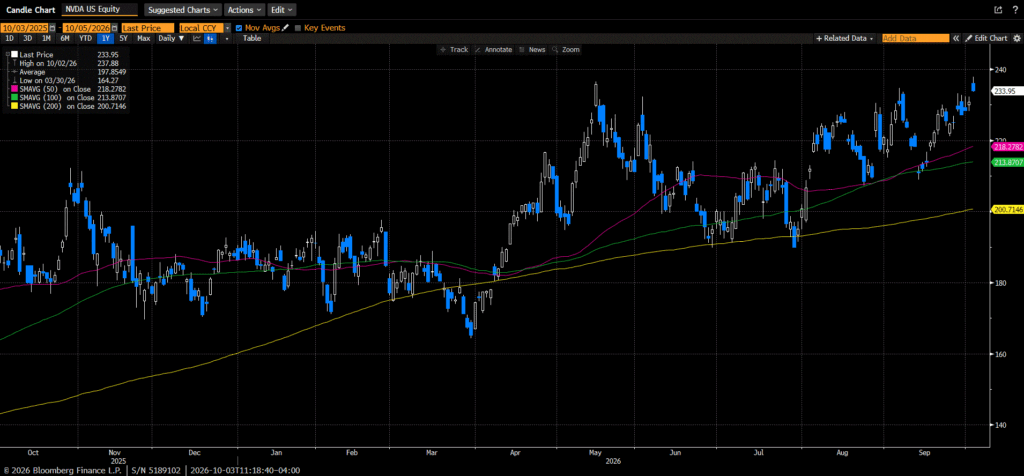
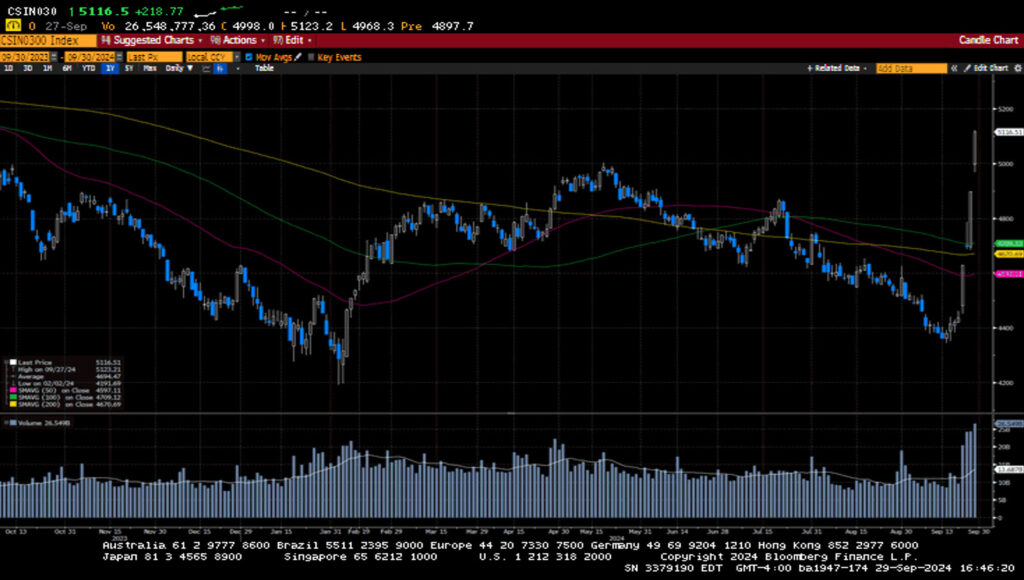
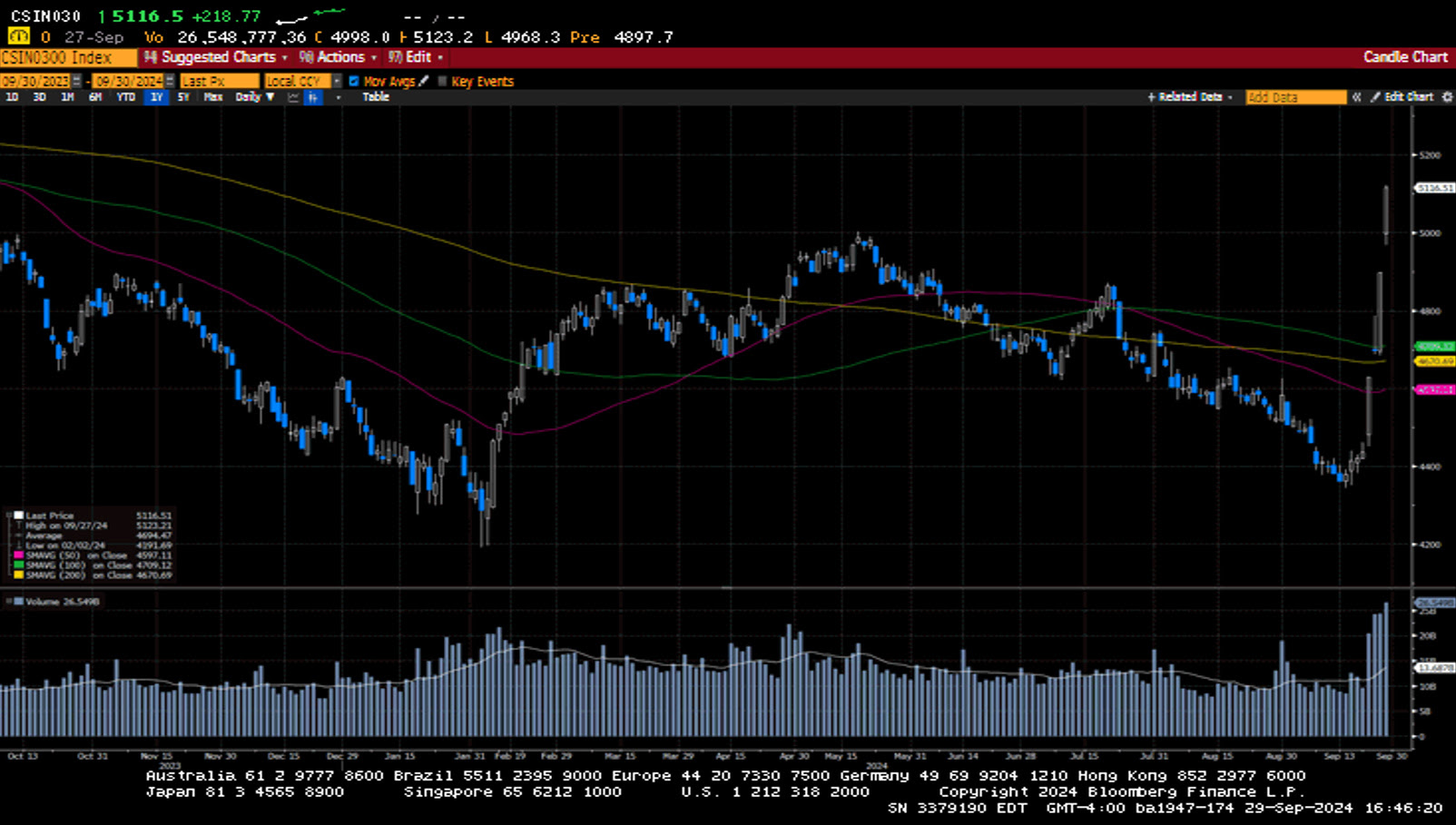
US equity markets posted a third week of gains as global central banks continued to cut monetary policy rates. China, Switzerland, Mexico, Hungry, and the Czech Republic cut their policy rates. Chinese markets gained on the news that several funding rates would be reduced and that the government would increase its fiscal spending as needed to meet its growth targets. It’s widely expected that the PBOC will also cut the prime rate soon. The CSI 300 gained 15% for the week, its largest weekly gain since 2008. The shift in policy rates comes as inflation appears to be moderating globally. The Fed’s preferred measure of inflation, the PCE, announced Friday, provided more evidence that prices are indeed trending lower. Better-than-expected earnings results from Micron Technology also catalyzed the market to move higher. The semiconductor sector regained leadership and led the market higher with sizeable moves in influential names such as NVidia, Intel, and ASML. The move was dampened later in the week by news that the DOJ was investigating Super Micro Computer for accounting irregularities and on news that the Chinese government wants Chinese companies to avoid using NVidia’s GPUs.
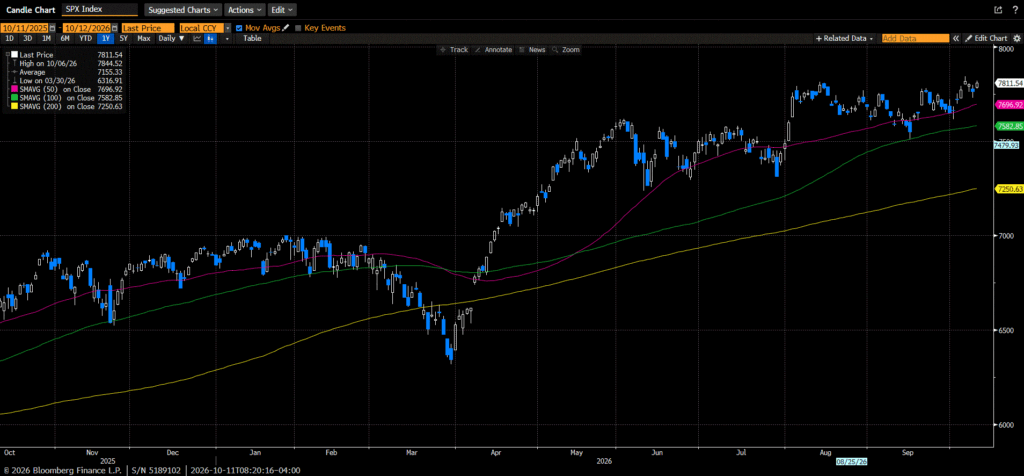
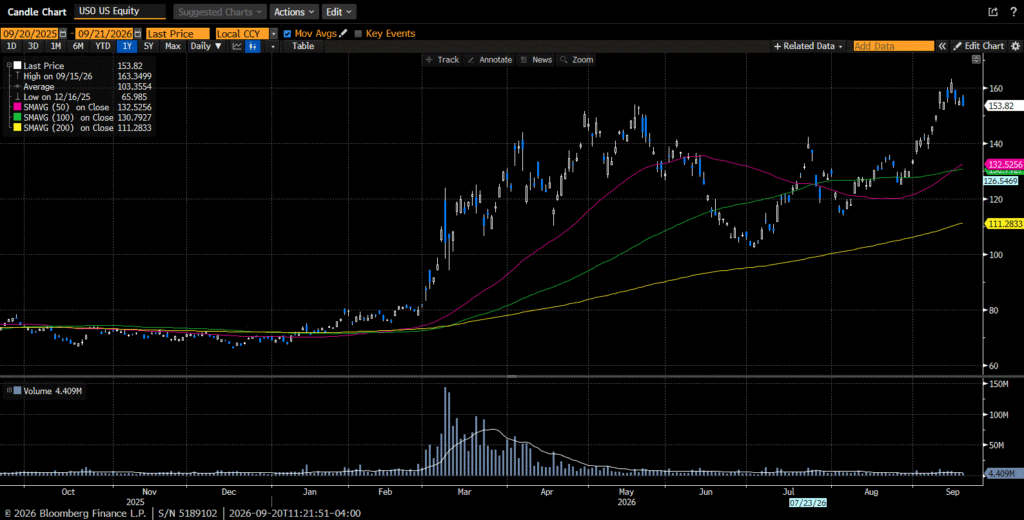
The S&P 500 gained 0.6% while hitting its 42nd record high this year. The Dow added 0.6%, the NASDAQ rose 1%, and the Russell 2000 shed 0.1%. Yields increased across much of the curve this week as US Treasuries continued to consolidate their aggressive moves since August. The 2-year yield fell one basis point to 3.56%, while the 10-year yield increased by two basis points to 3.75%. Oil prices tumbled 4% despite escalating tensions in the Middle East. WTI prices fell by $2.86 to $68.15 a barrel. Notably, the UAE announced it would likely increase oil production in December. Gold prices increased by $22.00 to $2667.90 an Oz. Copper prices advanced $0.25 or 5.7% to $4.58 per Lb. Bitcoin closed at $65,500, while the US Dollar Index fell to 14-month lows at 100.43.
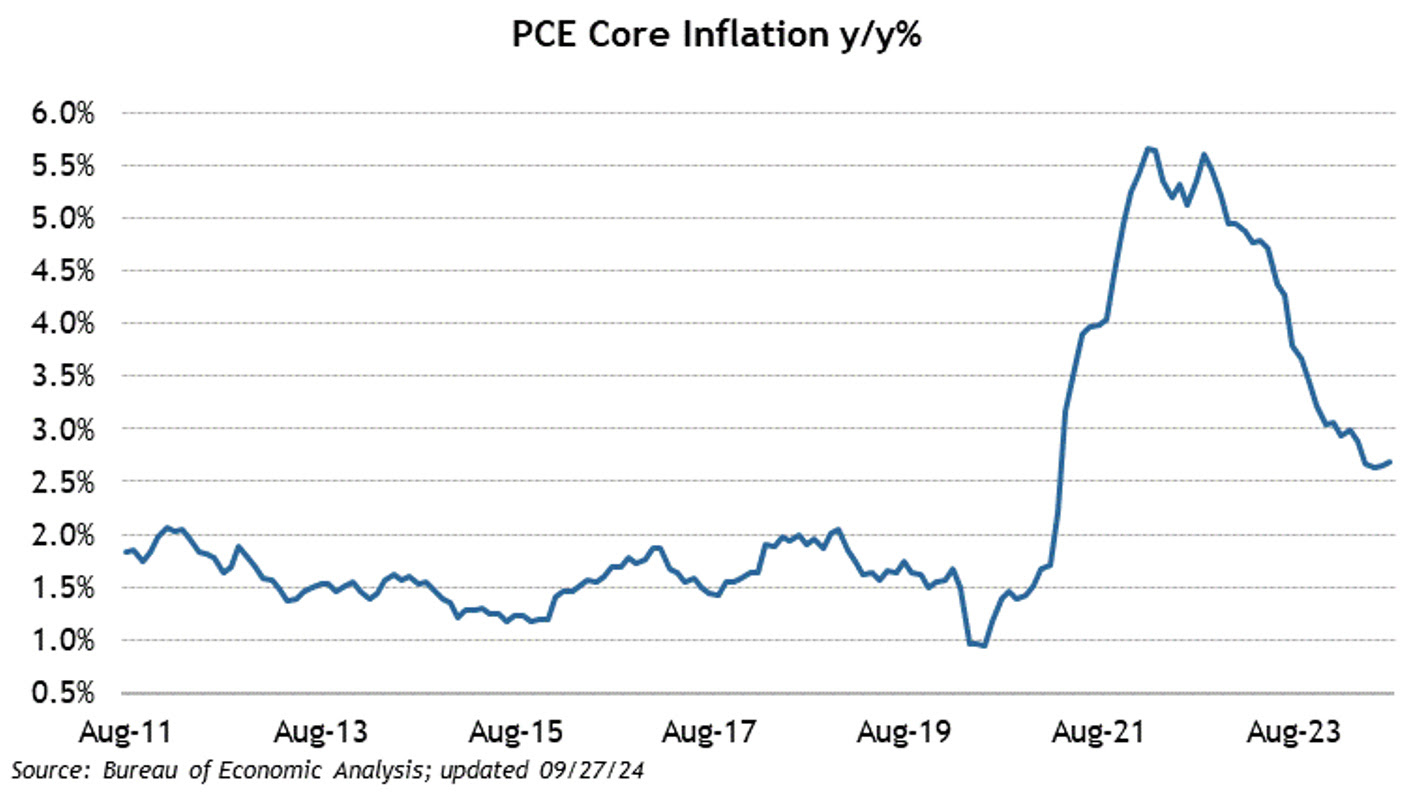
The economic calendar showed continued progress on the inflation front and telegraphed a resilient labor market. Headline PCE increased by 0.1%, in line with the consensus estimate, while Core PCE inched up 0.1%, which was lower than the anticipated 0.2%. On a year-over-year basis, PCE increased 2.2%, while the Core PCE rose 2.7%. Personal Income increased by 0.2%, shy of the estimated 0.3%. Personal Spending came in line with the consensus at 0.2%. Initial Jobless Claims fell by 3k to 218k, while Continuing Claims climbed by 13k to 1834k. The third look at Q2 GDP showed growth of 3% while the GDP Deflator grew by 2.5%- both in line with the street’s estimates. Consumer Confidence came in a little better than expected at 70.1, while Consumer Sentiment fell from its prior reading to 98.7.
Investment advisory services offered through Foundations Investment Advisors, LLC (“FIA”), an SEC registered investment adviser. FIA’s Darren Leavitt authors this commentary which may include information and statistical data obtained from and/or prepared by third party sources that FIA deems reliable but in no way does FIA guarantee the accuracy or completeness. All such third party information and statistical data contained herein is subject to change without notice. Nothing herein constitutes legal, tax or investment advice or any recommendation that any security, portfolio of securities, or investment strategy is suitable for any specific person. Personal investment advice can only be rendered after the engagement of FIA for services, execution of required documentation, including receipt of required disclosures. All investments involve risk and past performance is no guarantee of future results. For registration information on FIA, please go to https://adviserinfo.sec.gov/ and search by our firm name or by our CRD #175083. Advisory services are only offered to clients or prospective clients where FIA and its representatives are properly licensed or exempted.