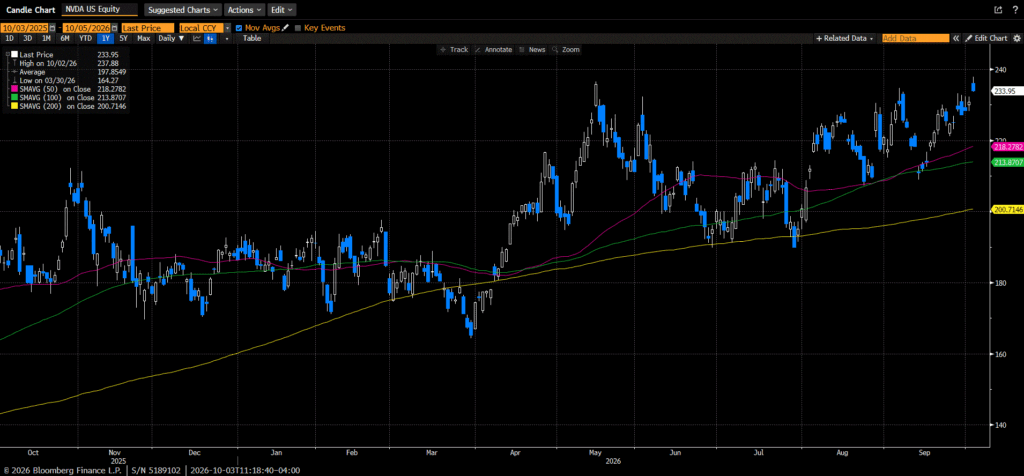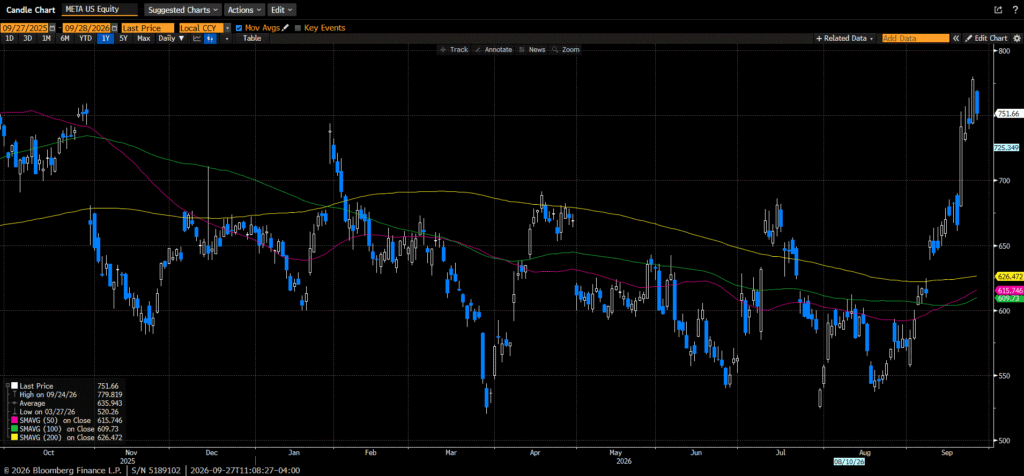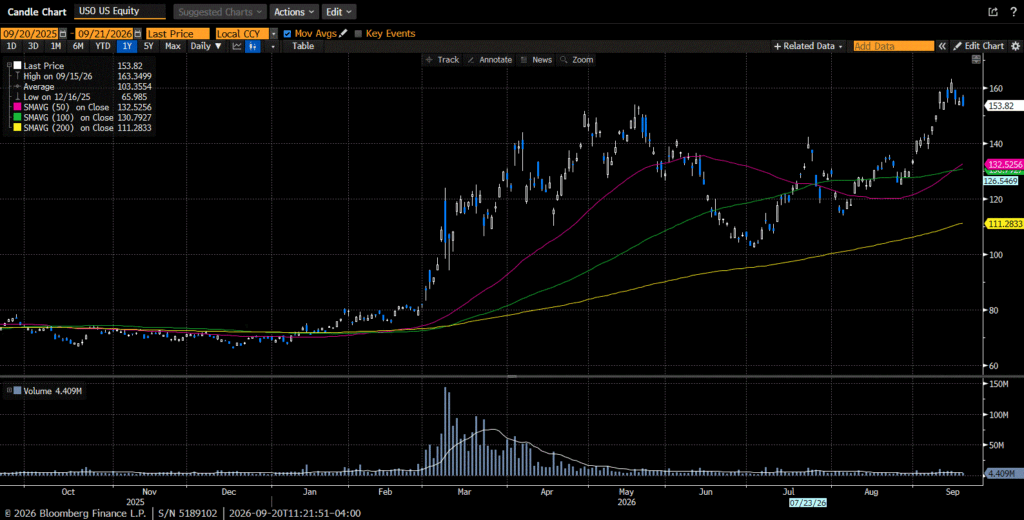

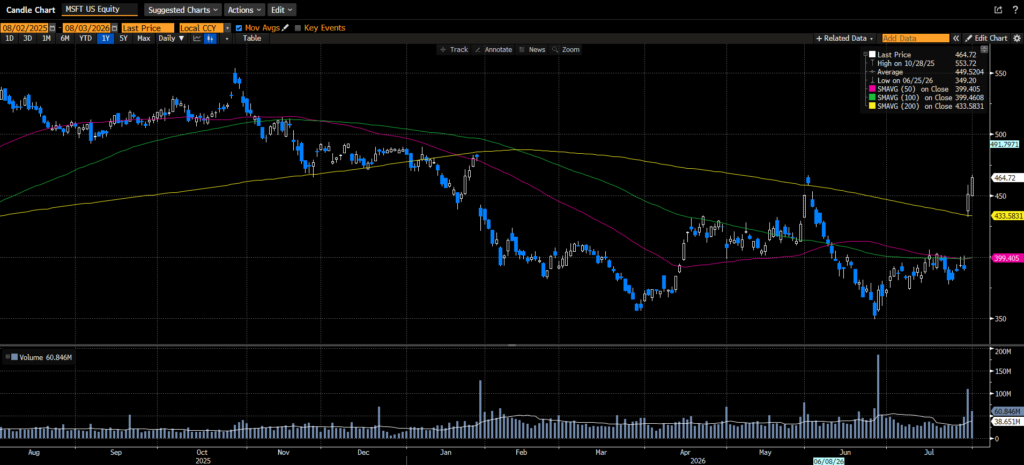
It was an extremely busy week on Wall Street, with investors having to assess increased geopolitical tensions in the Middle East alongside a deluge of corporate 2nd-quarter earnings results, several central bank monetary policy decisions, and a full economic calendar. As I write this morning, Trump has decided to hold off on additional strikes as a deal appears imminent with Iran to open the Strait of Hormuz. Oil prices soared by 21.6% in July as tensions escalated throughout the month. These increased prices will pressure the Federal Reserve to consider rate hikes. While leaving their policy in place last week at 3.50%-3.75%, Logan, Kashkari, and Hammack voted against holding the policy rate in place and suggested the Fed should have raised the policy rate by a quarter of a percent. New Fed Chairman Kevin Warsh, in his post-meeting Q&A, came off as quite hawkish. The markets last week had massive intraday swings and saw at least 1% swings post the Fed’s decision. The Bank of England and Bank of Japan also kept their policy rates unchanged. Notably, the Bank of Japan, in coordination with the US Treasury, intervened on the weak Japanese Yen, sending it nearly 3% higher on Friday. Concerns regarding AI infrastructure spending continued but eased after Microsoft and Amazon posted stellar 2nd-quarter results. Both companies indicated that their capex on AI would increase from prior estimates. Apple shares traded lower in the wake of its earnings results as the company tempered its third-quarter earnings forecast. The company did, however, convey the supply chain constraints related to memory and predict that this shortage will continue for quite a while.

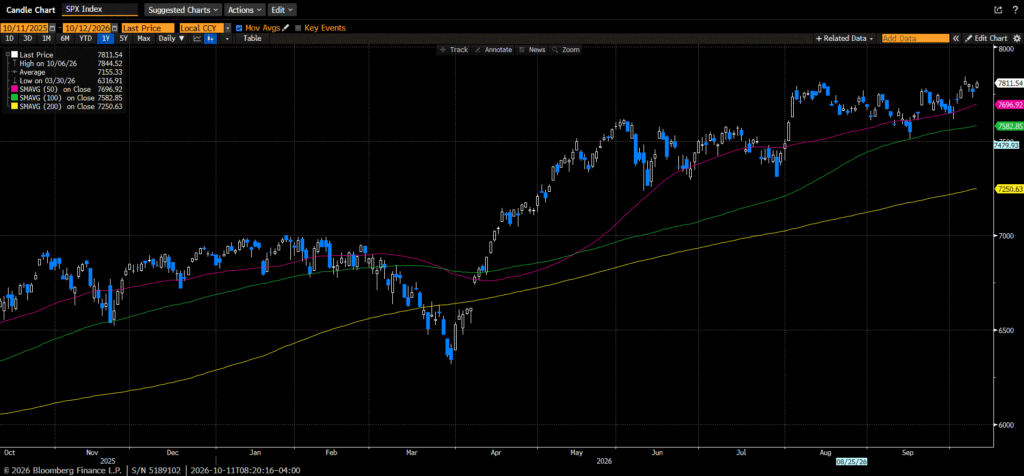
Despite this week’s market swings, US equity averages settled in the green. The S&P 500 increased by 1% for the week and finished the month of July, up 0.15%. The Dow rose 1% for the week and 0.41% for the month. NASDAQ added 1.6% for the week and fell by 2.54% for the month. The Russell 2000 advanced 0.5% for the week and shed 2.56% for the month. It was a tough month for US Treasuries, where yields increased meaningfully across the curve. The 2-year yield increased by fifteen basis points in July to close at 4.29%, while the 10-year yield increased by thirty-three basis points to close at 4.75%. The curve steepened over the month with shorter-tenured paper yields increasing less than longer-dated maturities. Oil prices fell last week by 5.3% to $84.57, but as mentioned before, increased 21.6% in July. Gold prices increased 1.6% in July to $4106.60 per ounce. Silver prices fell by 2.8%, or $1.63, to $57.79 per ounce. Copper prices advanced by 3.5% in July, closing the month at $6.47 per Lb. Bitcoin’s price increased by 1.61% in July to $63,000. The US Dollar index fell by 1.2% in July, with most of that loss coming on the back of the BOJ and the US Treasury’s intervention on the Japanese Yen.

It was a busy week on the economic data front as well. The Fed’s preferred measure of inflation, the PCE, moderated on both the headline and core readings. Headline PCE came in at -0.1% on a month-over-month basis and 3.7% year-over-year, down from 4.1% in May. Core PCE increased by 0.1% month-over-month and fell to 3.3% from 3.4% year-over-year. While it is encouraging to see the downtick in these inflation readings, they are still well above the Fed’s mandate of 2%, and it is likely we will see an uptick in inflation on the back of the spike in oil prices over the last month. Consumer Confidence fell to 90.8 from the previous reading of 92.2, while the final reading of the University of Michigan’s Consumer Sentiment increased to 55.2 from 54.4. Personal income and Spending came in line with consensus estimates at 0.2% and 0.3%, respectively. The second look at 2nd quarter GDP was lowered to 1.5% from 2.1%. Finally, Initial Claims increased by 9k to 197k, while Continuing Claims fell by 7k to 1782k.

Investment advisory services offered through Foundations Investment Advisors, LLC (“FIA”), an SEC registered investment adviser. FIA’s Darren Leavitt authors this commentary which may include information and statistical data obtained from and/or prepared by third party sources that FIA deems reliable but in no way does FIA guarantee the accuracy or completeness. All such third party information and statistical data contained herein is subject to change without notice. Nothing herein constitutes legal, tax or investment advice or any recommendation that any security, portfolio of securities, or investment strategy is suitable for any specific person. Personal investment advice can only be rendered after the engagement of FIA for services, execution of required documentation, including receipt of required disclosures. All investments involve risk and past performance is no guarantee of future results. For registration information on FIA, please go to https://adviserinfo.sec.gov/ and search by our firm name or by our CRD #175083. Advisory services are only offered to clients or prospective clients where FIA and its representatives are properly licensed or exempted.