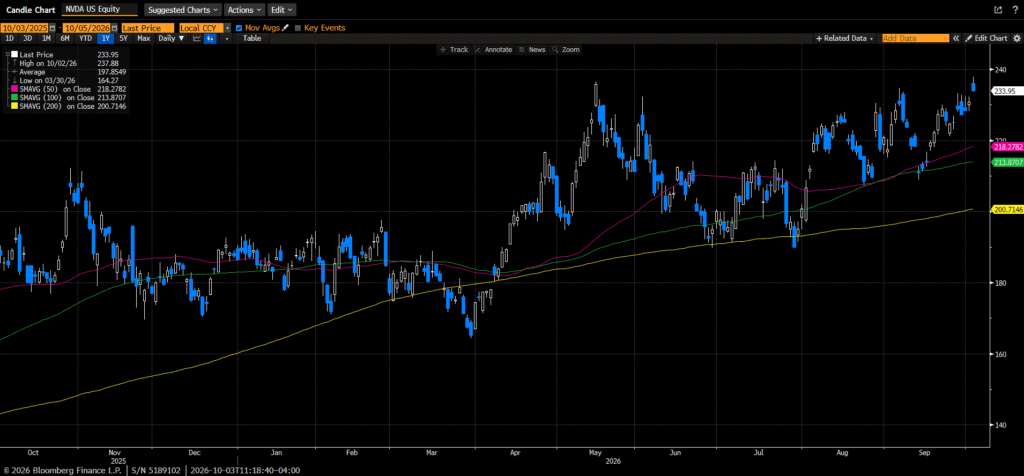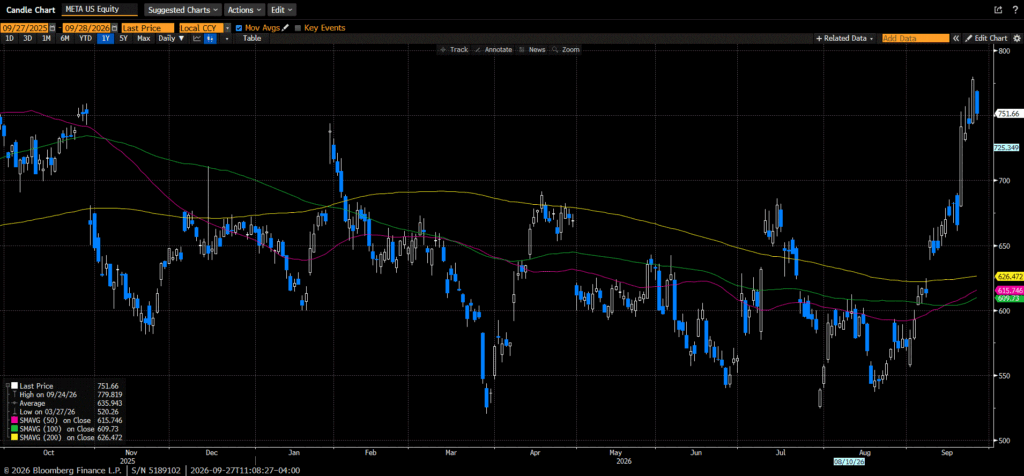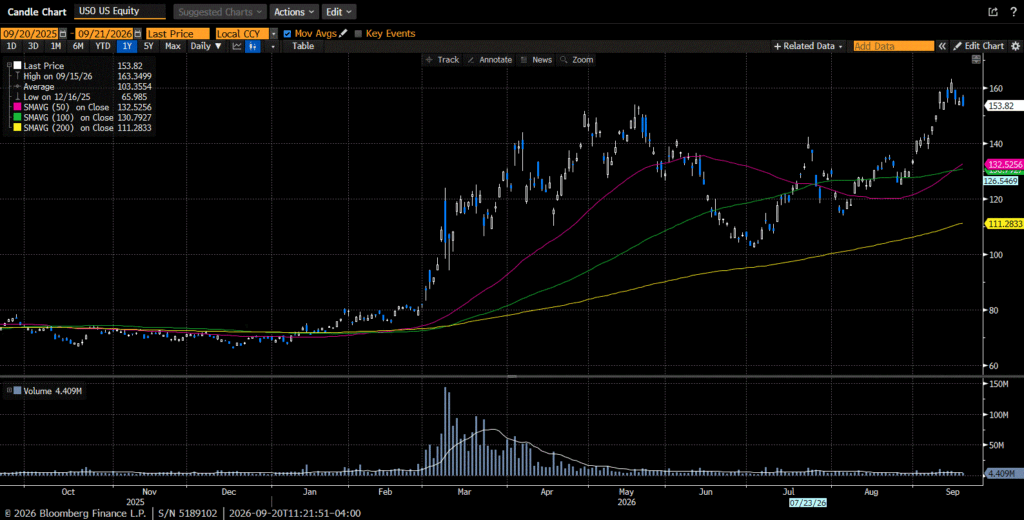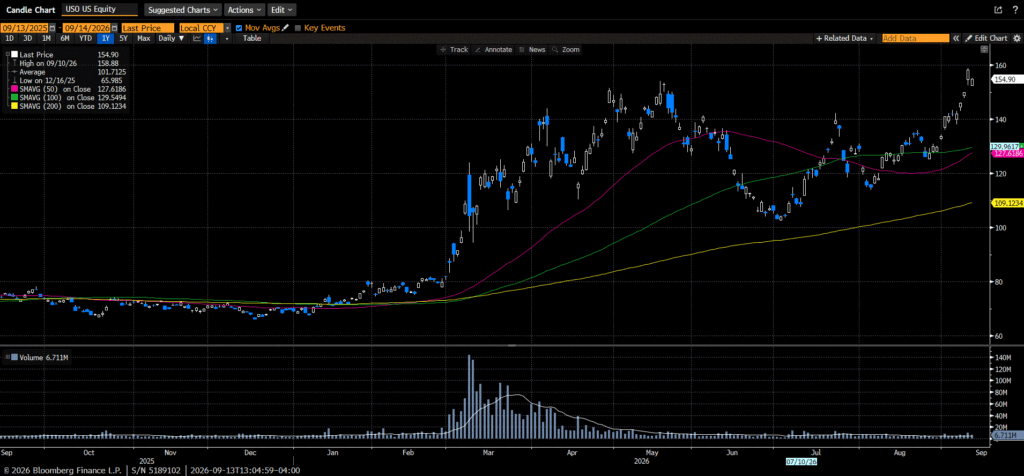

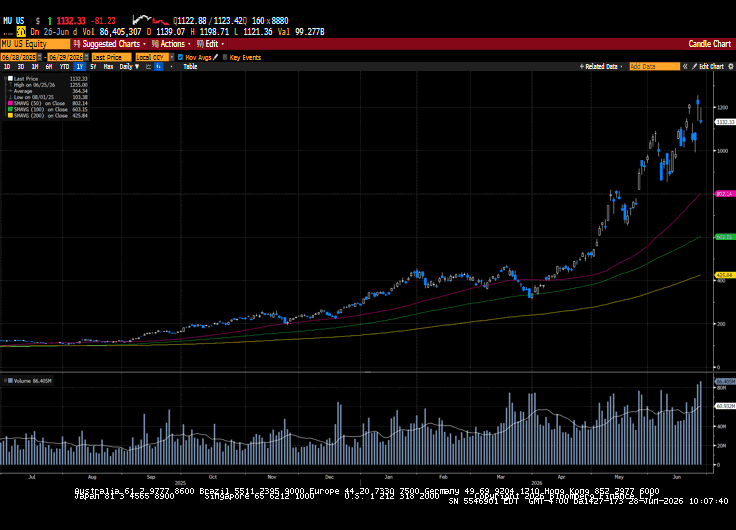
Markets finished the week mixed, with a noticeable rotation out of mega-cap technology issues to healthcare, real estate, and consumer staples. Concerns about the return on investment from a massive capital-expenditure binge on artificial intelligence resurfaced. Additionally, news that Google’s top AI engineer was leaving for Anthropic, along with news that OpenAI will delay its IPO, dampened sentiment on the AI trade. Trade in the Semiconductor sector was extremely volatile even as Micron announced fantastic first-quarter results. The demand for memory pushed Micron’s gross margin to 86%, demonstrating its pricing power. The news sent Apple shares lower as rising memory prices prompted the company to raise product prices. The healthcare sector was among the best-performing sectors of the week, with several acquisitions announced between drug makers. The energy sector struggled as oil prices continued to fall amid constructive signals from US-Iran ceasefire negotiations. That said, late Friday, Iran attacked another tanker in the Strait of Hormuz, which in turn led to the US conducting airstrikes on Iranian air defense and drone facilities.

The S&P 500 lost 2% and is now up 7.4% year to date. The Dow rose by 0.6%, the NASDAQ tumbled 4.6%, and the Russell 2000 advanced by 1%. Yields fell across the curve in a symmetrical fashion. The 2-year yield fell by nine basis points to 4.09%, while the 10-year yield fell by eight basis points to 4.37%. Oil prices fell by $7.35, or 9.5%, to $69.24 a barrel. Gold prices fell by $148.60 to close the week at $4,096.70 per ounce. Silver prices fell by 9.9% to $59.67 per ounce. Copper prices lost eighteen cents to $6.21 per Lb. Bitcoin’s price fell by 6.29% to ~$60,000. The VIX, which measures volatility, rose 12.2% to close the week at 18.41. The Japanese Yen remained weak at 161.72 against the US Dollar, even as the US Dollar index fell 0.1% to 101.35.

The Fed’s preferred measure of inflation, the PCE, came in as expected on both the headline and core readings at 0.4% and 0.3%, respectively. The headline figure increased to 4.1% from 3.8 in April on a year-on-year basis, while the Core figure increased to 3.4% from 3.3%. Markets reacted very little to the numbers, but investors seemed encouraged that these figures would decline in the coming months given the decrease in oil prices. Personal Spending and Income were both up 0.7%, better than the consensus estimates for each. S&P Global US Manufacturing and Services PMIs showed improvement from the previous readings, coming in at 55.7 and 51.3, respectively. The third estimate of Q1 GDP improved to 2.1% from 1.6%. Initial Jobless Claims fell by 12k to 215K, while Continuing Claims rose by 21k to 1.821m. The Final June reading of the University of Michigan’s Consumer Sentiment Index increased to 49.5 from 48.9 in May.

Investment advisory services offered through Foundations Investment Advisors, LLC (“FIA”), an SEC registered investment adviser. FIA’s Darren Leavitt authors this commentary which may include information and statistical data obtained from and/or prepared by third party sources that FIA deems reliable but in no way does FIA guarantee the accuracy or completeness. All such third party information and statistical data contained herein is subject to change without notice. Nothing herein constitutes legal, tax or investment advice or any recommendation that any security, portfolio of securities, or investment strategy is suitable for any specific person. Personal investment advice can only be rendered after the engagement of FIA for services, execution of required documentation, including receipt of required disclosures. All investments involve risk and past performance is no guarantee of future results. For registration information on FIA, please go to https://adviserinfo.sec.gov/ and search by our firm name or by our CRD #175083. Advisory services are only offered to clients or prospective clients where FIA and its representatives are properly licensed or exempted.