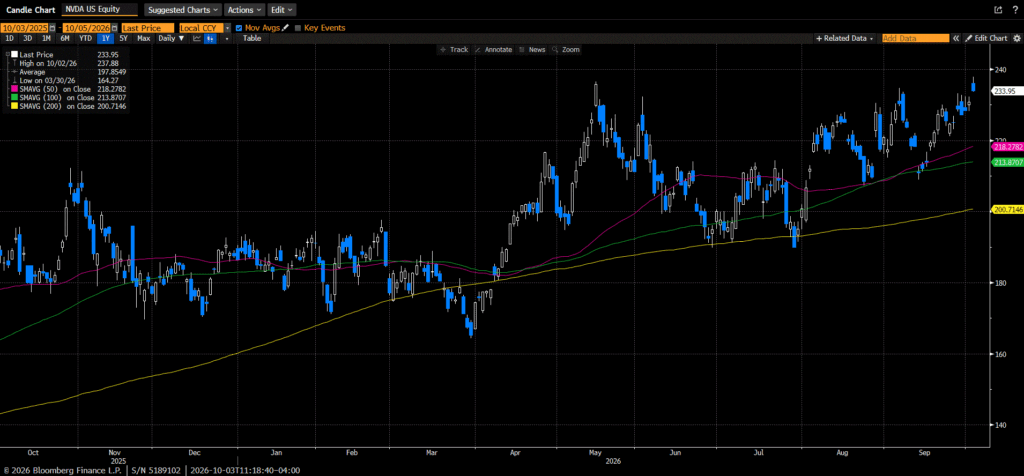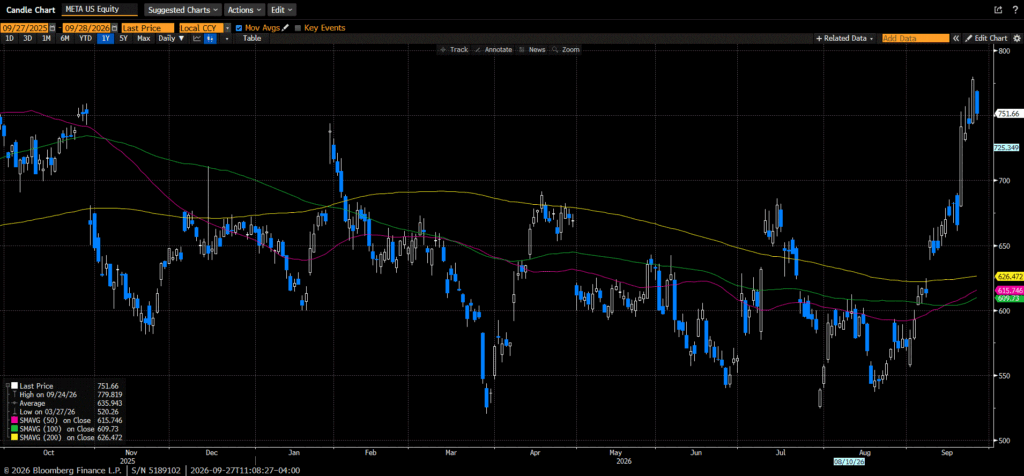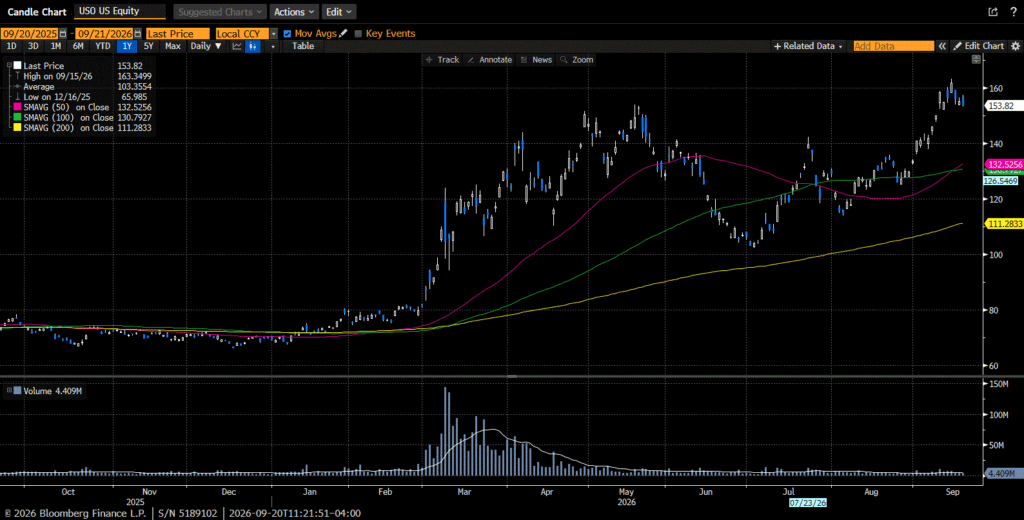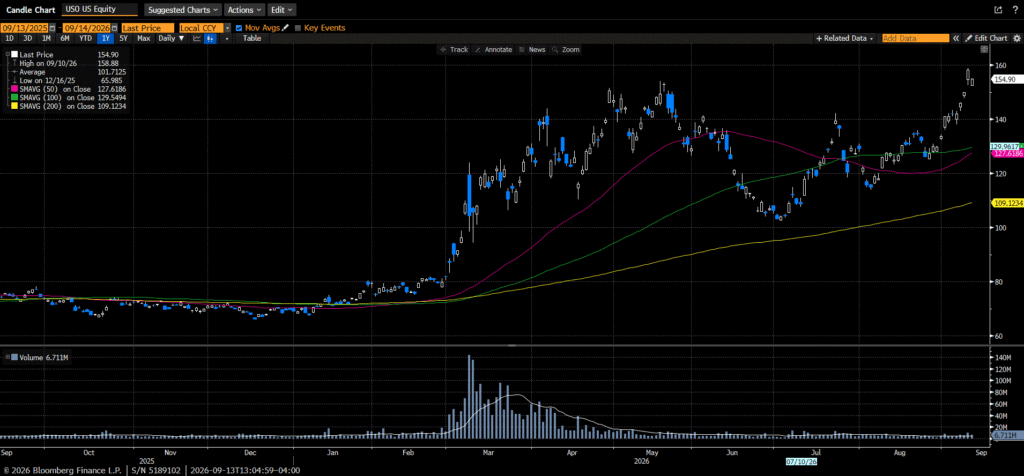
Happy Father’s Day to all the fathers out there. The holiday-shortened week brought gains to US equities and saw the Japanese and South Korean markets forge new all-time highs. The signing of a memorandum of understanding between the US and Iran extended the ceasefire by 60 days, with negotiations on a permanent treaty to start this weekend. Equity markets rallied on the signing of the MOU, while oil prices plunged to levels not seen since before the war started. As I write this note, the Strait of Hormuz has been closed by Iran on the back of increased hostilities in Lebanon. Vice President Vance is en route to Switzerland to meet the rest of the US envoy and their Iranian counterparts to start negotiations to permanently end the war.
Global central bank policy was also top of mind for investors as the new Fed Chairman, Kevin Warsh, took the podium for the first time post the FOMC meeting. As expected, the Fed kept its policy rate unchanged at 3.50%-3.75%. The Fed’s statement removed forward guidance and shifted its bias away from its full labor mandate to inflation. Fed Chairman Warsh did not provide his estimates for the Summary of Economic Projections, but the SEP showed an outright hawkish stance from the other members of the Fed. In his post-statement commentary, the Chairman announced that he had assembled five task forces to address the Fed’s communication, balance sheet, data sources, its assessment of productivity and jobs, and its inflation framework. He hopes that by year-end, these task forces will have found solutions that will allow the Fed to move forward. It is clear that Warsh will head a very different Federal Reserve, one that is likely to be more tempered in its projections and more pragmatic in real time rather than delayed and data-dependent. Markets sold off after the Q&A, on the idea that the Fed will be less transparent, which will inherently increase market volatility. That said, it can be argued that a less transparent Fed will strengthen the impact of its monetary policy decisions. Interestingly, the long end of the yield curve rallied on the news, likely due to a perceived more disciplined Fed. The Bank of Japan raised its policy rate by twenty-five basis points to 1%, a level not seen since 1999. The move did little to stem the weakness of the Yen. The Bank of England held it rate at 3.75% with two dissents favoring a rate hike. The Swiss National Bank and the Norges Bank made no changes to their policy rates.

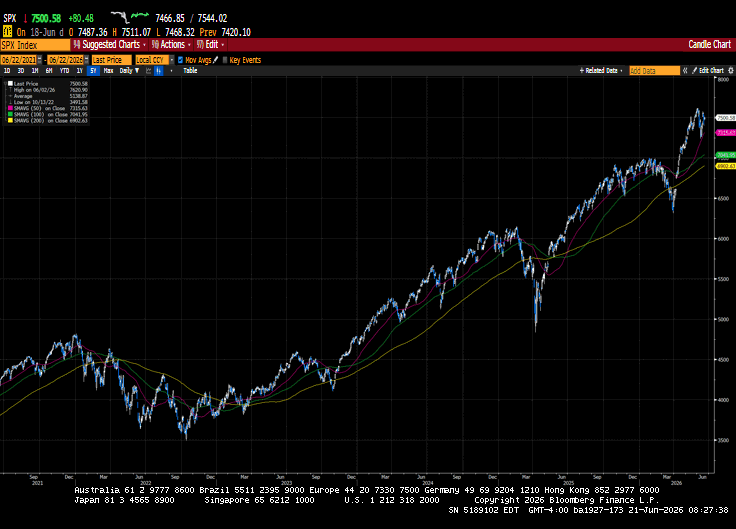
The S&P 500 gained 1%, the Dow rose 0.8%, the NASDAQ added 2.7%, and the Russell 2000 advanced 1.5%. The US Treasury curve flattened, with a weakening bias at the front end and a rally in longer-duration paper. The 2-year yield increased by nine basis points to 4.18%, while the 10-year yield fell by six basis points to 4.45%. West Texas Intermediate crude plunged 9.7% to $76.59 a barrel. Gold prices increased by $6.10 to $4,245.30 an ounce. Silver prices fell by 4.5% to $64.91 per ounce. Copper prices fell by five cents to $6.39 per Lb. Bitcoin’s price fell by ~$500 to $63,600. The US Dollar index closed at 100.86, a 13-month high.

The economic calendar was quiet. Housing Starts and Permits were both weaker than expected, coming in at 1177k and 1413k, respectively. Headline Retail Sales were better than expected at 0.9% versus the consensus estimate of 0.6%. The Ex-Auto Retail Sales figure came in at 0.8% versus the estimate of 0.6%. Initial Jobless Claims fell by 4k to 226k, while Continuing Claims increased by 24k to 1810k.

Investment advisory services offered through Foundations Investment Advisors, LLC (“FIA”), an SEC registered investment adviser. FIA’s Darren Leavitt authors this commentary which may include information and statistical data obtained from and/or prepared by third party sources that FIA deems reliable but in no way does FIA guarantee the accuracy or completeness. All such third party information and statistical data contained herein is subject to change without notice. Nothing herein constitutes legal, tax or investment advice or any recommendation that any security, portfolio of securities, or investment strategy is suitable for any specific person. Personal investment advice can only be rendered after the engagement of FIA for services, execution of required documentation, including receipt of required disclosures. All investments involve risk and past performance is no guarantee of future results. For registration information on FIA, please go to https://adviserinfo.sec.gov/ and search by our firm name or by our CRD #175083. Advisory services are only offered to clients or prospective clients where FIA and its representatives are properly licensed or exempted.