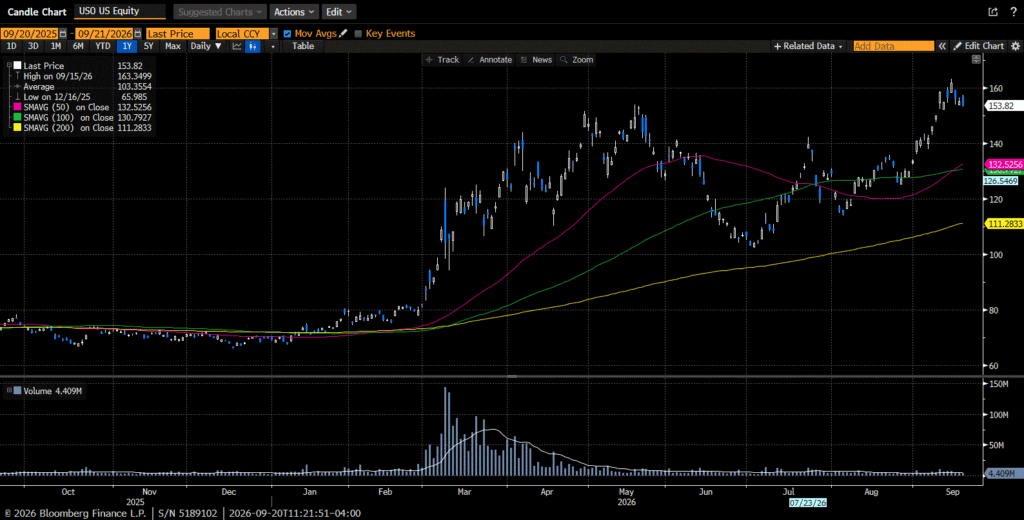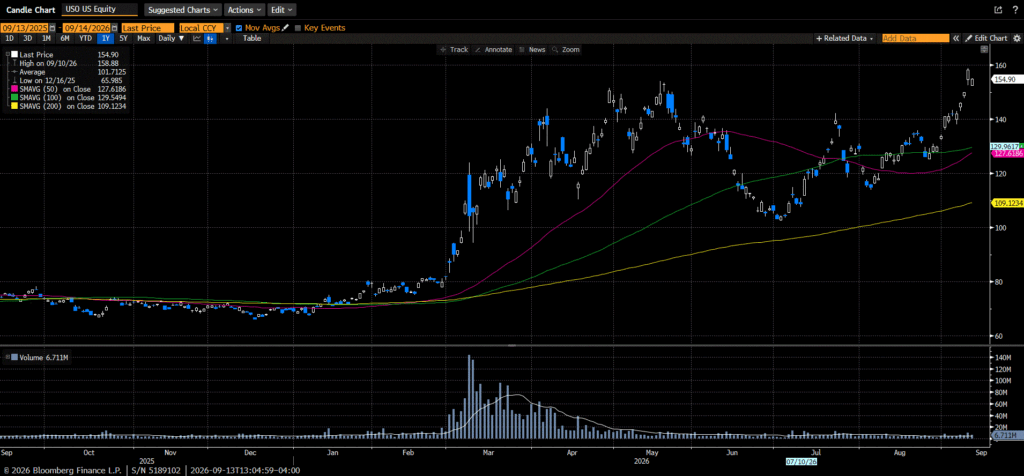

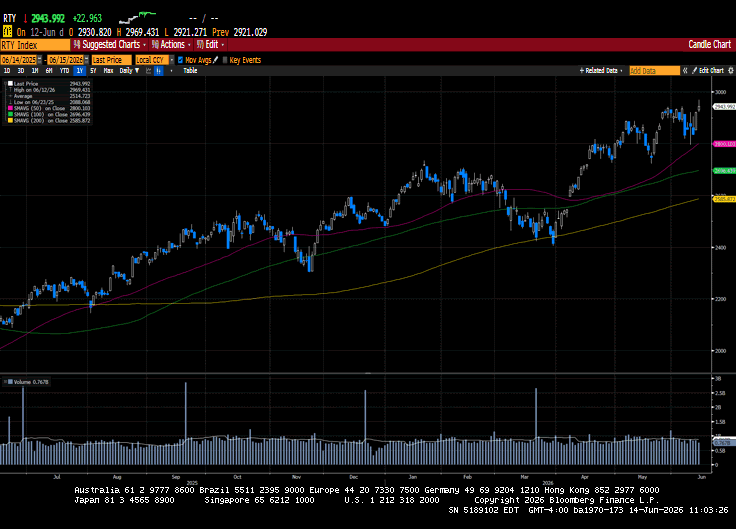
It was a hectic week on Wall Street as investors contended with heightened tensions in the Middle East, awaited the largest IPO in history, and received elevated inflation readings. The US and Iran appear to be very close to extending a fragile ceasefire, but as I write this, a deal has not yet been signed. Tension increased over the week as Iran shot down a US Black Hawk helicopter, which in turn led to US airstrikes on Iranian infrastructure. On Thursday, Trump suspended attacks, claiming the two sides were close to a deal. Oil prices remain volatile but fell sharply in hopes that the Strait of Hormuz would reopen soon. West Texas Intermediate Crude prices fell by 6.2% to $84.88 a barrel, the lowest price since mid-April. The much-anticipated initial public offering of SpaceX took place on Friday, with the company valued at $1.75 trillion. The IPO priced at $135 a share, opened at $150 a share, and closed the day at $160.95, up nearly 20% from the IPO price. The successful IPO is being seen as a positive for this bull market and opens the door for several other companies to come public. Anthropic and OpenAI have both filed to go public in the coming months. Elevated energy prices led to inflation readings that remain high and will likely keep the Federal Reserve on hold. The ECB raised its monetary policy rate by 25 basis points, and the Bank of Japan is widely expected to raise its policy rate next week.

The S&P 500, Dow, and NASDAQ rose by 0.7% this week, while the Russell 2000 increased by 3.9%. There was a broadening out in markets with several sectors participating in the rally. Semiconductor equipment and memory stood out as leaders, while the Software sector lagged due to a weak outlook from Oracle. US Treasuries were bid up across the curve, with shorter-duration paper outperforming. The 2-year yield declined by seven basis points to 4.09%, while the 10-year yield fell by five basis points to 4.49%. As I mentioned, Oil prices tumbled by $5.69, closing the week at $84.88 per barrel. Gold prices fell by 2.9% to $4,239.20 per ounce. Silver prices fell by $1.13, or 1.6%, to $ 67.97 per ounce. Copper prices increased by 2.3% to $6.44 per Lb. Bitcoin’s price rose by 4% to $64,400. The VIX, a measure of market volatility, fell 17% to 17.68. The US Dollar index declined by 0.3% to close the week at 99.7.

This week’s economic calendar highlighted the Consumer Price Index and the Producer Price Index. Headline CPI came in at 0.5% versus the expected 0.6% and was up 4.2% year-over-year, above the 3.8% increase in April. 60% of the increase in the headline number was due to energy prices. Core CPI, which strips out food and energy prices, rose 0.2%, less than the consensus estimate of 0.4%. The Core reading increased to 2.9% from 2.8% in April, year over year. Headline PPI increased by 1.1% versus the estimate of 0.8% and was up 6.5% year over year. The Core PPI increased by 0.4%, less than the anticipated increase of 0.5%, and was up 4.9% over the last year. Initial Jobless claims for the week rose by 4k to 229k, while Continuing Claims increased by 14k to 1795k. A preliminary look at the June University of Michigan Consumer Sentiment increased to 48.9 from the final reading in May of 44.8.

Investment advisory services offered through Foundations Investment Advisors, LLC (“FIA”), an SEC registered investment adviser. FIA’s Darren Leavitt authors this commentary which may include information and statistical data obtained from and/or prepared by third party sources that FIA deems reliable but in no way does FIA guarantee the accuracy or completeness. All such third party information and statistical data contained herein is subject to change without notice. Nothing herein constitutes legal, tax or investment advice or any recommendation that any security, portfolio of securities, or investment strategy is suitable for any specific person. Personal investment advice can only be rendered after the engagement of FIA for services, execution of required documentation, including receipt of required disclosures. All investments involve risk and past performance is no guarantee of future results. For registration information on FIA, please go to https://adviserinfo.sec.gov/ and search by our firm name or by our CRD #175083. Advisory services are only offered to clients or prospective clients where FIA and its representatives are properly licensed or exempted.