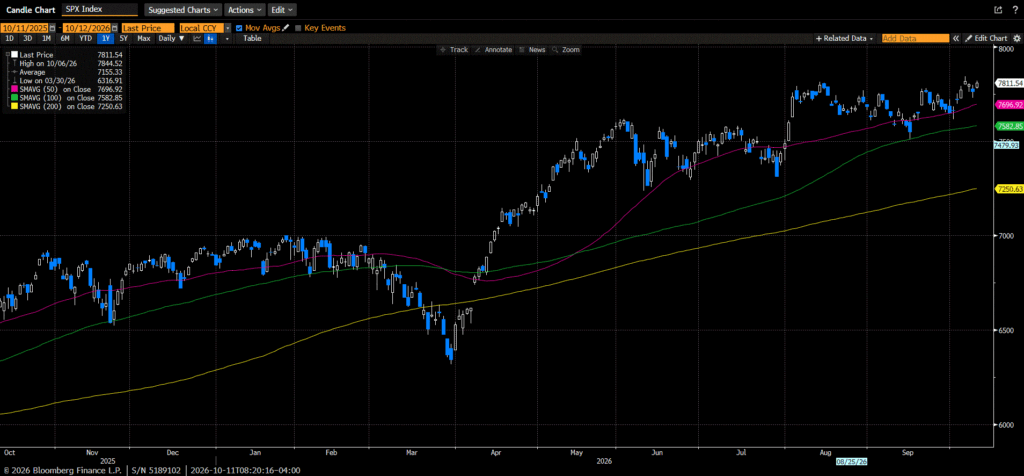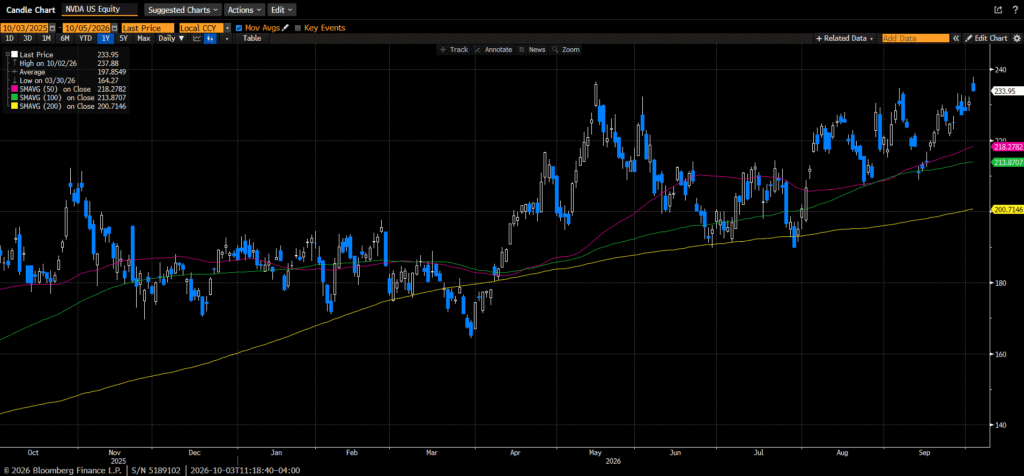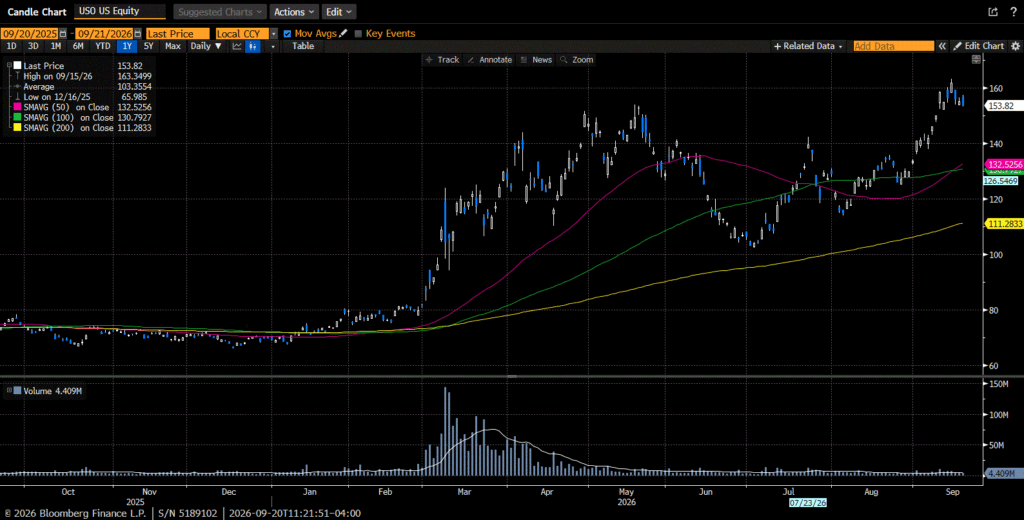

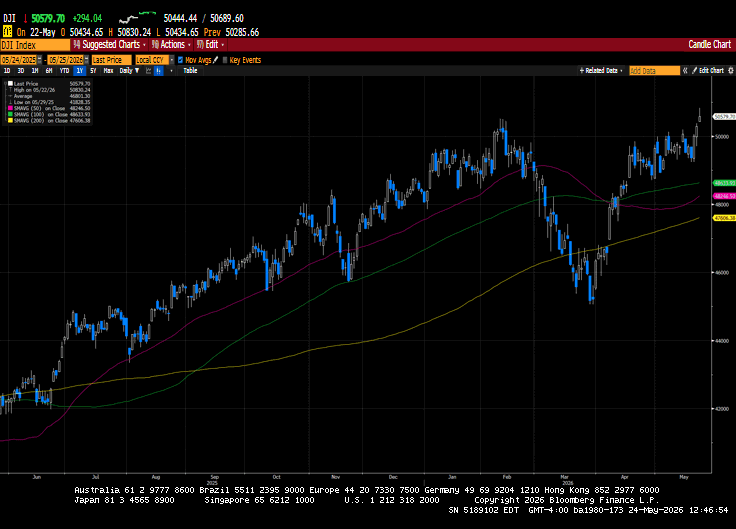
Happy Memorial Day weekend, and thank you to all the brave men and women who have served our country to ensure our freedom. Markets took a step forward last week in what I would consider a complete reversal of the prior week’s action. A broadening-out trade could be seen, with interest-rate-sensitive parts of the market getting a bid. The S&P 500 posted its eighth straight week of gains while the Dow Jone Industrials hit an all-time high. Healthcare led while utilities and real estate outperformed. Information Technology performed okay as Nvidia once again posted better-than-expected Q1 results, but the results were met with a muted market response. Negotiations between the US and Iran continued, and later in the week, it appeared that both sides were close to extending the already 6-week ceasefire. Pakistan, the UAE, Qatar, and Saudi Arabia appealed to President Trump for more time to secure a comprehensive deal to reopen the Strait of Hormuz. Twenty-five ships crossed the Strait last week after Iran granted permission to pass. Oil prices remained volatile and elevated. On Friday, Kevin Warsh was sworn in as the new Federal Reserve Chairman. He takes over the role as several Fed officials have backed away from cutting interest rates in 2026.

The S&P 500 gained 0.9%, the Dow rose by 2.1%, the NASDAQ added 0.5%, and the Russell 2000 led gains with a 2.7% advance. The US yield curve flattened as shorter-tenured paper sold off and longer-maturity paper traded higher. The 2-year yield increased by four basis points to 4.12%, while the 10-year yield fell by four basis points to 4.56%. West Texas Intermediate crude prices fell 8.8% to $96.13 a barrel, while Brent crude ended the week at $100.21 a barrel. Gold prices fell by $34.90 to $4,526.90 per ounce. Silver prices fell by 1.2% or $0.96 to $75.20 per ounce. Copper prices rose by eight cents to $6.38 per Lb. Bitcoin’s price fell by 3.65% to $75,500. The US Dollar index was little changed on the week, closing at 99.26.

S&P 500 5/22/2026
News on the economic front was quiet. Housing Starts and Building permits were slightly better than expected, coming in at 1465k and 1442k, respectively. Initial Jobless claims fell by 3k to 209K, while Continuing Claims rose by 6k to 1782k. The S&P Global Manufacturing PMI increased to 55.3 from the previous reading of 54.5. The S&P Global Services PMI fell to 50.9 from 51, but remained in expansion. The University of Michigan’s Consumer Sentiment Index for May fell to the lowest level since the index was created. The index came in at 44.8, down from April’s reading of 49.8. Consumer concerns about rising costs and the inability to earn more than inflation were the primary factors driving the index lower.

Investment advisory services offered through Foundations Investment Advisors, LLC (“FIA”), an SEC registered investment adviser. FIA’s Darren Leavitt authors this commentary which may include information and statistical data obtained from and/or prepared by third party sources that FIA deems reliable but in no way does FIA guarantee the accuracy or completeness. All such third party information and statistical data contained herein is subject to change without notice. Nothing herein constitutes legal, tax or investment advice or any recommendation that any security, portfolio of securities, or investment strategy is suitable for any specific person. Personal investment advice can only be rendered after the engagement of FIA for services, execution of required documentation, including receipt of required disclosures. All investments involve risk and past performance is no guarantee of future results. For registration information on FIA, please go to https://adviserinfo.sec.gov/ and search by our firm name or by our CRD #175083. Advisory services are only offered to clients or prospective clients where FIA and its representatives are properly licensed or exempted.