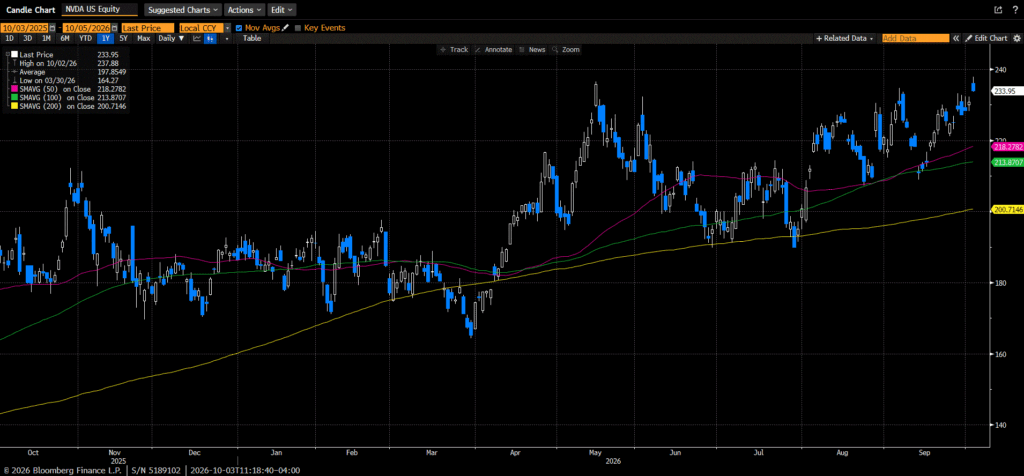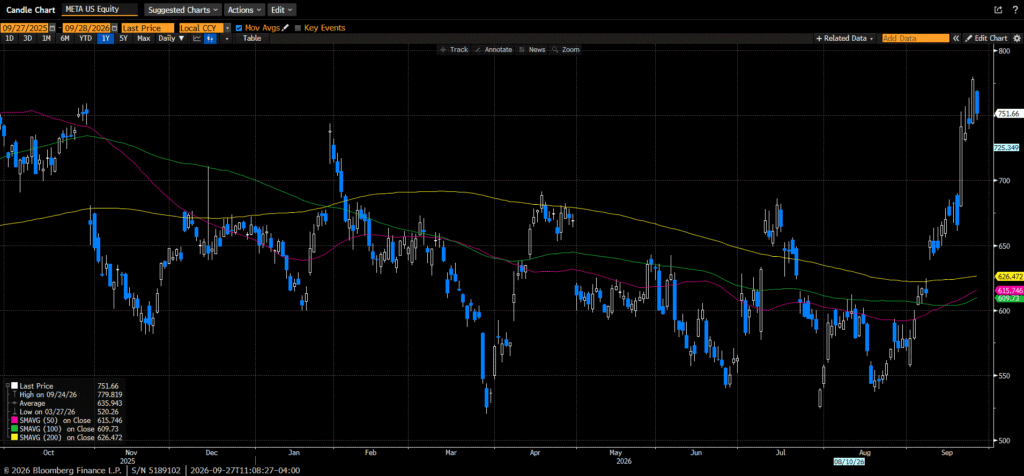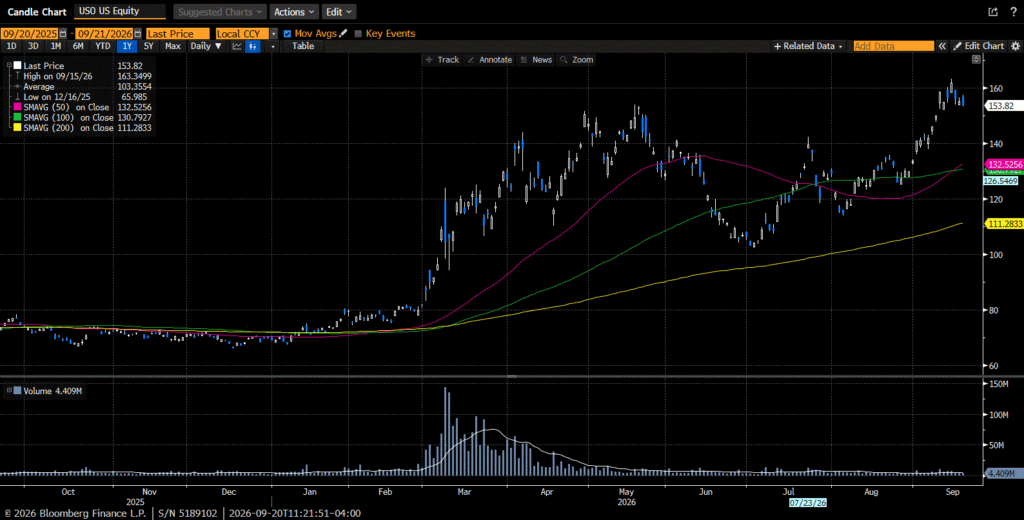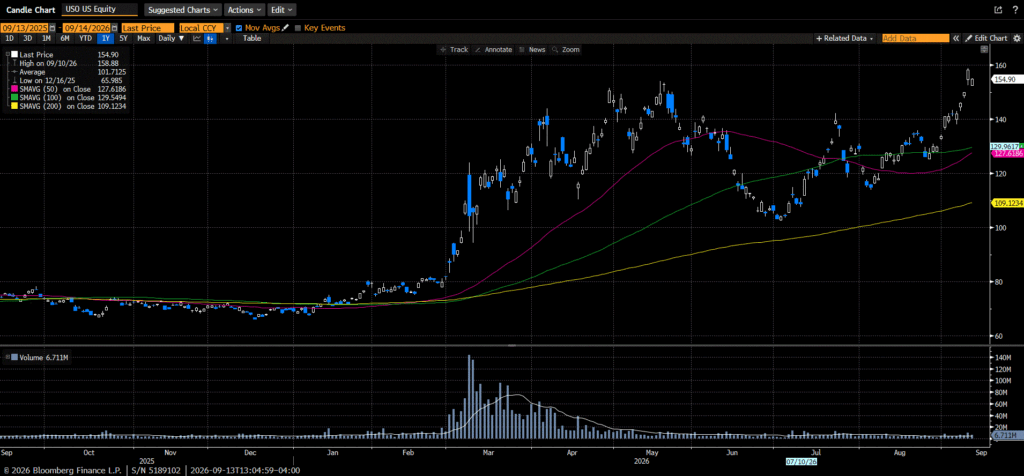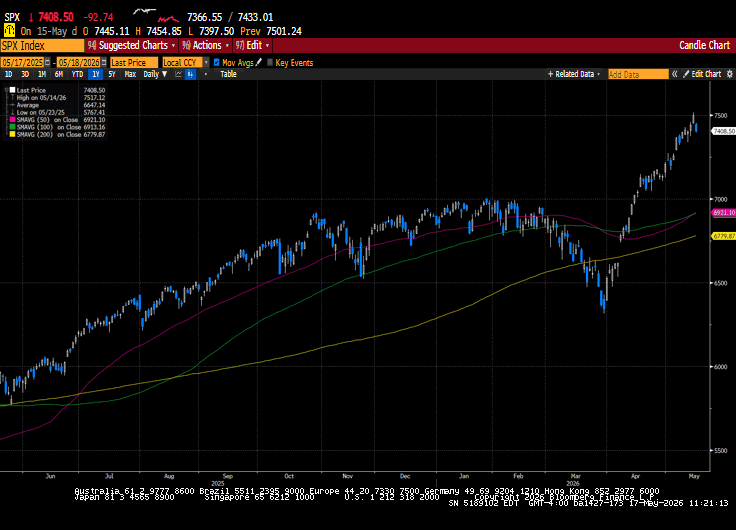
US equity markets finished the week mixed in volatile trade. Hotter-than-expected inflation data, coupled with increased tensions in the Middle East, sent US Treasury yields significantly higher. The US-China summit ended with both sides with no real incremental policy changes. XI and Trump did discuss trade, Taiwan, and the War in Iran. The Mega-Cap technology names continued to provide leadership, with Semiconductors leading the AI charge. However, on Friday, the Semiconductor sector was hammered as traders took profits on one of the year’s hottest and most overcrowded trades. The broader market continued to struggle as advancing issues relative to declining issues, known as “breadth”, deteriorated further. Rate-sensitive parts of the market, such as Mid-Caps, Small Caps, Real Estate, Utilities, and the Consumer Discretionary sector, were notable laggards. We would expect markets to come under further pressure if global interest rates continue to move higher. Notably, the US 10-year yield is now above 4.50%, coming as 10-year Gilts and 10-year JGB yields have hit levels not seen in decades. Kevin Warsh was confirmed as the new Federal Reserve Chairman this week, as futures markets currently price in no rate cuts in 2026.

The S&P 500 gained 0.1%, the Dow fell 0.2%, the NASDAQ declined by 0.1%, and the Russell 2000 slid 2.4%. As I mentioned, US Treasuries fell meaningfully across the curve. The 2-year yield increased by nineteen basis points to 4.08%, while the 10-year yield increased by twenty-four basis points to close the week at 4.60%. West Texas Intermediate crude prices increased by 10.5% or $10.10 to $105.49 per barrel as the Strait of Hormuz continued to be at a standstill. Gold prices fell by 3.5% to $4,561.80 per ounce. Silver prices declined by 4.1% to $77.55 per ounce. Copper prices were unchanged for the week, closing at $6.30 per Lb. Bitcoin’s price declined by 2.88% to $78,200. The US Dollar index advanced by 1.5% to 98.99. A measure of volatility, VIX, increased by 7.2% to 18.43.

iShares 20-year US Treasury ETF 5/15/2026
The economic calendar highlighted two inflation measures: the Consumer Price Index and the Producer Price Index. Both readings showed a material year-over-year uptick. Headline April CPI came in at 0.6% versus the consensus estimate of 0.5%. The measure increased by 3.8% over last year, up from 3.3% in March. The Core CPI, which excludes food and energy prices, increased by 0.4%, in line with expectations. On a year-over-year basis, the reading ticked to 2.8% from 2.6% in March. Energy prices increased by 3.8% month-over-month and is up 17.9% on an annual basis. Headline PPI came in at 1.4% versus the consensus estimate of 0.4%, and was up 6% annually from 4.3% in March. Core PPI increased by 1%, well above the consensus estimate of 0.3%. On a year-on-year basis, the Core reading increased by 5.2% in April, up from 4% in March. April Retail sales increased by 0.5%, higher than the estimate of 0.4%. Ex-Autos came in at 0.7%, which was better than the 0.4% estimate. Initial Jobless Claims increased by 12k to 211k, while Continuing Claims increased by 24k to 1782k.

Investment advisory services offered through Foundations Investment Advisors, LLC (“FIA”), an SEC registered investment adviser. FIA’s Darren Leavitt authors this commentary which may include information and statistical data obtained from and/or prepared by third party sources that FIA deems reliable but in no way does FIA guarantee the accuracy or completeness. All such third party information and statistical data contained herein is subject to change without notice. Nothing herein constitutes legal, tax or investment advice or any recommendation that any security, portfolio of securities, or investment strategy is suitable for any specific person. Personal investment advice can only be rendered after the engagement of FIA for services, execution of required documentation, including receipt of required disclosures. All investments involve risk and past performance is no guarantee of future results. For registration information on FIA, please go to https://adviserinfo.sec.gov/ and search by our firm name or by our CRD #175083. Advisory services are only offered to clients or prospective clients where FIA and its representatives are properly licensed or exempted.