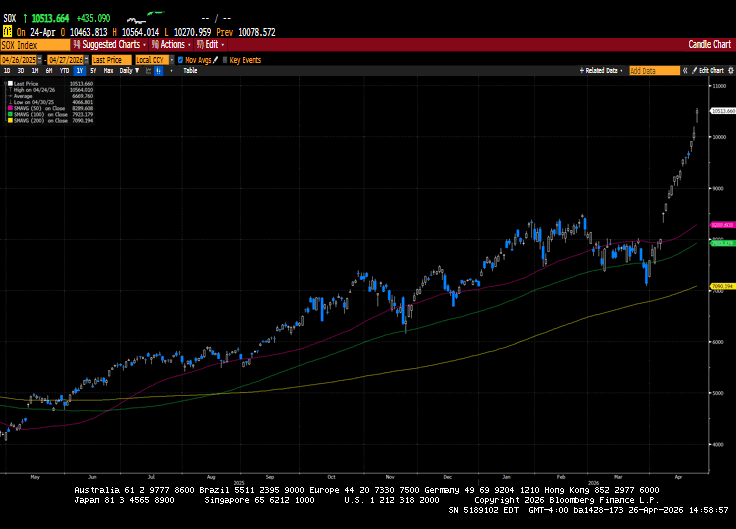
Global markets had mixed results last week as headlines about the US-Iran conflict continued to affect trade. Conflicting reports of the US and Iran meeting to negotiate a ceasefire came and went without the two sides meeting. The Strait of Hormuz continued to be closed while the US continued to impose a blockade on Iranian ships. A fractured Iranian leadership has likely reduced hopes for negotiations, and while a ceasefire remains in place by the US, this timeline is very much in question. As the War enters its ninth week, concerns about global growth are mounting, and the damage to supply chains is worsening. Despite concerns about the conflict, Q1 earnings have come in much better than expected. Solid results from several technology companies, along with more news related to AI collaboration, helped propel the S&P 500 and NASDAQ to all-time highs. A fantastic quarter and outlook from Intel pushed the Philadelphia Semiconductor Index materially higher for the week. According to FactSet, 28% of the S&P 500 have reported first-quarter results. Of these results, 84% have beaten earnings per share estimates, while 81% have beaten revenue estimates. Currently, earnings per share growth for the quarter is 15.1%, while revenue growth is 10.3%. Other corporate highlights included the announcement that Apple’s Tim Cook would step down as CEO and that John Ternus would take over as CEO starting September 1st. Amazon and Anthropic announced a deal that includes a $25 billion investment by Amazon in Anthropic and a 10-year, $100 billion AWS deal between the companies. Elsewhere, it appears that Kevin Warsh will be confirmed as the next Federal Reserve Chairman. Mr. Warsh, during his confirmation hearing, stood by the independence of the Federal Reserve, was critical of the size of the Fed’s balance sheet, and will seek a new framework to contend with inflation. The DOJ, late in the week, dropped the criminal probe into current Fed Chairman Powell and his oversight of the renovation of the Federal Reserve’s building, which has cost $2.5 billion.

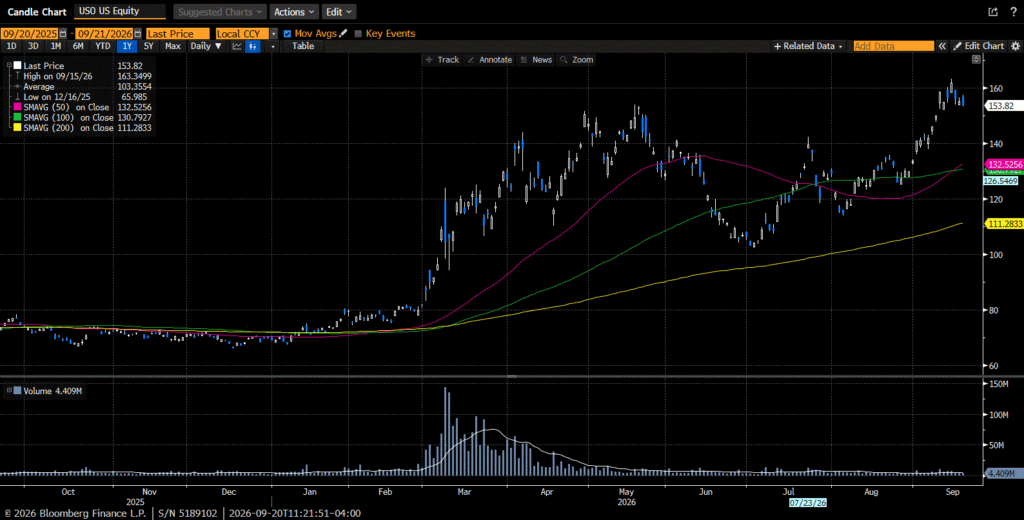
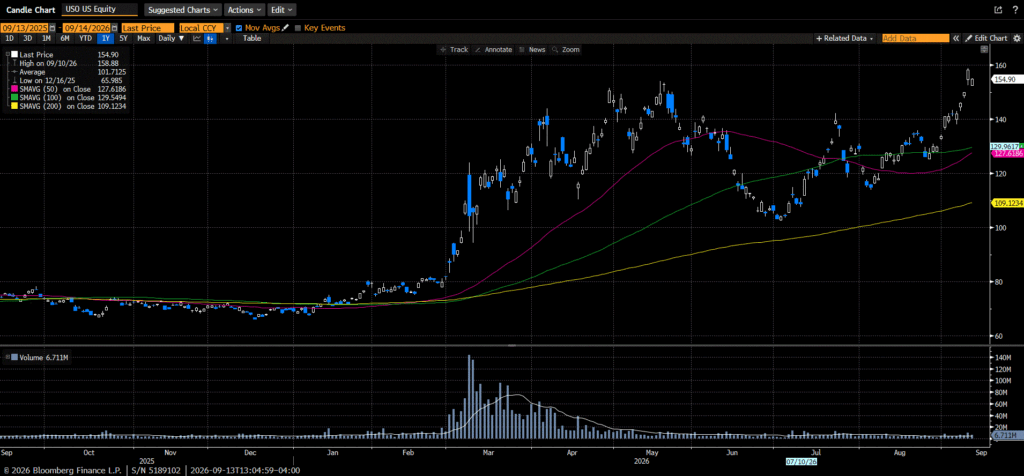
The S&P 500 gained 0.5%, the Dow was lower by 0.4%, the NASDAQ added 1.5%, and the Russell 2000 increased by 0.4%. US Treasury yields climbed across the curve. The 2-year yield increased by ten basis points to 3.78%, while the 10-year yield increased by six basis points. Oil prices jumped by 12.1% to close at $94.42 per barrel. Gold prices fell by 2.8% to $4,739.80 per ounce. Silver prices fell by $5.32, closing the week at $76.41 per ounce. Copper prices fell by eight cents to $6.03 per Lb. Bitcoin’s price increased by 3.49% to close the week at ~$78,000. The CBOE Volatility Index increased by 7%, closing at 18.71. The US Dollar index increased by 0.3% to 98.54.

S&P 500 Index 4/24/2026
The economic calendar was quiet last week. March Retail Sales came in better than expected, but the results were tempered by the fact that most of the gains were driven by price increases rather than volume. The headline number came in at 1.7% versus the consensus estimate of 1.3%. The Ex-Autos figure increased by 1.9% versus the estimated 0.9%. March Pending Home Sales increased by 1.5%, better than the 0.5% that was expected. Initial Jobless Claims increased by 6k to 214K, while Continuing Claims increased by 12k to 1.821m. A preliminary look at the S&P Global Manufacturing and Services PMIs showed that both were better than the previous readings. The final reading for the University of Michigan’s April Consumer Sentiment Index increased to 49.8 from 47.6, but the increase comes on the back of a record low made in March. The slight uptick was attributed to lower gas prices following the ceasefire agreement.

Investment advisory services offered through Foundations Investment Advisors, LLC (“FIA”), an SEC registered investment adviser. FIA’s Darren Leavitt authors this commentary which may include information and statistical data obtained from and/or prepared by third party sources that FIA deems reliable but in no way does FIA guarantee the accuracy or completeness. All such third party information and statistical data contained herein is subject to change without notice. Nothing herein constitutes legal, tax or investment advice or any recommendation that any security, portfolio of securities, or investment strategy is suitable for any specific person. Personal investment advice can only be rendered after the engagement of FIA for services, execution of required documentation, including receipt of required disclosures. All investments involve risk and past performance is no guarantee of future results. For registration information on FIA, please go to https://adviserinfo.sec.gov/ and search by our firm name or by our CRD #175083. Advisory services are only offered to clients or prospective clients where FIA and its representatives are properly licensed or exempted.