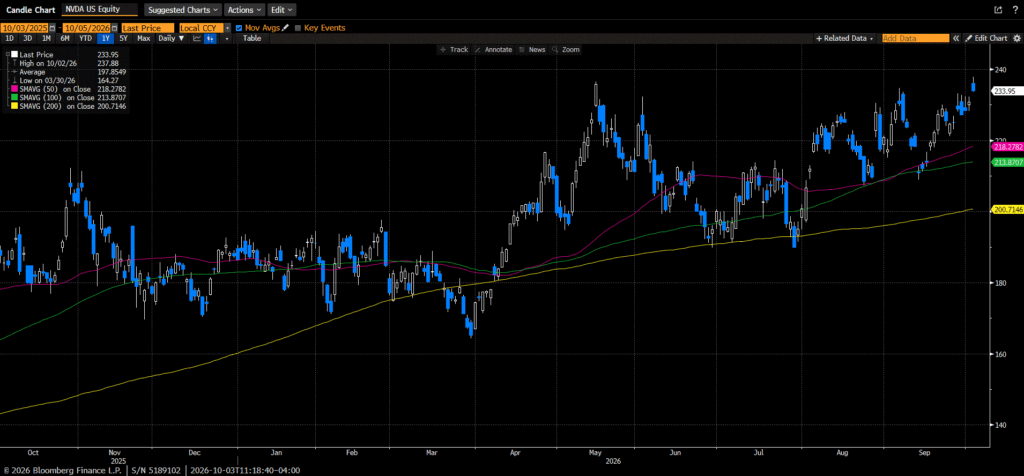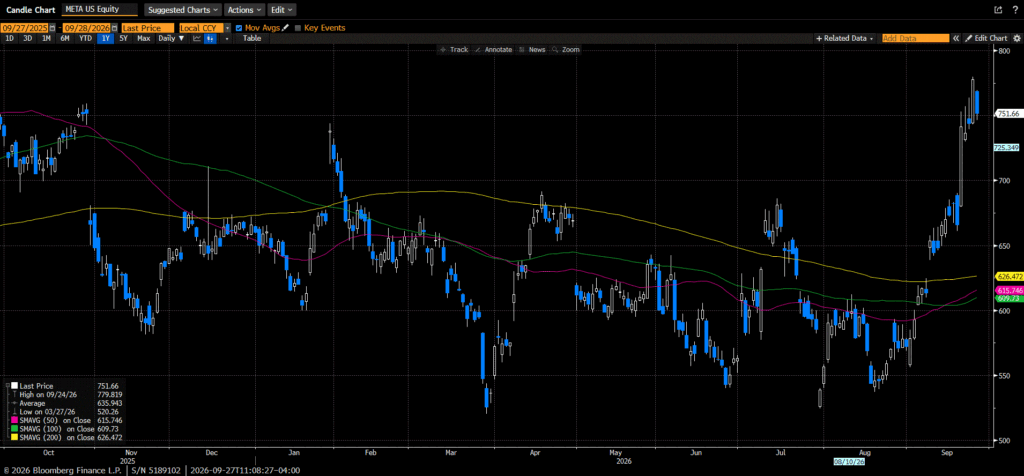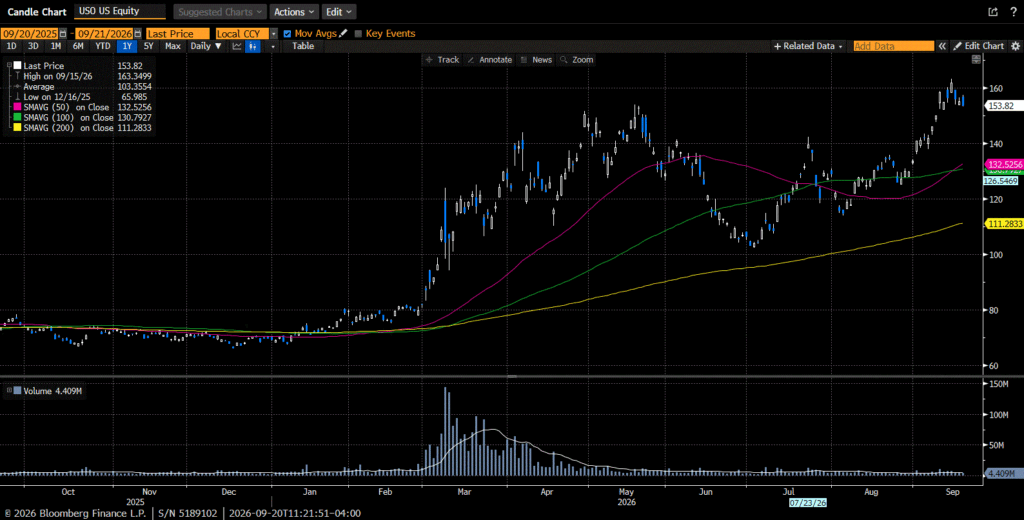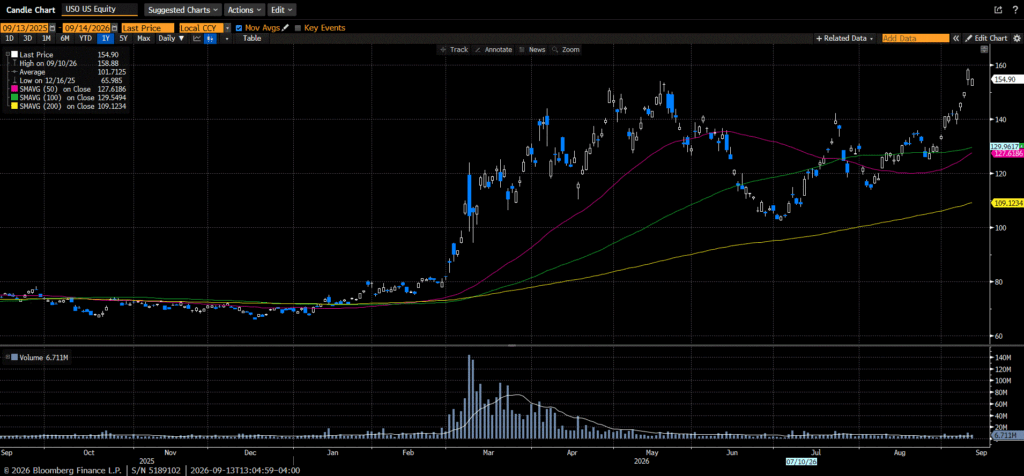

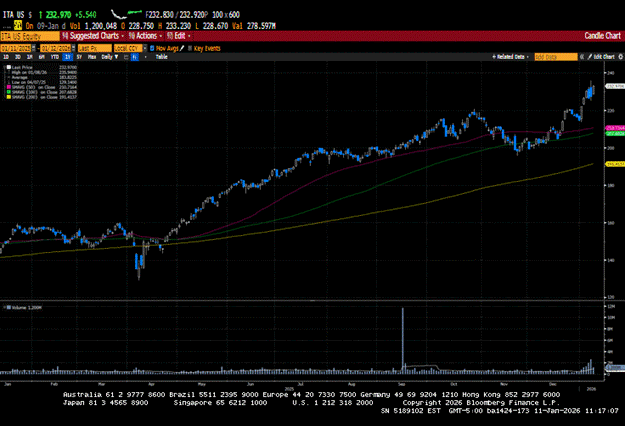
US equity markets notched new highs in the second week of the new year, even as geopolitical tensions increased in several regions. The new highs came on a broadening out of the rally, with cyclicals and small caps leading the way. It was a busy week, with several announcements from President Trump. The President met with oil executives late in the week to discuss the current situation in Venezuela and proposed that the companies invest $100 billion in the country’s oil infrastructure, with US government protection. The new regime in Venezuela handed over 30 billion barrels of oil to the US, where it will be immediately refined and sold to the market. The news sent several energy companies higher, but there are several outstanding issues that need to be addressed, and the timeline will likely be measured in years rather than months to restore Venezuelan crude production to its pre-Chávez, pre-Maduro levels. President Trump also said he would limit defense companies from paying dividends and buying back shares, and instead have those proceeds spent on capital expenditures to further develop defense capabilities. Defense names were sold following the announcement. The President then proposed increasing defense spending to $1.5 trillion in 2027, which sparked a rally for the sector. The President addressed housing affordability by announcing he would halt institutional purchases of single-family homes and instructing Fannie Mae and Freddie Mac to buy $200 billion in mortgages. Finally, late Friday, the President said he would cap credit card interest rates at 10%. The Consumer Electronics Show in Las Vegas showcased several tech initiatives, most notably advancements in robotics and semiconductors. Nvidia said it would introduce Rubin, its latest chip, in the coming months, while Intel and Advanced Micro Devices introduced their latest chips. Other notable corporate news included Samsung’s quarterly earnings, which were much better than expected, driven by strong memory demand and higher pricing, which more than doubled profitability. Meta announced that it had secured significant energy contracts from nuclear power companies Vistra and Oklo. Finally, Rio Tinto announced it was in talks to acquire Glencore for $200 billion. Should the deal close, the combined company would be the world’s largest mining company.

The S&P 500 gained 1.6%, the Dow rose 2.3%, the NASDAQ increased by 1.9%, and the Russell 2000 outperformed with a 4.6% gain. The US yield curve flattened as longer-dated maturities outperformed the short end. The 2-year yield increased by six basis points to 3.54%, while the 10-year yield decreased by two basis points to 4.17%. Mixed signals in economic data pushed out expectations for rate cuts from the Federal Reserve, and was likely the reason for the underperformance of the front end of the curve. Notably, debt issuance in the first two weeks of the year exceeded $260 billion, with more issuance expected, which will likely set a January record. The commodity complex was well bid this week. Crude prices increased by 3% with WTI closing at $59.10 a barrel. Gold prices rose by 4%, or $172, to close at $4,501 per Oz. Silver prices gained more than 12% to close at $79.34 per Oz. Copper prices rose by twelve cents or 3.6% to close the week at $5.90 per Lb. Bitcoin’s price rose at the start of the week but declined throughout the week, ending near its opening level at $90,725. The US Dollar index increased by 0.7% to 99.12.

The economic calendar was loaded with much of the focus on the labor market. The Employment Situation Report had something for everyone and likely gave the Fed the ability to push out the timing of the next rate cut. Non-Farm Payrolls increased by 50k, less than the consensus estimate of 70k. Private Payrolls increased by 37K versus an estimated 50k. The Unemployment Rate fell to 4.4% from 4.6% and was expected to fall to 4.5%. Average Hourly Earnings increased by 0.3% month over month and increased by 3.8% annually from the previous reading of 3.6%. The Average Hourly work week came in line with expectations at 34.2 hours. JOLTS, which measures job openings, declined to 7.146m from 7.449m. ADP private payrolls increased by 41K, which was up from the prior decline of 29k. Initial Jobless Claims rose by 8k to 208k, while Continuing Claims increased by 56k to 1914k. ISM Manufacturing contracted to 47.9 from the prior reading of 48.2. ISM Services increased to 54.4 from the prior reading of 52.6. Finally, the University of Michigan’s preliminary January reading of Consumer sentiment increased slightly to 54 from 52.9 in December.

Investment advisory services offered through Foundations Investment Advisors, LLC (“FIA”), an SEC registered investment adviser. FIA’s Darren Leavitt authors this commentary which may include information and statistical data obtained from and/or prepared by third party sources that FIA deems reliable but in no way does FIA guarantee the accuracy or completeness. All such third party information and statistical data contained herein is subject to change without notice. Nothing herein constitutes legal, tax or investment advice or any recommendation that any security, portfolio of securities, or investment strategy is suitable for any specific person. Personal investment advice can only be rendered after the engagement of FIA for services, execution of required documentation, including receipt of required disclosures. All investments involve risk and past performance is no guarantee of future results. For registration information on FIA, please go to https://adviserinfo.sec.gov/ and search by our firm name or by our CRD #175083. Advisory services are only offered to clients or prospective clients where FIA and its representatives are properly licensed or exempted.