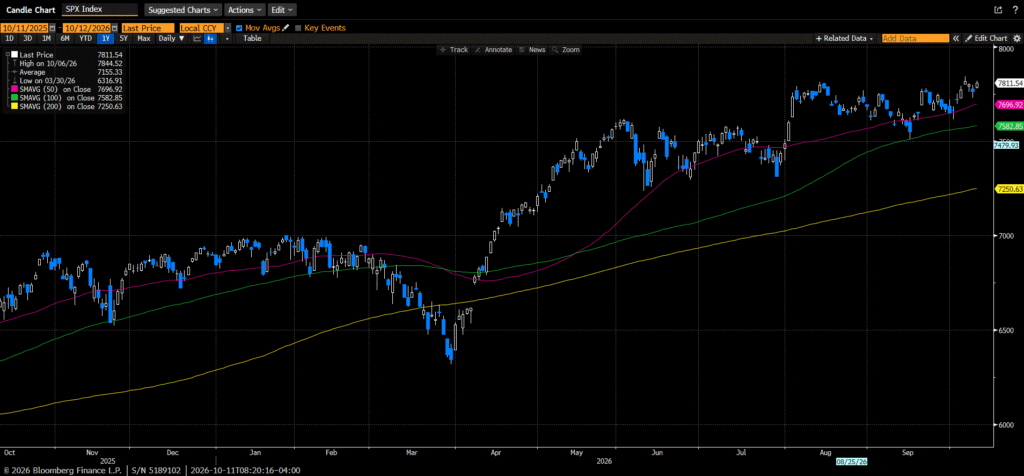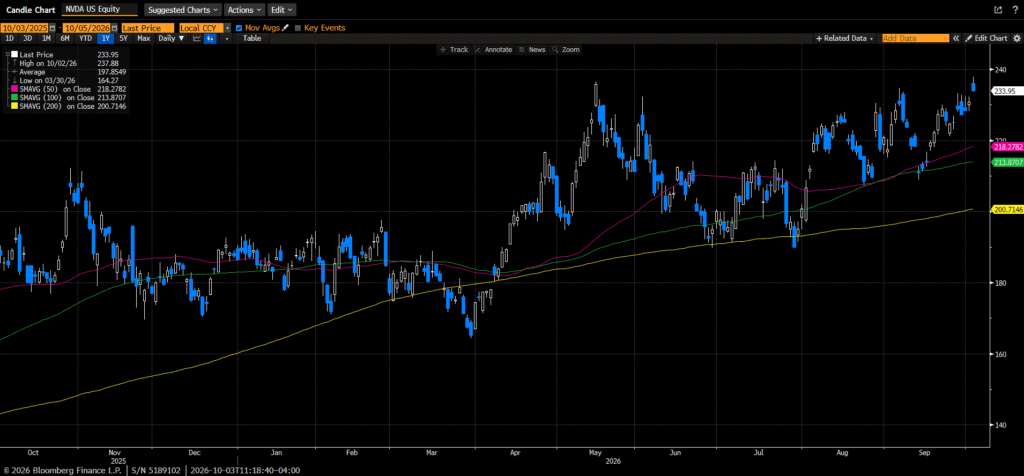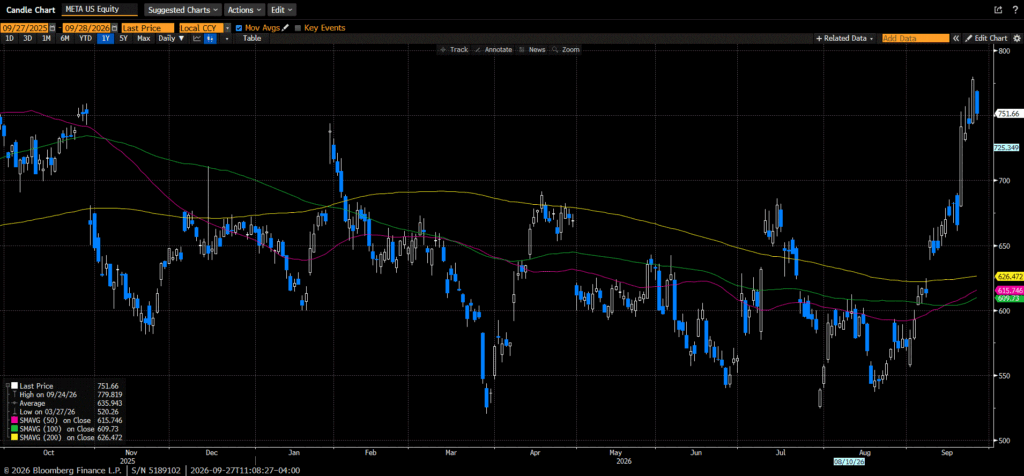

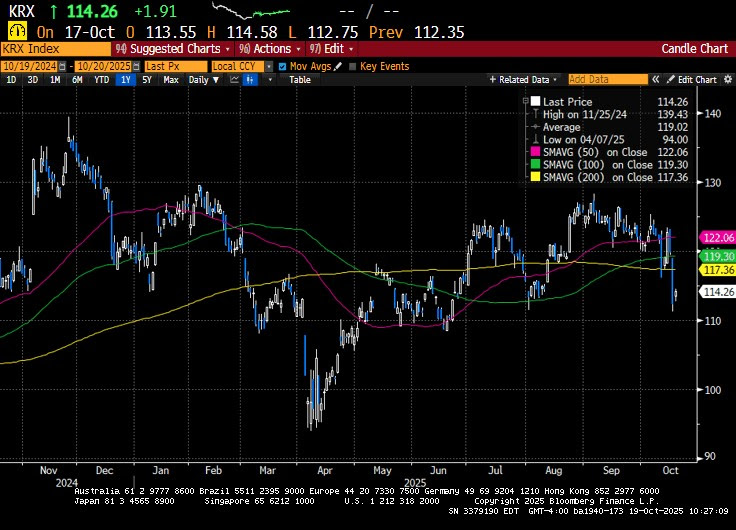
US markets rebounded from losses in the prior week as trade tensions between the US and China appeared to ease. President Trump is scheduled to meet with President Xi in the next couple of weeks, and Treasury Secretary Bessent met with Chinese trade officials over the weekend. President Trump also had a constructive call with Russian President Vladimir Putin and will meet with him in Hungary to discuss the end of the Ukraine war. The President also met with the Ukrainian leader, Zelensky, who was in Washington seeking Tomahawk missiles. Third-quarter earnings started in earnest with the largest banks posting solid results. Goldman Sachs, JP Morgan, Wells Fargo, Citibank, Bank of America, and Morgan Stanley all had better-than-expected results. Investment Banking and Trading were strong within the quarter. On the other hand, regional bank earnings were mixed and catalyzed concerns related to credit exposure after Zion and Western Alliance Bancorp took write-offs on fraudulent loans related to commercial real estate. The concerns sent the KBW Regional Bank Index down 6.3%. The regionals did have a nice bounce on Friday, but credit quality concerns will likely continue and be in focus on Wall Street. Taiwan Semiconductor and ASML helped propel the Semiconductor sector after posting solid quarters. Open AI announced partnerships with Broadcom and Walmart, which catalyzed buying in both companies. Quantum computing stocks got another lift after IONQ announced a significant advancement in quantum chemistry. United Airlines’ third-quarter earnings exceeded estimates, but comments by the company’s CEO related to the US government shutdown and its possible effects on bookings took shares lower.

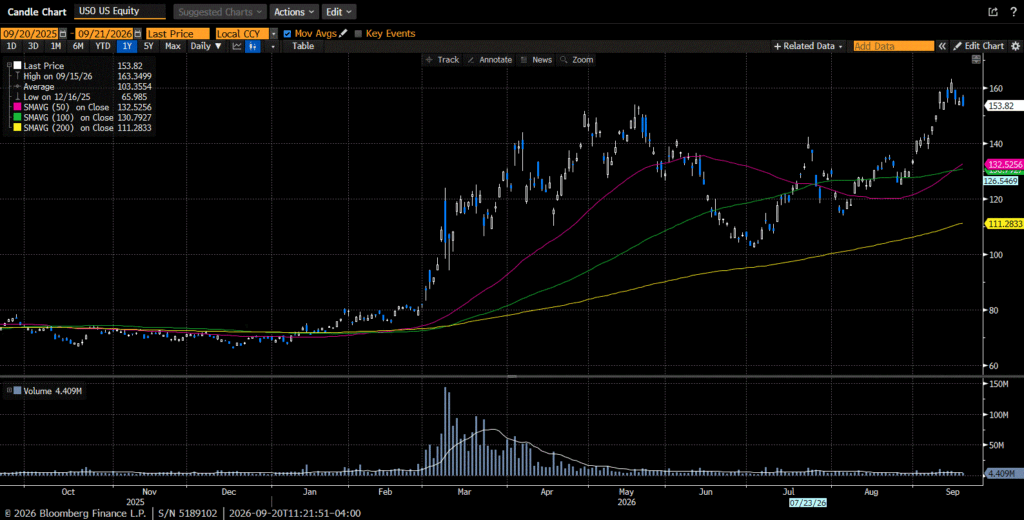
The S&P 500 gained 1.7%, the Dow rose by 1.6%, the NASDAQ increased by 2.1% and the small-cap Russell 2000 advanced by 2.4%. US Treasuries ended the week higher across the curve. The 2-year yield fell by six basis points to 3.46%, while the 10-year yield decreased by four basis points to 4.01%. Several Fed officials were at the podium throughout the week, and the rhetoric generally signaled more easing from the Fed. The Fed will go into a quiet period now until the October 28th-29th FOMC meeting. Currently, there is a 99% probability of a twenty-five basis point rate cut at the October meeting and a 94% probability of another twenty-five basis point cut at the December meeting. Notably, with the US government shut down, there has been very little economic data to assess. Oil prices continued to fall. WTI prices fell by $1.83 or 3.1% to close the week at $57.11 a barrel. The US and India are close to a deal that would curb Indian demand for Russian oil. Gold prices increased the most in a week on record. At the end of the week, Gold was up $212.80 or 5.8% to close at $4212.70 per ounce. Copper prices were up eight cents to close the week at $4.97 per Lb. Bitcoin’s price fell by 2.94% and is currently trading at $108,220. The US Dollar index increased by 0.4% to 98.42.

The economic calendar was quiet. NFIB Small Business Optimism came in at 98.8, down from the prior reading of 100.8. Mortgage Applications fell by 1.8% in the prior week. Empire State Manufacturing increased by 10.7, up from the prior reading of -8.7. Finally, the NAHB Housing Market Index came in at 37 versus the consensus estimate of 32.
Investment advisory services offered through Foundations Investment Advisors, LLC (“FIA”), an SEC registered investment adviser. FIA’s Darren Leavitt authors this commentary which may include information and statistical data obtained from and/or prepared by third party sources that FIA deems reliable but in no way does FIA guarantee the accuracy or completeness. All such third party information and statistical data contained herein is subject to change without notice. Nothing herein constitutes legal, tax or investment advice or any recommendation that any security, portfolio of securities, or investment strategy is suitable for any specific person. Personal investment advice can only be rendered after the engagement of FIA for services, execution of required documentation, including receipt of required disclosures. All investments involve risk and past performance is no guarantee of future results. For registration information on FIA, please go to https://adviserinfo.sec.gov/ and search by our firm name or by our CRD #175083. Advisory services are only offered to clients or prospective clients where FIA and its representatives are properly licensed or exempted.