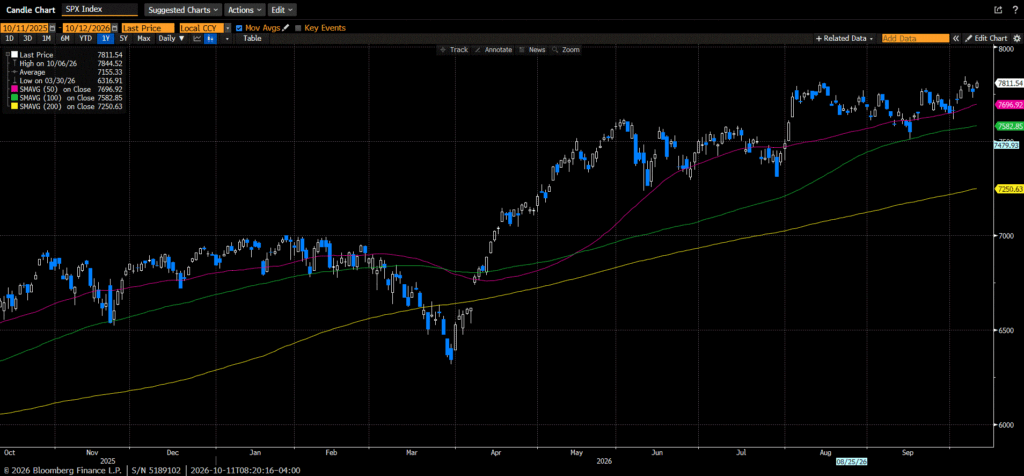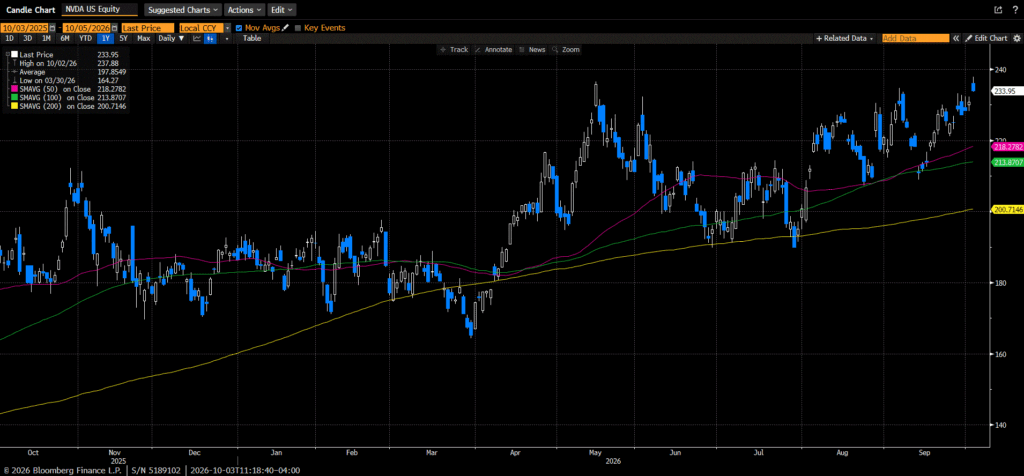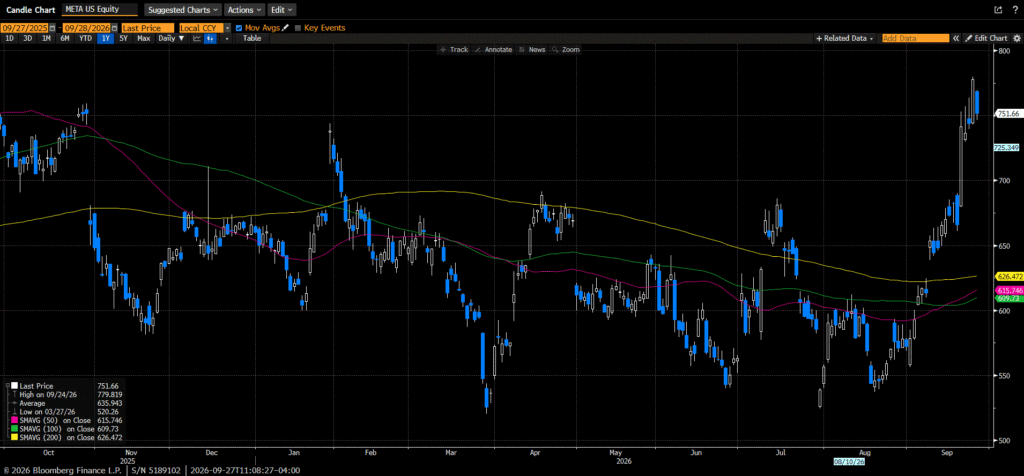


U.S. equity markets were little changed for the week; that said, the S&P 500 and NASDAQ were able to forge another set of all-time highs.
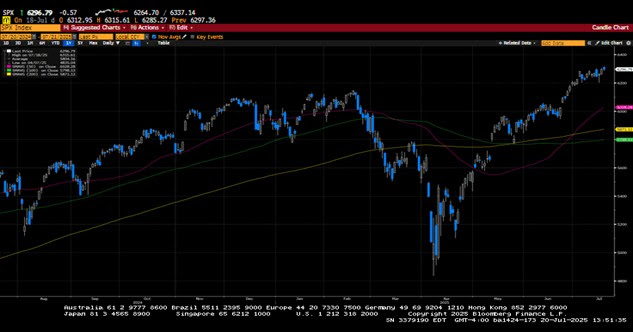
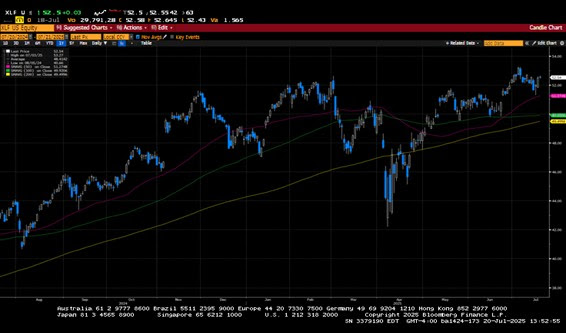
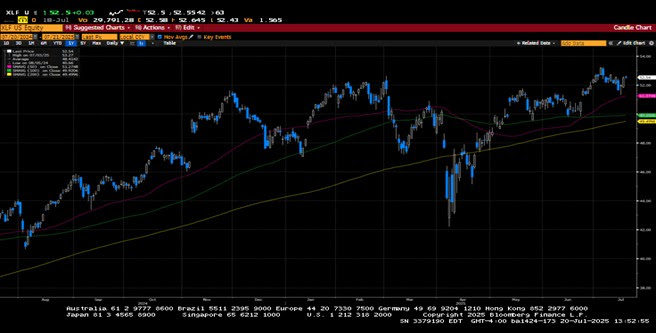
A busy Q2 earnings calendar saw 12% of the S&P 500 report earnings. Earnings from several large banks came in better than expected, but despite the better results, many of the banks sold off after their earnings announcements. This may be an indication of what to expect for the rest of earnings season, given the extraordinary moves we have seen in equity markets. In the coming week, 112 S&P 500 companies are scheduled to announce earnings results.
Trade negotiations continue, but few deals have been announced. The EU is preparing retaliatory tariffs in response to Trump’s announcement of a 30% tariff on a broad basket of EU goods. Treasury Secretary Scott Bessent met with Japan’s Prime Minister Ishiba on Friday to discuss trade, but no deals were announced. Notably, Japan is holding elections this weekend, where it appears Ishiba’s LDP party faces a significant setback and a loss of its majority.
The Federal Reserve’s independence remains a key talking point for Wall Street, as President Trump continues to suggest he would fire Chairman J. Powell. The President continues to insist that the Fed should be cutting rates. President Waller again laid out his argument for a rate cut in the upcoming July meeting, while several other Fed officials noted the Fed was in a good position to wait for more data. Currently, the odds of a July rate cut are under 5%. Suggestions that Powell has mismanaged the renovation of the Federal Reserve’s building (seen as a reason to terminate Powell) have been growing so much that Powell has penned a letter to the President clarifying the renovation plans, including details on what has been spent.
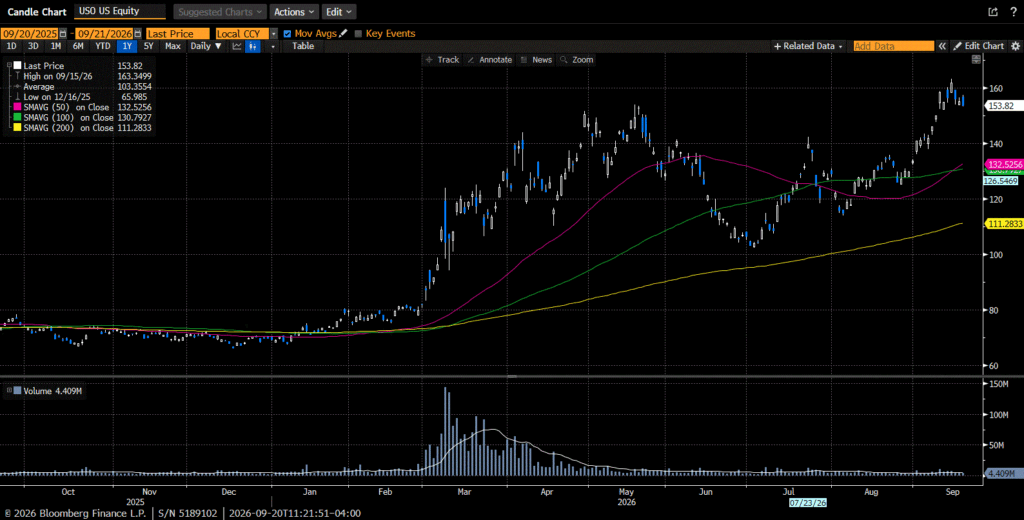
The S&P 500 gained 0.6%, the Dow lost 0.1%, the NASDAQ led with an advance of 1.5%, and the Russell 2000 increased by 0.2%. The U.S. Treasury curve steepened, with shorter tenured Treasuries outperforming the longer end of the curve. The 2-year yield declined by three basis points to 3.88%, while the 10-year yield increased by one basis point to close at 4.43%. Oil prices fell 2.5% to close the week at $66.03 a barrel. Gold prices fell by $5.50 to close at $3,358.30 per ounce. Copper prices were little changed at $5.61 per Lb. Bitcoin’s price remained little changed despite a volatile week following its significant move in the prior week. Bitcoin is currently trading at $118,700. The U.S. Dollar index gained 0.6% on the week.
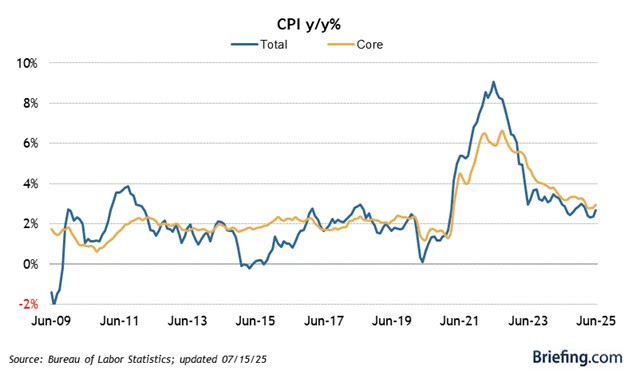
Inflation data and retail sales data were the highlights on the economic calendar. Headline Consumer Price Index increased by 0.3% slightly above the estimated 0.2%. On a year-over-year basis, the headline figure rose 2.7% in June, up from 2.4% in May. The Core CPI reading came in line with estimates of 0.2% but the yearly figure increased to 2.9% from May’s 2.8%. A decrease in the Shelter and Vehicle figures was encouraging; however, an uptick in Apparel and Furnishing prices may be a sign of increased levies showing up in the data. The Producer Price Index came in better than expected. The headline and core figures came in unchanged versus an estimated increase of 0.1%. On a year-over-year basis, both readings declined from the prior month. The data received on the CPI and PPI did very little to alter the course of Fed policy in the upcoming July meeting. Retail Sales increased by 0.6% versus an estimated 0.4%. The better print shows a resilient consumer. Initial Claims fell by 7k to 221k, while Continuing Claims increased by 2k. Labor continues to look okay. The preliminary July University of Michigan Consumer Sentiment Index increased to 61.8 from June’s figure of 60.7. Housing Starts and Building Permits both beat estimates, but the data was tempered by a decline in single-family starts and permits.
Investment advisory services offered through Foundations Investment Advisors, LLC (“FIA”), an SEC registered investment adviser. FIA’s Darren Leavitt authors this commentary which may include information and statistical data obtained from and/or prepared by third party sources that FIA deems reliable but in no way does FIA guarantee the accuracy or completeness. All such third party information and statistical data contained herein is subject to change without notice. Nothing herein constitutes legal, tax or investment advice or any recommendation that any security, portfolio of securities, or investment strategy is suitable for any specific person. Personal investment advice can only be rendered after the engagement of FIA for services, execution of required documentation, including receipt of required disclosures. All investments involve risk and past performance is no guarantee of future results. For registration information on FIA, please go to https://adviserinfo.sec.gov/ and search by our firm name or by our CRD #175083. Advisory services are only offered to clients or prospective clients where FIA and its representatives are properly licensed or exempted.