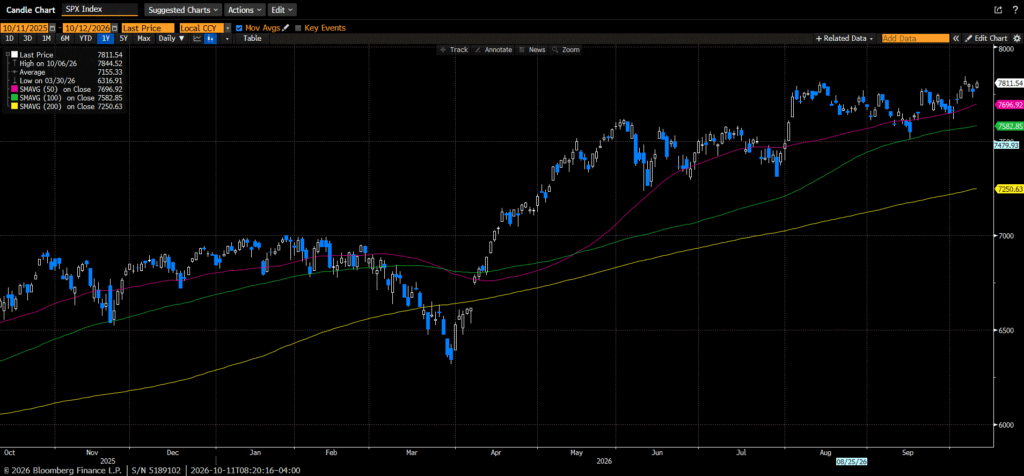

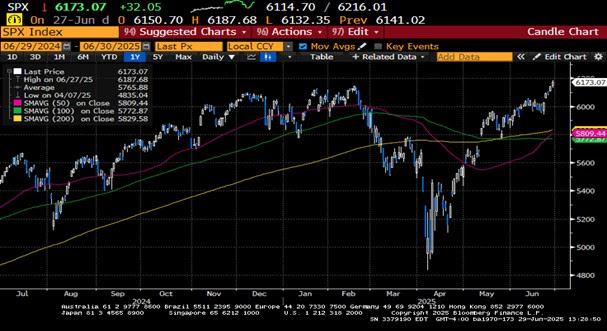
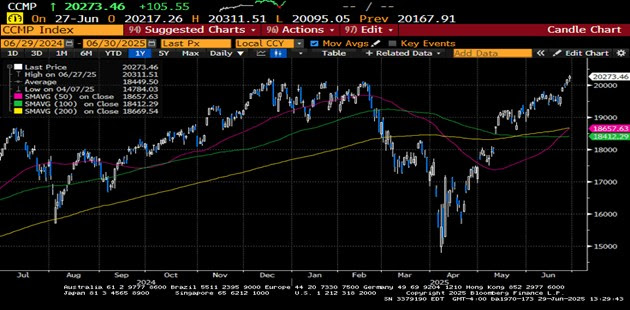
The S&P 500 and the NASDAQ joined the NASDAQ 100 in forging new all-time highs in an extremely busy week for Wall Street. A de-escalation of the Iran-Israel-US conflict happened on the twelfth day after Israel’s initial strikes. The US bombed three key nuclear facilities last Saturday, with mixed assessments on the damage to the facilities. Markets braced for increased tensions and the possibility of shipping interruptions at the Strait of Hormuz. A retaliatory strike by Iran on a US base in Qatar was telegraphed to the US to avoid casualties and set the footing for a ceasefire agreement. The market rallied after the ceasefire and turned its attention to a full economic calendar, Fed Chairman Powell’s semiannual testimony to Congress, Global trade, some residual Q1 earnings, and Senate negotiations on Trump’s “One Big Beautiful Bill”.
Dovish comments from Fed Governor Bowmen suggested that the Fed could cut its policy rate as soon as July, consistent with what we heard from Fed Governor Waller in the prior week. The likelihood of a July rate cut increased from 14% to nearly 25% after the comments. However, in testimony in front of Congress, Chairman Powell pushed back and suggested the Fed could continue to wait to cut its policy rate. That said, he did leave the door open for rate cuts dependent on a weakening of the labor market and continued progress on inflation. Not surprisingly, President Trump pushed back on the Fed Chair’s hawkish tone and suggested he may announce his next Fed Chairman’s nomination well before Powell’s term ends in May. The Federal Reserve also announced that it would reduce capital requirements at some banks and that most banks had passed their most recent stress tests.
Late in the week, the market was catalyzed by the announcement that the US and China had reached a framework for trade. China will open up more exports of rare earth minerals, while the US will relax some of the curbs associated with technology exports to China. Treasury Secretary Bessent also suggested the timeline for trade negotiations could be extended for some countries. At the same time, Commerce Secretary Lutnick told reporters that the US was close to nine other trade deals. Trump announced Friday that the US and Canada negotiations were off the table after Canada imposed a digital services tax and a 400% tariff on US dairy products.
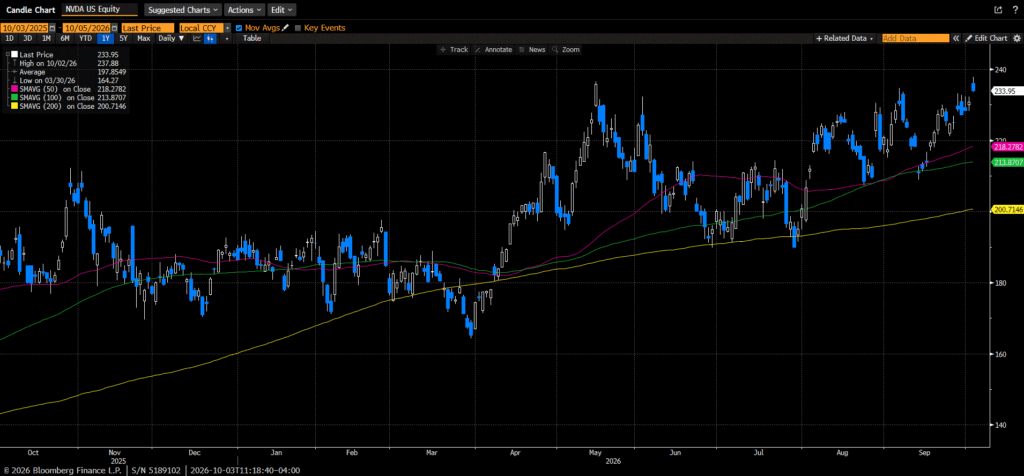
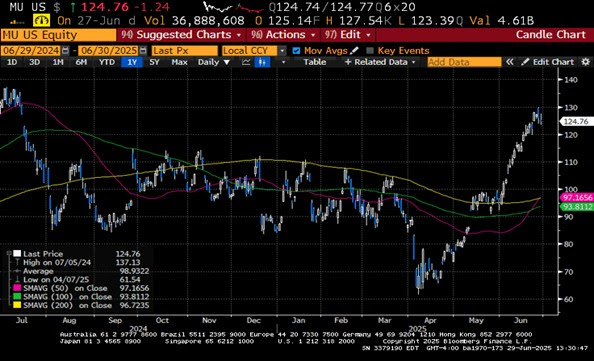
Micron Technology’s Q1 earnings results sparked a rally in the Semiconductor sector. The news helped push NVidia to all-time highs and gave weight to expectations of more cap-ex spend on artificial intelligence. Nike also had a great quarter and helped buoy a rally in the Consumer Discretionary Sector. The sector also benefited from Tesla’s robo taxi launch in Austin, Texas.
The Senate found the votes late Saturday night to proceed with the reconciliation bill. The bill will now undergo a full reading by the Senate, followed by more debate. The bill will then enter into several amendment votes. This process will likely bleed into the coming week, and Senate passage is not guaranteed. The President has called on his republican lawmakers to get it passed for his signature before the Independence Day holiday.
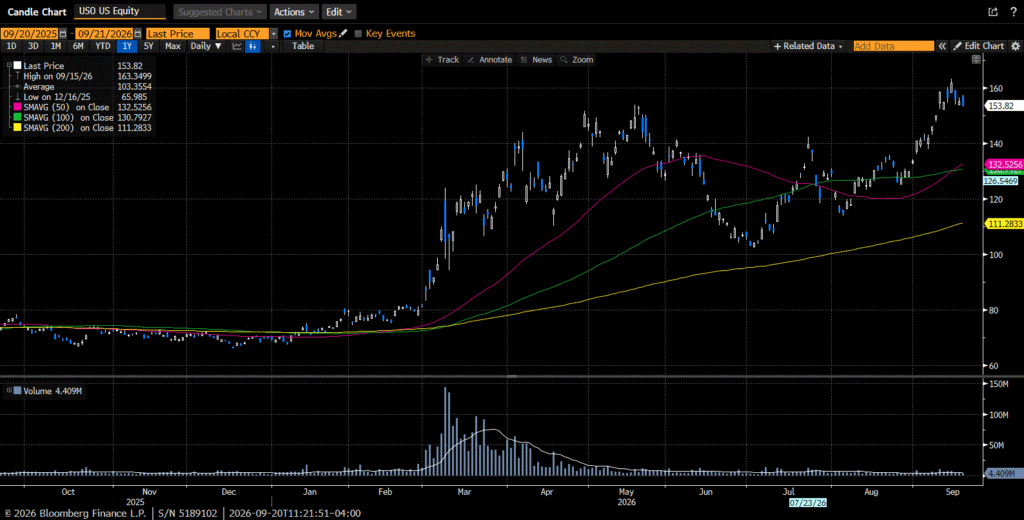
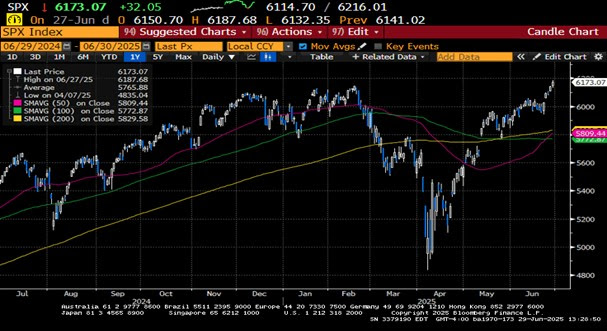
The S&P 500 gained 3.4%, the Dow rose 3.8%, the NASDAQ jumped 4.2%, and the Russell 2000 inked a gain of 3%. US Treasuries had a third consecutive week of gains as rate cut expectations increased on mixed economic data and dovish comments from some Fed officials. The 2-year yield declined by sixteen basis points to 3.74%, while the 10-year yield fell by nine basis points to 4.29%. Oil prices tumbled on the ceasefire agreement. WTI fell by 11% or $8.26 to close the week at $65.57 a barrel. Gold prices fell by 2.7% to close the week at $3,292.80 per ounce. Copper prices surged by 4.9% and closed above $5 per pound for the first time in several months. Bitcoin prices increased by 7.5%, closing the week at $107,500.
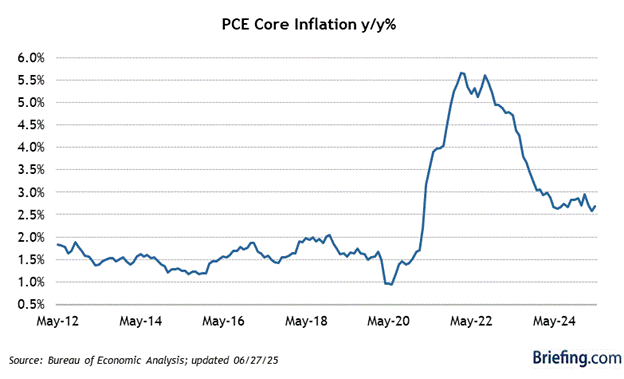
There were several items on the economic calendar this week. PCE, the Fed’s preferred measure of inflation, came in a touch higher than what the street was expecting on a year-over-year basis. The headline print came in at 2.3% versus April’s 2.2%, while the core reading came in at 2.7% compared to April’s 2.6%. Personal Income fell by 0.4% versus the consensus estimate of 0.4%. Personal Spending fell by 0.1% compared to the forecast of 0.2%. The third look at Q1 GDP fell to 0.5% from -0.2% but again must be tempered given the massive increase in imports in front of the expected tariffs. Consumer Confidence and Sentiment ticked higher on the back of the delayed tariffs. Consumer Confidence came in at 9, while Consumer Sentiment ticked to 60.7. Initial Claims fell by 10k even as Continuing Claims increased by 37k to 1,974k. May Durable Goods orders surged by 16.4% versus the prior reading of -6.6%.
Investment advisory services offered through Foundations Investment Advisors, LLC (“FIA”), an SEC registered investment adviser. FIA’s Darren Leavitt authors this commentary which may include information and statistical data obtained from and/or prepared by third party sources that FIA deems reliable but in no way does FIA guarantee the accuracy or completeness. All such third party information and statistical data contained herein is subject to change without notice. Nothing herein constitutes legal, tax or investment advice or any recommendation that any security, portfolio of securities, or investment strategy is suitable for any specific person. Personal investment advice can only be rendered after the engagement of FIA for services, execution of required documentation, including receipt of required disclosures. All investments involve risk and past performance is no guarantee of future results. For registration information on FIA, please go to https://adviserinfo.sec.gov/ and search by our firm name or by our CRD #175083. Advisory services are only offered to clients or prospective clients where FIA and its representatives are properly licensed or exempted.