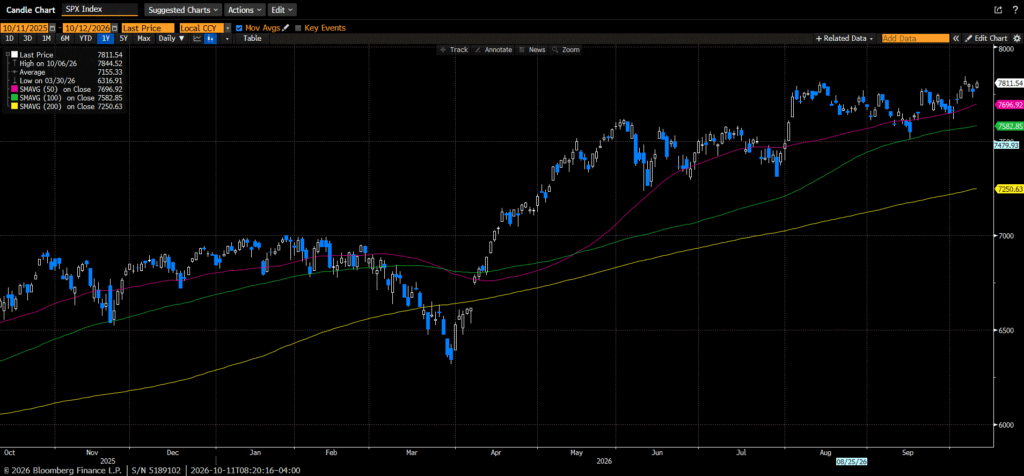

The holiday-shortened week was busy. Trade uncertainties continued to be on investors’ minds, with several trade stories hitting the tape throughout the week. News on Tuesday that President Trump had extended the timeline for negotiations with the EU until July 9th catalyzed global markets higher. News that the US Court of International Trade had ruled against President Trump’s legal authority to impose and enforce reciprocal tariffs, and the subsequent ruling by the US Court of Appeals to temporarily reinstate the tariffs kept investors guessing what would come next on the trade front. On Friday, Trump accused China of violating the preliminary trade agreement with the US and then threatened to impose additional technology-related sanctions on China. The President later said he looked forward to speaking with China’s President Xi and was hopeful things could be worked out. Treasury Secretary Bessent is scheduled to meet with the Japanese trade delegation in the next few days.
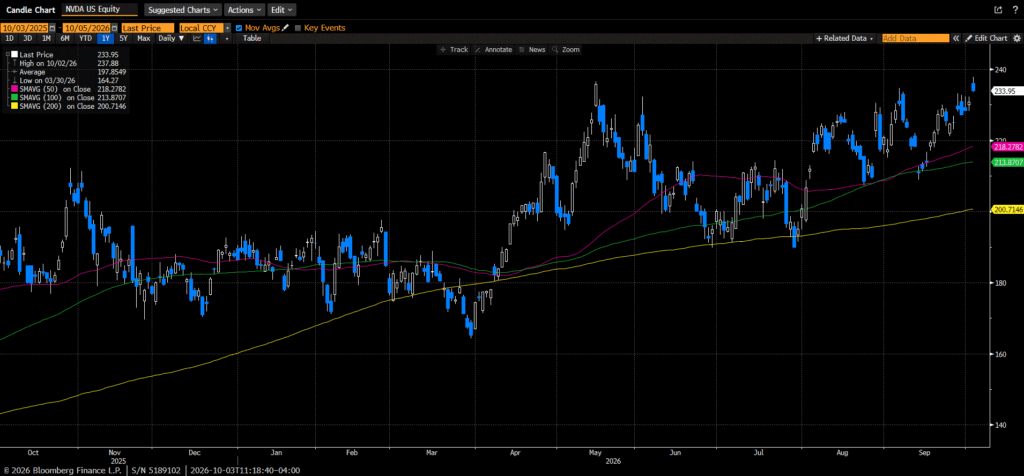
Earnings from NVidia were solid and helped to push shares higher, but the stock fell later in the week off the announcement of further technology bans on China. Costco had a great quarter, while Best Buy and Salesforce.com had disappointing quarters.

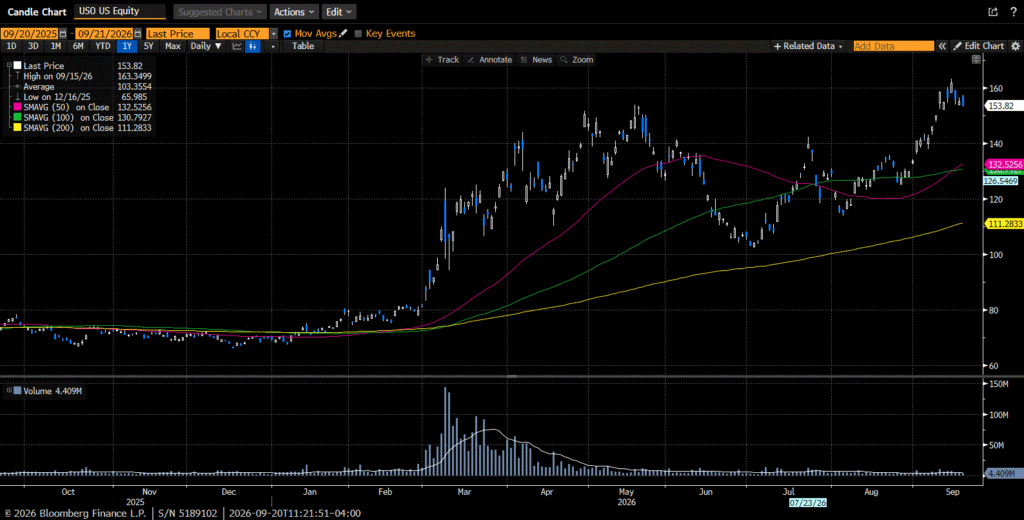
The S&P gained 1.9%, the Dow added 1.6%, the NASDAQ advanced by 2%, and the Russell 2000 increased by 1.3%. US Treasuries found some reprieve this week as 2, 5, and 7-year auctions were met with solid demand. The 2-year yield fell by eight basis points to 3.92%, while the 10-year yield decreased by nine basis points to 4.42%. When yields decline, bond prices increase. US Treasuries were also bolstered by the announcement that Japan may decrease its issuance of its ultra-long JGBs. WTI oil prices fell by 1.57%, closing at $60.79 a barrel. Crude prices have fallen by 15.42% since the beginning of the year. Gold prices are up 25.53% year to date and gained 0.55% on the week, closing at $3,315.40 an ounce. Copper prices fell 3.34% on the week to close at $4.70 per Lb. Bitcoin prices fell by $4k to $104,836. The Dollar index gained 0.33% to close the week at 99.33.

The economic calendar was stacked with a mixed bag of results. The Fed’s preferred measure of inflation, the PCE, showed continued progress on the inflation front. Headline and Core PCE came in line with expectations at 0.1%. On a year-over-year basis, the headline number declined to 2.1% in May from 2.3% in April, while the Core reading fell to 2.5% from 2.7% in April. Personal Income came in better than expected at 0.8% versus the estimated 0.3%. Personal Spending was in line with the consensus estimate of 0.2%. Sentiment and Confidence data showed a bit of an uptick. The Consumer Confidence index was 98, higher than the 85.7 reported in April. The final reading of the University of Michigan’s Consumer Sentiment Index increased to 52.2 from the prior reading of 50.8. Both of these upticks could be attributed to the reprieve on tariffs. The 2nd look at Q1 GDP was revised to -0.2% from -0.3%. However, a revision in the Personal Spending figure to 1.2% from 1.8% caused concerns about the consumer curbing their spending. Finally, Initial Jobless Claims increased by 16k to 240k, while Continuing Claims increased by 26k to 1.919M.
Investment advisory services offered through Foundations Investment Advisors, LLC (“FIA”), an SEC registered investment adviser. FIA’s Darren Leavitt authors this commentary which may include information and statistical data obtained from and/or prepared by third party sources that FIA deems reliable but in no way does FIA guarantee the accuracy or completeness. All such third party information and statistical data contained herein is subject to change without notice. Nothing herein constitutes legal, tax or investment advice or any recommendation that any security, portfolio of securities, or investment strategy is suitable for any specific person. Personal investment advice can only be rendered after the engagement of FIA for services, execution of required documentation, including receipt of required disclosures. All investments involve risk and past performance is no guarantee of future results. For registration information on FIA, please go to https://adviserinfo.sec.gov/ and search by our firm name or by our CRD #175083. Advisory services are only offered to clients or prospective clients where FIA and its representatives are properly licensed or exempted.