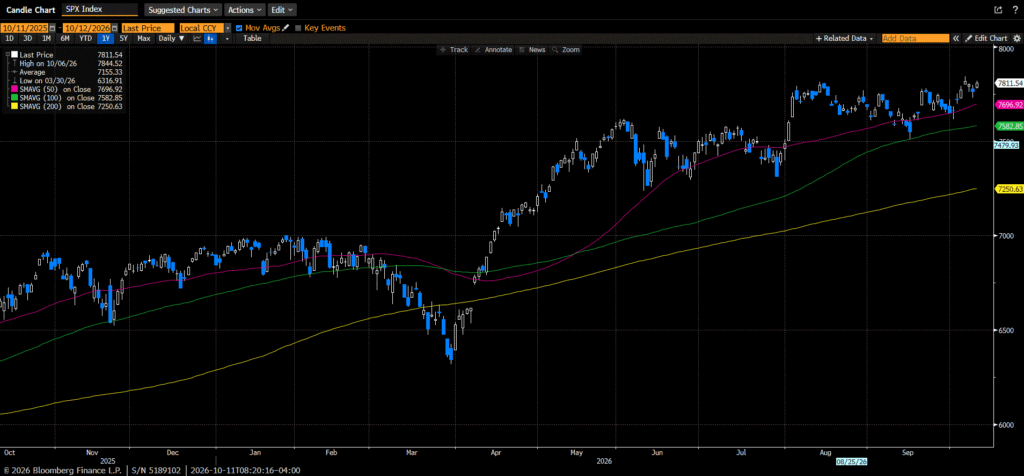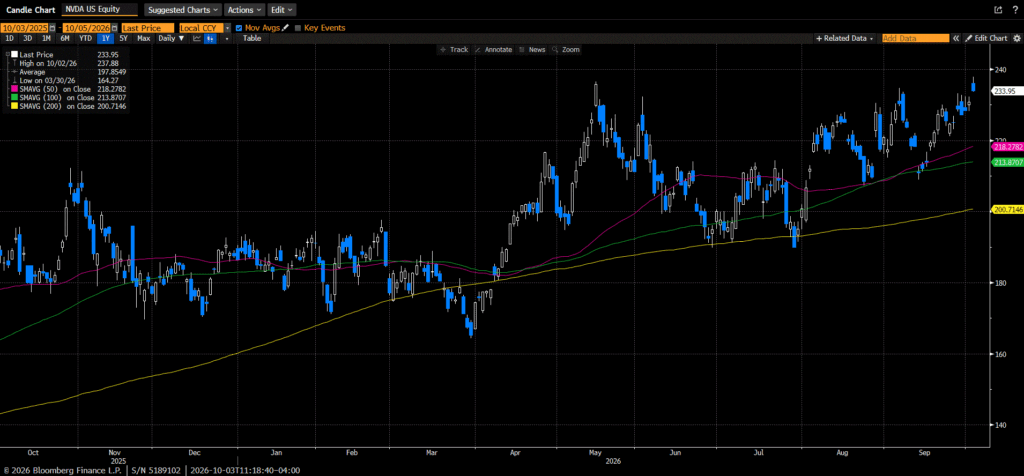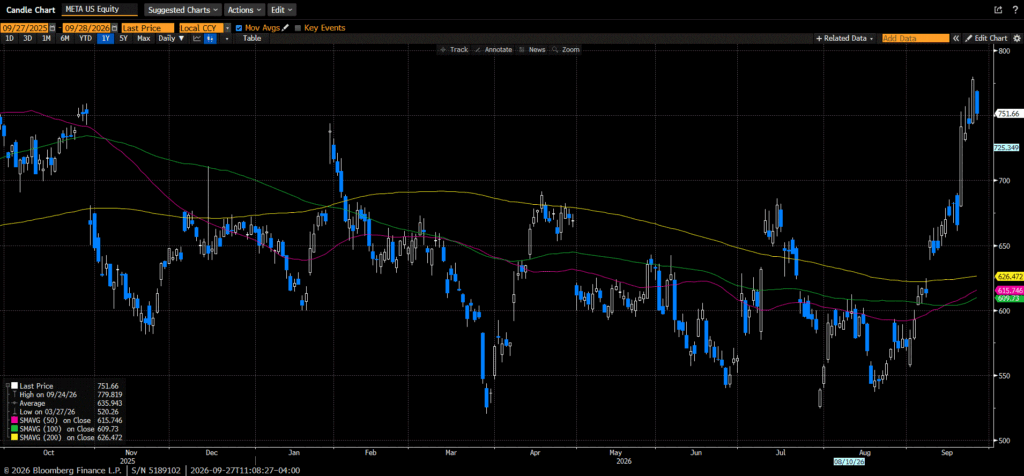

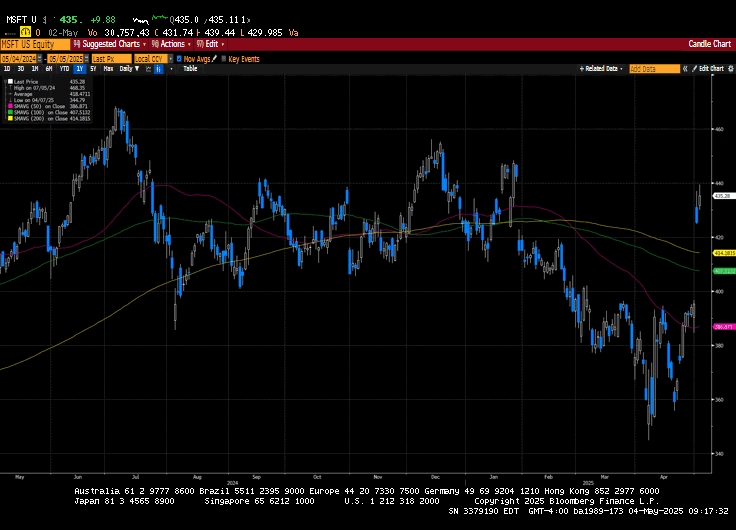
Global markets rallied for a second week as the S&P 500 clinched nine consecutive days of gains- something not seen in two decades. News that trade negotiations between the US and seventeen countries would occur over the next few weeks encouraged investors to buy risk assets. US and Chinese diplomacy seemed to thaw a bit after the US reportedly reached out to Beijing on trade and after China relaxed tariffs on several US goods. A third of the S&P 500 reported first-quarter earnings over the week with mixed results. Microsoft shares advanced 11.1% after its earnings showed strong demand for Azure. Meta shares also ripped higher on the back of its better-than-expected results and outlook. Meta ended the week 9.1% higher. Apple’s quarter was solid, but worries about the impact of tariffs on its supply chain and demand for the iPhone in China weighed on shares. The economic calendar was also full this week and provided some intriguing data for investors to contemplate.

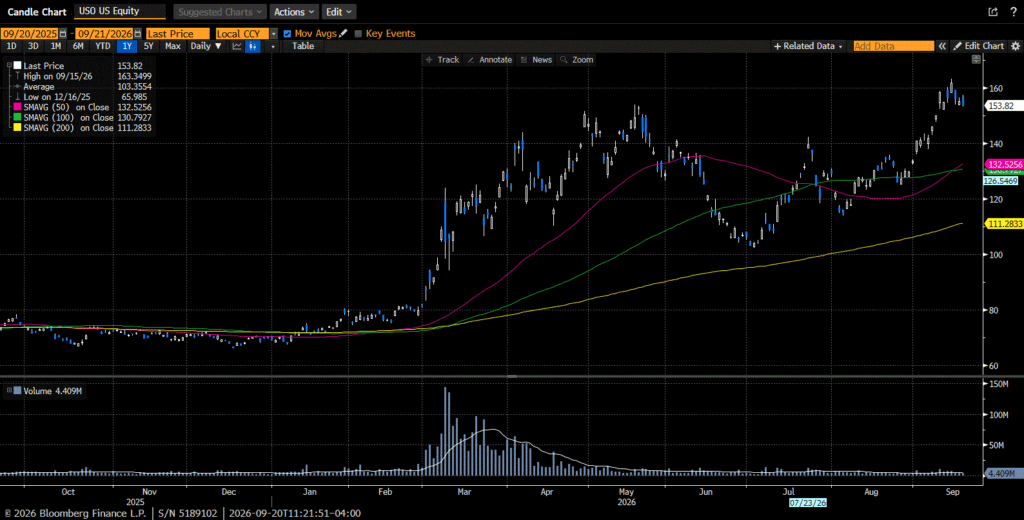
The S&P 500 gained 2.92%, the Dow rose 3%, the NASDAQ increased 3.42%, and the Russell 2000 added 3.22%. The S&P 500 regained its 50-day moving average (5582), which could induce technical buying and push the index higher. A stronger-than-expected Employment situation report hit the bond market on Friday and sent yields higher across the curve. The move produced weekly losses for US Treasuries. The 2-year yield increased by eight basis points to 3.84%, while the 10-year yield increased by five basis points to 4.32%. Oil prices tumbled on the idea that OPEC+ was considering an increase in output. West Texas Intermediate lost $4.86 or 7.42%, closing at $58.36 a barrel. Gold prices continued to come off their most recent highs, losing $55.50 to close at $3,242.10 an ounce. Copper prices fell 3.2% or $0.16 to close at $4.60 per Lb. Bitcoin prices close Friday afternoon at $97,500, up $2,500 for the week. The US Dollar index increased by 0.5% to 100.08. Notably, the Japanese Yen weakened on dovish tones from the BOJ, which held their monetary policy rate at 0.5%.

The Employment Situation report headlined the economic calendar, which showed stronger-than-expected payroll generation. Non-Farm Payrolls increased by 177k versus the consensus estimate of 130k. Private Payrolls increased by 167k, topping the forecast of 125k. The Unemployment Rate remained at 4.2%. Average Hourly Earnings came in at 0.2%, lower than the anticipated 0.3%. The Average Work Week came in at 34.3 versus the estimate of 34.2. Interestingly, Initial Claims increased by 18k to 241k and Continuing Claims jumped by 83k to 1916k. We continue to look at this high-frequency data for signs of weakness in the labor market and are closely watching the shippers and retailers for signs of layoffs. The Fed’s preferred measure of inflation, the PCE, showed no increase from the prior month on both the headline and core readings. On a year-over-year basis, headline PCE increased by 2.3%, down from 2.7% in March. The Core increased by 2.6% but decreased from 3% in March. Personal Income increased by 0.5% in March, in line with expectations, while Personal Spending increased by 0.7%, above the estimated 0.4%. The first look at Q1 GDP showed a contraction of 0.3% versus the consensus estimate of 0.4%. The decline came as imports ticked materially higher on demand pull in front of expected tariffs. The GDP Deflator came in at 3.7% versus an estimated 3.1%- slower GDP growth coupled with higher prices equals stagflation. ISM Manufacturing also showed continued contraction in the manufacturing sector. The print came in at 48.7, down from the prior reading of 49. Anything under 50 is considered contraction, while a print above 50 indicates expansion. Consumer Confidence continued to wane with a print of 86, down from the prior month’s reading of 93.9. The expectations index declined to 54.4, the lowest level since October 2011. 12-month inflation expectations also ticked higher to 7% from 6%.

Investment advisory services offered through Foundations Investment Advisors, LLC (“FIA”), an SEC registered investment adviser. FIA’s Darren Leavitt authors this commentary which may include information and statistical data obtained from and/or prepared by third party sources that FIA deems reliable but in no way does FIA guarantee the accuracy or completeness. All such third party information and statistical data contained herein is subject to change without notice. Nothing herein constitutes legal, tax or investment advice or any recommendation that any security, portfolio of securities, or investment strategy is suitable for any specific person. Personal investment advice can only be rendered after the engagement of FIA for services, execution of required documentation, including receipt of required disclosures. All investments involve risk and past performance is no guarantee of future results. For registration information on FIA, please go to https://adviserinfo.sec.gov/ and search by our firm name or by our CRD #175083. Advisory services are only offered to clients or prospective clients where FIA and its representatives are properly licensed or exempted.