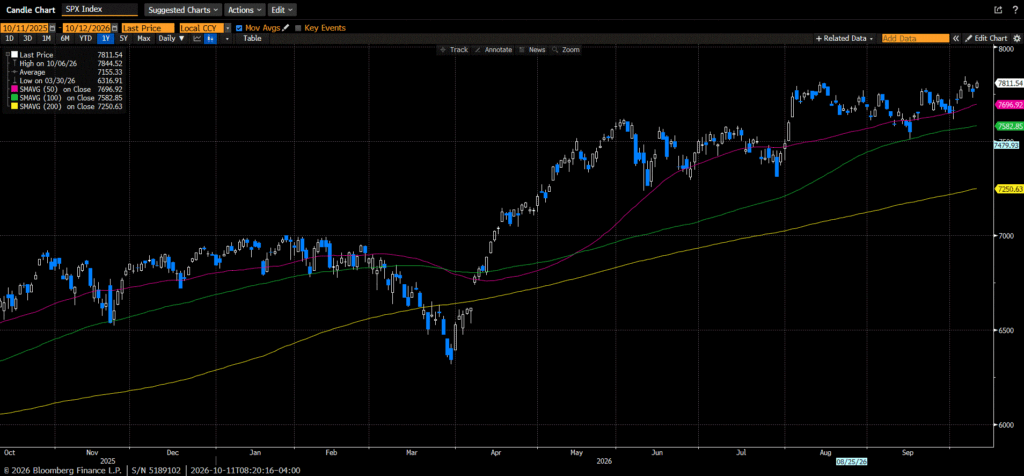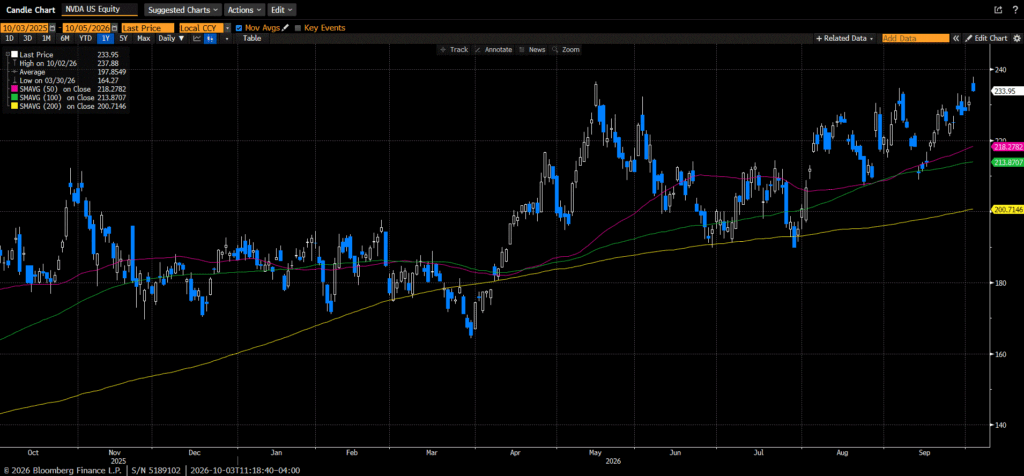

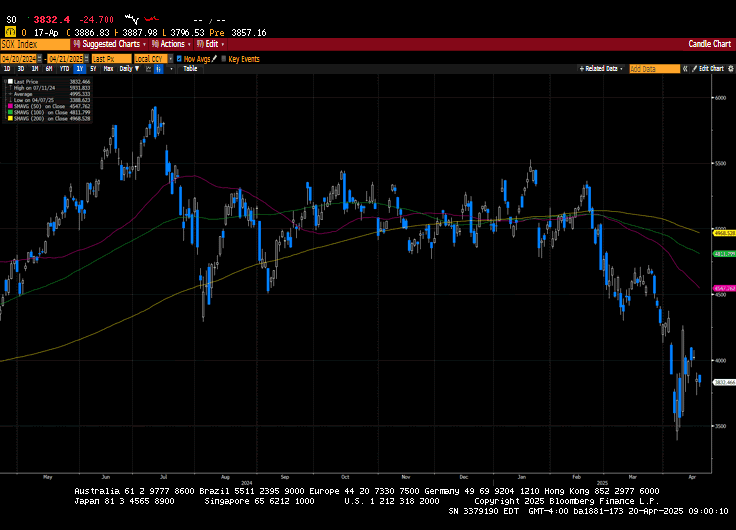
Equity markets regressed during the abbreviated trading week, while US Treasuries found some footing. Trade policies continued to influence markets and foster uncertainty. Little progress was made on country-specific tariffs, while several announcements contradicted prior trade rhetoric. Last weekend, the Trump administration announced that Smartphones, Laptops, Semiconductors, Solar Cells, and other electronics produced in China would avoid certain levies, catalyzing buying in Apple and NVidia on Monday. Later in the week, the announcement that a Section 232 investigation from the Trade Expansion Act would proceed on Semiconductors, Semiconductor equipment, Pharmaceuticals, and Pharmaceutical ingredient companies dampened investors ‘ interest. NVidia shares were hammered on the announcement that the company would take a $5.5 billion charge on their H20 chips as tighter export controls to China were implemented. On the other hand, auto makers were bid higher on headlines that tariff adjustments may come on certain auto parts.
First-quarter earnings announced over the week came with mixed results. Goldman Sachs gained 9.5% as it topped estimates while announcing record trading revenue. Citibank and Bank of America also had positive results. Dutch semiconductor equipment company ASML saw its shares throttled on a weaker-than-expected outlook. Similarly, United Healthcare shares plummeted more than 20% after their results missed the mark and management reduced estimates for the full year.
Fed Chairman Jerome Powell’s presentation at the Economic Club of Chicago was not well received by the markets or the White House. Powell said he did not think much progress would be made on the Fed’s dual mandate of full employment and inflation this year, while also suggesting there would not be a “Fed Put” for the markets. President Trump criticized the Chairman and called for his resignation, or he would pursue his termination. A test of the Fed’s independence would not be good for markets.

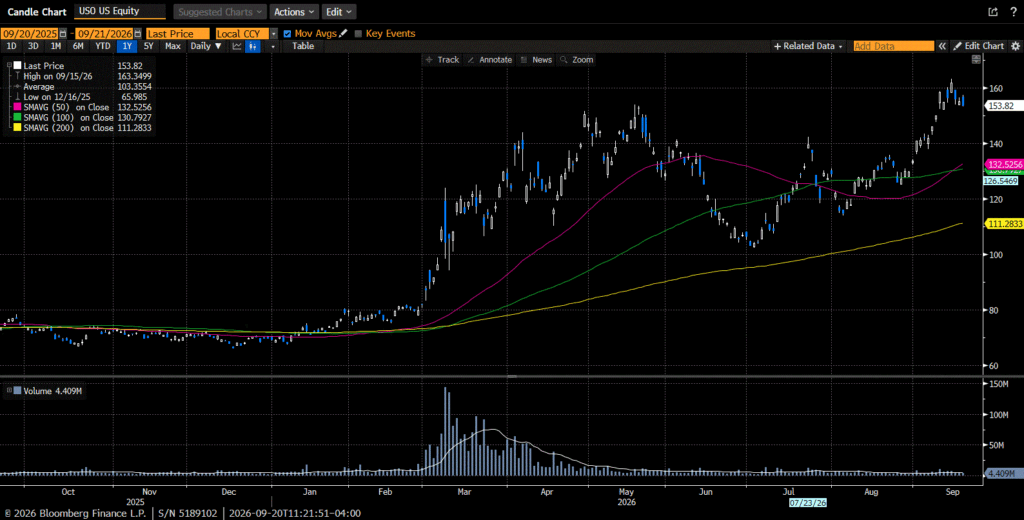
The S&P 500 lost 1.4%, the Dow shed 2.5%, the NASDAQ lost 2.3%, and the Russell 2000 gained 0.9%. The belly of the US Treasury curve outperformed, while the entire curve saw lower yields. Treasury Secretary Bessent said there was no evidence of Sovereigns selling US Treasuries in the prior week and noted the strong indirect or foreign demand in last week’s Treasury auctions. The 2-year yield fell by fifteen basis points to 3.8%, while the 10-year yield fell by sixteen basis points to 4.33%. Oil prices increased by 3.85% to close at $63.92 a barrel. Gold prices fell by 2.5% or $81.20 to $3,327.80 per ounce. Copper prices increased by 4.2% to close at $4.70 per Lb. Bitcoin prices increased by ~$1,000, closing at $84,500. The US Dollar index fell by 0.3% to 99.52.

The economic calendar was pretty quiet but featured a stronger-than-expected Retail Sales print. The headline number increased by 1.4% versus the consensus estimate of 1.3%. The Ex-auto print increased 0.5% versus the estimated 0.2%. A pull forward in demand due to the anticipated tariffs took some of the shine off the better numbers, but confirmed what many bank CEOs conveyed on their earnings calls—the consumer is still out there spending. Initial claims fell by 9k to 215k, while continuing claims increased by 41k to 1.885m. Housing starts came in at 1.324m, well below the consensus estimate of 1.418m. Single-unit starts fell 14.8% from the prior month. Building permits were slightly better than expected at 1.482m. Both the Empire State Manufacturing and Philly Fed data showed weakness in the manufacturing sector.
Investment advisory services offered through Foundations Investment Advisors, LLC (“FIA”), an SEC registered investment adviser. FIA’s Darren Leavitt authors this commentary which may include information and statistical data obtained from and/or prepared by third party sources that FIA deems reliable but in no way does FIA guarantee the accuracy or completeness. All such third party information and statistical data contained herein is subject to change without notice. Nothing herein constitutes legal, tax or investment advice or any recommendation that any security, portfolio of securities, or investment strategy is suitable for any specific person. Personal investment advice can only be rendered after the engagement of FIA for services, execution of required documentation, including receipt of required disclosures. All investments involve risk and past performance is no guarantee of future results. For registration information on FIA, please go to https://adviserinfo.sec.gov/ and search by our firm name or by our CRD #175083. Advisory services are only offered to clients or prospective clients where FIA and its representatives are properly licensed or exempted.