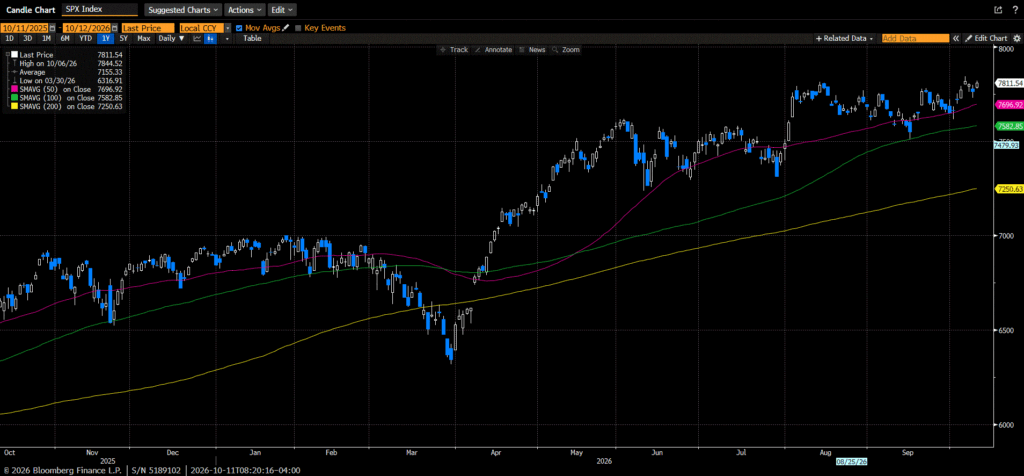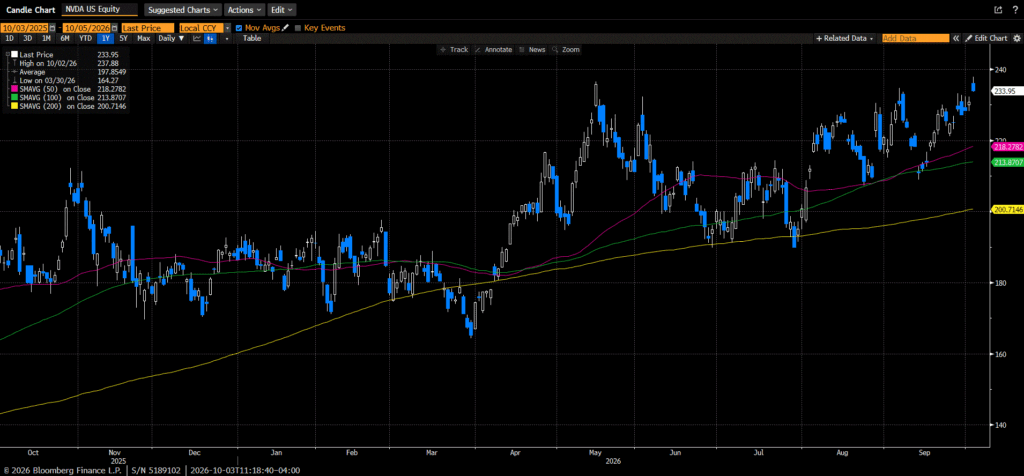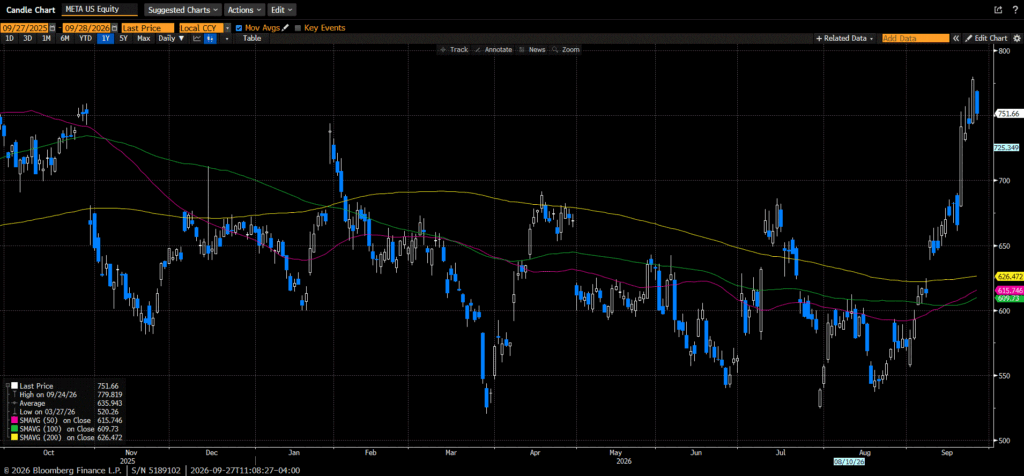


Global financial markets tumbled last week as investors moved out of risk assets, fearing that a worldwide trade war would ensue after Trump’s tariffs were higher than anticipated. Thursday and Friday’s market action resulted in a $5.4 trillion loss in US market capitalization. Q1-2025 ended on Monday, marking the worst quarter since 2022, and March was also the worst month since 2022. The first quarter was also the worst quarter for US stocks when compared to the rest of the world’s equity indices since 2009. Have we seen peak uncertainty in the markets? That is the question many on Wall Street are contemplating. Now that the US has announced its tariffs, will other countries retaliate with their own tariffs? China imposed a 34% tariff in response to the announcement that the US would levy an additional 34% on Chinese goods, resulting in an overall duty of 54% on Chinese goods. On the other hand, Vietnam and Cambodia announced that they would eliminate tariffs on US goods and sought to negotiate with the US to remove the announced tariffs. I am in the camp that negotiations will be ongoing, and in the end, overall global tariffs will be reduced. That said, the current narrative is that these announced tariffs will increase inflation, slow global growth, and perhaps tip several economies into recession. According to a survey from Bloomberg, economists have increased the probability of recession in the next year to 30% from 20% at the end of 2024. The idea of slower growth means that corporate earnings are likely to be revised lower in the coming months as first-quarter earnings are announced. This may lead to another leg lower for the market, although some of this has likely already been priced into the market. Investors should expect increased volatility in the coming weeks as retaliatory tariffs are announced and negotiations result in new levels of duties. The volatility index (VIX) spiked to 45, the highest level since the Covid-19 pandemic hit the markets in March 2020. I would expect some moderation in the VIX over the coming days and weeks, but I anticipate it will remain elevated for the next couple of months.

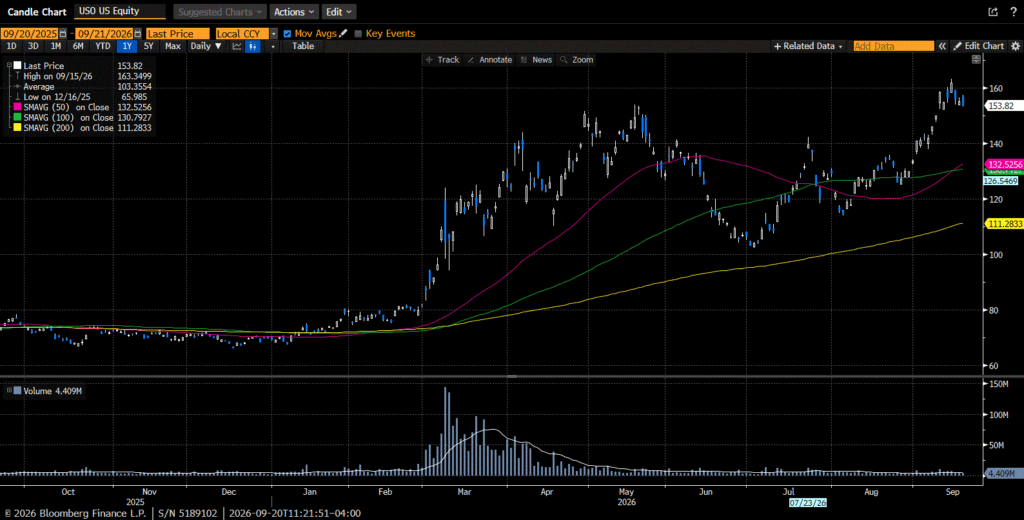
The S&P 500 lost 9.1%, the Dow shed 7.9%, the NASDAQ tumbled 10%, entering a bear market, falling more than 20% from its recent highs, while the Russell 2000 gave back 9.7%. It was just an ugly week on Wall Street. The Information Technology sector lost 11.4%, the Financials Sector shed 11.4%, and the Energy Sector fell by 15%. All 11 S&P 500 sectors fell on the week. US Treasuries did offer a safe-haven quality. The 2-year yield fell by twenty-four basis points to 3.67%, while the 10-year yield fell by twenty-seven basis points to 3.99%. Interestingly, the market now has priced in a 50% probability that the Federal Reserve will cut its policy rate by 100 basis points by the end of the year. Commodities offered no safe haven for investors. Gold prices dropped from their all-time highs by 2.5% or $78.50 to close at $3,034.60. Oil prices hit a four-year low after falling 10.6% or $7.32 to close at $62.02 a barrel. Copper prices fell by 14.5% to close at $4.39 per Lb. Bitcoin’s price increased by $200 to close at $82,962. The US Dollar index fell by 1.1% to close at 102.89. The Yen, Euro, and Swiss Franc were all bid higher on the week.

The Employment Situation report was the highlight of this week’s economic calendar. Non-farm payrolls came in much better than expected at 228,000 versus the consensus estimate of 130,000. Private Payrolls were also better, coming in at 209,000 versus the estimated 120,000. The Unemployment rate ticked higher to 4.2% from 4.1%. Average Hourly earnings were in line with expectations of 0.3%, as was the average workweek at 34.2 hours. In aggregate, this was a good report; however, revisions to the prior two months of data were lower and cast a slight shadow over the overall report. ISM Manufacturing fell into contraction with a reading of 49, down from the previous figure of 50.3, and concerns about prices paid were noted by several economists. ISM Services remained in expansion but just barely, coming in at 50.8, down from the prior reading of 53.5. Job openings fell to 7.568 million from 7.762 million. Initial Jobless claims fell by 6k to 219k, while Continuing Claims increased by 56K to 1.903 million- the highest level since November of 2021.

Investment advisory services offered through Foundations Investment Advisors, LLC (“FIA”), an SEC registered investment adviser. FIA’s Darren Leavitt authors this commentary which may include information and statistical data obtained from and/or prepared by third party sources that FIA deems reliable but in no way does FIA guarantee the accuracy or completeness. All such third party information and statistical data contained herein is subject to change without notice. Nothing herein constitutes legal, tax or investment advice or any recommendation that any security, portfolio of securities, or investment strategy is suitable for any specific person. Personal investment advice can only be rendered after the engagement of FIA for services, execution of required documentation, including receipt of required disclosures. All investments involve risk and past performance is no guarantee of future results. For registration information on FIA, please go to https://adviserinfo.sec.gov/ and search by our firm name or by our CRD #175083. Advisory services are only offered to clients or prospective clients where FIA and its representatives are properly licensed or exempted.