Growth concerns entered the market narrative as investors continued to look at policy uncertainties on tariffs and the strains on geopolitical relations. The Trump administration confirmed that 25% tariffs on Canada and Mexico would be effective on March 4th and announced an additional 10% levy on Chinese imports. Trump also said a 25% tariff would soon be placed on European imports. That said, there is still a sense that these tariffs may be avoided, and late in the week, Mexico announced that they may propose to match the US tariffs on Chinese imports.
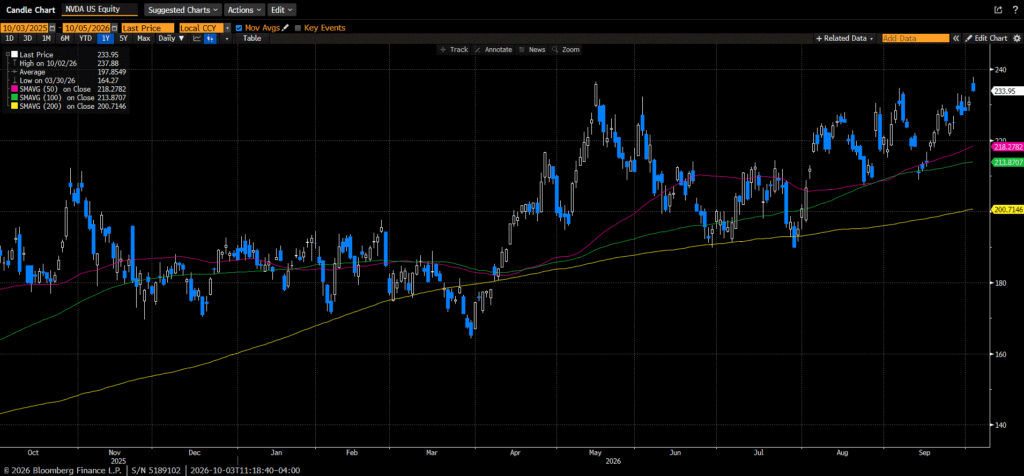
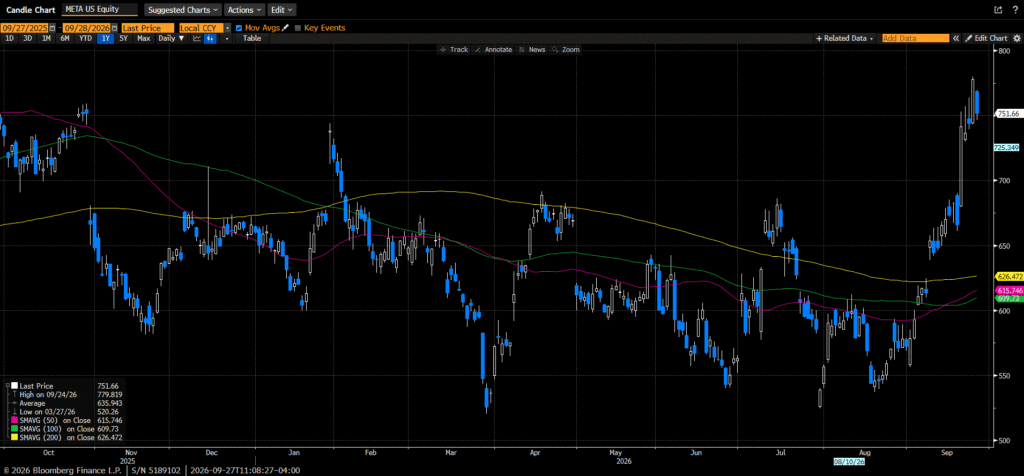
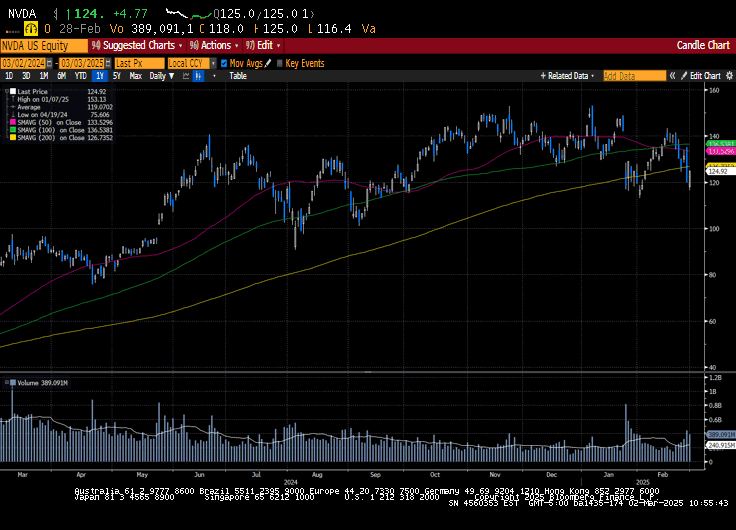
Valuations of companies that led the markets higher last year have been scrutinized as the ROI from AI initiatives has underwhelmed. Microsoft’s announcement that they would curtail their plans to build out data centers, coupled with a “good but not great” 4th quarter earnings result from Nvidia, induced more selling in the more speculative parts of the market. However, there are mixed signals here. Microsoft said that it still planned to spend the $80 billion in capital expenditures detailed in its most recent earnings call; Apple announced a $500 billion plan that would create 20,000 jobs in the US to create AI-focused servers, and Meta and Apollo are working on a $35 billion financing plan to finance a new Meta data center. Despite the continued spending on AI mega-caps are off more than 10% from their highs and have now entered correction territory.
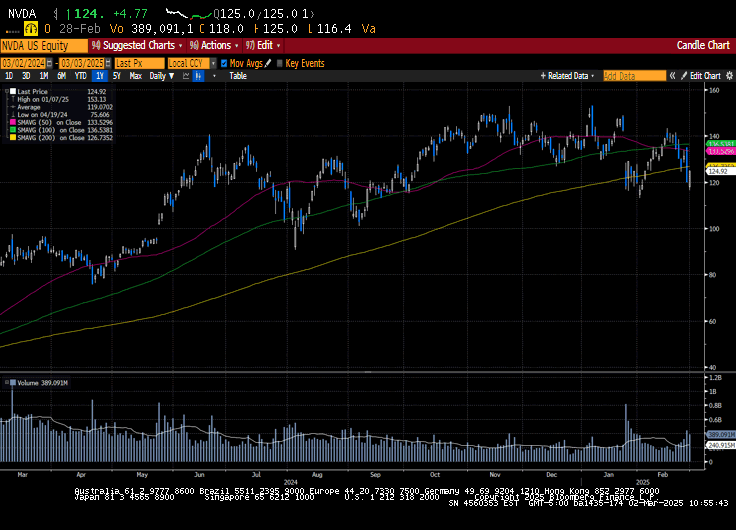
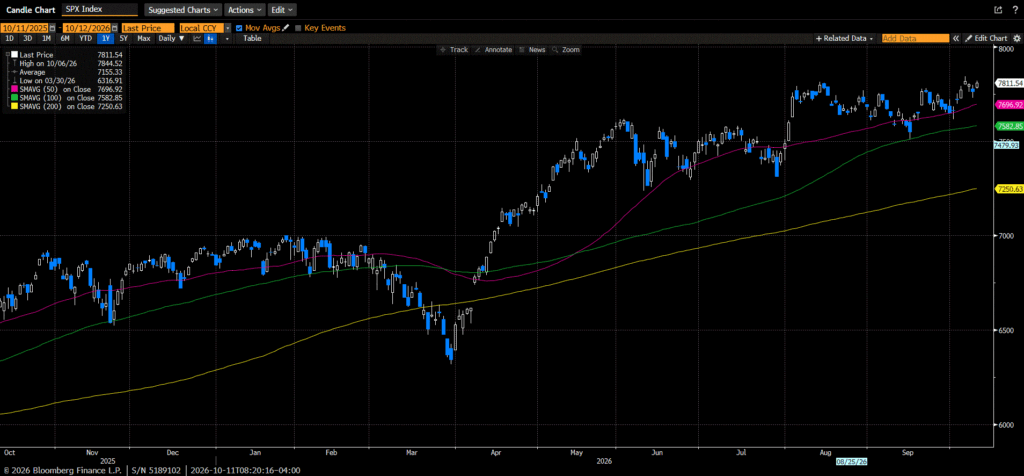
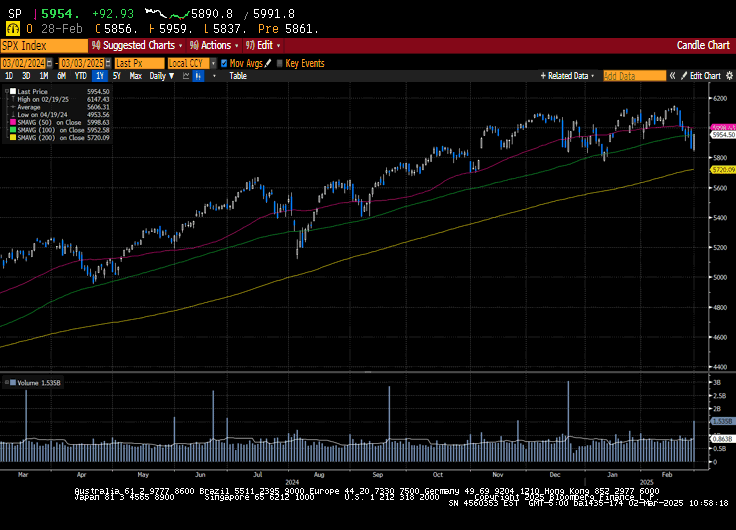
The S&P 500 shed 1%, the Dow gained 1%, the NASDAQ tumbled 3.5%, and the Russell 2000 gave back 1.5%. Notably, the S&P 500 could not hold on to its most recent highs, and selling brought the index below its 50-day moving average, which will now act as resistance for the index to move higher. The NASDAQ joined the Russell 2000 with negative year-to-date returns. Investor concerns about growth were manifested in US Treasuries. The 2-year yield declined by nineteen basis points to 4%, while the 10-year yield went to 2025 lows with a nineteen basis point decline to 4.23%. Interestingly, the market is now pricing just over two rate cuts in 2025: two weeks ago, it was a jump ball on one rate cut.
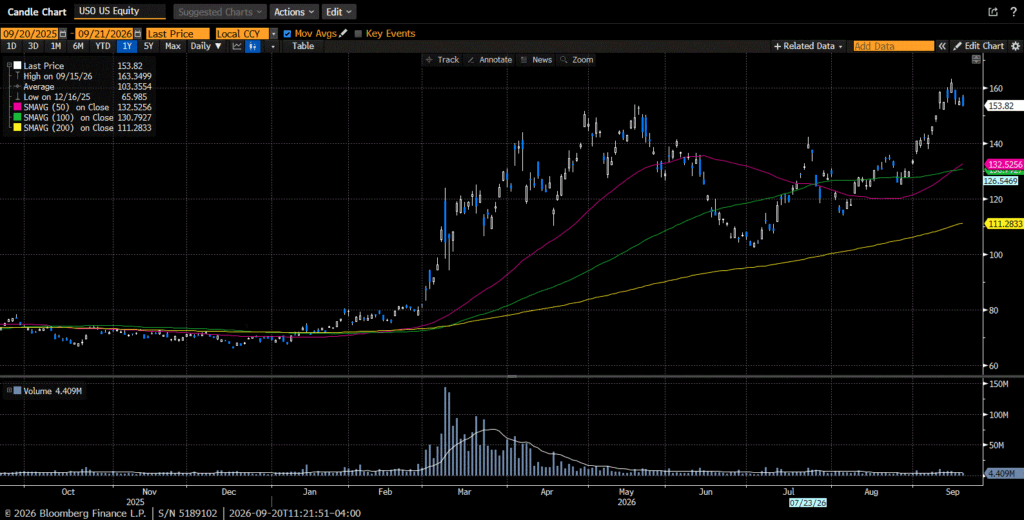
Oil prices continued to slump, losing $0.65 to close at $69.71. Gold prices had a meaningful retreat off their most recent highs, losing 3.5% or $103.70 to close at $2849.70 an Oz. Copper prices were unchanged on the week at 4.54 per Lb. Bitcoin prices plunged and nearly broke through $80,000 before bouncing to close, down 9.5% to $85,900. The Dollar index advanced 0.9% to 107.62.
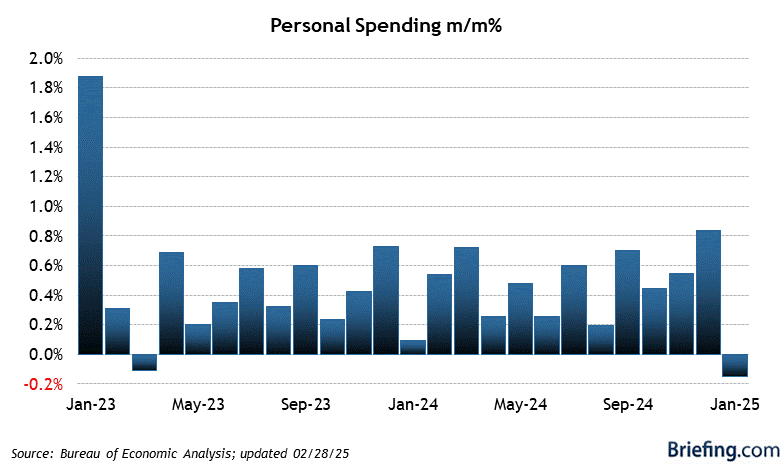
The economic calendar fostered the weak growth narrative as well. Pending Home Sales fell by 4.6%, a percentage fall not seen since 2001. The 2nd estimate of Q2 GDP was in line with the 1st estimate of 2.3%, but the GDP inflator increased to 2.4% from 2.2%, showcasing the elevated inflationary environment. Consumer Confidence fell to 98.3 from the prior print of 105.3 and was the lowest print in the data series since August 2021. The survey showed a material increase in one-year inflation expectations from 5.2% to 6%, the highest level since 1995. Tariffs were cited as the reason for the rise in inflation expectations. The Fed’s preferred measure of inflation, the PCE, showed a month-over-month increase of 0.3%, as did the Core reading; both were in line with expectations. The year-over-year figures came in at 2.5% and 2.6%, lower than the December figures of 2.6% and 2.9%. Personal spending came in at -0.2%, down from the prior print of 0.7%, and validated the weak retail sales print earlier in the month. The weaker print also may translate into a weaker Q1 2025 GPD estimate. The weaker print caused investors to reevaluate the health of the consumer. Personal Income increased to 0.9% from the prior reading of 0.4%.
Investment advisory services offered through Foundations Investment Advisors, LLC (“FIA”), an SEC registered investment adviser. FIA’s Darren Leavitt authors this commentary which may include information and statistical data obtained from and/or prepared by third party sources that FIA deems reliable but in no way does FIA guarantee the accuracy or completeness. All such third party information and statistical data contained herein is subject to change without notice. Nothing herein constitutes legal, tax or investment advice or any recommendation that any security, portfolio of securities, or investment strategy is suitable for any specific person. Personal investment advice can only be rendered after the engagement of FIA for services, execution of required documentation, including receipt of required disclosures. All investments involve risk and past performance is no guarantee of future results. For registration information on FIA, please go to https://adviserinfo.sec.gov/ and search by our firm name or by our CRD #175083. Advisory services are only offered to clients or prospective clients where FIA and its representatives are properly licensed or exempted.