

Markets bounced back nicely in the second week of September. It was an intriguing week of trade with several undercurrents to consider. The first and likely only Presidential debate between Harris and Trump appeared to be won by Harris, although polls continue to suggest an extremely close election. Policy agendas continue to be assessed for their impact on markets. Tariffs and taxes remain top of mind for Wall Street.
Inflation data announced on Wednesday and Thursday showed slightly higher than expected readings in Core CPI and Core PPI but nothing that would change the likelihood of the Federal Reserve cutting its policy rate in the coming week. Interestingly, the probability of a fifty-basis-point hike increased to 45%, according to what some think was a leak by the Fed to a Wall Street Journal journalist, suggesting that the Fed may indeed cut by fifty basis points. Of note, the European Central Bank cut its policy rate by twenty-five basis points and then came across as more hawkish on future cuts in post-decision commentary.

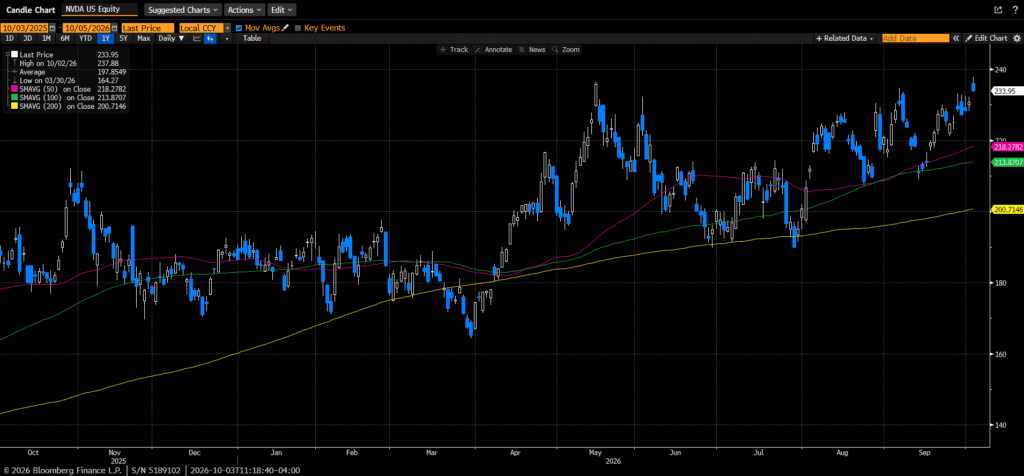
Intraday volatility was notable, as was the broadening out of the market rally. That said, the Semiconductor sector, which had been the market leader until the last couple of months, had a fantastic week. NVidia’s share price increased by over 15% last week, while the Semiconductor index advanced by over 9%. Small-cap issues, which have been on a rollercoaster ride for most of the year, posted a solid week of gains on the idea that the Federal Reserve would be cutting rates to normalize their policy rate rather than on growth concerns.
However, those growth concerns were manifested at Barclay’s Financials Services conference. At the conference, JP Morgan lowered their Net Interest Income, and Goldman Sachs conveyed weaker-than-expected revenue from trading. Ally Financial tumbled 16% as the CFO highlighted increasing stress on the consumer, which has led to weaker credit trends.

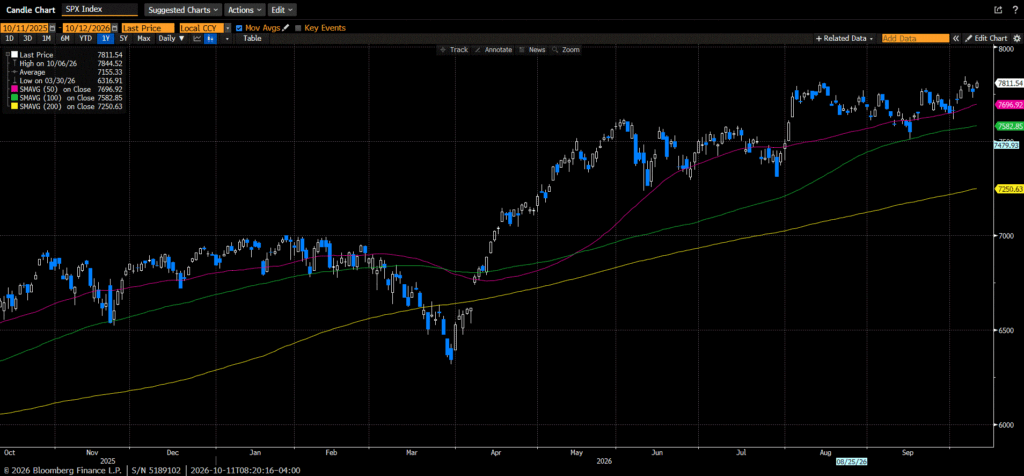
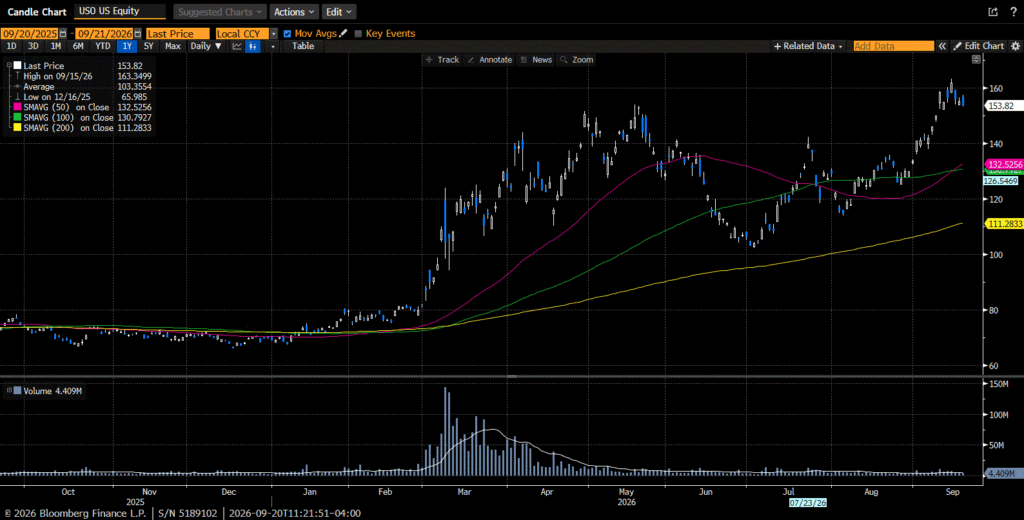
The S&P 500 gained 4%, the Dow added 2.6%, the NASDAQ jumped 6%, and the Russell 2000 increased by 4.4%. US Treasuries continued to rally across the yield curve. The 2-year yield fell by seven basis points to 3.58%, while the 10-year yield fell by six basis points to 3.65%. West Texas Intermediate crude prices increased by $1.00 on perhaps some supply concerns related to Hurricane Francine. Gold prices soared to new all-time highs and closed the week $86.00 higher at $2611.30 an Oz. Copper prices increased by $0.15 to close at $4.22 per Lb. The US Dollar index fell by 0.1% to 101.07.
The economic calendar was focused on the Consumer Price Index and the Producer Price Index. Headline CPI came in at 0.2%, in line with expectations, and was up 2.5% over the last year. Core CPI, which excludes food and energy, increased by 0.3% versus the consensus estimate of 0.2%. On a year-over-year basis, the core reading increased by 3.2%. Shelter costs continue to be sticky, rising 0.5% in August. Headline PPI came in at 0.2%, in line with the street estimate. PPI increased by 1.7% over the last year, down from 2.1% in July. Core PPI came in at 0.3%, slightly above the consensus estimate of 0.2%. On a year-over-year basis, the core figure increased by 2.4% in August, up from 2.3% in July. Initial Claims increased by 2k to 230k, while Continuing Claims increased by 5k to 1850k. A preliminary reading of the University of Michigan’s Consumer Sentiment Index came in better than expected at 69 versus the prior reading of 68.3.
Investment advisory services offered through Foundations Investment Advisors, LLC (“FIA”), an SEC registered investment adviser. FIA’s Darren Leavitt authors this commentary which may include information and statistical data obtained from and/or prepared by third party sources that FIA deems reliable but in no way does FIA guarantee the accuracy or completeness. All such third party information and statistical data contained herein is subject to change without notice. Nothing herein constitutes legal, tax or investment advice or any recommendation that any security, portfolio of securities, or investment strategy is suitable for any specific person. Personal investment advice can only be rendered after the engagement of FIA for services, execution of required documentation, including receipt of required disclosures. All investments involve risk and past performance is no guarantee of future results. For registration information on FIA, please go to https://adviserinfo.sec.gov/ and search by our firm name or by our CRD #175083. Advisory services are only offered to clients or prospective clients where FIA and its representatives are properly licensed or exempted.