



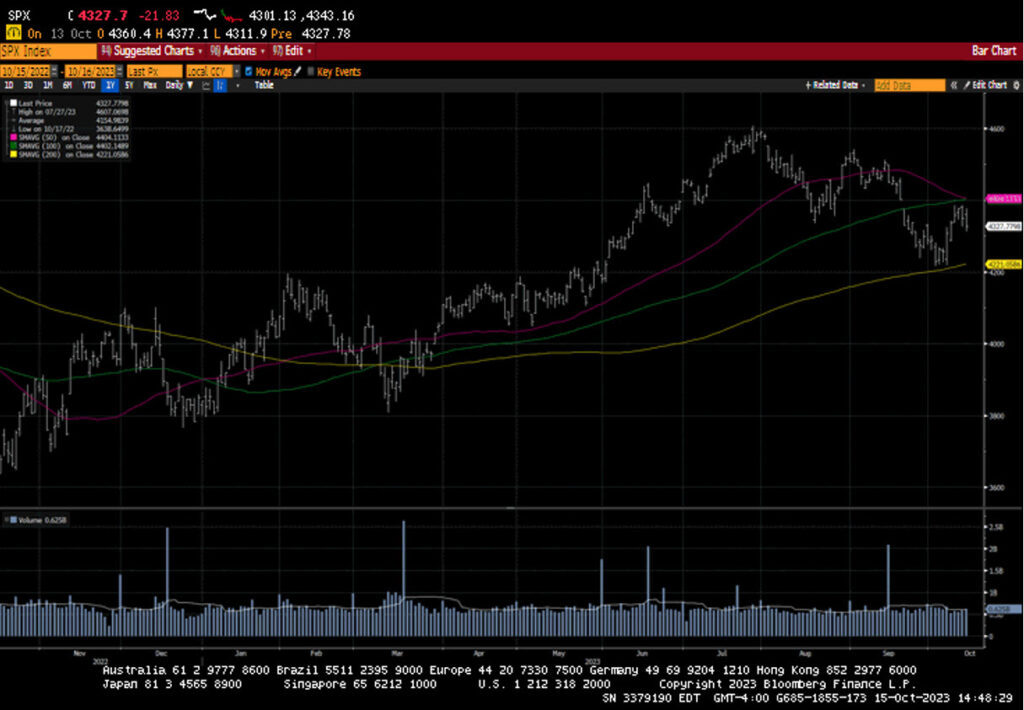
US equity markets finished the week with mixed results as investors digested the first tranche of third-quarter earnings results. JP Morgan, Citi Bank, Wells Fargo, and United Healthcare had better-than-expected earnings. Investors were also focused on the Middle East, where the conflict between Israel and Hamas continues to warrant caution and hope of a diplomatic solution. The Biden Administration halted a 6 billion dollar payment to Iran and said it was considering more sanctions, while the Iranian Foreign Minister warned Israel and its allies “will face reactions on other areas,” suggesting perhaps a broader conflict. US Treasuries caught a safe-haven bid, lowering yields across the curve for the first time in several weeks. The move lower in yields came despite several central bankers indicating that rates were likely to be higher than longer, three US Treasury auctions that had soft demand, and economic data that showed a slight moderation in September inflation. The UAW broadened their strike to include a Ford plant in Kentucky even as the big three announced more layoffs. In Washington, the Republican-led house continued to be without a Speaker. Representative Scalise from Louisiana initially passed a preliminary vote but dropped out after the realization that he would not have enough votes to win Speaker.
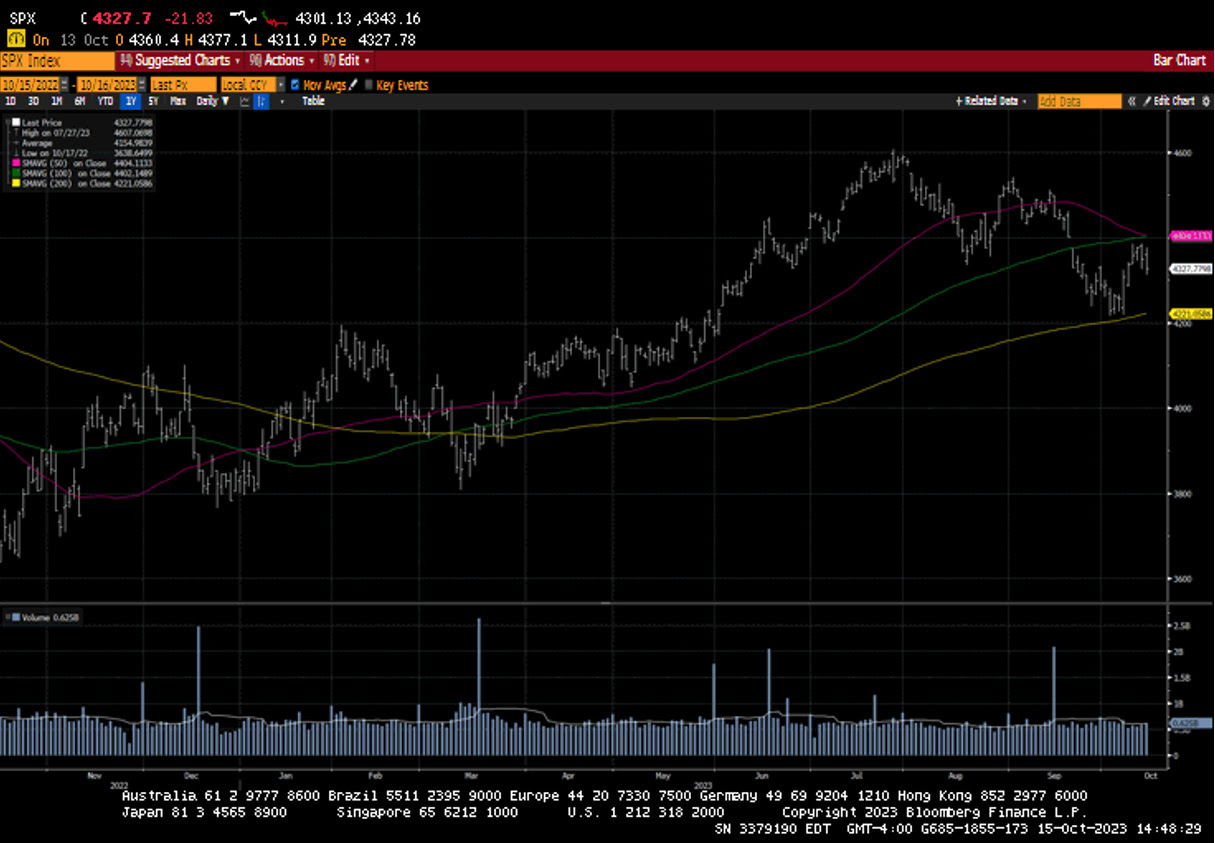
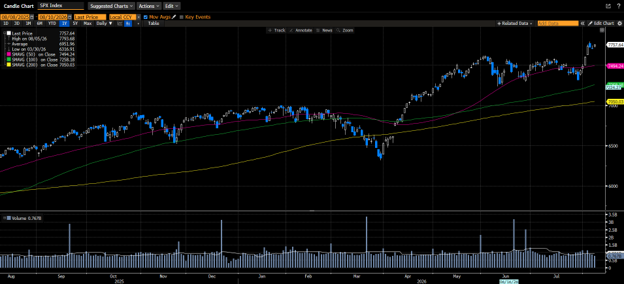
The S&P 500 gained 0.4%, the Dow added 0.8%, the NASDAQ fell by 0.2%, and the Russell 2000 gave back 1.5%. US Treasuries found a haven bid. The 2-year yield fell by one basis point to 5.05%, while the 10-year yield fell by fifteen basis points to 4.63%. Oil prices rallied 5.2% or $4.40 to close at $87.40 a barrel. A safe-haven bid was also very noticeable in Gold, where prices increased by $96.40 to $1941.50 an Oz. Copper prices fell by $0.08 to $3.56 a Lb.
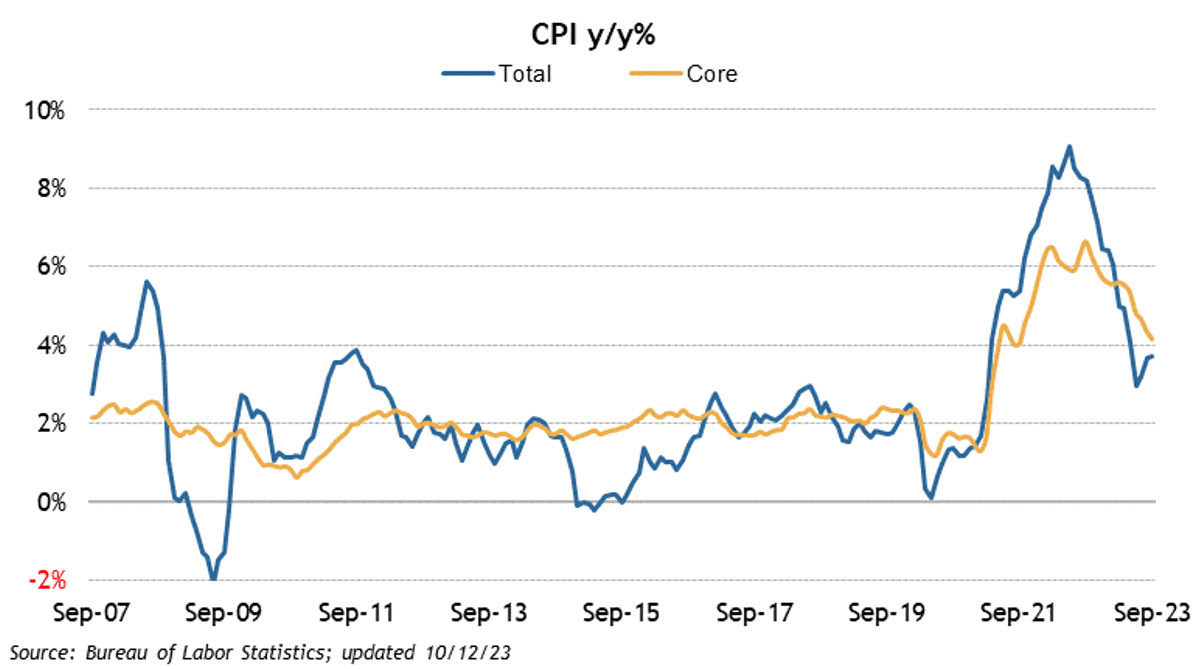
The economic calendar was centered on Consumer and Producer Price data. The Consumer Price Index increased by 0.4% in September, slightly more than the consensus estimate of 0.3%. The headline number was unchanged from the August reading of 3.7% year-over-year. The Core CPI, which excludes food and energy prices, increased by 0.3%, in line with expectations. On a year-over-year basis, the Core number fell to 4.1% from 4.3% in August. Of note, over half the gain in CPI was attributed to shelter costs, which increased by 0.6% in September. Producer prices were hotter than expected on both the headline and core numbers. Headline PPI came in at 0.5% versus the consensus estimate of 0.3%. The headline reading increased by 2.2%, up from 1.6% in August. The Core measure increased by 0.3% versus the expected 0.2%, up 2.7% from 2.2% in August. The labor market continued to be tight, with Continuing Claims coming in at 207k while Continuing claims increased by 30k to 1.702 million.
Investment advisory services offered through Foundations Investment Advisors, LLC (“FIA”), an SEC registered investment adviser. FIA’s Darren Leavitt authors this commentary which may include information and statistical data obtained from and/or prepared by third party sources that FIA deems reliable but in no way does FIA guarantee the accuracy or completeness. All such third party information and statistical data contained herein is subject to change without notice. Nothing herein constitutes legal, tax or investment advice or any recommendation that any security, portfolio of securities, or investment strategy is suitable for any specific person. Personal investment advice can only be rendered after the engagement of FIA for services, execution of required documentation, including receipt of required disclosures. All investments involve risk and past performance is no guarantee of future results. For registration information on FIA, please go to https://adviserinfo.sec.gov/ and search by our firm name or by our CRD #175083. Advisory services are only offered to clients or prospective clients where FIA and its representatives are properly licensed or exempted.