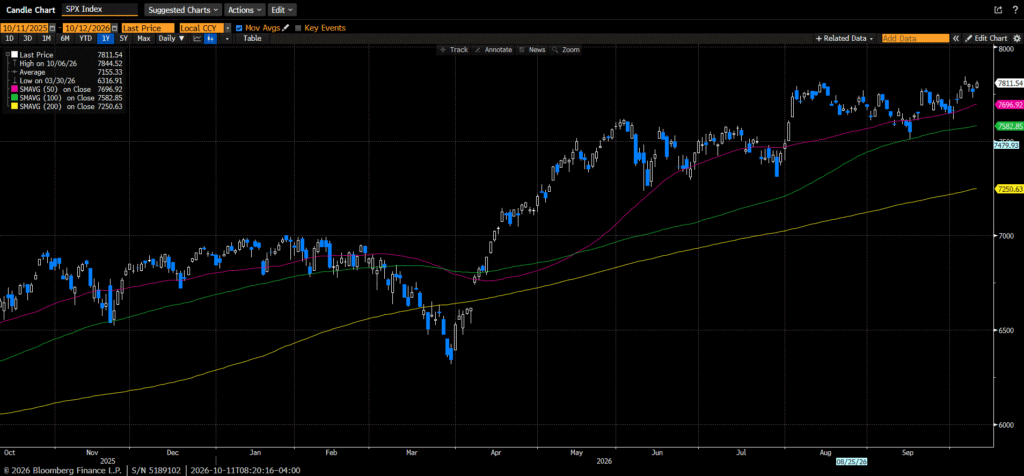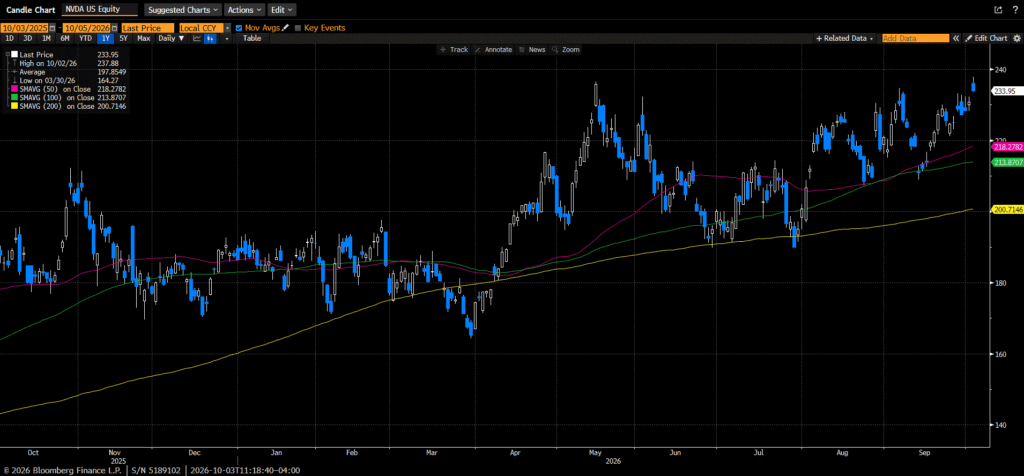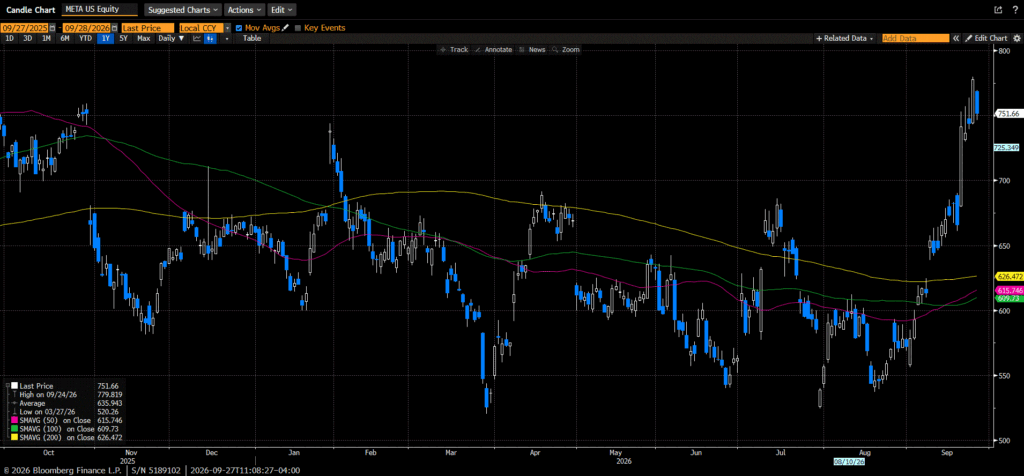


The Federal Reserve, as expected, cut its monetary policy rate by twenty-five basis points to 3.50%-3.75% and tempered expectations for further cuts in 2026. The decision was not unanimous, as a divided Fed considered elevated inflation against a weakening labor market. The Summary of Economic Projections showed the Fed cutting rates by another 25 basis points in 2026, versus the Street’s expectations of two 25-basis-point cuts. The SEP also showed an increase in economic growth and a slight decrease in inflation. The Fed also announced it would begin buying $40 billion per month in Treasuries, a form of quantitative easing. The Fed’s decision pushed the S&P 500 and Dow to all-time highs, even as concerns about the AI trade continued to mount. Oracle’s third-quarter results were disappointing, sending shares down over 10%, while the company also announced that some AI data center buildouts would be pushed back by a year. Broadcom reported a solid quarter but fell after lowering its margin outlook. Ciena posted a nice quarter and traded higher, as did Lululemon. There is a clear rotation underway, with money flowing into cyclicals and out of information technology and communication services. The financial sector rose 2.3% for the week, materials 2.4%, and industrials 1.4%. In contrast, information technology lost 2.3%, and communication services fell 3.2%. The mega-caps fell by 1.9%, while the equally weighted S&P 500 increased by 0.73%.

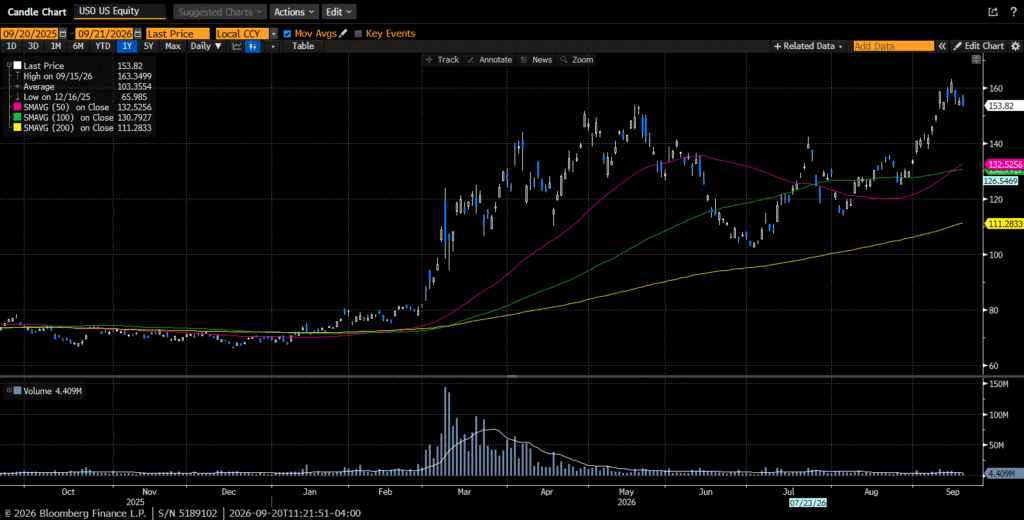
For the week, the S&P 500 lost 0.6%, the Dow rose 1.1%, the NASDAQ shed 1.6%, and the Russell 2000 gained 1.2%. The US yield curve steepened as shorter tenured paper saw slight gains while longer tenured paper saw losses. The 2-year yield fell by three basis points to 3.53%, while the 10-year yield increased by five basis points to close at 4.19%. Oil prices fell by 4.34% or $2.61 to $57.46 a barrel. Gold prices increased by 1.9% to $4,327.60 per ounce. Silver prices were up over 10% before selling off sharply on Friday, but did close the week up 4.21% at $61.36 per ounce. Copper prices fell by ten cents to $5.36 per Lb. Bitcoin’s price increased by $900 to $90,164. The US Dollar index fell by 0.6% to 98.37.

The economic calendar was quiet. Initial Jobless Claims increased by 44k to 236k, while Continuing Claims fell by 99k to 1838k. JOLTS data showed job openings of 7.670 million, up from the prior reading of 7.658 million. NFIB Small Business Optimism increased to 99 from 98.2. The Employment Cost Index rose to 1% from 0.9%, above the consensus estimate of 0.9%. This week, we will receive the BLS Employment Situation report for November, along with Retail Sales from October.

Investment advisory services offered through Foundations Investment Advisors, LLC (“FIA”), an SEC registered investment adviser. FIA’s Darren Leavitt authors this commentary which may include information and statistical data obtained from and/or prepared by third party sources that FIA deems reliable but in no way does FIA guarantee the accuracy or completeness. All such third party information and statistical data contained herein is subject to change without notice. Nothing herein constitutes legal, tax or investment advice or any recommendation that any security, portfolio of securities, or investment strategy is suitable for any specific person. Personal investment advice can only be rendered after the engagement of FIA for services, execution of required documentation, including receipt of required disclosures. All investments involve risk and past performance is no guarantee of future results. For registration information on FIA, please go to https://adviserinfo.sec.gov/ and search by our firm name or by our CRD #175083. Advisory services are only offered to clients or prospective clients where FIA and its representatives are properly licensed or exempted.