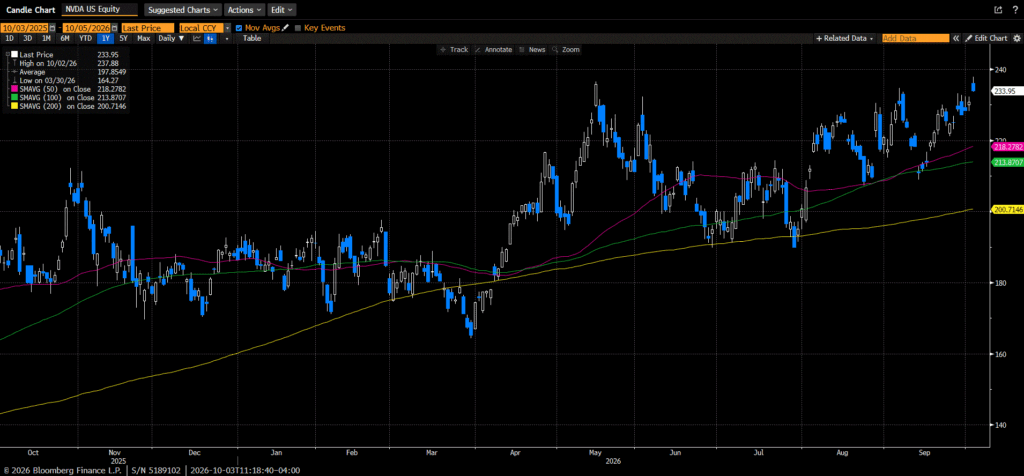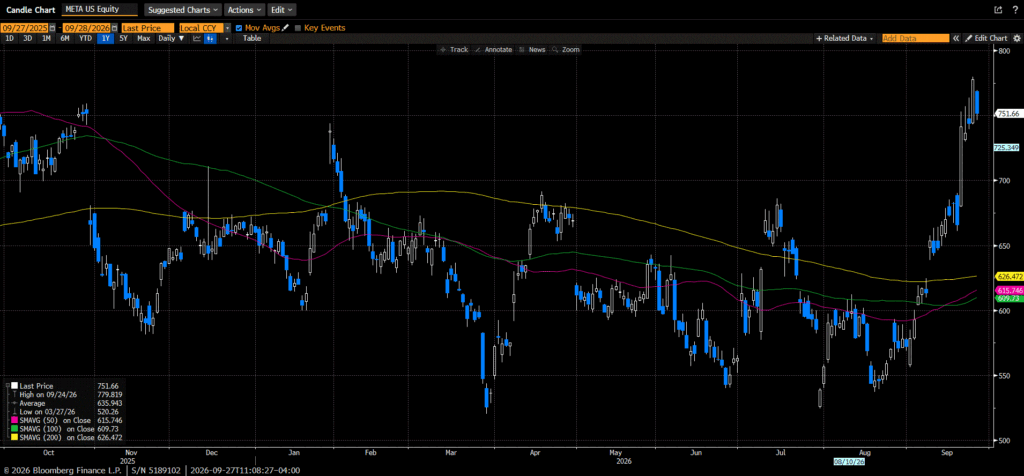
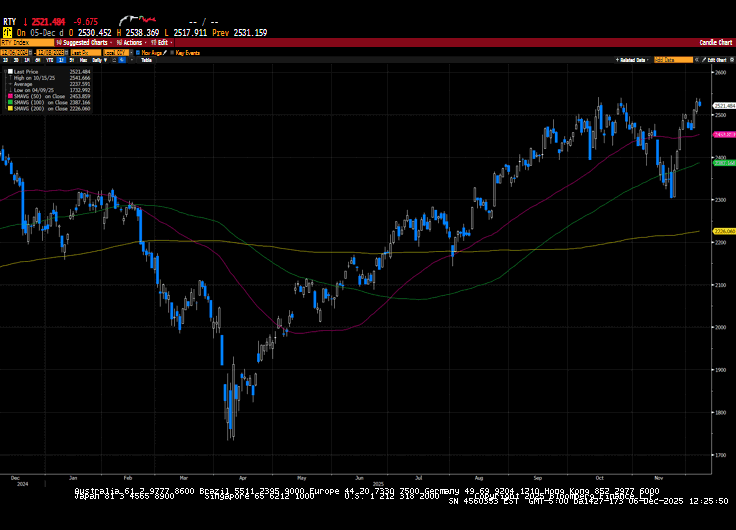
Apprehensive investors pushed markets higher this week, with the small-cap Russell 2000 hitting a new all-time high, while the S&P 500 closed just 50 points below its October all-time high. Economic data, some of which is quite dated, offered a mixed picture of the economy and did little to recalibrate rate-cut expectations for the Fed’s December FOMC meeting next week, which currently stands at an 87.5% probability of a 25 basis-point cut. That said, the market expects material dissent at the meeting, which will likely lead to a hawkish cut and temper expectations for cuts in 2026. President Trump announced he would decide on the next Federal Reserve Chairman in early 2026, while Wall Street pushed back on the proposition of frontrunner Kevin Hassett. Mega-caps outperformed, as did cyclicals such as industrials and financials. Netflix announced it will acquire Warner Bros. Discovery for $72 billion, or $27.75 per share, in a deal to be financed with significant debt. Undoubtedly, the deal will come under antitrust scrutiny, but Netflix agreed to a $5 billion breakup fee, suggesting it will likely make concessions to get the deal across the finish line. BHP walked away from a $52 billion bid for Anglo American as the deal could not get off the ground. Artificial Intelligence continued to make headlines with more deals on the tape, new chip solutions announced, and a Code Red alarm sounded by OpenAI’s Sam Altman related to Google’s Gemini progress. Heightened concerns regarding the circular nature of several AI deals, increased debt financing, valuations, and tempered expectations from some companies around their AI initiatives continue to be prevalent in the headlines. Salesforce.com and MongoDB posted solid earnings and had encouraging outlooks. Snowflake had a solid quarter but tempered expectations around its AI solutions. Dollar General posted a strong quarter as consumers seek value, while Kroger surprised the street by lowering expectations for the coming year. Holiday shopping appears to be off to a good start; however, some have suggested the numbers are impressive not because of increased volume, but because of increases in prices.

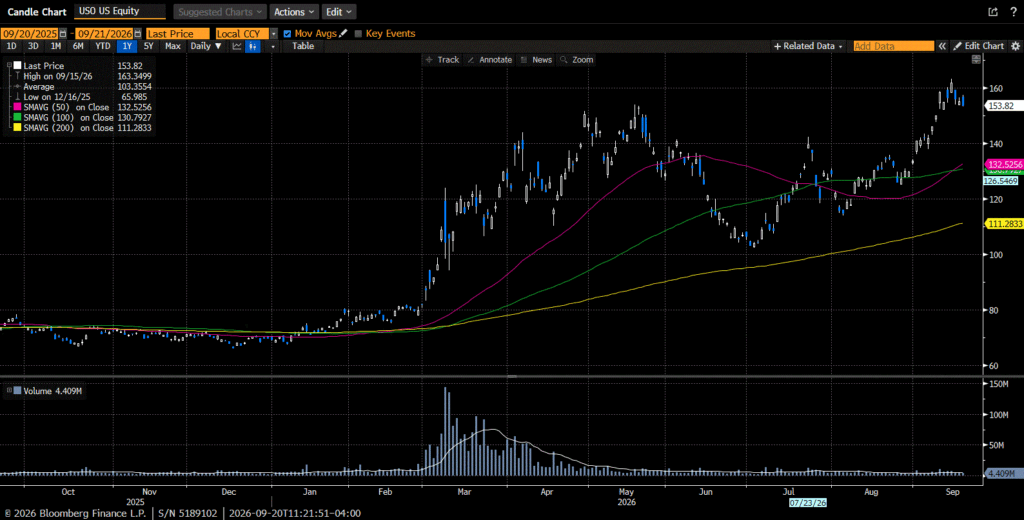
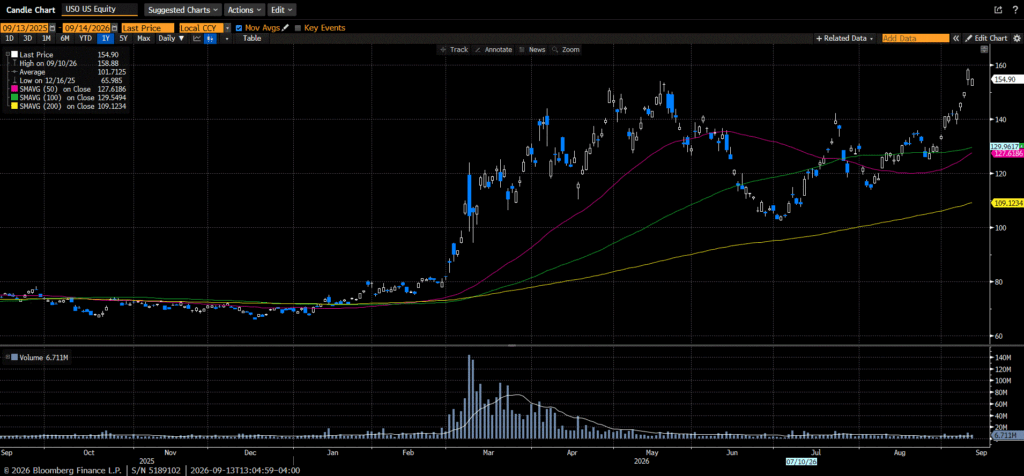
The S&P 500 gained 0.3%, the Dow rose by 0.5%, the NASDAQ increased by 0.9%, and the Russell 2000 posted a 0.8% advance. The US Treasury market was under pressure across the curve, posting one of its worst weeks in months. The 2-year yield increased by seven basis points to 3.56%, while the 10-year yield increased by twelve basis points to close the week at 4.14%. Notably, Japan’s 10-year JGB yield continued to rise and hit multi-year highs as the BOJ is poised to increase its policy rate. The perceived policy divergence between the Fed and BOJ has weakened the US Dollar relative to the Yen, with the cross closing at 155.28 on Friday. The US Dollar index closed lower by 0.5% to 99.14. Oil prices regained the $60 level, increasing by $0.63 for the week. Gold prices were little changed, losing $12.20 on the week to close at $4243.50 per ounce. Silver prices increased by 4.3% to $58.88 per ounce. Copper prices rose by $0.19, or 3.6%, to $5.46 per Lb., with some strategists calling for even higher prices. Bitcoin prices started the week lower, then bounced mid-week, only to finish the week lower. The performance divergence in Bitcoin from other risk assets over the last couple of months is interesting, but we remain constructive on the asset. Notably, Vanguard announced this week that it would allow bitcoin on its platform, potentially increasing the demand.

The Fed’s preferred measure of inflation for September came in line with expectations at 0.3% for the headline figure and 0.2% for the core figure, which excludes food and energy. On a year-over-year basis, the headline figure increased by 2.8%, up from 2.7% in the prior month, while the Core figure increased by 2.8%, down from 2.9% seen in August. The takeaway from the report is that inflation remains well above the Fed’s mandate, and while it’s not moving higher right now, it seems sticky and reluctant to move lower. Personal Income and Personal Spending were also in line with expectations at 0.4% and 0.3%, respectively. ISM Manufacturing shrank the most in four months to 48.2% from the prior reading of 48.7%. ISM Services, on the other hand, expanded to 52.6% from 52.4%. ADP private payrolls data came in lower than expected, and while the Challenger job-cut data was better than in October, it still showed significant layoffs in November. We will not receive the BLS Employment Situation Report for another two weeks, so the Fed will have to rely on these private data sources, along with high-frequency claims data. Initial claims fell by a surprising 27k to 191k, while Continuing Claims fell by 4k to 1939k. It was a holiday-shortened week, but it still does not show the labor market falling off a cliff. Finally, the preliminary December University of Michigan Consumer Sentiment index increased to 53.3 from November’s final reading of 51.

Investment advisory services offered through Foundations Investment Advisors, LLC (“FIA”), an SEC registered investment adviser. FIA’s Darren Leavitt authors this commentary which may include information and statistical data obtained from and/or prepared by third party sources that FIA deems reliable but in no way does FIA guarantee the accuracy or completeness. All such third party information and statistical data contained herein is subject to change without notice. Nothing herein constitutes legal, tax or investment advice or any recommendation that any security, portfolio of securities, or investment strategy is suitable for any specific person. Personal investment advice can only be rendered after the engagement of FIA for services, execution of required documentation, including receipt of required disclosures. All investments involve risk and past performance is no guarantee of future results. For registration information on FIA, please go to https://adviserinfo.sec.gov/ and search by our firm name or by our CRD #175083. Advisory services are only offered to clients or prospective clients where FIA and its representatives are properly licensed or exempted.