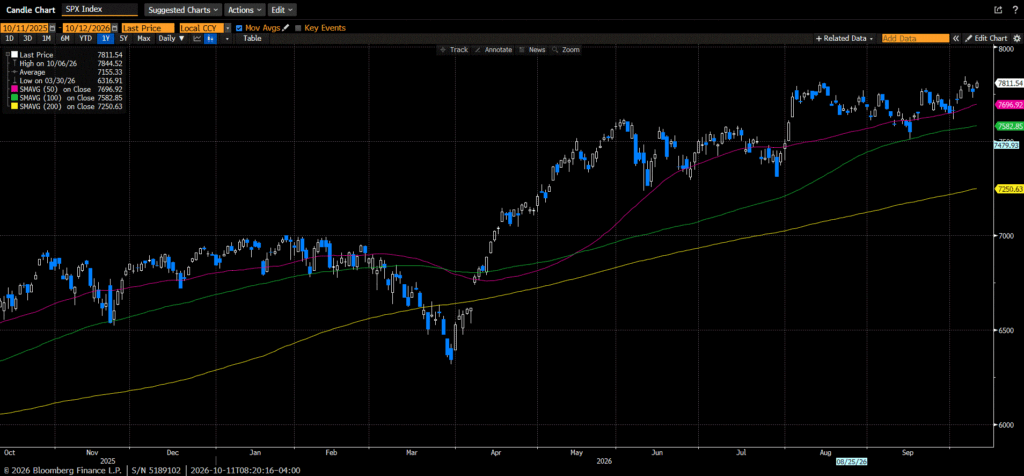
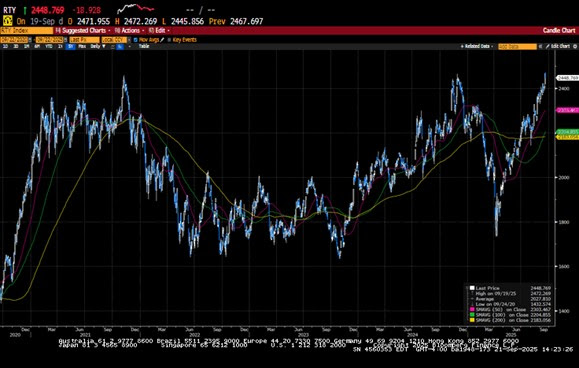
The major US equity market indices forged another set of all-time highs as investors went all in on risk assets after the Federal Reserve announced a twenty-five basis point cut to its policy rate and telegraphed the potential for three more cuts by January 2026. The Small-Cap focused Russell 2000 eclipsed a level not seen since November 2021, and it’s the first time since then that all of the major indices closed at all-time highs together. The Fed Chairman Jerome Powell did concede the Fed is in a tough spot now as it relates to its dual mandate. “There is no risk-freepath ahead,” and the Fed will now make decisions “meeting by meeting”. Currently, the market has assigned a 91.9% of a twenty-five basis point cut at the October meeting and an 82.3% for another twenty-five basis points at the December meeting. Markets generally do well when rate cuts come in a non-recessionary environment. The Fed’s Summary of Economic Projections showed nine Fed officials expecting one more cut this year, ten expecting two more cuts, and one expecting no more cuts. The SEP also saw Fed officials take up their growth estimates in 2026, while also increasing their inflation forecast. Notably, the Bank of England and the Bank of Japan left their policy rates in place. Mega-Caps continued to show leadership with the Communication Services and Information Technology sectors, posting the biggest gains on the week. Conversely, the Real Estate and ConsumerStaples sectors posted losses on the week.

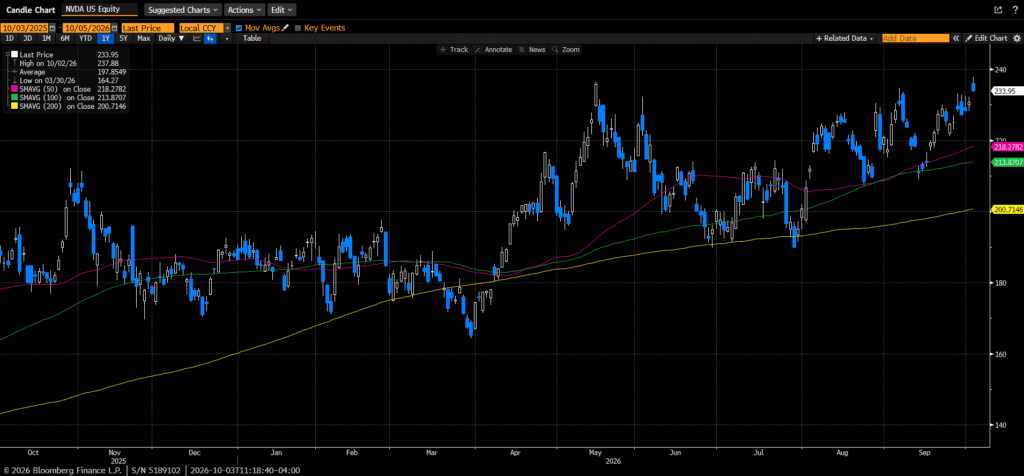
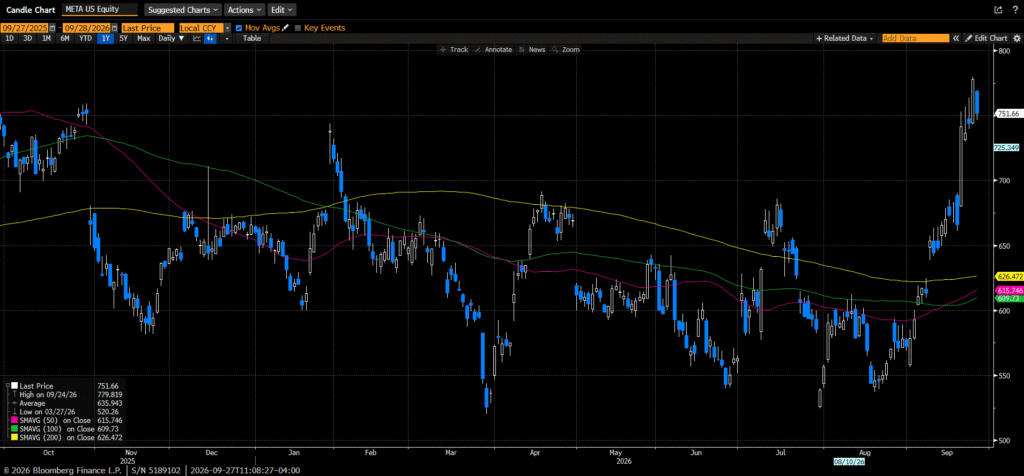
There was a bunch of corporate news this week that reinforced the artificial intelligence theme. Nvidia took a $5 billion stake in Intel, sending Intel’s shares higher by 23%. Nvidia also announced that it would spend $6.5 billion on cloud services from Coreweave. Meta announced that it would spend $20 billion on Oracle’s cloud computing offering. Oracle also looks like it will be at the forefront of a deal to buy TikTok after President Trump and Chinese President Xi had a constructive conversation on Friday. Elsewhere, Apple’s iPhone 17has had solid pre-order demand in international markets, boosting its share price. Tesla shares finished the week higher after Elon Musk announced the company had repurchased $1 billion in Tesla stock.

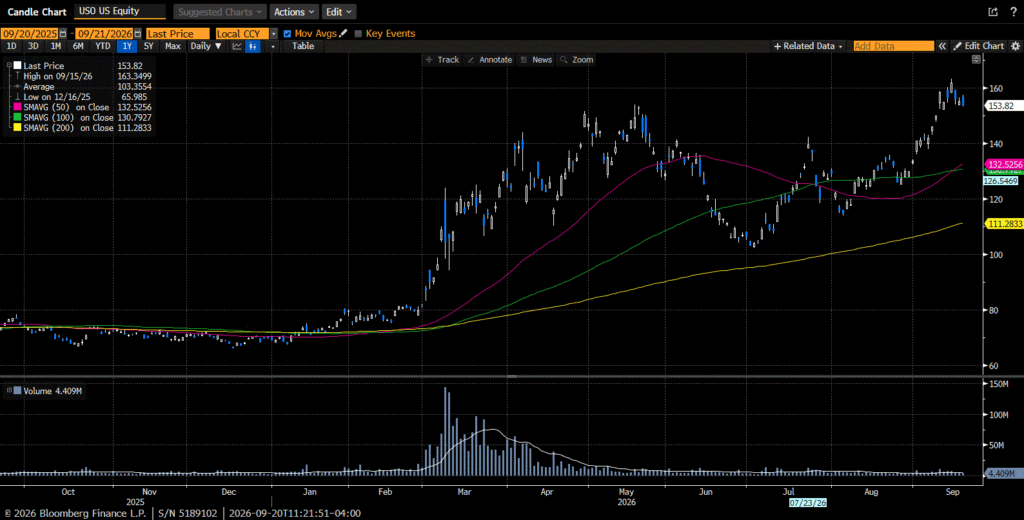
The S&P 500 gained 1.2%, the Dow added 1%, the Nasdaq increased by 2.2%, and the Russell 2000 gained 2.2%. The US Treasury curve suffered minor losses with the curve steepening. The 2-yearyield increased by two basis points to 3.58%, while the 10-year yield increased by eight basis points, closing at 4.14%. Oil prices fell by $0.26 to close the week at $62.41 a barrel. Gold prices rose by $19.50 to $3,706 per ounce. Copper prices fell by two cents to $4.63 per Lb. Bitcoin’s price increased by ~$200 to $115,800. The US Dollar index was little changed, closing at 97.63, up 0.07.
Economic data reported for the week were generally positive. August Retail Sales came in at 0.6% versus an estimate of 0.3%, while the Ex-auto figure was up 0.7% versus the consensus estimate of 0.1%. The retail figure within the control group, which feeds into the GDP calculation, was up 0.7% and portends a healthy consumer. Industrial Production was up 0.1% versus a flat estimate. Housing Starts and Permits were both lighter than expected, coming in at 1307k and 1312k, respectively. Initial Claims fell by 33k to 231k, reversing the prior week’s significant move. Continuing Claims fell by 7k to 1920k.

Investment advisory services offered through Foundations Investment Advisors, LLC (“FIA”), an SEC registered investment adviser. FIA’s Darren Leavitt authors this commentary which may include information and statistical data obtained from and/or prepared by third party sources that FIA deems reliable but in no way does FIA guarantee the accuracy or completeness. All such third party information and statistical data contained herein is subject to change without notice. Nothing herein constitutes legal, tax or investment advice or any recommendation that any security, portfolio of securities, or investment strategy is suitable for any specific person. Personal investment advice can only be rendered after the engagement of FIA for services, execution of required documentation, including receipt of required disclosures. All investments involve risk and past performance is no guarantee of future results. For registration information on FIA, please go to https://adviserinfo.sec.gov/ and search by our firm name or by our CRD #175083. Advisory services are only offered to clients or prospective clients where FIA and its representatives are properly licensed or exempted.