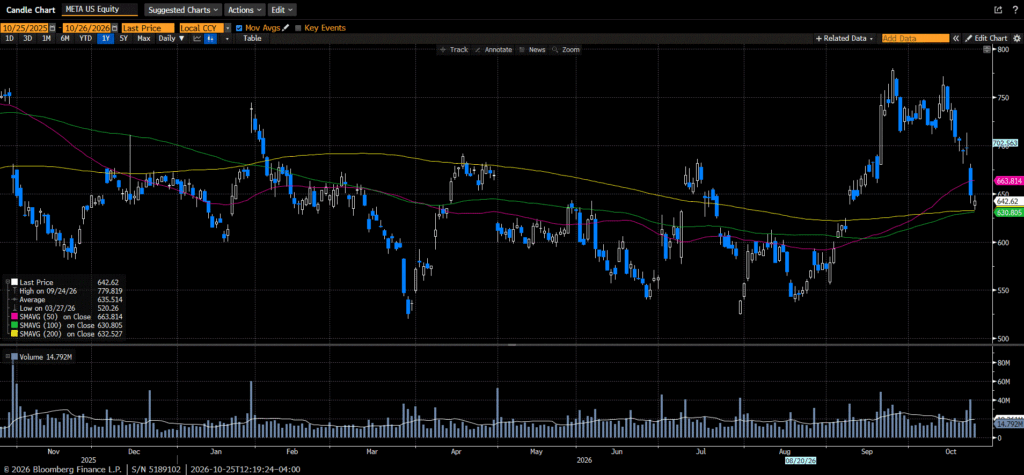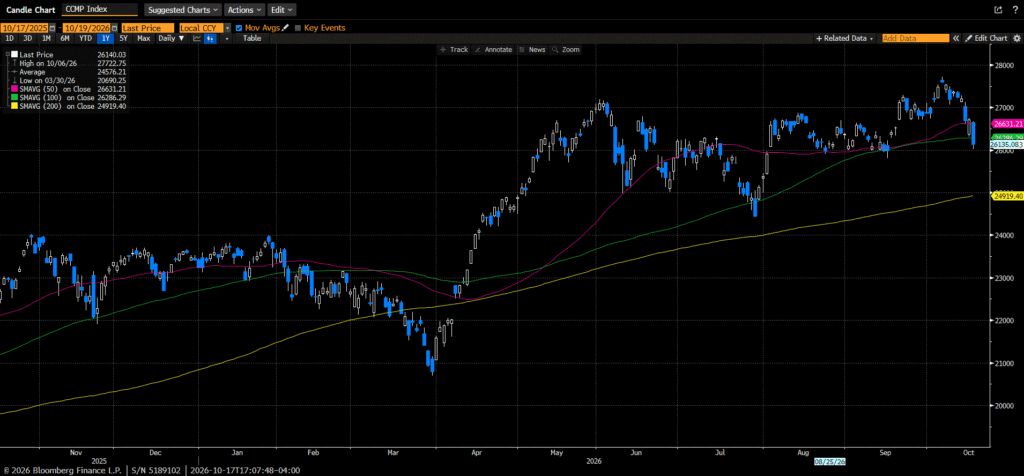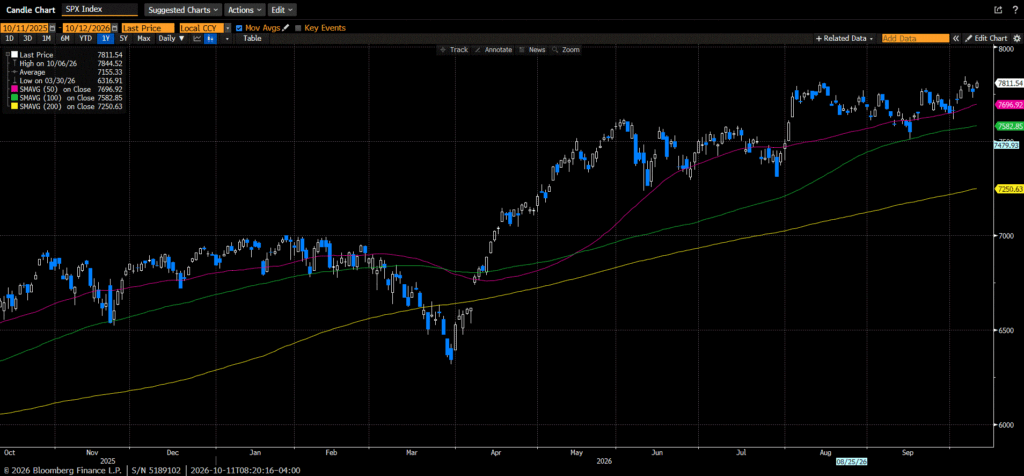

US equity indices posted another set of all-time highs as investors increased expectations for three, twenty-five basis point rate cuts by year’s end. Inflation data reported for the week essentially gave the Fed the green light for a September rate cut. Additionally, a significant downward revision to this year’s BLS payrolls data (-911,000), accompanied by a notable increase in Initial Unemployment Claims, fueled the notion of two additional cuts. Fed funds futures now imply an 85% probability of three cuts.

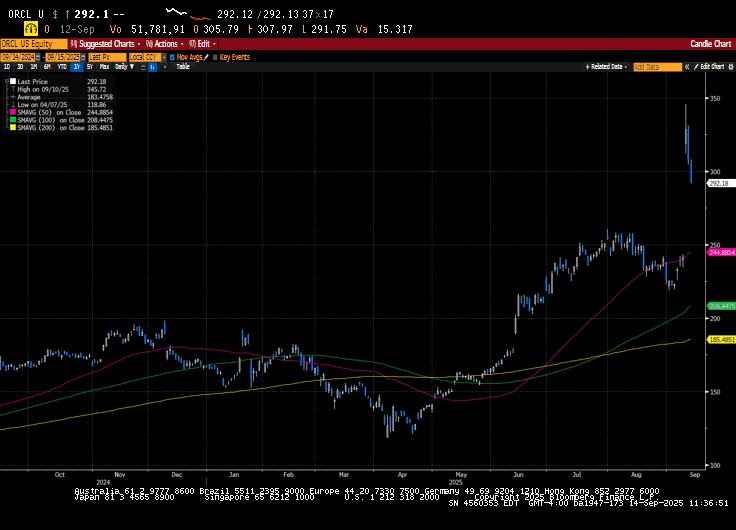
Mega Cap issues regained leadership as Semiconductors and Information Technology advanced on solid earnings results from Oracle. Oracle missed on both the top and bottom lines, but guidance offered showed bookings of $340 billion, with $114 billion in revenues from Cloud Infrastructure. The guidance alongside the announcement that OpenAI would spend $300 billion on Oracle solutions sent shares higher by 35% and propelled CEO LarryEllison to the status of the wealthiest person on earth. Broadcom’s shares continued to move higher a week after it posted solid earnings. Robinhood and Applovin shares moved higher on the news that their companies would join the S&P 500 index. The week also saw the busiest week for IPOs since 2021, with $400 billion in deals being priced into the market. Pay later firm Klarna and blockchain credit company Figure Technology were standout IPOs this week. South Korea’s SK-Hynix showcased its new High Bandwidth Memory HBM4, while Micron Technology was praised by several analysts after the company indicated it would raise the price of its DRAM and NAND products. Apple’s product launch was well telegraphed, and the market’s response was lackluster to the new iPhone 17. That said, pre-orders in China are currently beating expectations.

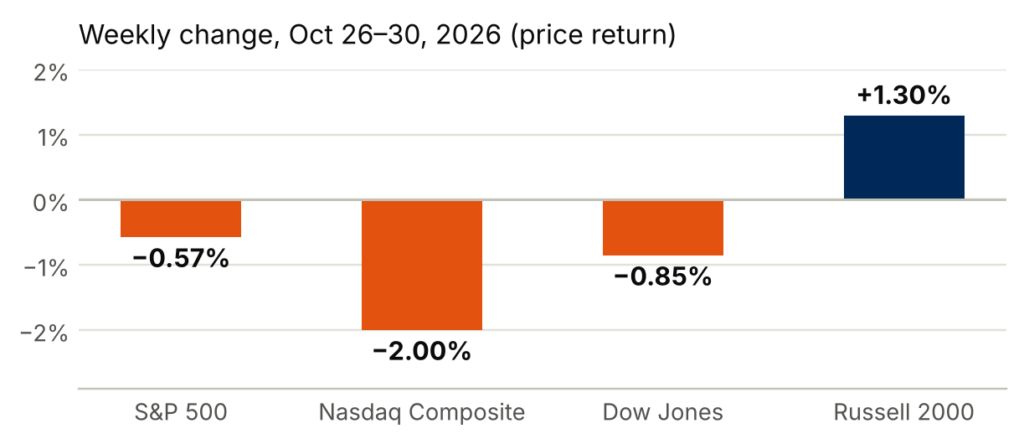
The S&P 500 gained 1.6%, the Dow added 1%, the NASDAQ increased by 2%, and the Russell 2000 rose by 0.3%. The US yield curve flattened this week, with shorter-tenured paper increasing in yields, while longer-duration paper saw its yield come down. The 2-year yield increased by five basis points to 3.56%, while the 10-year yield fell by three basis points to 4.06%. Oil prices increased by $0.80 to $62.67 a barrel. Gold prices forged another all-time high and closed the week up $33.30 to $3,686.50 per ounce. Copper prices increased by ten cents to $4.65 per Lb. Bitcoin’s price increased by 4.87% or $5,400 to $115,600. The US Dollar index rose by 0.2% to 97.56. We expect the US dollar to continue weakening as rate cuts from the Fed are realized. Notably, the ECB left its policy rate inplace this week.
A weaker-than-anticipated Producer Price Index gave the green light for the Fed to cut rates at its September 17th meeting. The headline number and core number came in at -0.1% versus the estimate of 0.4%. On a year-over-year basis, the headline number increased by 2.6% versus the prior reading of 3.1%, while the core reading increased by 2.8% versus the July reading of 3.4%. The headline Consumer Price Index came in a little hotter than expected at 0.4%, while the Core reading, which excludes food and energy, came in line with estimates of 0.3%. On a year-over-year basis, the headline figure increased by 2.9%, above the 2.7% reported in July, while the core reading stayed at 3.1%. Initial Claims increased by 27k to 263k, the most in four years. Continuing Claims were unchanged from the prior week at 1939k. A preliminary look at September Consumer Sentiment showed a decline from the previous month at55.4.

Investment advisory services offered through Foundations Investment Advisors, LLC (“FIA”), an SEC registered investment adviser. FIA’s Darren Leavitt authors this commentary which may include information and statistical data obtained from and/or prepared by third party sources that FIA deems reliable but in no way does FIA guarantee the accuracy or completeness. All such third party information and statistical data contained herein is subject to change without notice. Nothing herein constitutes legal, tax or investment advice or any recommendation that any security, portfolio of securities, or investment strategy is suitable for any specific person. Personal investment advice can only be rendered after the engagement of FIA for services, execution of required documentation, including receipt of required disclosures. All investments involve risk and past performance is no guarantee of future results. For registration information on FIA, please go to https://adviserinfo.sec.gov/ and search by our firm name or by our CRD #175083. Advisory services are only offered to clients or prospective clients where FIA and its representatives are properly licensed or exempted.