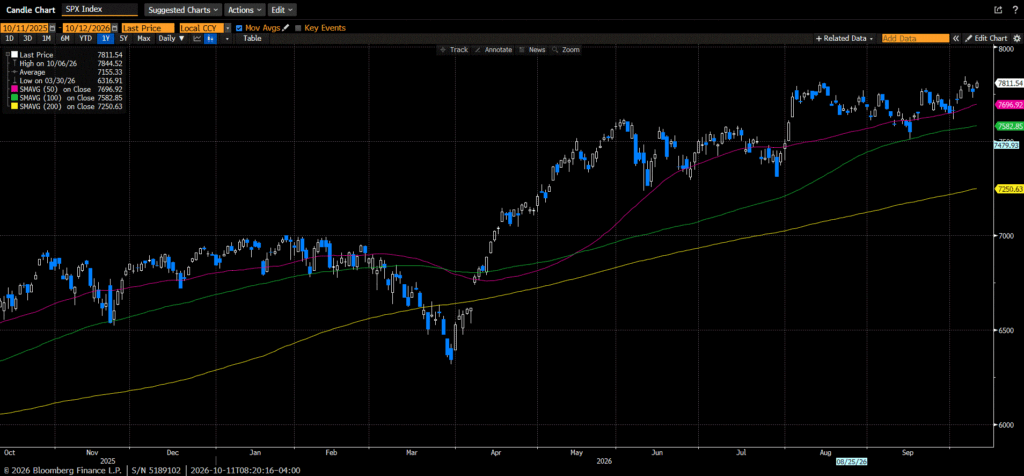

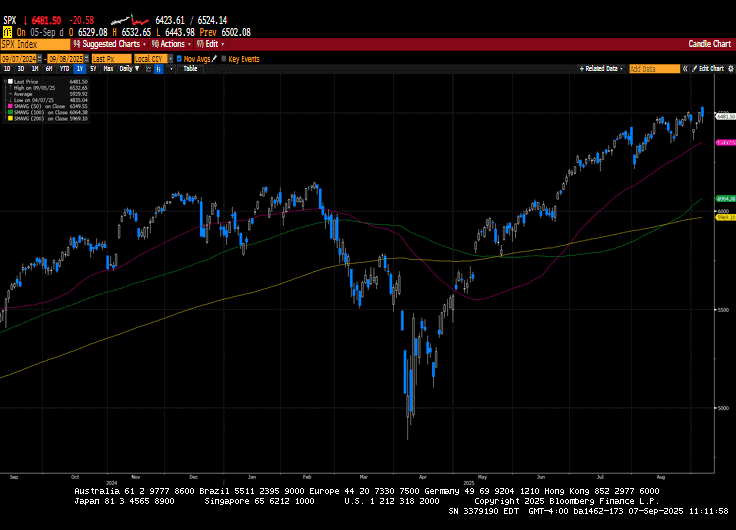
Investors sent the S&P 500 to another all-time high in a holiday-shortened week of trading. President Trump started the week by asking the Supreme Court to expedite a hearing to challenge the International Trade Court and the Federal Court of Appeals rulings that most of the imposed tariffs were put in place illegally. We believe that the prior rulings will stand at the Supreme Court and this will likely increase volatility in the markets. That said, the Administration is currently exploring alternative methods to impose tariffs within specific sections of current trade laws. Sectoral tariffs are one avenue and are currently being imposed on Steel, Lumber, Autos, and several other products. The universal tariffs in place are set to expire on October 14th.
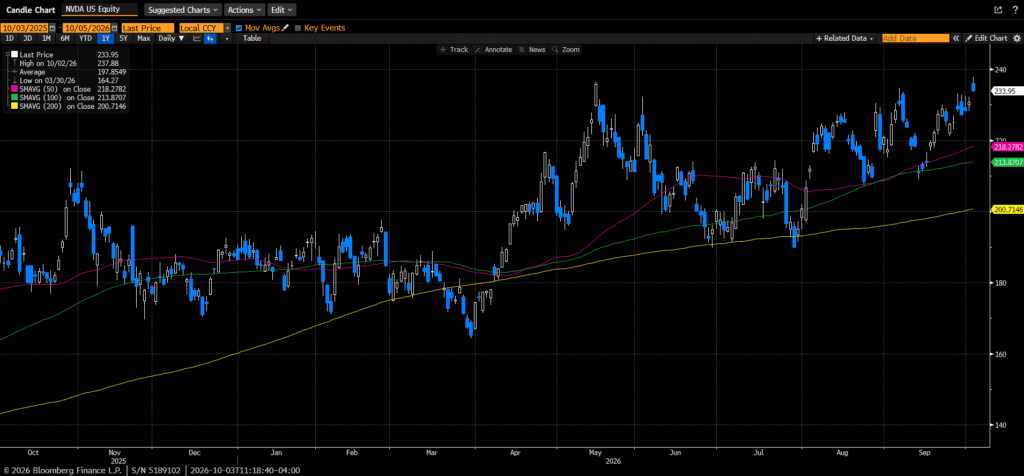
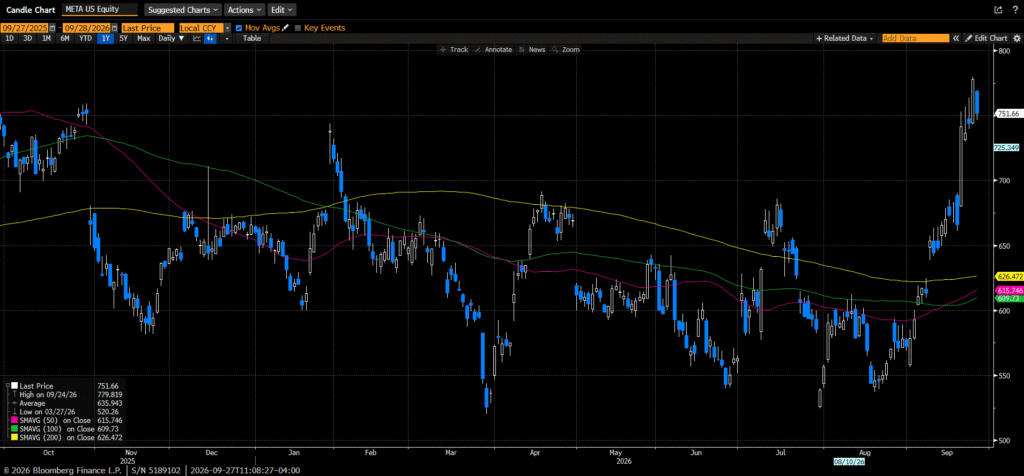
Several retailers reported their Q2 earnings, with mixed results. Macy’s had a stellar quarter, as did American Eagle. On the other hand, Lululemon and Dollar Tree’s guidance was disappointing and sent their shares sharply lower. Kraft/Heinz announced that it would be splitting the company into two companies, while Constellation Brands fell hard after its full-year guidance for fiscal year 2026 was lowered on concerns regarding volatility in consumer spending behavior. Google and Apple shares rose significantly on news that Google would be able to retain its Chrome browser and that Apple would likely use Google’s AI initiative Gemini to fuel its AI solutions. Broadcom posted a very impressive 2nd quarter and announced that the company would be working with Open-AI in developing a new chip. The news sent its shares materially higher while sending shares of competitor NVidia and AMD lower. Taiwan Semiconductor fell early in the week on news that the Administration had revoked authorization to ship essential gear to its Chinese chip-making base. The Retail sector led gains with a 3.75%weekly return, followed by the Semiconductor sector, which was up by 1.6%. The Energy and Financial Sectors were the biggest losers this week, falling 3.5% and 1.7%, respectively.

Concerns regarding fiscal austerity sent yields in long-duration sovereigns higher in several countries. UK Gilts, French Oats, and Japanese JGBs all saw yields increase on the longer end of the curve. In the US, the 30-yearTreasury yield eclipsed 5% before receding on a weaker-than-expected payrolls report. Fed rhetoric for the week was definitely skewed to the dovish side, with several bankers indicating they were inclined to endorse a September rate cut. With weaker labor data reported over the week, the probability of a September rate cut has approached 100% with the prospect of another cut in October increasing to80% and another in December rising to 70%.
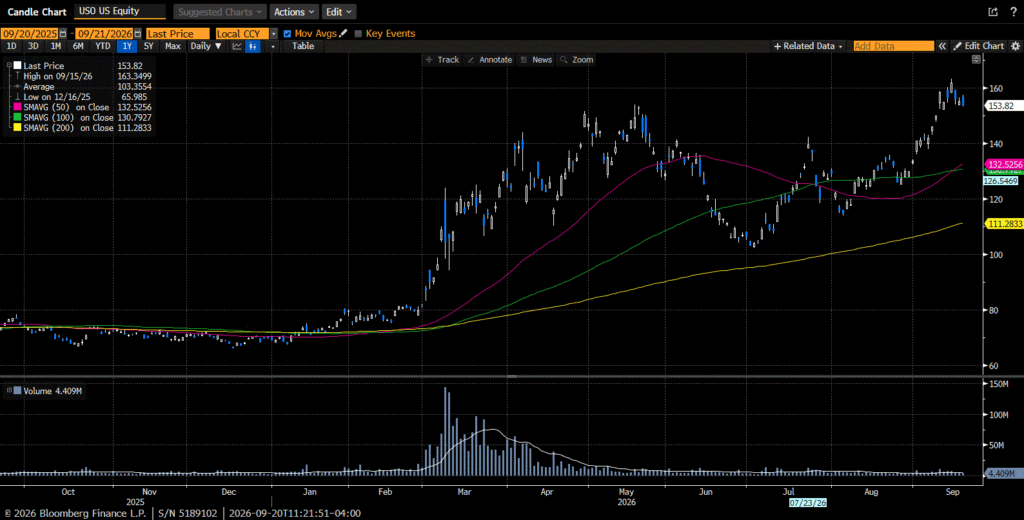
The S&P 500 rose 0.3%, the Dow lost 0.3%, the NASDAQ increased by 1.1%, and the Russell 2000 added 1%. US Treasury yields fell across the curve. The 2-year yield decreased by eleven basis points to 3.51%, while the 10-year yield fell by fourteen basis points to close the week at 4.09%. Oil price fell by 3.3% on expectations that OPEC+ would increase production in October. OPEC+ did in fact announce that it will raise production by 137,000 barrels in October and will systematically add 1.65million barrels of production into the system over the next year. WTI closed the week at $61.87 a barrel. Gold prices attained another all-time high, closing the week up 3.8% or $137 at $3,653.20 per ounce. Copper prices fell by four cents to $4.55 per Lb. Bitcoin’s price increased by 2.68% to$111,200. The US Dollar index ended the week little changed at 98.05.

The economic calendar was heavily focused on labor data. JOLTS data showed fewer job openings. The report showed 7.181M job openings vs. the prior revised lower number of 7.357M. The ADP Employment change came in at 54k payrolls versus the consensus estimate of 69k. Non-Farm Payrolls increased by 22k, well below the estimated 78k. Private Payrolls increased by 38k versus the estimated 90k. The unemployment rate ticked higher to 4.3%from the prior 4.2% and Average Hourly earnings increased by 0.3%, in line with estimates. The Average Workweek declined to 34.2 hours from 34.3 hours. Initial Jobless Claims increased by 8k to 237k, while Continuing Claims fell by 4k to1.940m. ISM Manufacturing came in slightly higher than expected at 48.7% but remained in contraction. ISM Services increased to 52% from 50.5% but its underlying Employment Index came in at 46.5%, which was the third consecutive month of contraction. Again, the weaker-than-expected labor figures give the Fed cover to cut rates in September. Increases in inflation may temper further rate hikes after September, but the market has now priced in the idea of three cuts this year.

Investment advisory services offered through Foundations Investment Advisors, LLC (“FIA”), an SEC registered investment adviser. FIA’s Darren Leavitt authors this commentary which may include information and statistical data obtained from and/or prepared by third party sources that FIA deems reliable but in no way does FIA guarantee the accuracy or completeness. All such third party information and statistical data contained herein is subject to change without notice. Nothing herein constitutes legal, tax or investment advice or any recommendation that any security, portfolio of securities, or investment strategy is suitable for any specific person. Personal investment advice can only be rendered after the engagement of FIA for services, execution of required documentation, including receipt of required disclosures. All investments involve risk and past performance is no guarantee of future results. For registration information on FIA, please go to https://adviserinfo.sec.gov/ and search by our firm name or by our CRD #175083. Advisory services are only offered to clients or prospective clients where FIA and its representatives are properly licensed or exempted.