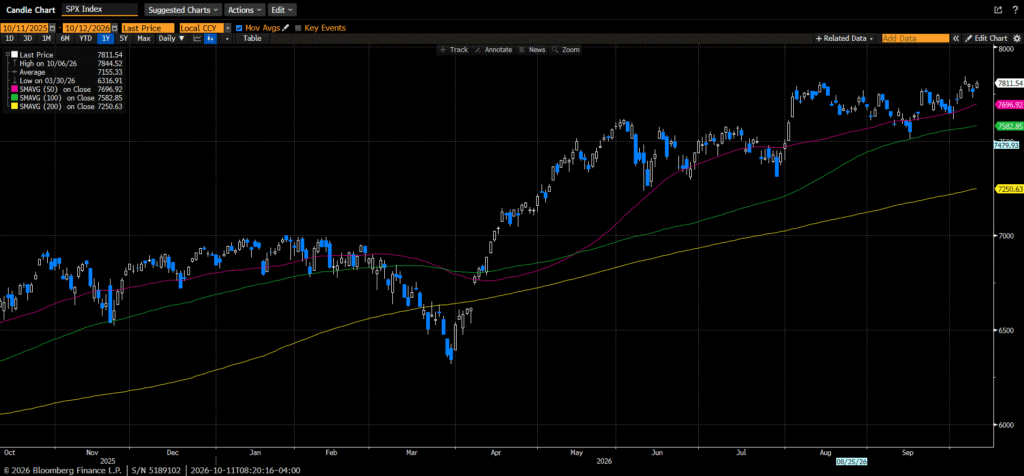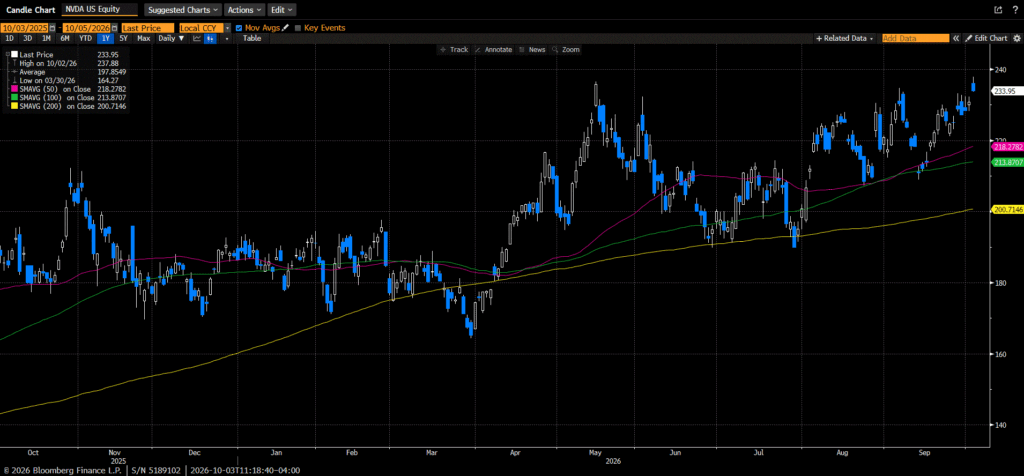

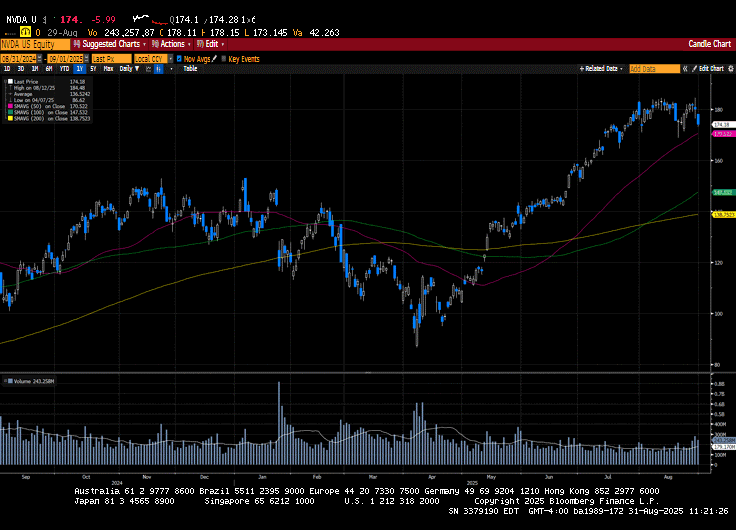
The S&P 500 posted a gain for the fourth consecutive month as investors continued to embrace the prospects of a September rate cut, a robust economic outlook, and strong corporate earnings. The much-anticipated second-quarter results from NVidia were met with muted trade. However, several investment banks increased their price targets on the company, resulting in an average price target of $203.00. Results showed strong demand for their products, and commentary from CEO Jensen Huang suggested capital expenditures from their largest customers are expected to accelerate over the next year. NVidia’s market cap is now $4.4 trillion, and it makes up 8.1% of the S&P 500. In other corporate news: Apple will showcase the iPhone 17 at its September 9th product launch. Caterpillar and Best Buy warned that their earnings would be less than expected due to tariff policy. Snowflake and Alibaba had strong quarterly results, while Dell’s profit margins on its servers compressed.

Stronger-than-expected GDP figures, along with an in-line PCE inflation print, kept a September rate cut on the table. Fed officials Barkin, Daley, and Waller echoed what Fed Chairman Powell had said last week: the balance of risk had shifted to the labor market. Fed Governor Lisa Cook filed a lawsuit against President Trump after he fired her due to allegations of mortgage fraud. Concerns over the Fed’s independence will likely increase in the months to come as Trump prepares to announce the next Federal Reserve Chairman.

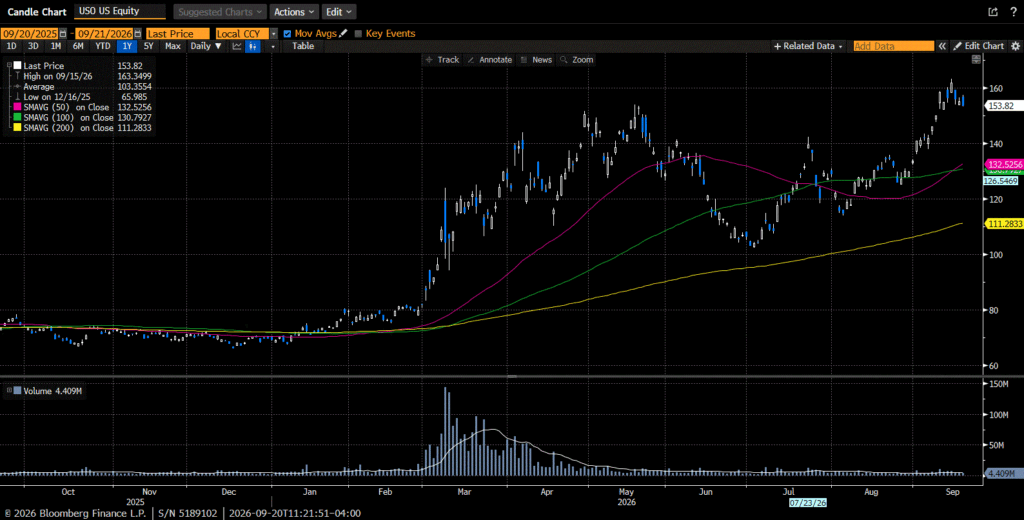
The S&P 500 lost 0.1%, the Dow Jones Industrial Average gave back 0.2%, the NASDAQ Composite fell by 0.2%, and the Russell 2000 increased by 0.2%. US Treasuries gained across the curve, with shorter tenured paper continuing to outperform. The 2-year yield decreased by seven basis points to 3.62%, while the 10-year yield fell by three basis points to close at 4.23%. Notably, the 2-year yield fell by thirty-three basis points in the month of August, while the 10-year yield increased by three basis points. Oil prices increased by $0.34 to close the week at $64.01 a barrel. Gold prices surged by 2.8% or $97.40 to close at $3,516.20 per ounce. Copper prices increased by 2.9%, closing at $4.59 per Lb. Bitcoin’s price fell by 5.56% or by $6,400 to close at $108,225. The US Dollar index was1 up slightly on the week and closed at 98.01.
he Fed’s preferred measure of inflation, the PCE, came in line with the street’s expectations on both the headline and core figures. Headline PCE was up 0.2% on a month-over-month basis and was up 2.6% year-over-year, in line with June’s 2.6% increase. The core figure, which strips out food and energy, increased by 0.3% from the prior month and stood at 2.9% on a year-over-year basis, compared to 2.8% in June. The bottom line is that inflation remains elevated and above the Fed’s 2% target, but the in-line results did little to alter the likelihood of a September rate cut. Personal Income and Personal Spending came in better than expected at 0.4% and 0.5%, respectively. The results indicate a resilient consumer who continues to spend. The second look at the second-quarter GDP was revised higher to 3.3% from 3%, while the GDP Deflator came in at 2%. The final reading of the University of Michigan’s Consumer sentiment showed a decline in sentiment to 58.2 from 58.6. Similarly, the Consumer Confidence figures were also lower than the prior reading, coming in at 97.4. Finally, Initial Jobless Claims fell by 5k to 229k, while Continuing Claims fell by 7k to 1954k.

Investment advisory services offered through Foundations Investment Advisors, LLC (“FIA”), an SEC registered investment adviser. FIA’s Darren Leavitt authors this commentary which may include information and statistical data obtained from and/or prepared by third party sources that FIA deems reliable but in no way does FIA guarantee the accuracy or completeness. All such third party information and statistical data contained herein is subject to change without notice. Nothing herein constitutes legal, tax or investment advice or any recommendation that any security, portfolio of securities, or investment strategy is suitable for any specific person. Personal investment advice can only be rendered after the engagement of FIA for services, execution of required documentation, including receipt of required disclosures. All investments involve risk and past performance is no guarantee of future results. For registration information on FIA, please go to https://adviserinfo.sec.gov/ and search by our firm name or by our CRD #175083. Advisory services are only offered to clients or prospective clients where FIA and its representatives are properly licensed or exempted.