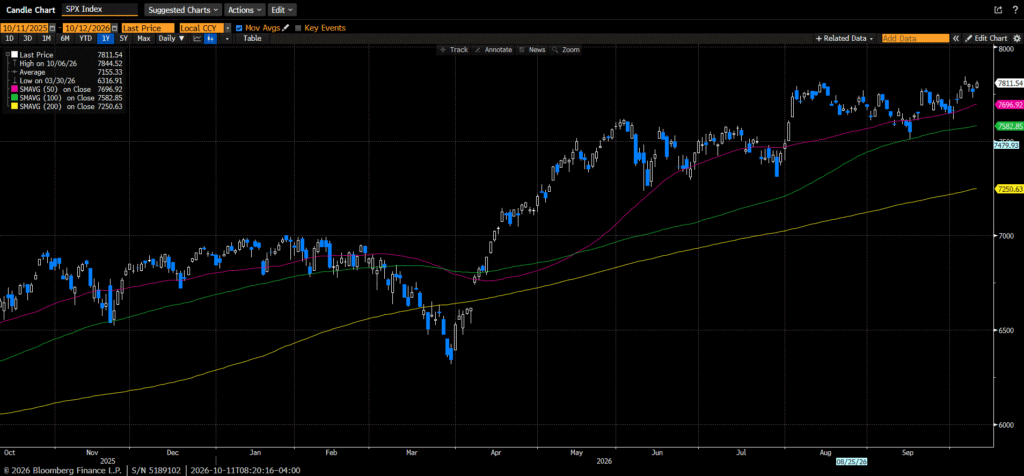


US equity markets ended the week with a powerful move to the upside after Fed Chairman J. Powell indicated that the balance of risk had shifted to the labor market, leaving the door open for a September rate cut. The final day of trading wiped out losses incurred in the prior four trading sessions. The Dow Jones Industrial Average was able to finish the week at new all-time highs as a rotation out of technology into cyclicals and small-caps continued. The week started with hopes that a trilateral meeting between the US, Russia, and Ukraine would be scheduled and perhaps lead to a ceasefire or an end to the conflict. However, news on that front was muted for the rest of the week.

All eyes were on the Kansas City Fed’s Economic Symposium held at Jackson Hole, where most expected to hear of a new policy framework from the Chairman and to hear him reiterate his most recent hawkish tone. There was, in fact, a shift in the Fed’s policy framework from what had been established in 2020, but to the surprise of many, including myself, the Chairman came off as quite dovish and solidified the argument for a twenty-five basis point cut at the September meeting. There is still plenty of data to digest before the next meeting, but at this point, it would take a significant uptick in inflation or a significant uptick in payrolls to change the current trajectory of a cut. Currently, Fed Fund futures assign a 75% probability of a cut. That said, there will most likely be dissent within the Fed, which was made clear from the FOMC minutes released this week, where Waller and Bowman expressed that the Fed should have cut the policy rate. Interestingly, Fed Officials Hammack, Bostic, Schmid, and Musalem pushed back on the notion of a September rate cut this week, citing concerns of elevated inflation in what appears to be a resilient labor market. Separately, President Trump called for the resignation of Fed Governor Lisa Cook, who is under investigation for alleged mortgage fraud. Cook responded to the claims, saying she would not be bullied into resigning. The incident, along with Trump’s criticism of Fed Chair Powell, further stoked investors’ fears over the Fed’s independence.

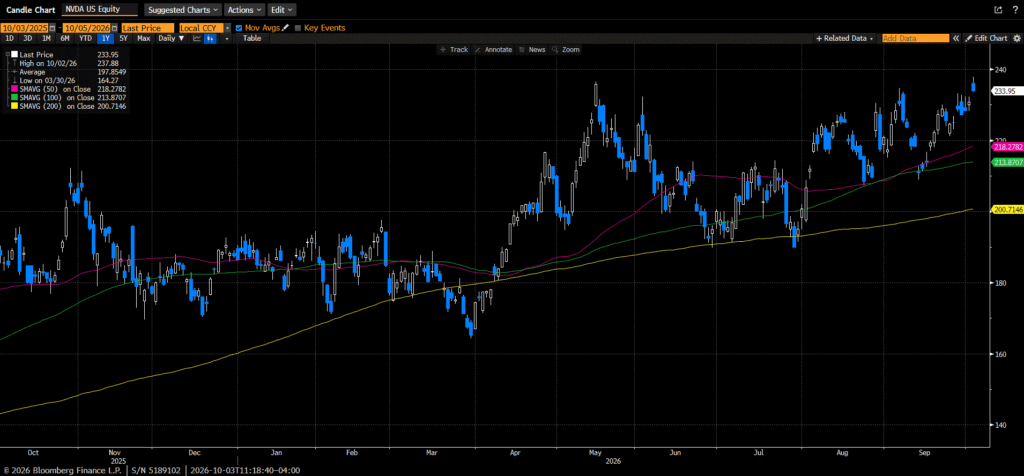
There was plenty of corporate news on the tape. Retailers showed a mixed bag of results. Home Depot and Lowe’s both reiterated their full-year guidance: however, investor were inclined to buy Home Depot and sell Lowe’s. Walmart’s disappoint profits sent its shares lower by 4.5%. Target continued to struggle in its second quarter but annouced that a new CEO would be taking the helm of the company. Palo Alto Networks had a fantastic quarter as it starte to show how its broad array of solutions is providing a one-stop shop for cybersecurity. Intel shares traded higher on confirmation that the US government had taken a 10% stake and that Softbank would invest $2 billion in the company. All eyes will be on NVidia this week as they are set to report Q2 earnings on Wednesday the 27th after the bell. Expectations are high as several investment banks have recently increased their price targets on the company.
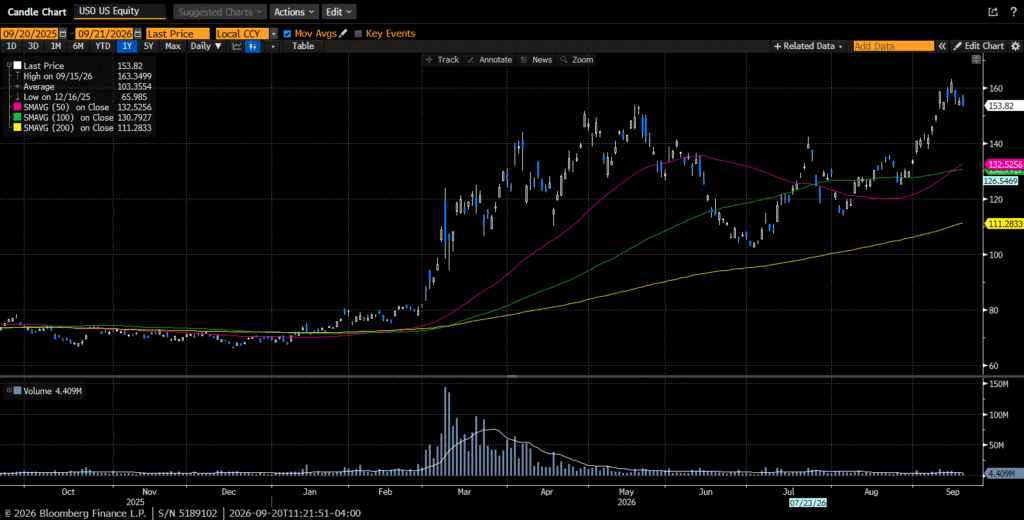
The S&P 500 gained 0.28%, the Dow increased by 1.53%, the NASDAQ fell by 0.58%, and the Russell 2000 jumped by 3.30%. US Treasuries rallied on the back of a dovish Powell adn shifted yeilds lower across the curve. The 2-year yield declined by seven basis points to 3.69%, while the 10-year yield fell by the same amount to 4.26%. Oil prices had a positive week, gaining 1.5%or $0.94 to close at $63.67 a barrel. Gold prices rose by 1% to close at $3,418.80 per ounce. Copper prices shed three cents to $4.46 per pound. Bitcoin’s price fell by 2.32% to $115,040. The US Dollar indext was little changed, losing 0.1% to 97.70.

The economic calendar was fairly quiet this week. Housing Starts came in better than expected at 1428k, while Building Permits were slightly less than expected at 1354K. Existing Home Sales were 4.01M versus the consensus estimate of 3.92M. Lower mortgage rates were cited as one of the reasons for the better print. Initial Claims ticked higher by 11k to 235K, while continuing claims jumped by 30k to 1972k. A preliminary look at S&P Global’s manufacturing PMI surprised to the upside, coming in at 53.3, well above the prior print of 49.8. The Services PMI came in at 55.4 versus the prior reading of 55.7.
Investment advisory services offered through Foundations Investment Advisors, LLC (“FIA”), an SEC registered investment adviser. FIA’s Darren Leavitt authors this commentary which may include information and statistical data obtained from and/or prepared by third party sources that FIA deems reliable but in no way does FIA guarantee the accuracy or completeness. All such third party information and statistical data contained herein is subject to change without notice. Nothing herein constitutes legal, tax or investment advice or any recommendation that any security, portfolio of securities, or investment strategy is suitable for any specific person. Personal investment advice can only be rendered after the engagement of FIA for services, execution of required documentation, including receipt of required disclosures. All investments involve risk and past performance is no guarantee of future results. For registration information on FIA, please go to https://adviserinfo.sec.gov/ and search by our firm name or by our CRD #175083. Advisory services are only offered to clients or prospective clients where FIA and its representatives are properly licensed or exempted.